Where the money actually goes on a Woodfin conversion
Woodfin's housing sits on two very different kinds of ground: the flat river terraces along the French Broad and the steeper cut-in lots climbing toward Reynolds and Elk Mountain. Those two lots should not price the same, and when they do, somebody is guessing. A conversion bid is really a stack of line items, and four of them decide most of the total.
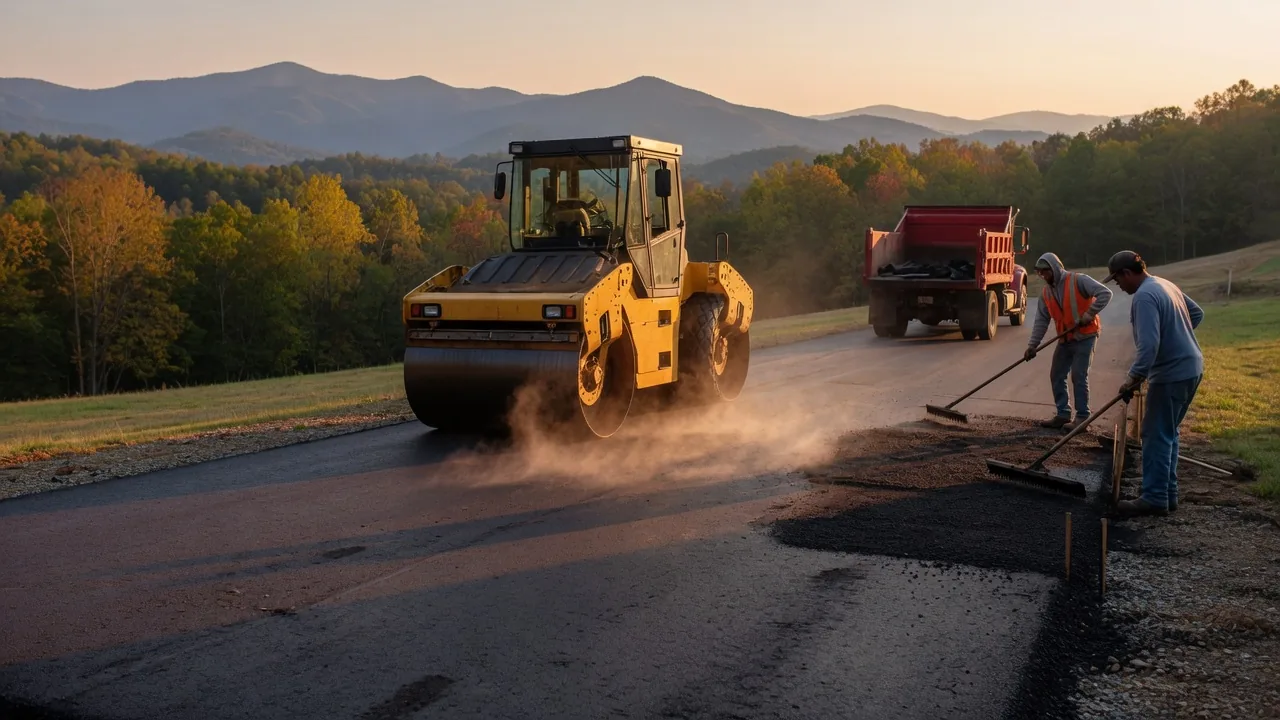
Base and compaction. Asphalt is only as good as what's under it. A drive that already has a stable, well-graded gravel base can often be shaped and overlaid. One with soft spots, ruts, or years of added loose stone needs re-grading to proper depth, then compaction in lifts. That's the single biggest swing item on most jobs.
Existing gravel. Options are blend in place, remove and haul, or cap over. Blending is cheapest when the material is clean and uniform. Hauling off a deep, dirty, mixed base adds trucking and disposal to the ticket.
Drainage. Woodfin's rain comes hard and the slopes shed it fast. Crown, shoulder, and any culvert or ditch work has to be resolved before paving, or you're paying for a driveway that will hold water at the edges and start to fail from the bottom up.
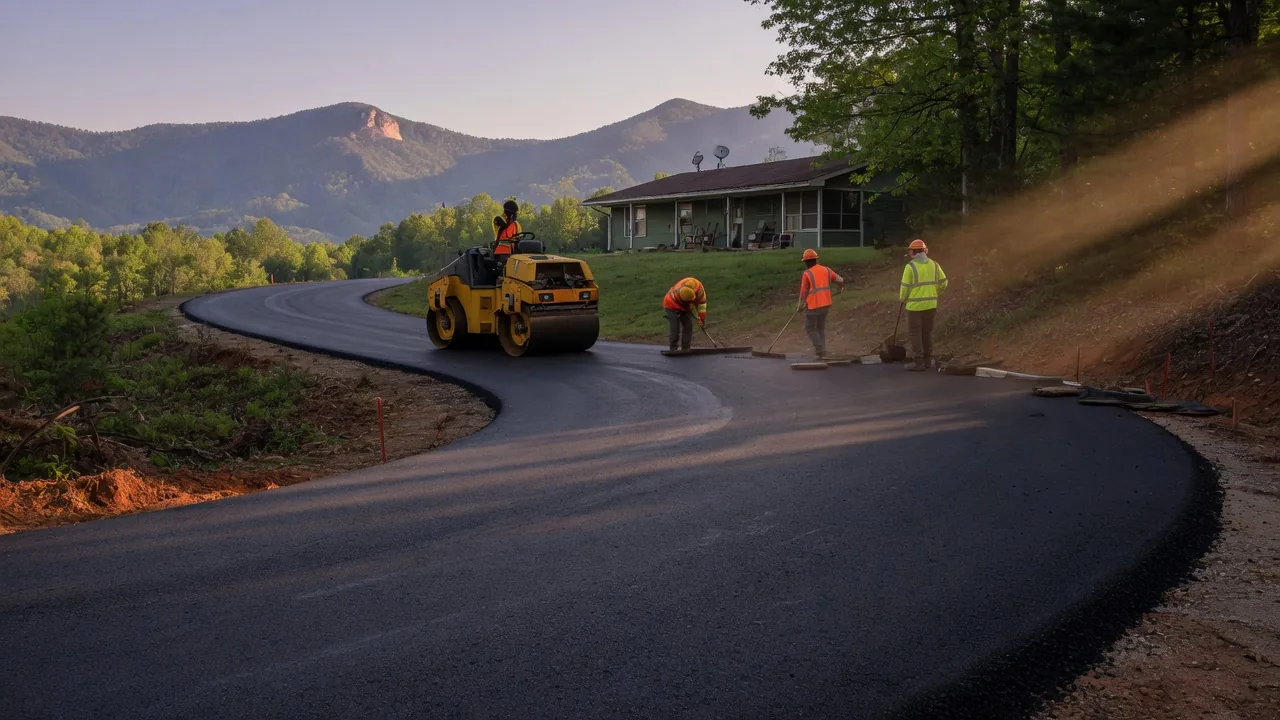
Grade and access. Steep runs need more asphalt per square yard and often a different mix; tight driveways that a full-size paver can't reach get paved with smaller equipment at a slower rate.
A working price table for Buncombe County drives
Ranges below reflect typical residential work in this county. Every number depends on square footage, base condition, and access, so treat them as bands, not quotes. The full itemized breakdown lives in the Buncombe County asphalt driveway cost table.
| Scope item | Typical range | What drives it |
|---|---|---|
| Light prep: regrade existing base, spot compaction, no haul-off | $900–$2,200 | Base stability, loose stone to reshape |
| Full base prep: scarify, add stone, compact in lifts | $2,000–$4,500 | Depth of new base, soft spots, haul distance |
| Drainage correction (crown, shoulder, culvert, or ditch) | $400–$3,000+ | Slope, water volume, whether a culvert is needed |
| Binder course, 2 in. | $2.50–$3.75 / sq ft | Mix design, thickness, grade |
| Surface course, 1.5 in. | $2.00–$3.00 / sq ft | Appearance grade, traffic, sun exposure |
| Steep-grade premium | 10%–25% over flat pricing | Binder content, slower placement, compaction difficulty |
| Gravel haul-off | $300–$900 per load | Volume removed, disposal fees |
A 40-by-12-foot drive with good base and simple drainage usually lands in the lower half of these bands. Add slope, soft spots, and haul-off and the same footage can double. That's why comparing two bids without comparing their line items tells you almost nothing.
Water, terrain, and the county's storm record
Buncombe County has seen 19 federally declared disaster events over a 1973-2026 record, and the dominant family is storm and flood. Woodfin sits on the French Broad, with residential ground that ranges from flat river bottom to hillside cuts. That combination means drainage isn't a checkbox on this job; it's the design constraint. A conversion that ignores uphill runoff, a plugged culvert, or a shoulder that doesn't shed water will crack and rut within a couple of seasons no matter how good the asphalt is.
The NC Office of State Fire Marshal and Code Officials enforces the state's adopted residential code, which treats site drainage as a requirement rather than an upgrade. If a contractor waves off drainage on a sloped Woodfin lot, that's the bid to set aside. When you're comparing scopes, the conversion guide walks through what a complete proposal should list.
Permits, right-of-way, and where the rules bite
Most driveway conversions on private property in Woodfin don't need a building permit, but the moment your drive meets a state-maintained road, you're dealing with an NCDOT driveway permit. The application and any required culvert sizing run through NCDOT Connect. Getting that permit before you schedule paving is not optional, and a delay there is the most common reason a Woodfin conversion slips a week.
Separately, if the scope includes regrading that changes drainage to a neighboring property, or if the driveway is part of a larger site plan, the project can cross into work that requires a licensed general contractor. The NC Licensing Board for General Contractors publishes the thresholds; a reputable paver will tell you which side of that line your job falls on rather than hoping you don't ask.
One more local reality: many Woodfin driveways terminate in a culvert under the roadway shoulder. If that culvert is undersized or crushed, no amount of new asphalt will fix the ponding. Have it inspected before the paving date, not after.
Choosing a crew that prices honestly
Ask any paver for the line items: base prep, compaction method, asphalt thickness in inches, mix type, drainage scope, and whether haul-off is included. A real conversion proposal will break out each of those. A one-number quote usually means the base work got shorted, and base is where driveway failures start.
Ask specifically how they handle a Woodfin sloped drive, because the answer separates crews that do hillside work from crews that mostly do flat commercial lots. And ask what they'll do if the base turns out worse than expected once they start scarifying; a fair crew prices that contingency upfront instead of hitting you with a change order on day two. For vetted local options, see paving contractors serving Woodfin.