Asphalt paving and sealcoating, Biltmore Forest NC

Paving Contractors in Biltmore Forest, NC

Asphalt paving in Biltmore Forest typically runs about $6,000 to $28,000 for a full driveway or private lane, with most single drives landing in the $9,000 to $18,000 band. Also in Biltmore Forest: asphalt driveway paving, asphalt driveway repair and asphalt resurfacing. Hot-mix asphalt, tar and chip and sealcoating for mountain driveways, lots and private roads across five Western North Carolina counties.

  • Free on-site estimate, price in writing
  • Compacted stone base, then hot mix rolled tight
  • Crowned and edged so mountain rain runs off, not in
  • Illustrated below: what the finished job looks like

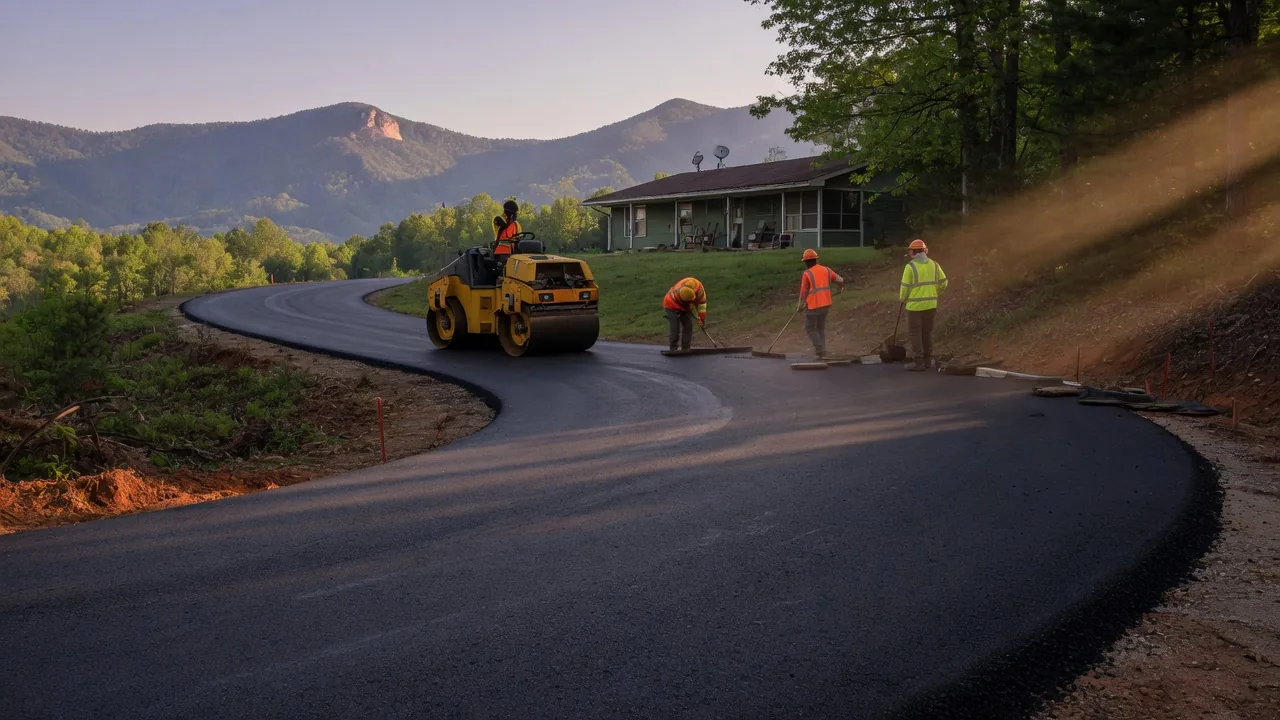
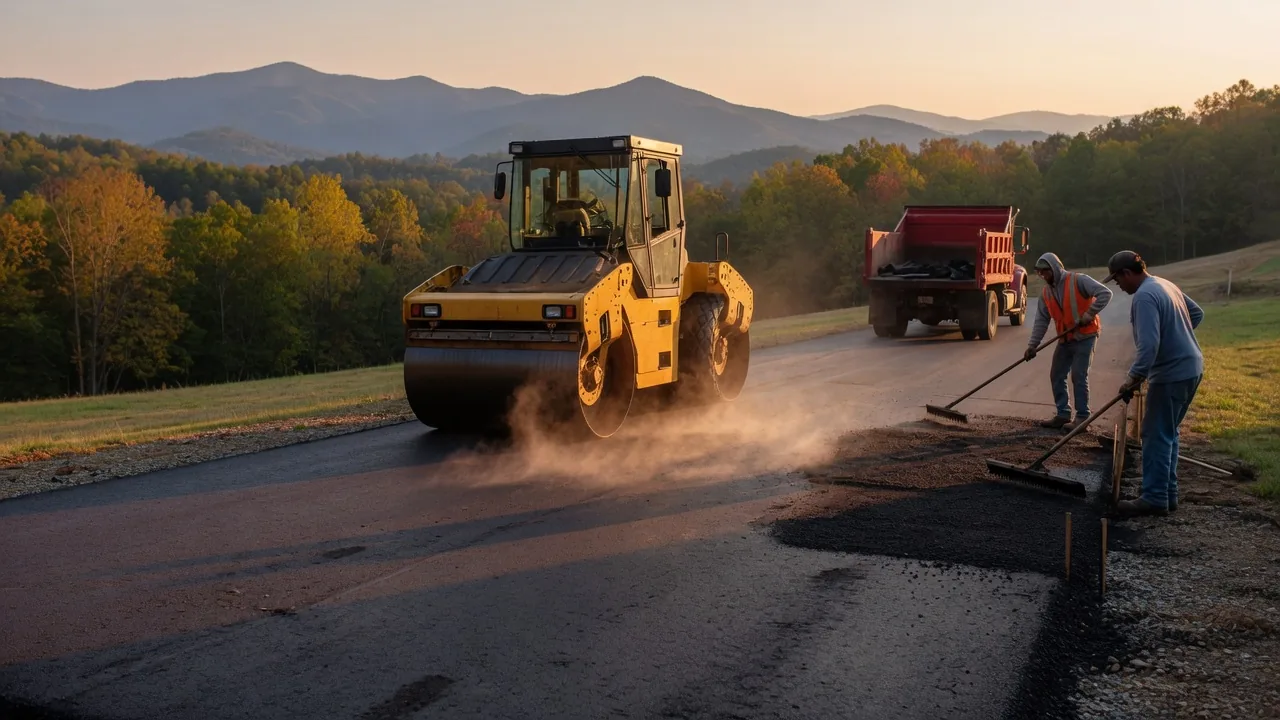
Pictured: illustration: a roller compacting hot-mix asphalt on a residential driveway. An illustration of the work, not a job photo.

Get a free estimate

Tell us about the driveway, lot or road. We measure it, check the base and the water, and put a real price in writing.

Free, no obligation. A written price after the site visit.

Free on-site estimateA real number, in writing, after we measure and check the base.
Base first, then blacktopCompacted stone, drainage, then hot mix, in that order.
Five countiesBuncombe, Haywood, Henderson, Madison and Transylvania.
Straight answersWe say when a patch or an overlay is the honest fix.
Quick answer
Paving Contractors in Biltmore Forest, NC

Asphalt paving in Biltmore Forest typically runs about $6,000 to $28,000 for a full driveway or private lane, with most single drives landing in the $9,000 to $18,000 band. The number swings on square footage, how much old surface has to come out, tree-root and drainage work, and how tight the trucks can get to the pour.

19
federal disaster declarations on record in Buncombe County
Hurricane Dorian
most notable event in the federal record
1973–2026
span of the declaration record
Asheville
Buncombe County hub

Where a Biltmore Forest paving number actually comes from

A quote for a drive in Biltmore Forest is really four or five numbers stacked. The first is area: this is a town of large, wooded lots off Vanderbilt Road and Brookline, so most drives are longer than a typical Asheville city apron — 800 to 2,500 square feet is common, and estate lanes run well past that. Material is priced per ton, and 2 inches of compacted asphalt covers roughly 80 square feet per ton, so area sets the floor.

The next number is removal. Older drives here often sit under a layer of failing asphalt, and you cannot simply pave over a surface that is already breaking up. Tear-out is billed per square foot and by the load to haul off. Then base: if the gravel under the asphalt has pumped full of clay or the drive has rutted, new stone and compaction add cost before a single ton of asphalt shows up.

Finally, access and specialty work. Narrow, tree-lined entries mean smaller equipment and slower placement. Roots heaving a drive, a culvert at the road, or a turn-around that needs regrading all land as line items. A bid that shows only a lump sum hides exactly the items that decide whether the job lasts.

The line-item price picture

Regional ranges for the pieces that make up a job. These are bands, not bids — your slope, subgrade and access decide where you land. For the fuller county breakdown, see the Buncombe County asphalt driveway cost table.

ItemTypical rangeWhat drives it
New asphalt over sound existing base$3-$5 per sq ftArea, thickness, access
Full teardown and replacement$6-$10 per sq ftDepth of old surface, haul-off
Gravel base rebuild$2-$4 per sq ftSubgrade condition, compaction
Residential driveway, most jobs$6,000-$18,000Total area, complexity
Long private lane or community road$18,000-$40,000+Linear footage, drainage, culverts
Sealcoat (maintenance only)$0.20-$0.40 per sq ftSurface area, prep

Anything that mixes structure (new base) with surfacing (new asphalt) is where quotes diverge most. Ask for the base thickness and the asphalt thickness in inches, in writing, on every bid you compare.

Water, shade, and mountain-grade lots

Biltmore Forest sits on rolling, heavily wooded ground, and that shapes paving more than anything else. Shaded drives dry slowly, so moisture sits on the surface and works into cracks. Sloped entries shed water fast, which is good until it reaches the road and needs somewhere to go — a drive that dumps runoff onto a neighbor's lot or the street is a problem you will hear about.

Federal disaster history backs up the local drainage concern: 19 declared events have touched this county over 1973-2026, almost all storm and flood related. That record is the argument for grading, culverts and edge drainage being designed in from the start rather than patched later. The EPA maintains stormwater guidance worth understanding if your runoff crosses a property line.

Then there are the trees. Root systems under a drive push it up in slow waves, and no asphalt mix survives that without addressing the root. On a wooded Biltmore Forest lot, expect at least one line item for root or subgrade correction.

Permits, licensing and who can legally do the work

Most residential driveway resurfacing does not need a building permit, but anything touching the public road — a new or moved driveway connection, a culvert at the shoulder — runs through NCDOT's driveway permitting process because the state controls access to its roads. Get that in writing before work starts, not after a crew cuts the shoulder.

On the contractor side, North Carolina draws a line on project size. The NC Licensing Board for General Contractors sets the threshold where a paving or grading job must be handled by a licensed general contractor rather than an unlicensed operator. On a large estate lane or community road, ask directly whether the job crosses that line and who holds the license. Larger HOA or shared-road projects may fall under HUD or association rules as well.

Licensing and permits are the quiet part of a paving bid. A low number from a crew that skips them is not a bargain, it is a liability you inherit.

Comparing paving bids without getting burned

Three things separate real Biltmore Forest paving quotes from the rest. First, thickness in inches: base depth and asphalt depth should be stated, not implied. Second, what happens to the old surface — overlay versus full removal should be spelled out with a reason. Third, drainage: where does water go when it leaves your drive, and is that addressed in the scope.

Ask for references on comparable wooded or sloped lots, not just flat parking pads elsewhere in the county. And ask how they handle the shoulder at the road, since that connects straight back to the permit question above. If you are still narrowing down what you need, the asphalt paving overview walks through overlay versus replacement, and the Biltmore Forest driveway paving page covers the town-specific scope in more detail.
Buncombe County, NC: the storm record

Federally declared disaster events19
Named storms in the recordHurricane Dorian, Hurricane Florence, Hurricane Fran, Hurricane Helene, Hurricane Ian, Hurricane Isaias
Incident typesFire, Flood, Hurricane, Severe Storm, Snowstorm
Record span (fiscal years)1973–2026
Source: FEMA OpenFEMA disaster declarations. County-level federal declarations, not individual claims.
More in Biltmore Forest

Everything we build in Biltmore Forest, NC

Questions people ask

Straight answers

How much does it cost to pave a driveway in Biltmore Forest NC?
Most full driveway jobs here land between $9,000 and $18,000, with the wider range for the area running about $6,000 to $28,000. Longer estate lanes and roads push higher. Area, tear-out, base condition and access are the main movers.
Do I need a permit to pave or repave a driveway in Biltmore Forest?
Simple resurfacing usually does not, but any new or altered connection to a public road needs NCDOT driveway approval. Confirm before work begins if your drive meets a state-maintained street.
Overlay or full replacement — which do I need?
If the existing asphalt is sound and only the surface is worn, an overlay is cheaper. If the base has failed, ruts are deep, or roots have pushed the surface up, replacement is the honest answer. A bid that overlays a failing base just hides the problem for a season or two.
How thick should the asphalt be?
For a residential drive, 2 inches of compacted asphalt over a properly compacted gravel base is the common standard, with more on heavy-use or sloped lanes. Ask for both base and asphalt thickness in writing on every quote.
Should I sealcoat a new driveway?
Wait. New asphalt needs time to cure before sealcoat, usually several months. Sealcoating is maintenance, priced per square foot, and it does not fix structural cracks — it protects a surface that is still in good shape.
Does the wooded, sloped terrain here affect the job?
Yes. Shade slows drying, slopes concentrate runoff, and tree roots heave the surface. Budget for drainage and root or subgrade correction on wooded Biltmore Forest lots.
How long does a driveway paving job take?
A typical residential drive is a matter of days once prep and base work are done, but tear-out, base rebuild and curing add time. Weather and access on long, narrow entries can stretch a schedule further.
Our work

Our work

Illustration: fresh black asphalt on a driveway curving up a wooded mountain lot. Built by Mountain Asphalt Paving.
Illustration: fresh black asphalt on a driveway curving up a wooded mountain lot.
Illustration: a roller compacting hot-mix asphalt on a residential driveway. Built by Mountain Asphalt Paving.
Illustration: a roller compacting hot-mix asphalt on a residential driveway.
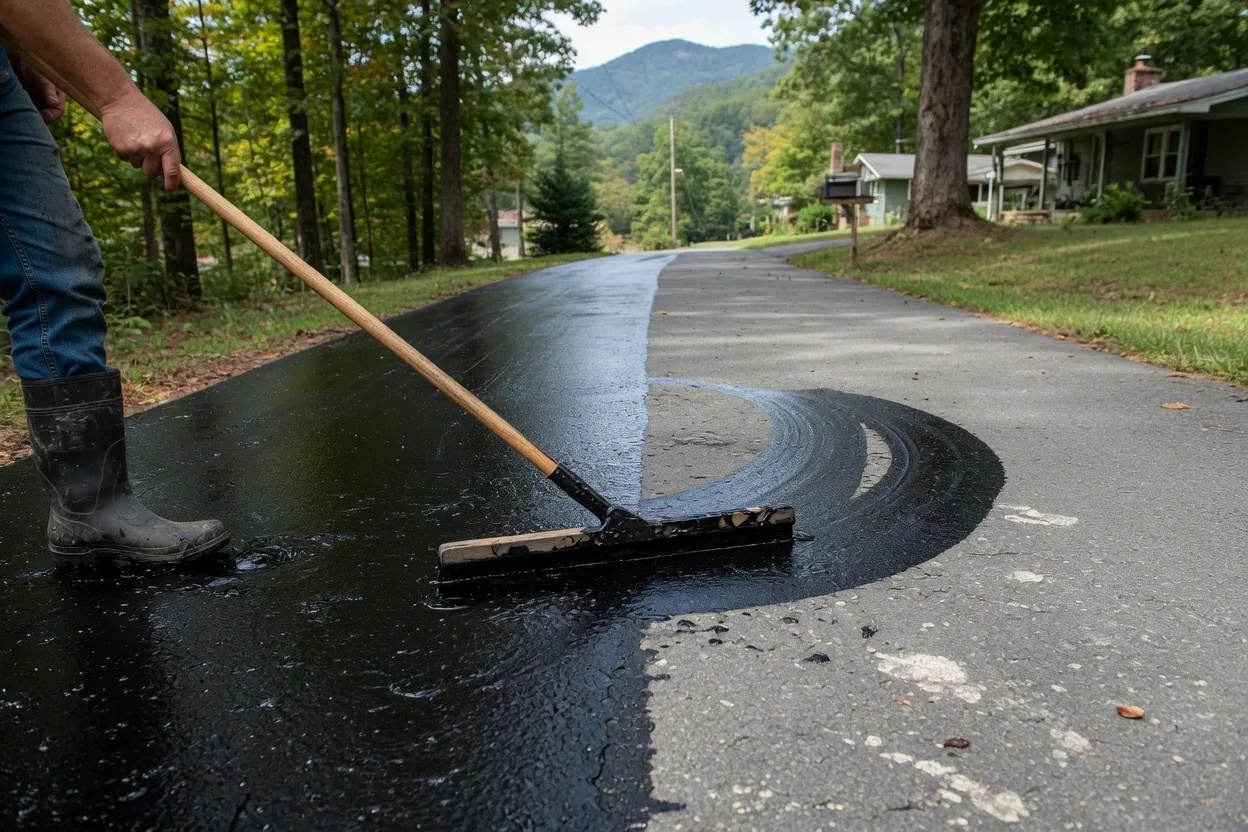
Illustration: sealcoat going down by squeegee, the treated half glossy black beside the faded half. Built by Mountain Asphalt Paving.
Illustration: sealcoat going down by squeegee, the treated half glossy black beside the faded half.
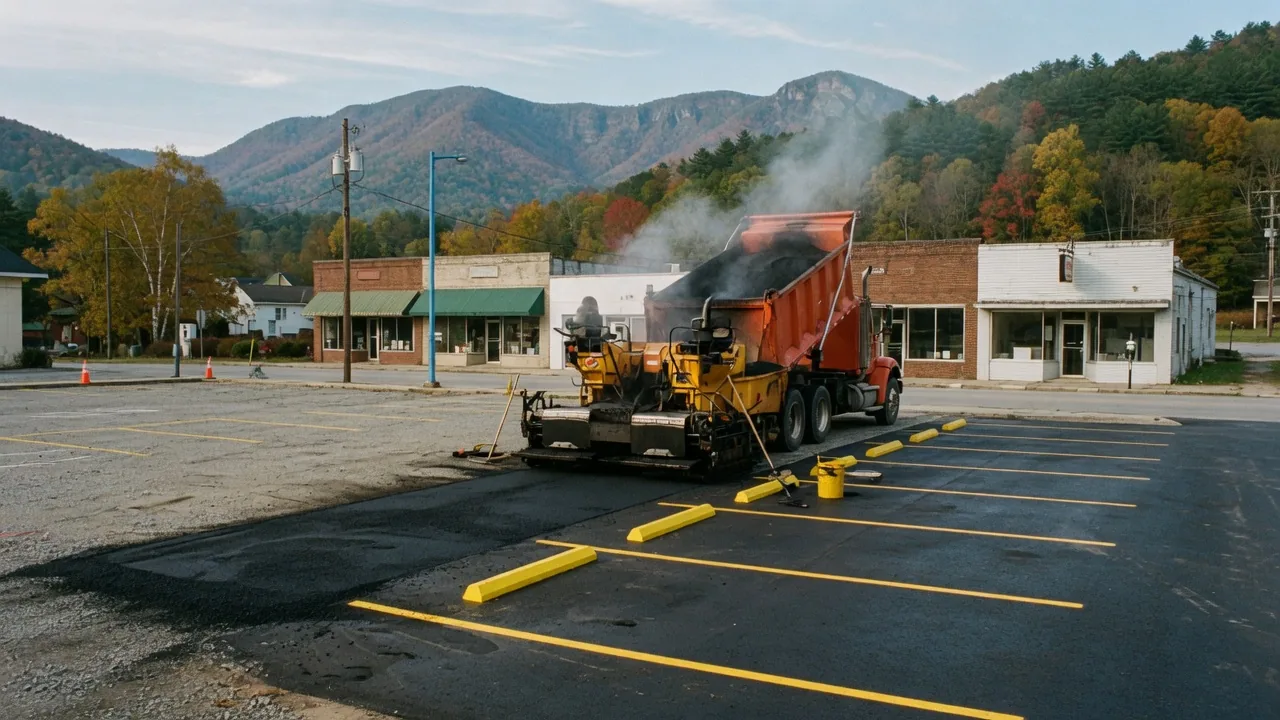
Illustration: a small parking lot being paved, with fresh striping on the finished half. Built by Mountain Asphalt Paving.
Illustration: a small parking lot being paved, with fresh striping on the finished half.
Get a quote

Tell us about your project. We price it straight.

Where it is and what you need — that's all it takes to start. You get a clear scope and an honest number, and your info never gets sold to a list.

Get a free estimate

Free, no obligation. A written price after the site visit.