Where the money actually goes on a Candler driveway
The asphalt is rarely the expensive part. On a Candler job, the cost anatomy breaks down into four line items, and three of them have nothing to do with the black stuff: subgrade prep (grading, compaction, and hauling off bad soil), stone base depth (Candler's clay holds water, so a 4-inch base is a wish and a 6-to-8-inch base is a driveway), drainage (culverts, swales, and where the uphill runoff gets pushed), and only then mix and tonnage. A quote that lists asphalt almost exclusively is a quote that is going to get renegotiated once the excavator opens the ground.
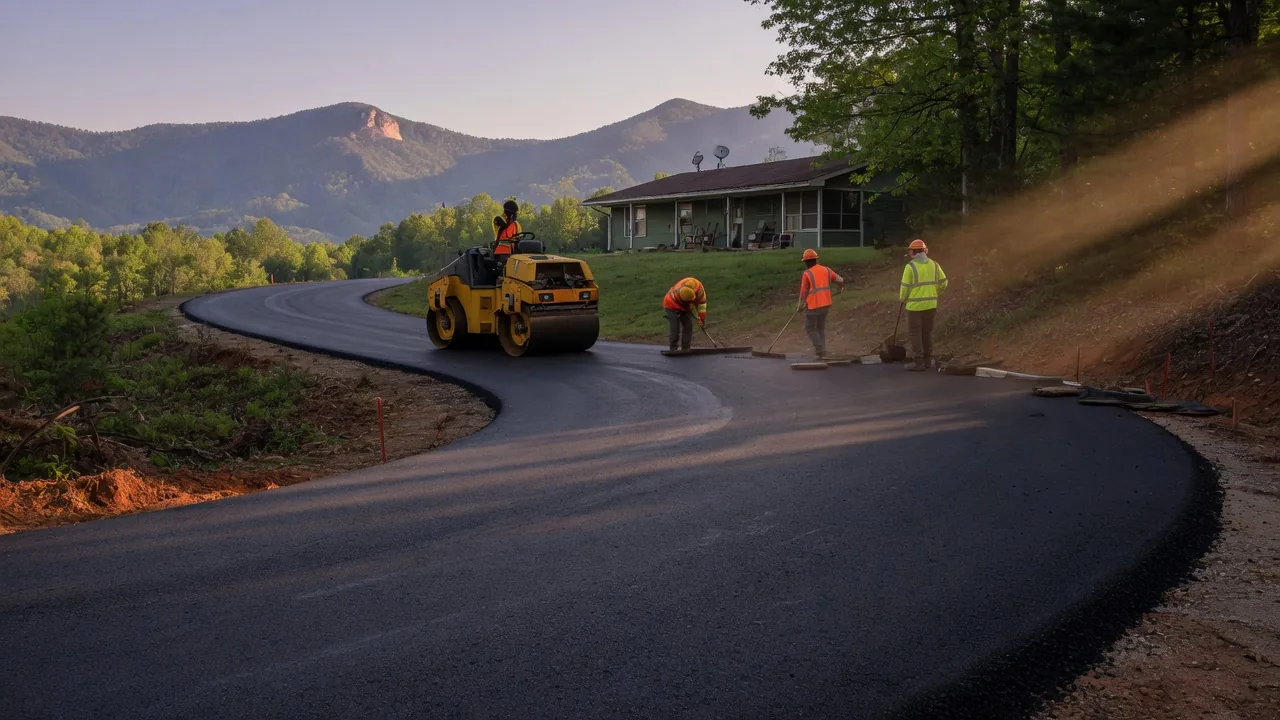
The second cost lever is access. Much of Candler is not subdivision-flat. Driveways off the ridge roads climb, curve, and drain toward the house instead of away from it. A paver who has to bring in a smaller machine, hand-shape edges, or build a turn-out for the truck is doing work that a flat-lot price never included.
Walk a driveway near the Hominy Valley side of town in February and you can read the whole story backwards. Where the base was built right, the surface is still tight at the edges. Where it was not, the failure is almost always at the point where the drive turns downslope toward the house — the water stacks up there, the clay underneath stays saturated for weeks, and the asphalt starts to shear. That is not an asphalt problem. That is a drainage problem that got paved over.
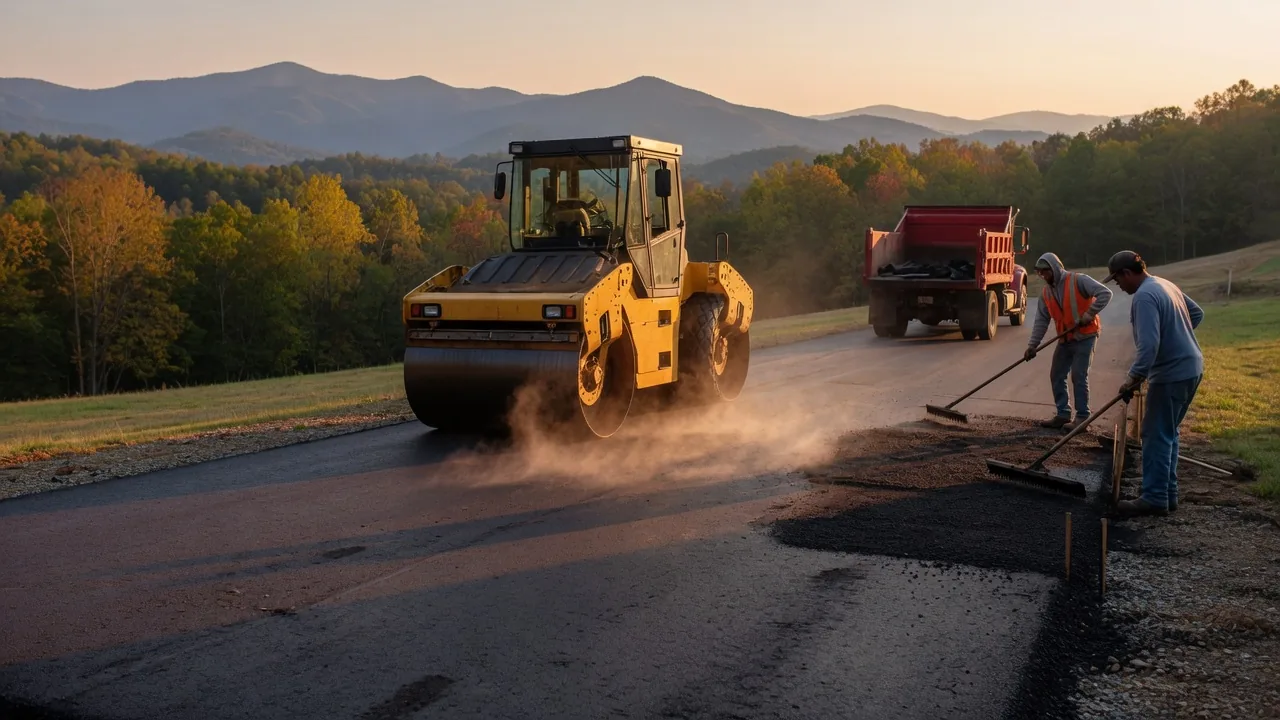
Haul distance is a smaller but real line item in this part of Buncombe County. The plant is not on the property, hot-mix trucks run on a clock, and a long rural run toward Candler's western edge means more truck time per ton. It shows up as a modest bump in the mix line, never as a separate charge, but it is part of why two driveways of identical square footage can come in a thousand dollars apart.
The last lever is what the driveway has to carry. A single-car gravel upgrade and a drive that a loaded work truck or an RV backs over twice a week are not the same build, even if they look the same from the road. Say what the driveway does before the paver prices it, because rebuilds cost more than first builds every time.
Scope vs. price range in Buncombe County
Ranges below reflect typical residential and light-commercial work in the Candler and greater Buncombe County market. Treat them as planning bands, not quotes — the Buncombe County asphalt cost breakdown carries the fuller line-item detail.
| Scope of work | Typical range |
|---|---|
| Overlay over sound existing asphalt (1.5" compacted) | $2,100–$4,200 |
| New driveway, standard length, full build | $3,200–$8,900 |
| New driveway, long rural run (300 ft+) | $9,000–$18,000 |
| Culvert install / drainage correction | $900–$3,500 |
| Full tear-out and rebuild with engineered base | $6,500–$14,000 |
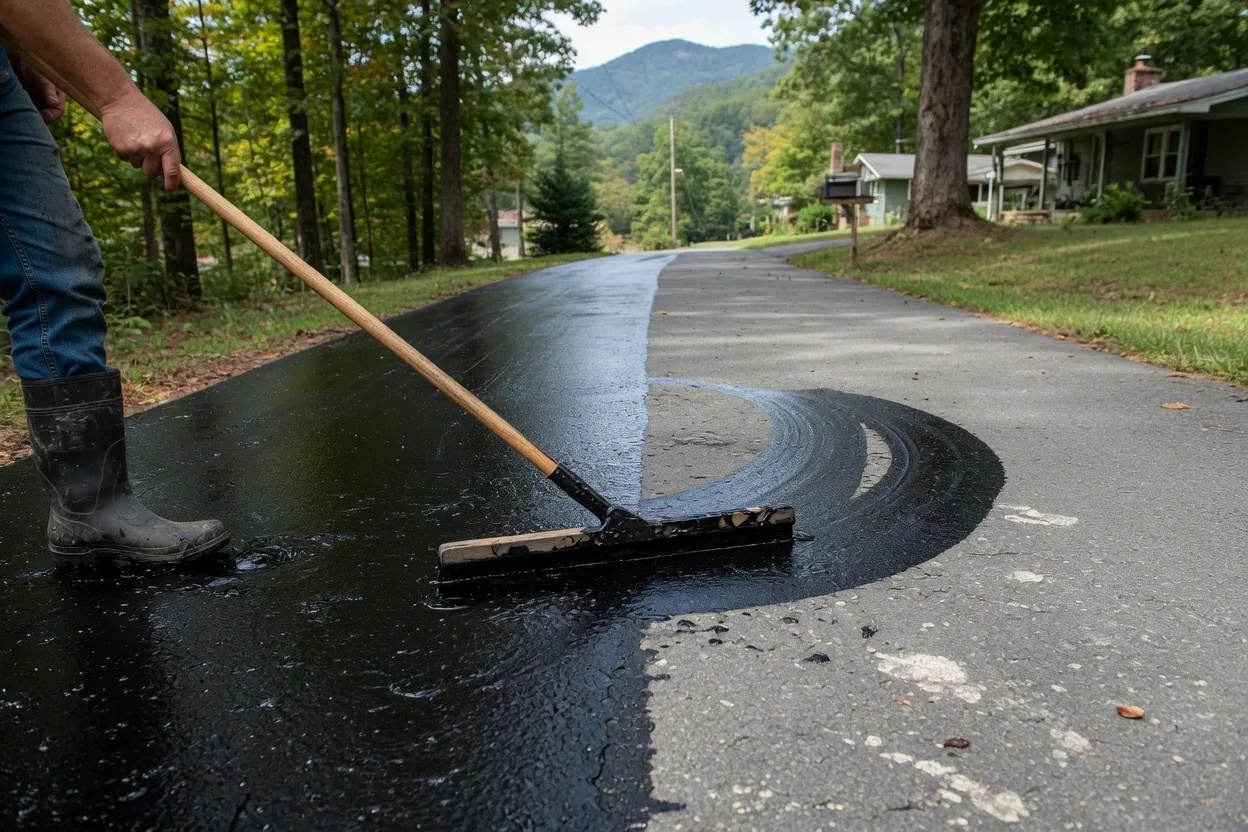
| Crack fill and sealcoat (maintenance) | $350–$1,400 |
If your driveway is in the 300-foot rural category, the price per square foot is almost always lower than a short city drive — but the total is higher. That is the single most misunderstood thing about driveway pricing in this county.
There is a third category the table cannot show: the gravel drive that has never been paved and has a decade of potholes, ruts, and clay pumped up through the stone. Converting that drive to asphalt is not the same job as paving new construction, because the marginal stone is already contaminated and part of it usually has to come out. When a Candler homeowner sends a photo of a drive that turns to soup every March, the honest answer is often that the driveway is being rebuilt, not upgraded. The asphalt driveway guide walks through how to tell those two situations apart before you commit.
Permits, right-of-way, and the rules that trip people up
Any driveway that meets a state-maintained road needs a driveway permit from NCDOT before work starts, and the application process runs through NCDOT Connect. This catches rural Candler property owners regularly: you can own the land, but the apron where your drive meets the highway is a right-of-way, and the state controls the culvert size, the sight-distance requirements, and the slope of that apron.
That apron slope rule is the one that surprises people on the steeper Candler roads. A driveway that drops away from the highway too sharply, or that crests in a way that hides an oncoming car, can be flagged even when the rest of the build is fine. It is why the culvert and the apron get designed early here, not treated as an afterthought once the base is already in.
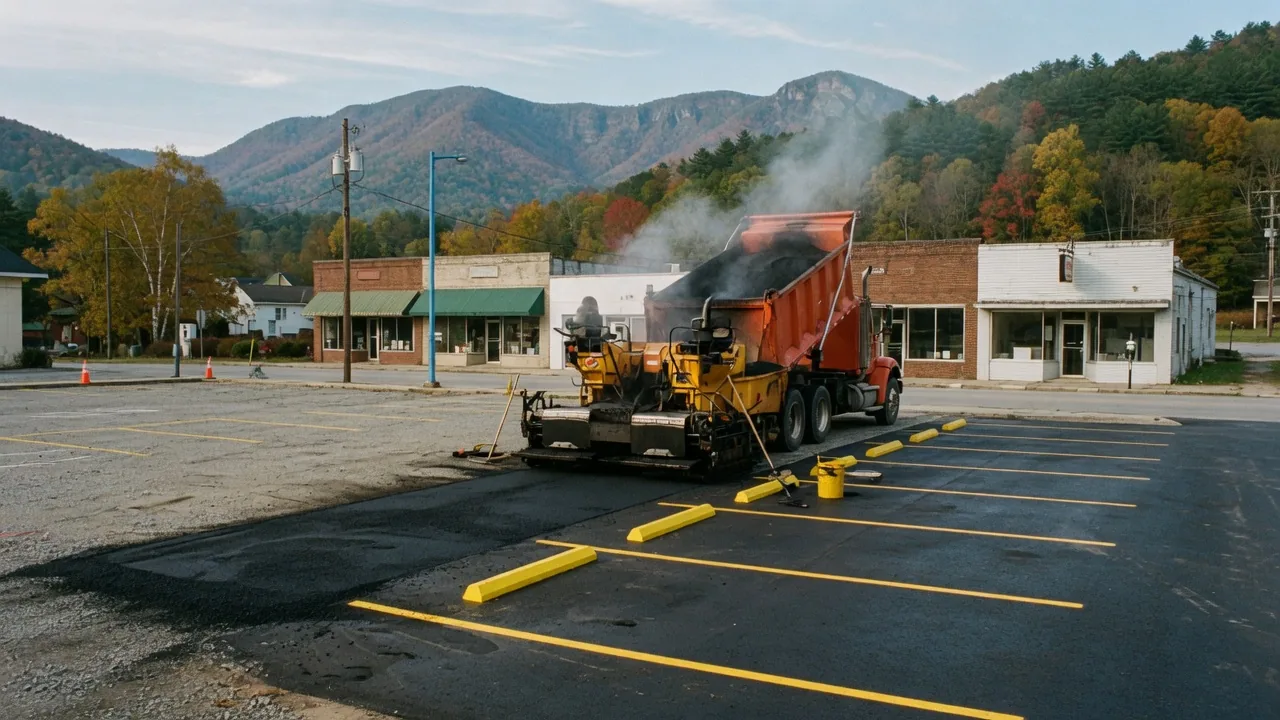
Where the driveway is a commercial or multi-family access, or where the grading crosses certain thresholds, the general contractor licensing rules kick in. The NC Licensing Board for General Contractors publishes the current dollar thresholds; anything above them requires a licensed GC, not just a paving crew. Before you sign, confirm which side of that line your job sits on. When the work is straight residential paving, most Candler homeowners are dealing with licensed paving contractors rather than GCs — but the threshold question is worth asking out loud.
If your project touches anything beyond the drive itself — grading that affects a septic field, work near a stream buffer, or a commercial lot — the scope can pick up county and state oversight that a simple residential repave never sees. The safest habit is to describe the full job to whoever bids it and let them tell you what permits it pulls. A contractor who shrugs off the permit question is telling you something useful.
Why Candler driveways fail earlier than they should
Candler sits in a wet, clay-heavy pocket of Buncombe County, and the federal record backs up how often water gets involved: 19 declared events touch this county across 1973-2026, overwhelmingly flood and storm family. That history matters to a driveway because asphalt is not waterproof and it is not structural. Water that cannot get off the surface finds the base, and once the base is saturated, freeze-thaw cycles turn a hairline crack into a pothole in a single winter.
The failure pattern is consistent: bad drainage first, base failure second, surface failure third. Homeowners call about the third one. The honest conversation is about the first two. Practical steps that pay for themselves — clean the culvert before fall, keep gutter discharge away from the drive edge, and seal cracks before they widen. EPA stormwater guidance at epa.gov is written for municipalities but the principle is the same at residential scale: slow the water, spread the water, keep it out of the structure.
Two local wrinkles make the pattern worse. First, tree cover: much of Candler is shaded, which slows spring drying on the base and keeps north-facing drives damp longer. Second, the freeze-thaw cycle in the mountains is genuinely harsher than the Piedmont, because the swings are bigger and more frequent across a single winter. A driveway that would last fifteen years on flat, sunny ground can fail in half that time here if the drainage was not solved at build time.
None of this is a reason to avoid asphalt. It is a reason to spend the money on the parts you can never see again once the surface is down.
Getting a real number instead of a phone estimate
A phone estimate for asphalt paving is a guess dressed as a price. The paver needs eyes on the subgrade, the drainage, and the access before the number means anything. A proper first visit includes probing the existing base, checking where water currently goes, measuring the actual square footage, and asking what the driveway is going to carry.
Get two or three bids, and check that they are bidding the same scope. The most common reason a Candler homeowner gets wildly different numbers is not that one paver is ripping them off — it is that one bid includes base correction, drainage, and compaction and the other is quoting an overlay over whatever is already there. Same driveway, two different jobs. If your job needs a crew with slope-lot and rural-run experience, our Candler paving contractor page covers how to screen for that.
One more thing worth doing before anyone shows up: write down what you have noticed. Where the water pools after a hard rain. Which cracks have grown since last year. Whether the drive has ever been sealcoated. That short list turns a vague estimate into a real conversation, and it is the difference between a quote that holds and a quote that grows the day the excavator opens the ground.