Where the water actually goes on a Swannanoa driveway
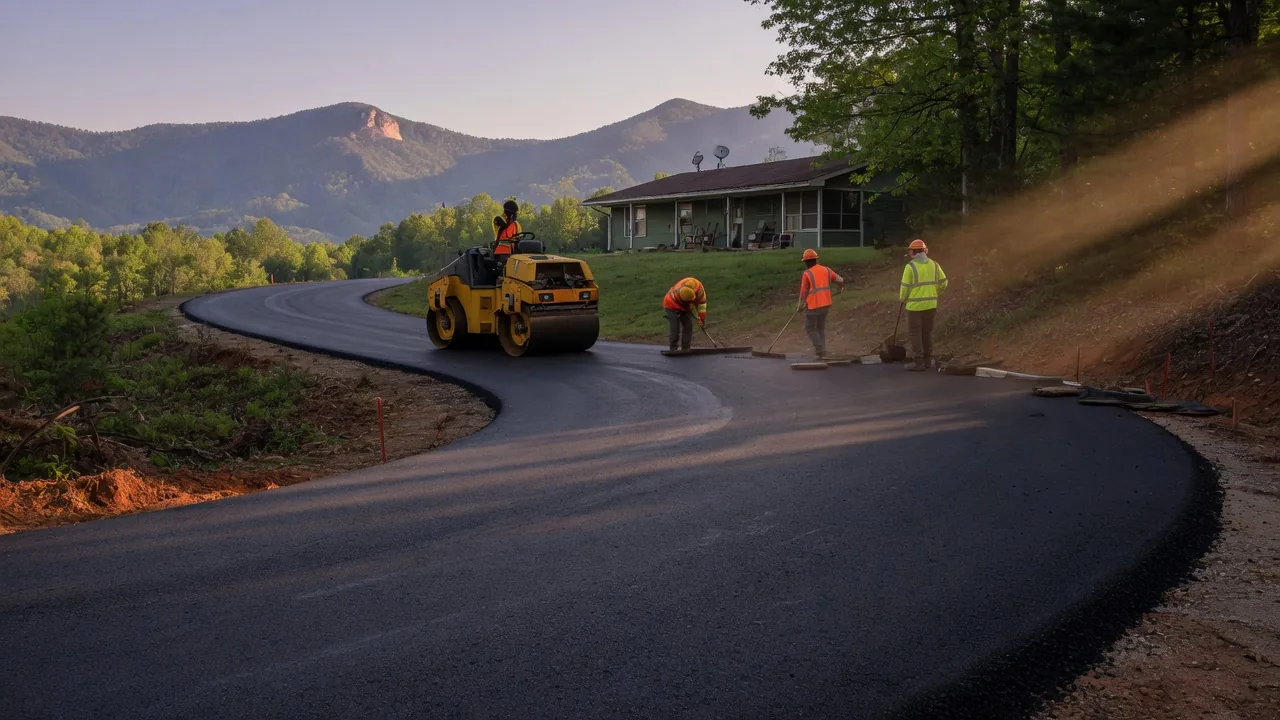
Most Swannanoa driveways fail at the edges, not the middle. The Valley sits between the Swannanoa River and the Blue Ridge wall, which means a lot of driveways climb from the road to the house on a grade, and the water that sheds off them has to go somewhere specific. On a crowned drive, rain splits and runs to both shoulders. On a flat-crowned or dished drive, it pools mid-panel, and that's where you see the first alligator cracking each spring.
The tell worth acting on: look at where the grit and leaf litter collect after a hard rain. That's your low spot, and it's the spot sealcoating will fail first if the water isn't redirected. A proper seal job on a graded drive includes a fresh edge line and enough slope correction at the apron to send runoff into the ditch instead of under the blacktop. Coastal plain contractors sell flat-lot sealcoating; here the grade is the whole conversation.
Here's the detail that separates a Swannanoa driveway from one in, say, Wilson or Greenville: the ditch. On a valley lot, the roadside ditch is not decorative. It carries storm flow off the mountain and along the road, and if your drive apron dumps water into the ditch on the high side, it will erode the shoulder and eventually cut back under the asphalt. A crew that knows this place will check the ditch grade before quoting, and if the ditch is already silted in, that's a line item you'll see on an honest bid.
Second tell: the apron. Where the drive meets the road, the mix of county road maintenance and private asphalt creates a seam that's always the first to crack. On a graded lot the apron takes the full force of water arriving from above and the road's own runoff, which is why edge rebuild at the apron shows up so often in valley bids. If a quote skips it, ask why.
Why the valley keeps calling sealcoaters back
Federal disaster records explain a chunk of the sealcoating and driveway repair work in this county: 19 declared events touch Buncombe (1973-2026), and the Swannanoa valley is where a lot of that water ends up. Every one of those events pushed storm runoff across driveways that were built for a drier assumption, and every one of them left behind small surface failures that turn into bigger ones if the asphalt isn't sealed and drained.
The National Weather Service's mountain forecasts are worth watching for exactly this reason. A driveway that handles a normal summer thunderstorm can still get ripped at the edge by a single slow-moving system parked against the ridge.
It's also a terrain story. Swannanoa sits in a bowl, and the ridges on both sides funnel water toward the valley floor. Driveways cut into the slope on the Black Mountain side often have a cut bank above them and a fill slope below, and the fill slope is where settling shows up first. If your drive has a soft spot near the bottom third, that's usually fill that wasn't compacted to spec or a culvert that's no longer moving water. Sealing over that without addressing drainage is money spent on cosmetics.
One more piece of context: a fair number of these drives were built or repaired after a storm event, sometimes fast, sometimes by crews who don't normally work mountain grade. That history is why we recommend asking how old the asphalt is and whether it was placed on a properly prepped base. If the answer is vague, the bid should price in more crack fill, because you'll be paying for the base problem one way or another.
What sealcoating actually covers, in dollars
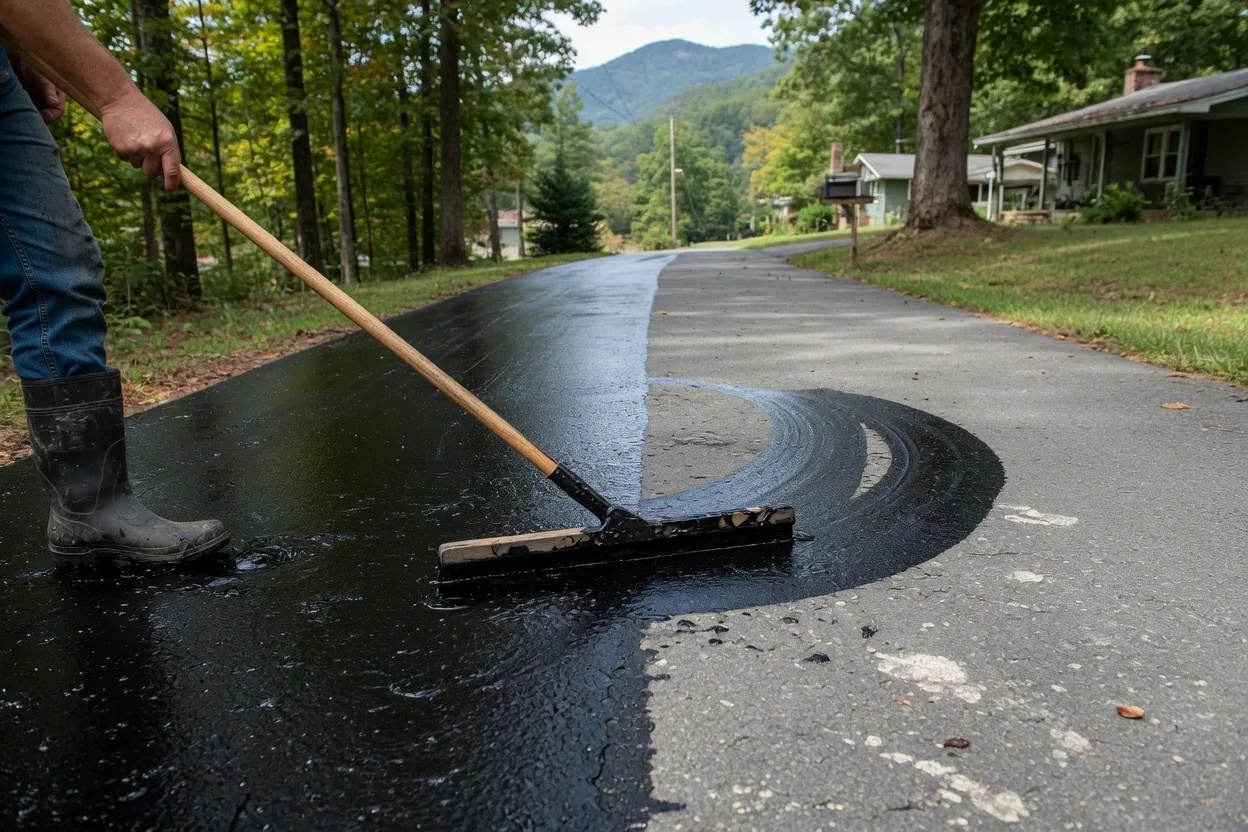
Sealcoating is not a paint job and it isn't a repair. It's a coal-tar or asphalt-emulsion coating that buys time against oxidation and UV. Crack filling is a separate line, and on a Swannanoa drive with grade, you usually want both priced separately so you can see what you're paying for. The table below reflects working ranges for the county, not a flat rate. For the full drive-replacement picture if sealing isn't the right answer, the Buncombe County asphalt cost breakdown is the working reference.
| Scope | Typical range | Notes |
|---|---|---|
| Seal only, standard 2-car drive (600-900 sq ft) | $150-$450 | Single coat, edge-to-edge; price moves with access |
| Seal + crack fill (cold-pour or hot-pour) | $250-$700 | Cracks must be dry and clean; hot-pour lasts longer |
| Seal + crack fill + edge rebuild at apron | $500-$1,200 | Where grade work lives; almost always needed on valley lots |
| Full driveway replacement (not sealing) | $3,500-$9,000+ | Priced by square foot, base prep, and slope |
| Per-square-foot seal rate, general | $0.14-$0.28 | Higher end for steep, cracked, or tight-access drives |
Treat any bid without a separate crack-fill and edge line as incomplete, not cheap. That's the pattern that costs the most in year three.
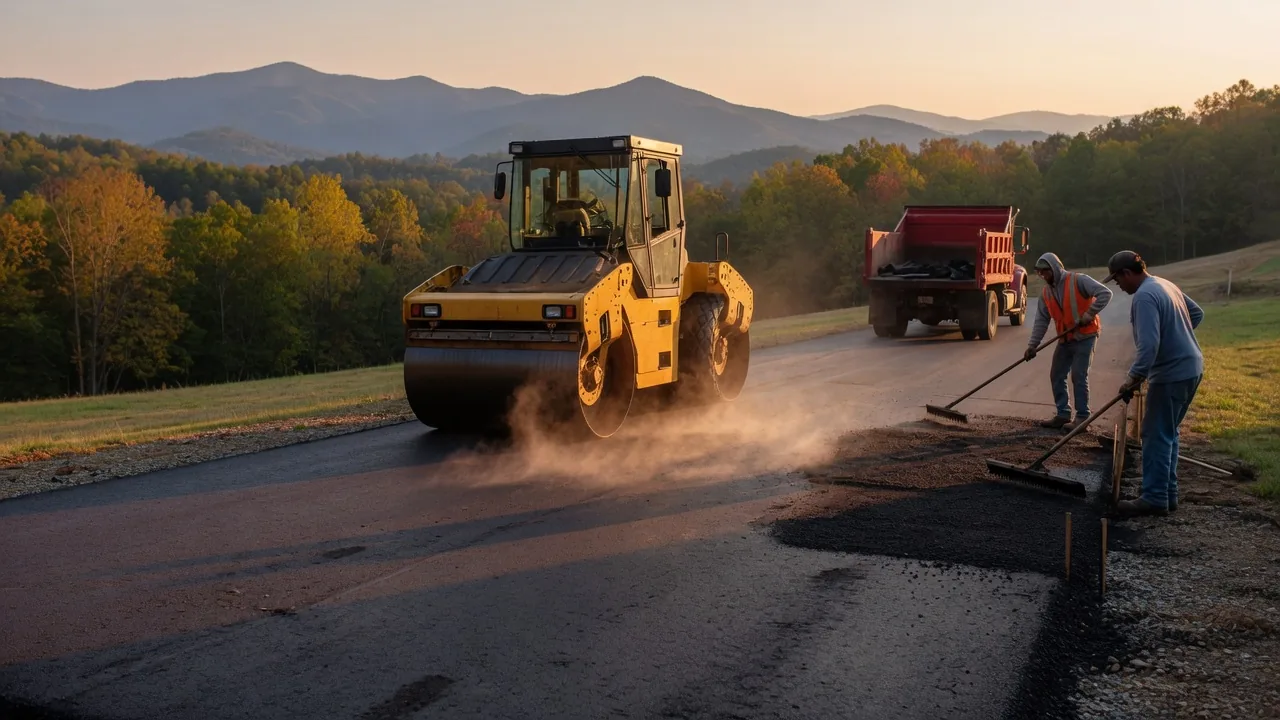
A few cost movers specific to this area. Access: a drive that climbs between two mature oaks with a low branch canopy is harder to work than an open drive, and a trailer-mounted rig may not reach the top. Length: valley lots are often long because the buildable pad sits back from the road, and that puts square footage on the bill even when the drive is narrow. Culvert: if the apron crosses a culvert and the headwall is failing, that's a concrete or riprap fix that no sealant will solve, and an honest bid separates it out.
What you shouldn't pay for: a second coat billed as standard on a first-time seal, or "premium" sealant that isn't specified by type. Ask which product, and ask whether the bid covers cleaning the surface before application. Blowing or sweeping off grit and leaf litter is not optional here. If it's not in the scope, the sealant is going over debris and peeling starts early.
The rules that matter once the job gets real
Two authority checks worth doing before you sign. First, if the work crosses into driveway construction, widening, or anything touching the road apron, the North Carolina Department of Transportation controls the right-of-way, and driveway permits go through NCDOT Connect. Sealing alone doesn't trigger a permit, but a resealed drive on a rebuilt apron usually does. Second, for anything beyond straight sealing, the NC Licensing Board for General Contractors sets the threshold at which a contractor has to be licensed in this state; ask for the number before the truck shows up.
One more: if a contractor proposes coating over wet asphalt to hit a scheduled date, walk away. Between October and March the valley holds moisture longer than the coast, and a sealant applied over damp blacktop peels within a season. The EPA's guidance on stormwater and runoff is also worth a glance if your drive drains toward a creek or the river corridor.
There's also a paperwork side that catches people off guard. If your project involves regrading the drive or adding fill, the county may classify it as development activity, which can trigger stormwater or erosion-control expectations depending on how close you are to a stream or the river corridor. That's not a reason to skip the work. It's a reason to ask your contractor whether they've pulled the right approvals before they start moving dirt. A crew that seals driveways for a living shouldn't be guessing on this, and a licensed general contractor will know which jobs stay under the private-driveway line and which ones don't.
Finally, insurance. Ask for a certificate of insurance before work begins. A sealcoating rig on a steep drive is a real liability exposure, and if a crew doesn't carry coverage, the risk transfers to you. This isn't a local rule, it's basic contract hygiene, but in a market where word-of-mouth hiring is common, it's the step people skip.
Reading a Swannanoa sealcoating bid
Four things separate a real bid from a lowball. First, is the scope quoted per square foot or as a flat number? Flat numbers hide the square footage; ask for both. Second, is crack fill line-itemed? It should be. Third, does the bid mention the ditch or the drainage path at the bottom of the drive? On graded lots, that line is the tell. Fourth, is the crew scheduling around a dry window, or just picking a date?
When you're narrowing the list, the paving contractors working Swannanoa page is a reasonable starting point, and the sealcoating overview covers what a first visit should include. Any crew worth hiring will walk the drive with you and point at the low spots before they quote. If they don't, they're not pricing your driveway, they're pricing a template.
Watch the walkthrough itself for signals. Does the estimator get out of the truck and walk the grade, or do they eyeball it from the street? Do they look at the ditch, the culvert, the apron seam? On a graded valley lot, the estimator who spends ten minutes on foot is the one who understands that this drive sheds water differently than the flat lots in Arden or Fletcher. That ten minutes is free information about who you're hiring.
Also ask what happens if it rains the day after the seal goes down. A good crew will tell you the cure window in hours, not "it'll be fine." Then they'll tell you what they do if the forecast shifts mid-job: reschedule, or protect the fresh coat. That answer tells you whether the schedule is built around the material or around the crew's convenience.
Finally, get the start date in writing and the payment terms. Most local outfits want a deposit and the balance on completion. Be cautious of anything asking for the full amount upfront, and be cautious of a bid that's dramatically below the others without a reason you can verify. In a valley where driveways are steep and water is relentless, cheap usually means something was left out, and you'll find out what it was next spring.