Where rain actually goes on a Weaverville driveway
Weaverville drains in a hurry. Reems Creek and Flat Creek both slice through the valley, and most residential lots are either on the valley floor or stacked on the hillside above it. A driveway here is a small piece of water engineering: the crown sheds to both edges, the edges feed a defined ditch or shoulder, and the ditch has to have somewhere legal to dump that is not your neighbor's foundation and not the creek buffer.
Walk any older Weaverville driveway after a heavy afternoon storm and you will see the failure mode before you see the crack. Water sheeting down the center instead of off the crown. Edges that have dropped a couple of inches where the soil washed out from the apron. A gravel shoulder that used to pass water and now ponds it against the asphalt. Paving over that is a one-winter decision. Fixing the grade first is what makes a driveway last past the next spring melt.
The reason this matters more here than in a flat Piedmont town is the combination of slope and soil. Much of the hillside above Reems Creek is weathered clay and rock, which sheds water almost as fast as it falls. On a lot that climbs away from the road, the driveway is often the only graded surface, so it becomes the de facto drainage channel for everything uphill of it. That is why a Weaverville driveway that was paved without a crown and a ditch can look fine in July and be a rutted mess by March.
What the terrain here does to a paving estimate
The flatter valley lots near the elementary school side of town quote close to the county baseline — see the working numbers on the Buncombe County driveway cost page. The hillside above Reems Creek is a different job. Culverts, cross-drainage, and in some cases a retaining edge to keep the base from migrating are real line items, and the slope governs how much of them you need. A driveway on a 15 percent grade is not the same product as a driveway on a 3 percent grade, even if both are 200 feet long.
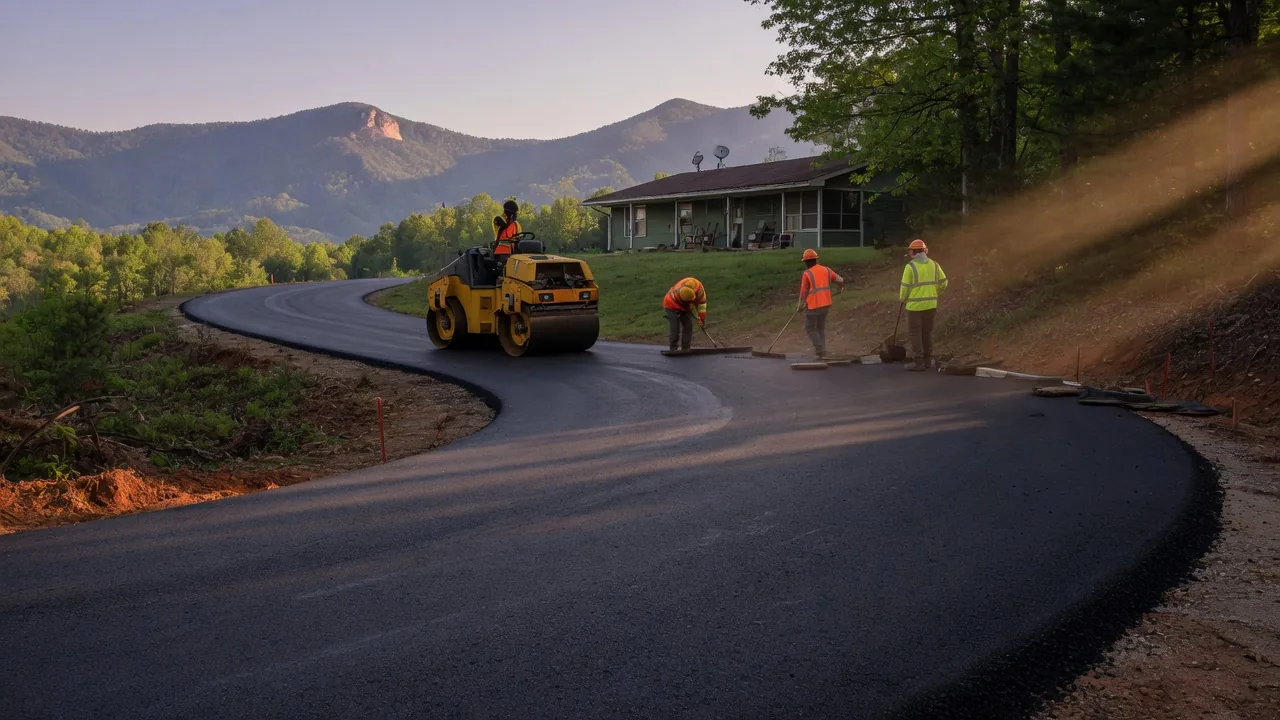
Terrain also changes the equipment and the day count. A long, steep run off a ridge road may need a track machine to cut the ditch and shape the crown because a standard paver cannot hold grade on that pitch without a base that is already true. On the valley floor, the limitation is usually the water table and how long the subgrade stays wet after rain. Two lots a mile apart in Weaverville can have completely different prep timelines for that reason alone.
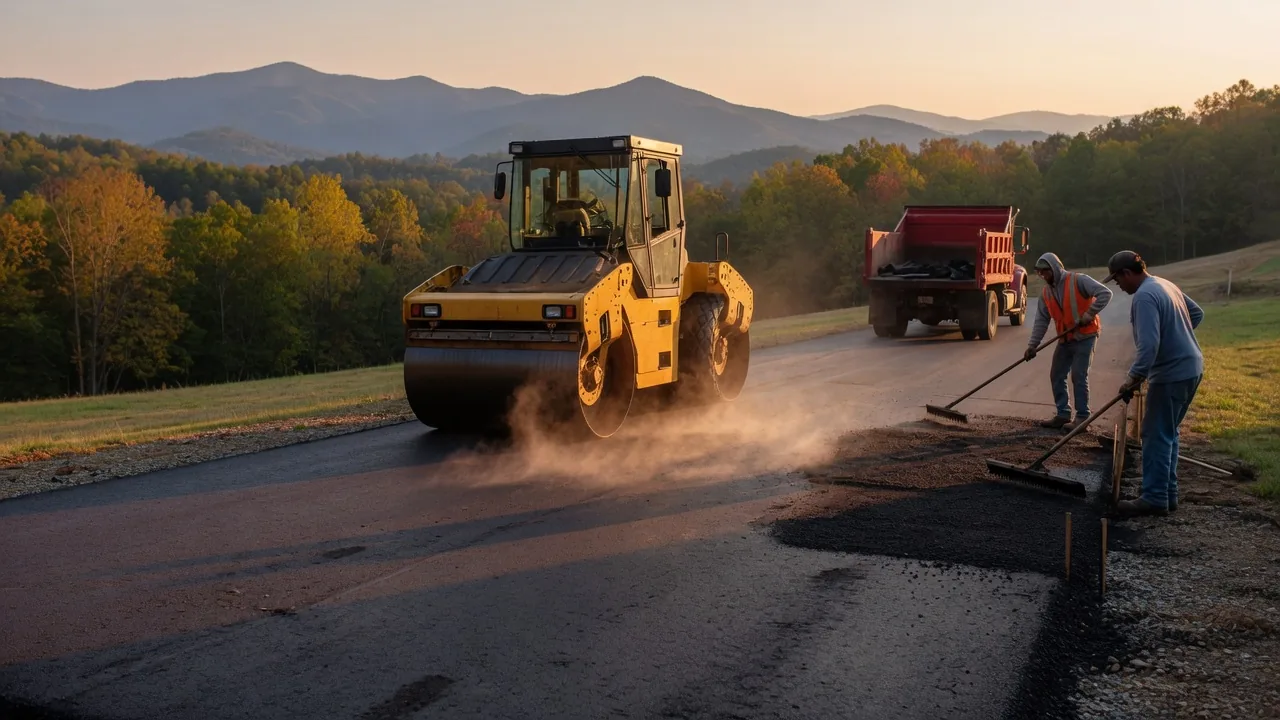
Access is the other quiet cost driver. Some Weaverville properties sit behind a narrow bridge, a shared easement, or a switchback that will not take a full-size dump truck. That does not make the job impossible, but it changes how material gets to the site and how many trips it takes. A quote that ignores access is a quote that changes once the crew sees the driveway in person.
Scope versus price ranges, plainly
Prices below reflect what a legitimately scoped job in the Weaverville area typically runs. Anyone quoting well under the low end on a graded job is either skipping base repair, skipping drainage, or skipping both.
| Scope | Typical range | Notes |
|---|---|---|
| Overlay on sound asphalt (thin lift) | $2,800–$5,500 | Only if base and grade are already correct |
| Standard driveway, remove-and-replace, flat lot | $4,200–$8,500 | Includes base prep and one pass |
| Graded hillside driveway with drainage | $7,500–$11,500 | Culvert, ditch, and edge work included |
| Full rebuild with base correction | $11,000–$18,000+ | Where the existing base has failed |
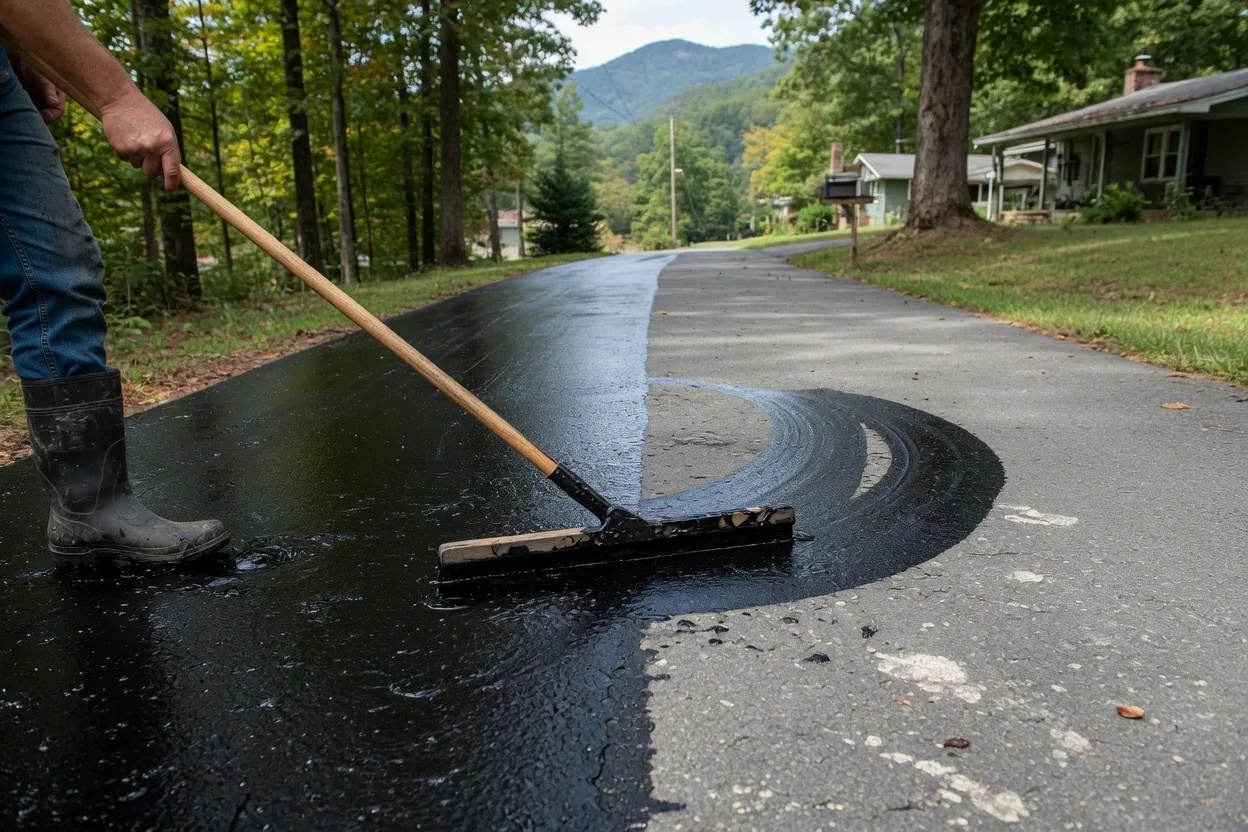
| Patching and crack sealing | $450–$1,800 | Maintenance, not a fix for grade problems |
For a fuller look at what a paving job includes, the asphalt paving overview walks through base, binder, and surface layers and how each one fails. The ranges above assume a normal residential width and a driveway that a crew can reach with standard equipment. Add for unusually long runs, winter work, or a base that has to be excavated deeper than expected.
It helps to think in terms of what you are actually buying. You are not buying a black surface. You are buying a shaped base, a compacted stone layer, and an asphalt mat thick enough to bridge small settlement without cracking. When a Weaverville quote is low, the missing money is usually in the base and the drainage, which is exactly the part you cannot see once the asphalt is down.
Water history, creek buffers, and why both matter here
Buncombe County has a serious storm and flood record — 19 declared federal events over 1973-2026 — and Weaverville sits in one of the wetter pockets of it. Every one of those events pushed water at driveways, aprons, and culverts that were sized for a drier assumption. If your driveway has failed or washed out more than once, that history is the diagnosis, not bad luck. The EPA publishes plain-language guidance on stormwater and runoff that is worth a look before you accept a drainage plan that ends at the property line. And if a new driveway or an expanded apron touches the state right-of-way, the NCDOT driveway permit portal is where that approval lives — the contractor should know this without being told.
Creek buffers matter here in a way they do not in drier counties. Lots close to Reems Creek or Flat Creek may have restrictions on how close you can grade, clear, or place fill. A driveway design that pushes stormwater straight at the riparian edge is asking for a problem, both with the water and with the rules. The honest fix is to keep the runoff on your own lot long enough for it to soak in or to be dispersed across a vegetated area, rather than concentrating it into a pipe that dumps at the creek.
This is also why a contractor who only paves and does not grade is a poor fit for many Weaverville jobs. The asphalt is the visible layer, but the real work is deciding where the water goes and building the ground so it goes there on purpose.
Checking a paving contractor without getting fooled
Two Weaverville-specific checks. First, ask them to describe your grade and where the water will exit the lot. If they cannot answer that in plain language on the first walk, they are a paving crew, not a driveway crew. Second, ask about licensing and how they handle any right-of-way or driveway-permit work; the NC Licensing Board for General Contractors sets the thresholds, and a contractor who knows them will answer without hedging. When you are ready to price the job, the Weaverville driveway paving page covers what a good first visit includes.
It also pays to ask what happens to the ground under the asphalt. A good crew will talk about subgrade compaction, stone size, and thickness before they talk about color or finish. A crew that leads with price per square foot and nothing about base is telling you what they plan to skip. On hillside lots, ask specifically how they will hold the edges and whether the ditch will be lined or left as bare soil. Bare soil ditches on a grade tend to cut deeper every storm until they undermine the driveway beside them.
Finally, ask for the sequence. On a graded job the order is usually clear, cut and shape, install drainage, compact base, then pave. If a contractor cannot lay out that order for your lot, the plan is probably being made up as the crew goes, which is how driveways end up ponding at the garage door.