What actually drives the number on a Buncombe County driveway
Two driveways on the same ridge outside Asheville can price $2,000 apart, and it almost never comes down to the surface material itself. Tar and chip — the local trade's name for a chip seal over a prepared stone base — is the material; the cost anatomy lives underneath it. On Buncombe's mountain lots, four line items do the moving: base prep (how deep the existing stone has to be cut and rebuilt), grade (a driveway climbing at 15%+ needs thicker edges and a different binder rate so the oil doesn't migrate before it sets), run length from the county road (long gravel lanes off places like Leicester Highway or Riceville Road add stone, tack, and truck time), and drainage — crowned surfaces, turnout ditches, and culvert crossings that keep uphill runoff from stripping fresh chip off the road every storm.
That last one is not a soft add-on here. Between the steep watersheds feeding the French Broad and the county's long record of federal disaster declarations (19 events spanning 1973-2026), water is the default enemy of any unpaved surface. A tar and chip quote that doesn't account for it is a quote for re-grading next spring.
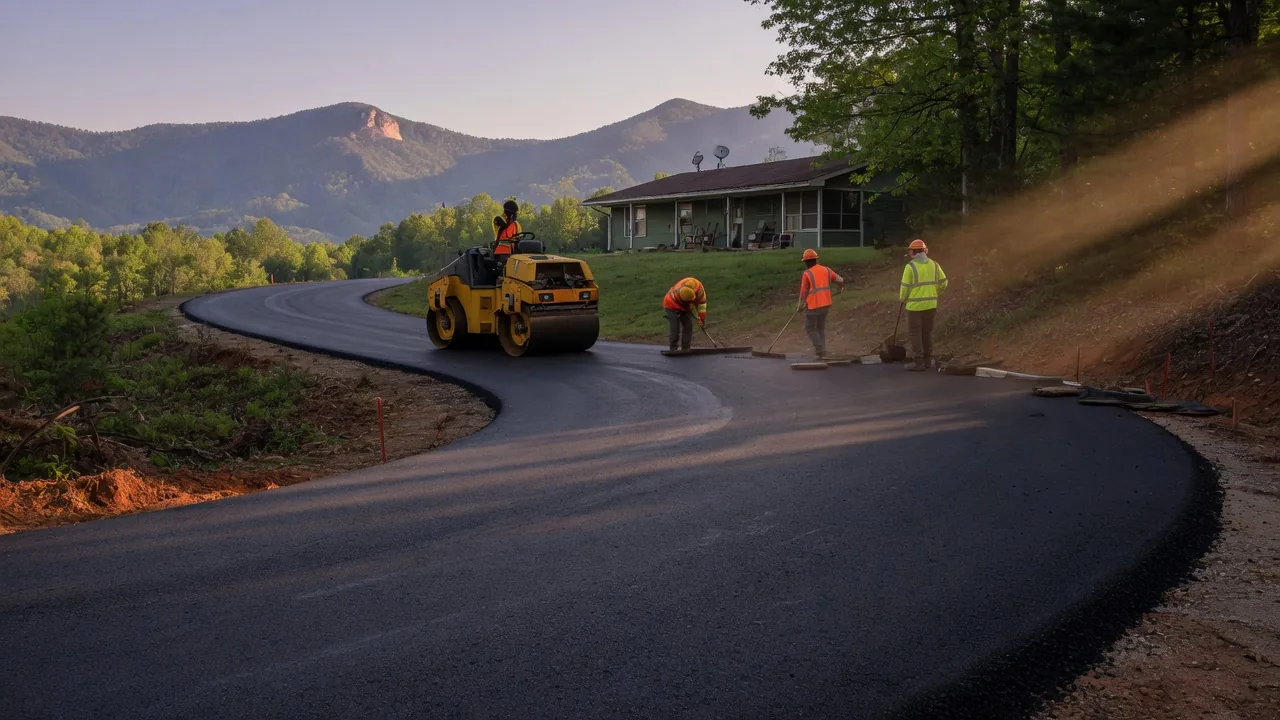
Consider a typical job on a wooded slope off Weaverville or north of the city: the driveway leaves the road on a slight crown, climbs through a cut between two oaks, and levels out at a gravel pad in front of the house. That short description hides at least three cost decisions — how much cut is needed to keep the grade under control, where the turnout ditch has to be cut to catch sheet flow off the bank, and whether the pad is thick enough to park a loaded truck without rutting. A bid that ignores any of those will come back with change orders or a failed surface in year two.
| Scope of work | Typical NC range | What drives it |
|---|---|---|
| New tar and chip over sound gravel base | $3.50 – $6.50 / sq ft | stone condition, chip size, oil binder rate |
| Full resurface (old chip seal recovery) | $2.50 – $4.50 / sq ft | crack fill, base repair, existing surface integrity |
| Add base prep + grading | $1.50 – $4.00 / sq ft | cut depth, haul-off, compaction on slopes |
| Steep-grade or long-lane surcharge | 15% – 40% above base | truck staging, edge thickness, drain tie-in |
| Culvert / turnout drainage work | $800 – $4,000+ | pipe size, rock armoring, permitting |
Those are working ranges for this region, not bids. A crew should walk your grade and probe the base before quoting a firm number.
One more local variable: the driveway apron. Where a private lane meets a county or state road, the transition has to be built to shed water away from the pavement edge. On Buncombe roads that climb and curve, the apron is often where the first failure shows up — a lip that catches plow blades, a dip that ponds in a storm. Fixing it during the chip seal install costs a fraction of fixing it after the fact.
Why mountain driveways cost more than the flatland numbers you see online
National cost guides price tar and chip like the surface lands on flat earth. In Buncombe County it doesn't. The county seat sits in a bowl of the Blue Ridge, and the housing pattern follows: driveways climbing from valley roads to ridgetop homes, working lanes off gravel roads in the Leicester and Weaverville areas, and long private approaches serving properties that never had a flat building pad to begin with. Each of those conditions changes the job.
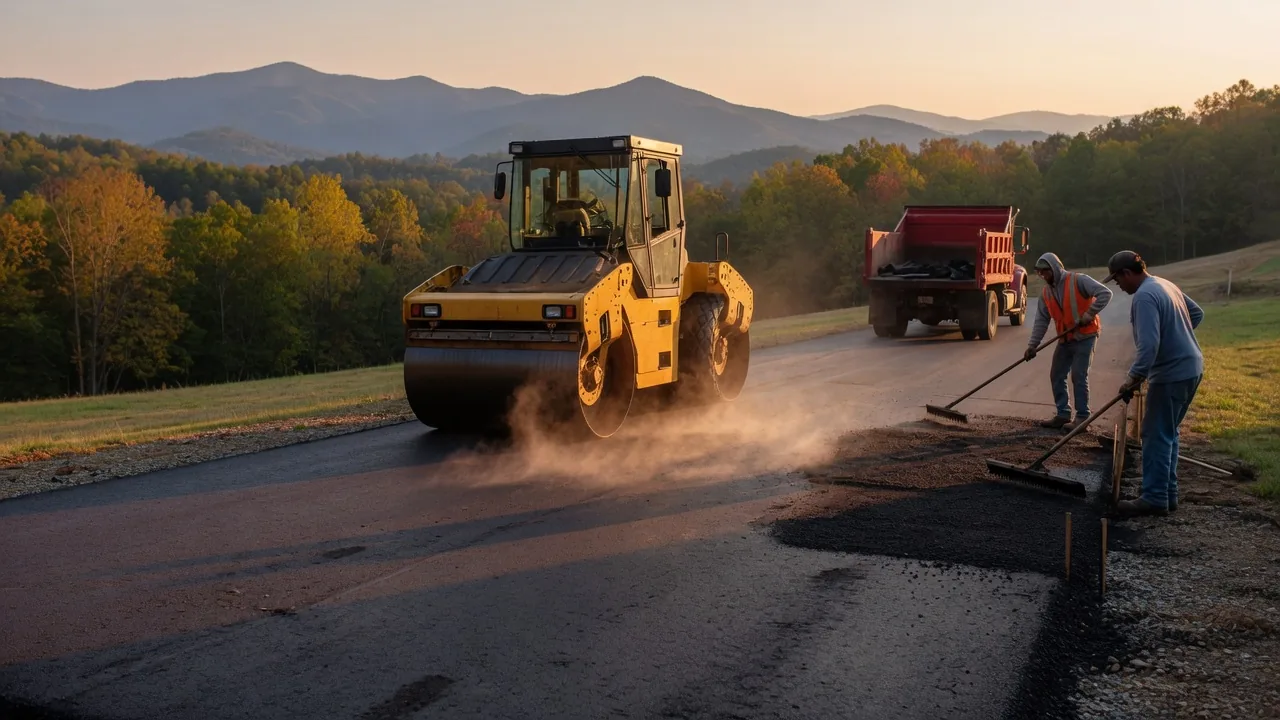
A steep grade means the chip spreader and the rubber-tire roller can't always reach the far end cleanly, so crews stage materials closer, spread in shorter runs, and build up the edges so the surface holds. A long lane means more square footage and more tack oil per trip. Wet, shaded mountain lots mean the base holds moisture longer, and applying chip seal over a saturated base traps water that freezes and heaves the surface through a mountain winter.
There is also the question of access for the equipment itself. A narrow gravel lane that switchbacks up a hillside may not fit a full-size distributor truck, which means the crew has to use a smaller rig and make more passes — slower work, more labor hours, and sometimes a higher material cost because smaller loads are less efficient. On some of the tightest lots above the French Broad, the practical answer is a phased install: chip seal the lower, flatter section first and leave the steep upper run for a season when the base has fully dried.
Weather windows matter here more than in the Piedmont. Buncombe sits at elevation, and the shoulder seasons bring fog, dew, and pop-up showers that can ruin a binder application. Crews working this county learn to watch the forecast hour by hour and to start early on grade work that has to be compacted before the afternoon storms roll in off the ridges. That compressed season is part of why local pricing holds firmer than the national averages you see quoted online.
If your driveway is currently gravel and the question is whether tar and chip is even the right next step, our tar and chip surface guide covers how it compares to a straight regrade, and the gravel driveway cost breakdown shows what the base work alone runs before any seal goes down.
How the cost stacks against asphalt — the honest comparison
Most Buncombe County homeowners comparing surfaces land on the same two options: tar and chip, or a full asphalt driveway. The trade-off isn't just price per square foot, it's what each surface does on a mountain lot over a decade.
Tar and chip typically comes in 30% to 50% below a comparable asphalt driveway on the same base — a real gap when you're surfacing 1,500 feet instead of 150. Asphalt lays smoother and holds a curve better on tight, steep switchbacks, but it cracks when the base moves underneath it, and on clay-and-rock mountain lots the base does move. Tar and chip flexes with minor movement, chips back into bare spots in a weekend, and re-seals cheaply. The trade-off is texture: it's a rougher, chattier surface, harder on bare feet and harder to shovel clean in a snow year.
Where the two tie: asphalt driveway cost in this region runs high enough on long mountain runs that many owners choose chip seal for the drive and keep asphalt for the parking pad near the house. That split approach is common here and usually the smarter money. The parking pad is where vehicles turn and sit, so a smoother, more forgiving surface pays off in tire wear and in the way it sheds water to the edges. The long run stays chip seal, where the flex and the cheap re-seal matter more than a perfect finish.
Maintenance is the other half of the comparison. Asphalt on a mountain grade wants crack filling almost every year and a seal coat every few, and those costs stack. Tar and chip wants a re-seal on a similar rhythm but at a lower price per square foot, and small failures are easier to patch without a visible seam. Over a fifteen-year horizon on a steep Buncombe lane, the maintenance gap often closes more of the upfront difference than owners expect.
Permits, codes, and the contractor threshold in North Carolina
If your project only resurfaces an existing driveway inside the property line, North Carolina generally doesn't require a building permit — it's maintenance, not construction. Two things change that.
First, anything that touches a state-maintained road — a new culvert under the shoulder, a changed driveway apron, a new connection point — needs a driveway access permit from NCDOT (NCDOT driveway and street access permits). Buncombe County has plenty of rural frontage on state roads, and this catches owners who assume their driveway is entirely private.
Second, structural work near a stream or steep slope can trigger local stormwater or erosion rules, and grading that disturbs significant area may require a plan under state sediment rules administered through the NC Department of Environmental Quality (NC DEQ). The NC Department of Insurance / Building Code Council sets the residential code the county enforces, and if a driveway project crosses into structural or retaining-wall work, contractor licensing thresholds under the NC Licensing Board for General Contractors apply. Ask any bidder how they handle the NCDOT apron question, because the answer separates the crews who work county roads weekly from the ones who don't.
It also helps to know what triggers a plan review versus a simple over-the-counter approval. A resurface inside the property line is usually the latter. Anything that changes the footprint of the driveway, adds a new connection to a public road, or moves dirt near a mapped stream is more likely to need a plan and a longer review window. Building that lead time into your schedule keeps the project from stalling mid-install, when the crew is on site and the base is open.
Keeping a tar and chip bid honest
Three habits protect your money on a mountain driveway job:
- Get the base inspected, not just the surface. Ask every bidder how deep they're cutting and what they'll do if they hit soft or saturated stone. The answer is most of the price difference between bids.
- Price the drainage separately. A line item for turnout ditches or a culvert keeps that cost visible instead of buried, and lets you decide whether to phase it.
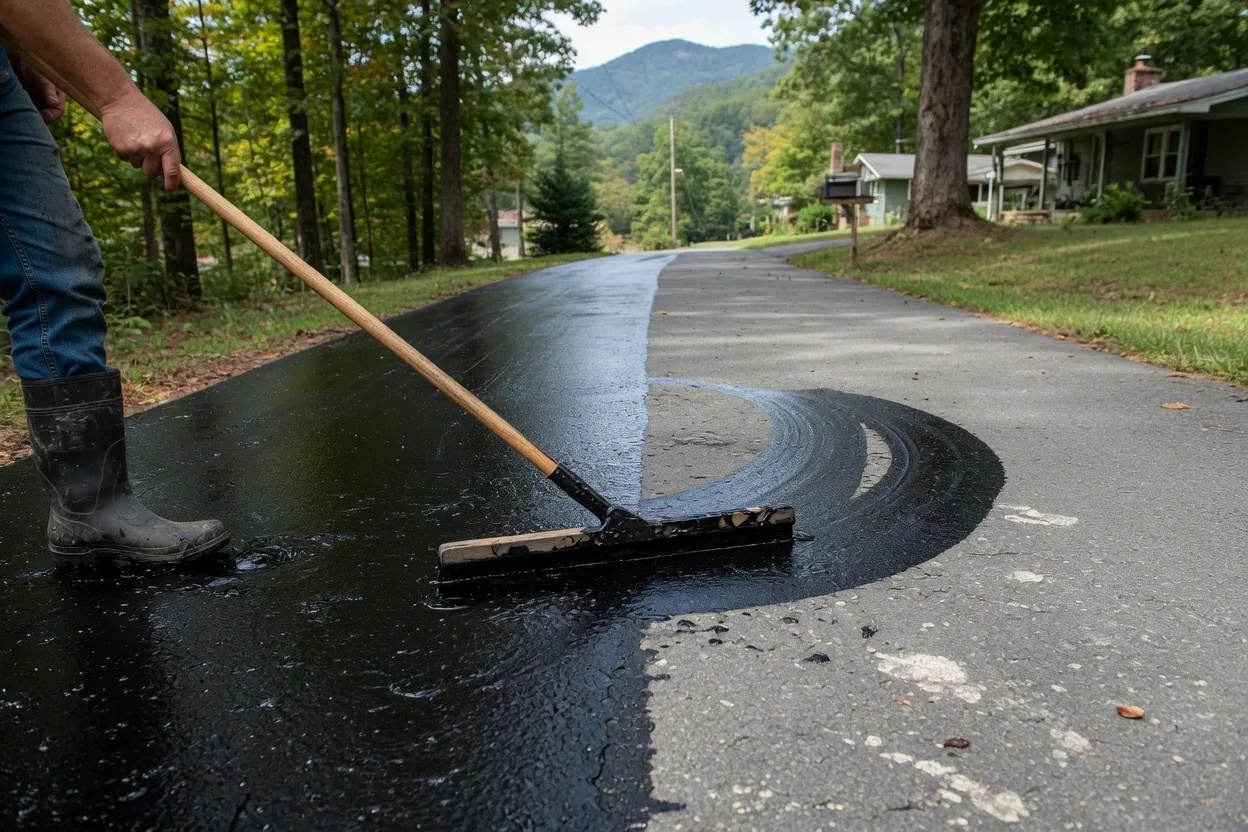
- Know the re-seal window. Tar and chip should be re-sealed every few years to keep the binder alive, and mountain sun on south-facing grades burns it faster. Budget for it from day one.
A fourth habit is worth adding on mountain lots: walk the driveway edge with the bidder and look for soft spots, seeps, and any place the base has already rutted. Those are the places that fail first, and a bid that lists how they will be repaired reads differently from one that doesn't mention them at all. On a long lane off a Weaverville gravel road, the edge is where runoff concentrates and where the surface gives up first; a crew that plans for it is a crew that has done this before.
If you want the region-wide picture before you call anyone, the asphalt cost guide and the gravel prep breakdown both put real numbers behind the base work your chip seal will sit on.