Where the rain goes decides what you pay
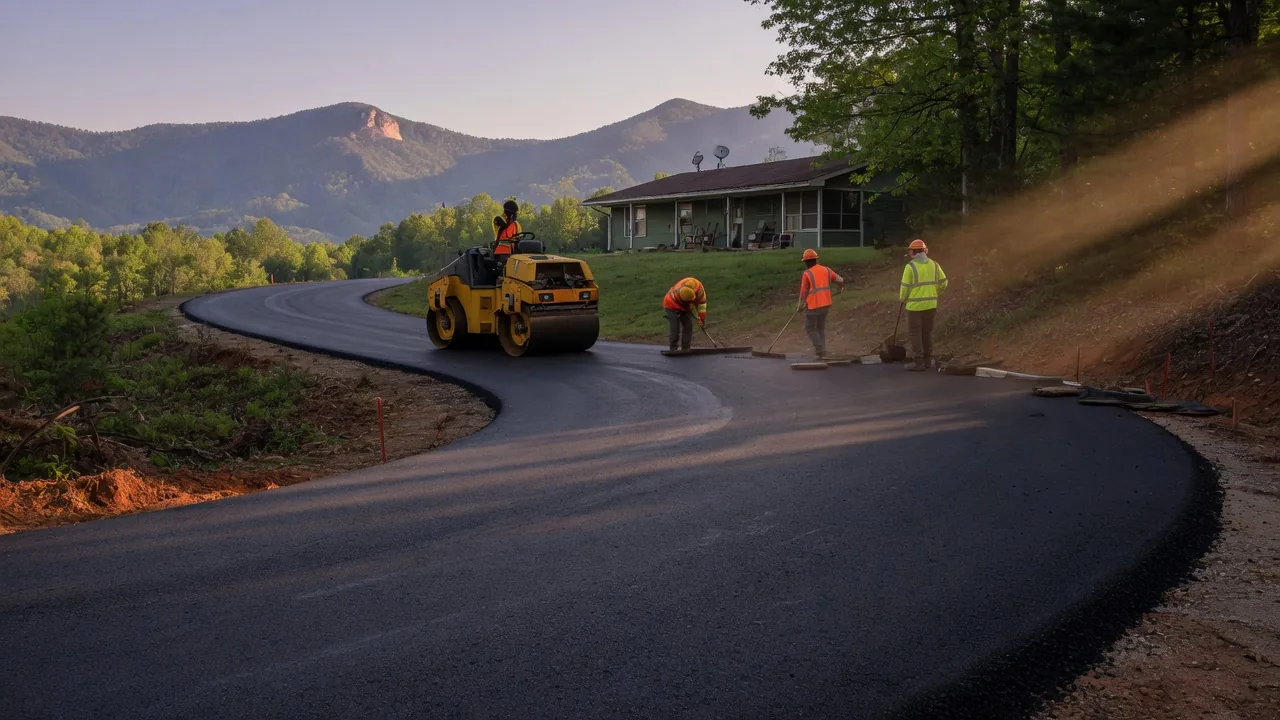
Flat Rock is a plateau village that falls away in every direction. A driveway on the ridge above Highland Lake might drop fifteen feet over its run; a lot near the Green River Road lowlands sits almost dead flat and drains almost nowhere. That difference decides your resurfacing scope before anyone talks about asphalt.
On a sloped drive, the crown has to be rebuilt — not preserved — so sheet flow splits to both edges instead of running the center like a chute. On a flat lot, the edge is the whole game: water that can't leave the pavement has to be carried by a swale or ditch, and if the existing ditch has silted in over twenty years of leaf drop, the new overlay is being installed into a bathtub. The third case is the cross-slope drive, where the uphill side needs a shoulder or berm that turns storm water before it ever touches the mat. None of this is optional work; it's what separates a drive that lasts fifteen years from one that alligators in three.
Walk any Flat Rock driveway after a hard summer storm and you can read its drainage history in the gravel fan at the garage apron and the mud stripes along the shoulder. The mature hardwood canopy that makes this village what it is also drops a staggering volume of leaves, twigs, and seed pods onto pavement between October and December. That debris finds the lowest point of every drive and plugs it. By spring, a ditch that was once four inches deep is a two-inch channel under a mat of leaf litter, and the next heavy rain sheet-flows straight down the mat instead of off it. Homeowners near the Carl Sandburg home side and along the older ridge roads often discover this the same way: a soft spot at the bottom of the slope that never quite dries out.
What resurfacing actually covers in Henderson County
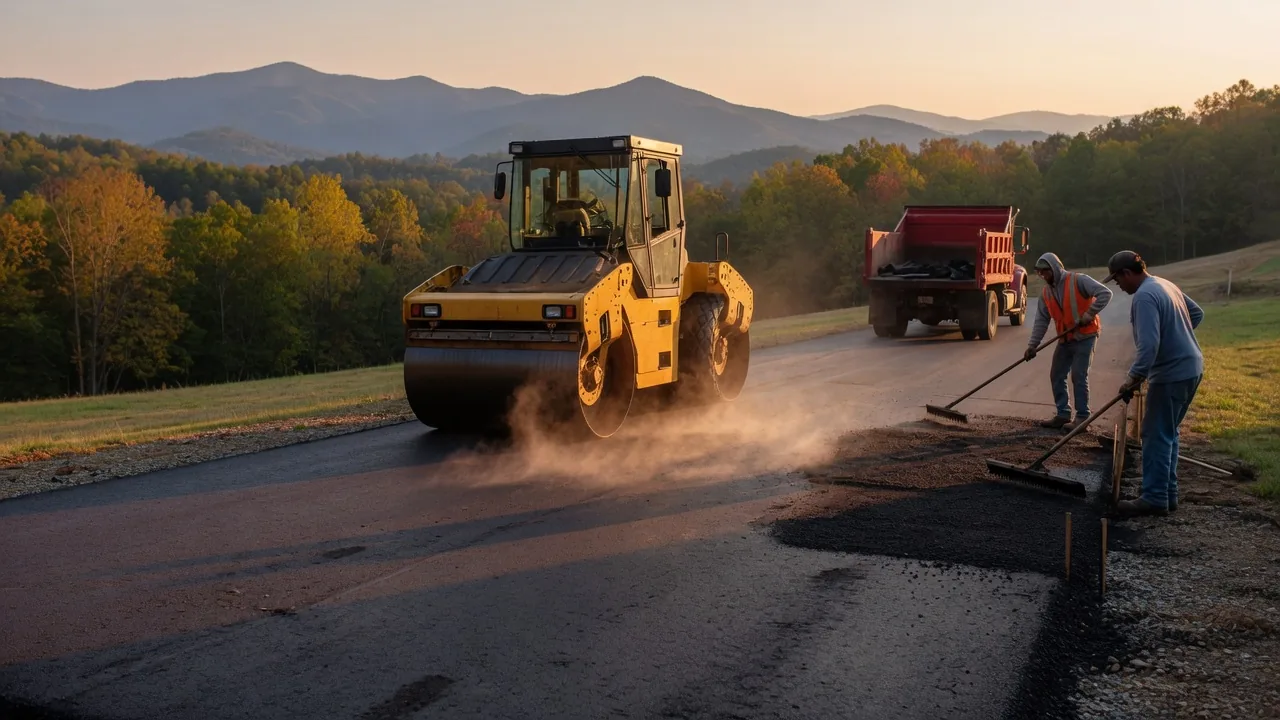
Resurfacing here means cleaning, patching, and overlaying an existing asphalt surface with a new wearing course — usually 1.5 to 2 inches compacted. It is not a rebuild, and the honest contractors in this county will tell you when your base has failed past the point where an overlay makes sense. If the subgrade under a failed section is pumping or saturated, no thickness of new asphalt will hold.
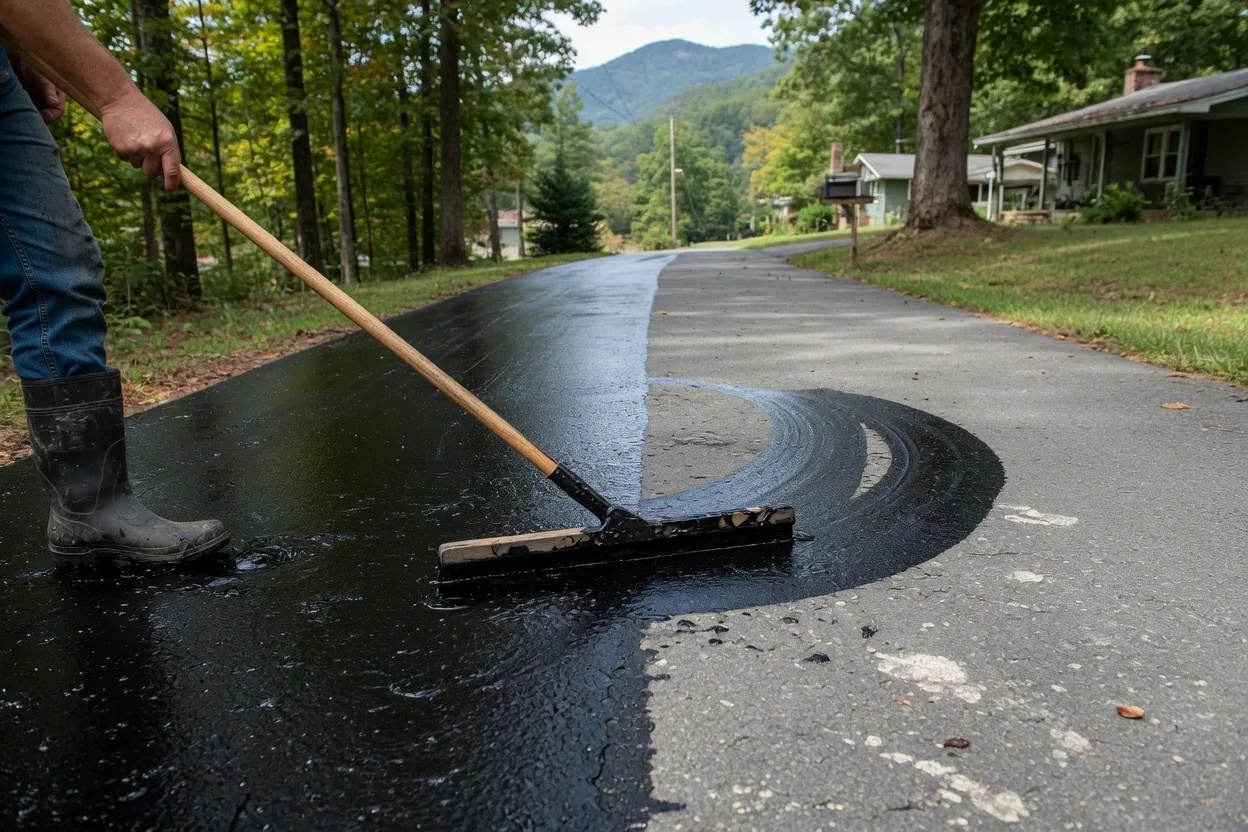
The work that has to happen first is unglamorous: crack routing and filling, removal of failed patches, edge milling where the new mat meets concrete aprons or garage slabs, and a tack coat so the layers actually bond. Tack is the step cheap bids skip, and it's the reason those overlays delaminate within a couple of winters. Your drainage corrections happen before the paving crew arrives, not after — see the resurfacing scope guide for the full sequence.
Henderson County adds a few wrinkles that contractors from outside the area tend to miss. Many Flat Rock properties sit on lots carved out of former farmland or estate parcels, and the original driveway base was often field stone, crusher run, or whatever the builder had on hand. That base may be thirty or forty years old and never designed for the weight of a modern overlay plus the gutter truck or the occasional loaded trailer. When a driveway was first paved over gravel decades ago, the soil between the old gravel and the new asphalt is usually the weak layer. Probing it with a spade before quoting is the difference between a bid that holds and a callback in year two. Also worth knowing: the county's freeze-thaw cycle in late winter works the edges harder than the middle, which is why driveway failures here so often start at the shoulder and creep inward.
Flat Rock resurfacing price ranges
Henderson County pricing runs below Asheville metro on labor and above the rural mountain counties on haul distance. The table below reflects scope rather than lot size alone, because grade work swings these numbers more than square footage does.
| Scope | Typical range |
|---|---|
| Crack fill and spot patch only (deferral) | $400–$900 |
| Standard overlay, flat or gentle lot, 1,000–1,400 sq ft | $2,100–$3,600 |
| Overlay with edge milling and drainage correction | $3,200–$5,400 |
| Steep drive overlay with crown rebuild and berm work | $4,500–$7,800 |
| Full-depth repair of failed sections, then overlay | $8–$14 per sq ft of repaired area |
The line-item breakdown for the county is in our Henderson County driveway cost table. Treat any quote that lands far under these bands as a scope question, not a bargain.
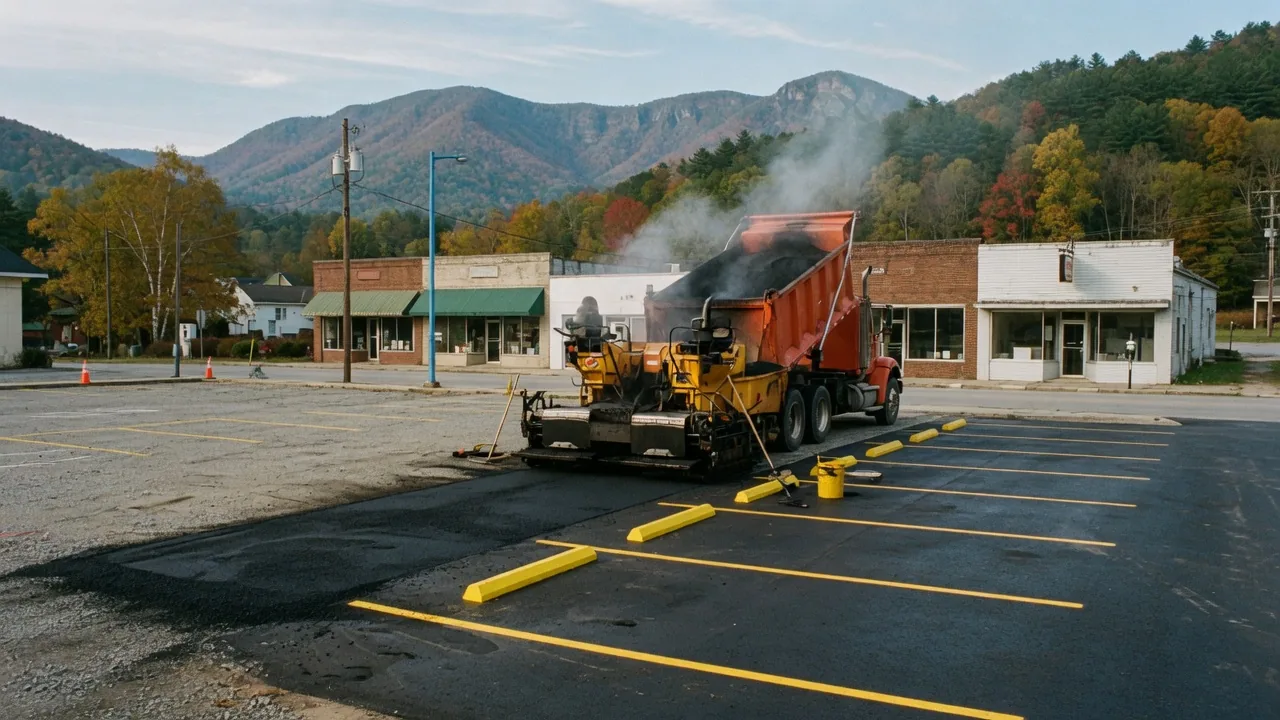
Two cost drivers are specific to this village. First, haul distance: most asphalt plants serving this side of Henderson County sit toward Hendersonville or down toward the South Carolina line, so a long or gated driveway in the estate areas off Kanuga or Pinnacle Mountain adds trucking time to every load. Second, staging. Flat Rock drives are frequently narrow, tree-lined, and bounded by stone walls, hedges, or mature landscaping that cannot be disturbed. A paver that has to back a hundred yards down a single-lane drive works slower and needs more handwork at the edges, and that labor shows up in the quote. None of it is padding; it is the actual cost of doing clean work on a constrained mountain-lot site.
Permits, water, and what this county checks
Resurfacing an existing driveway on your own property generally doesn't trigger a permit. Changing the driveway's footprint, adding a culvert, or altering where it meets a state-maintained road does — driveway connections to NCDOT roads run through the NCDOT Connect permit process, and the state cares about sight distance and ditch flow at the connection point, not your pavement.
Water leaving your property is the other regulated edge. If your drainage fix changes where runoff exits, or if you're working near a stream buffer, the NC Department of Environmental Quality rules on sedimentation and buffer disturbance apply. For structural work beyond paving — retaining walls holding a steep drive, for instance — the NC Licensing Board for General Contractors sets the dollar threshold where a licensed general contractor is required. Storm behavior here is a real planning input: 16 federal disaster declarations touch Henderson County across 1978-2026, and the overwhelming majority came from rain events, which is exactly why edge drainage isn't a cosmetic line item.
Practical translation for a Flat Rock homeowner: if your resurfacing plan keeps the same footprint and just re-lays asphalt and re-cuts the existing ditch line, you are almost certainly in no-permit territory. The moment you add a culvert under the drive, daylight a new outlet, or shift the apron where it meets the road, plan on a conversation with the state first. That conversation is not a hurdle; sight-distance and ditch-flow reviews exist because driveway outlets that dump onto a state road shoulder cause erosion that ends up on somebody else's property. Getting the outlet geometry right at permitting time is cheaper than fixing it after the next tropical remnant comes through.
Choosing a crew for a grade-heavy property
Ask two questions before you ask for a price. First: how will water leave this driveway when you're done? A crew that answers with slope percentages and outlet locations has done this on Flat Rock's terrain. A crew that answers "we'll crown it" has not thought about your lot.
Second: what happens at the edges? The best local outcomes come from contractors who mill a clean notch against concrete, rebuild shoulders with compacted stone rather than spoil dirt, and finish the mat flush to grade so a mower doesn't scalp the new asphalt every week. Our Flat Rock paving contractor page covers vetting and scheduling; start there if you're still narrowing the list.
A third question worth adding for this village specifically: what is the plan for the trees? Flat Rock drives are often canopied, and roots from mature oaks and maples heave pavement from below. No overlay fixes root heave for long, and a crew that pretends otherwise is selling you a two-year repair. The honest answer is either root pruning before paving or a localized full-depth repair around the heaved section, and it should appear in the written scope by location, not as a vague allowance. Ask for it in writing, with the cost separated from the overlay line, so you can see exactly what the tree is costing you.
Finally, watch the calendar. Late spring through early fall is the workable window here, and good crews book out during it. Asphalt placed into a cold, damp base never compacts to spec, and a rushed late-fall job on a shaded north-facing drive is a gamble with the whole investment. Scheduling around the village's leaf drop also pays off: get the ditches cleared first, then pave, so the new edges are not immediately buried under another season of debris.