The mix truck's route is the first line of every Canton bid
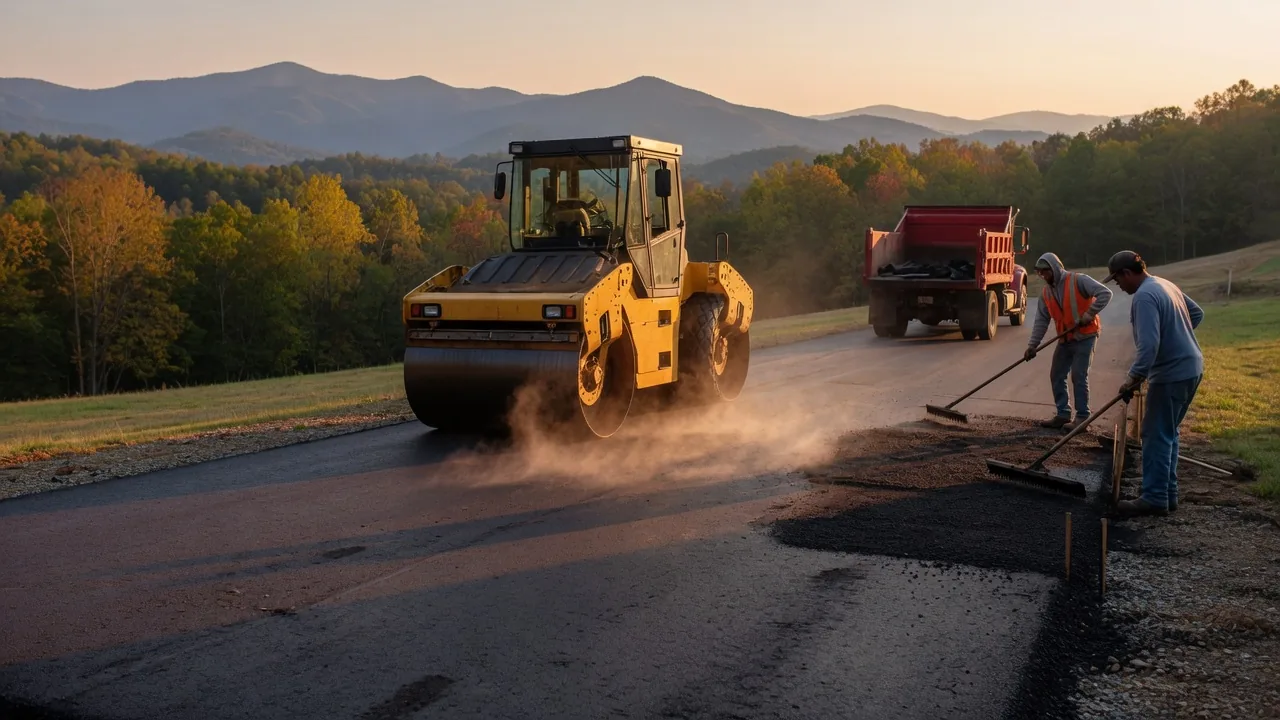
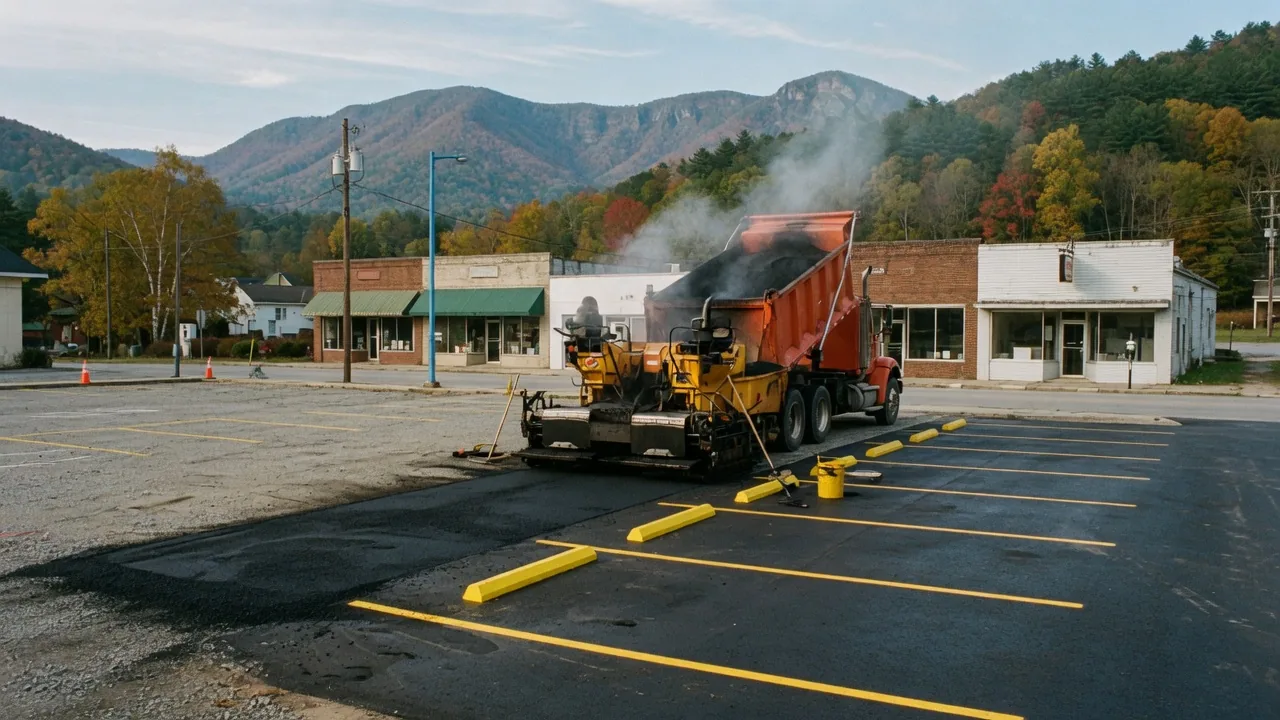
Canton sits in a valley where the Pigeon River and US-19/23 run side by side, and the town climbs steeply from the river bottoms up toward the ridges on both sides. That terrain shapes driveway repair more than most homeowners expect. There is no hot mix plant in Canton itself; asphalt arrives from batch plants in the wider region, and hot mix is a perishable product. It has to be laid while it is still workable, which means the truck's journey from plant to your driveway is part of the job, not an afterthought.
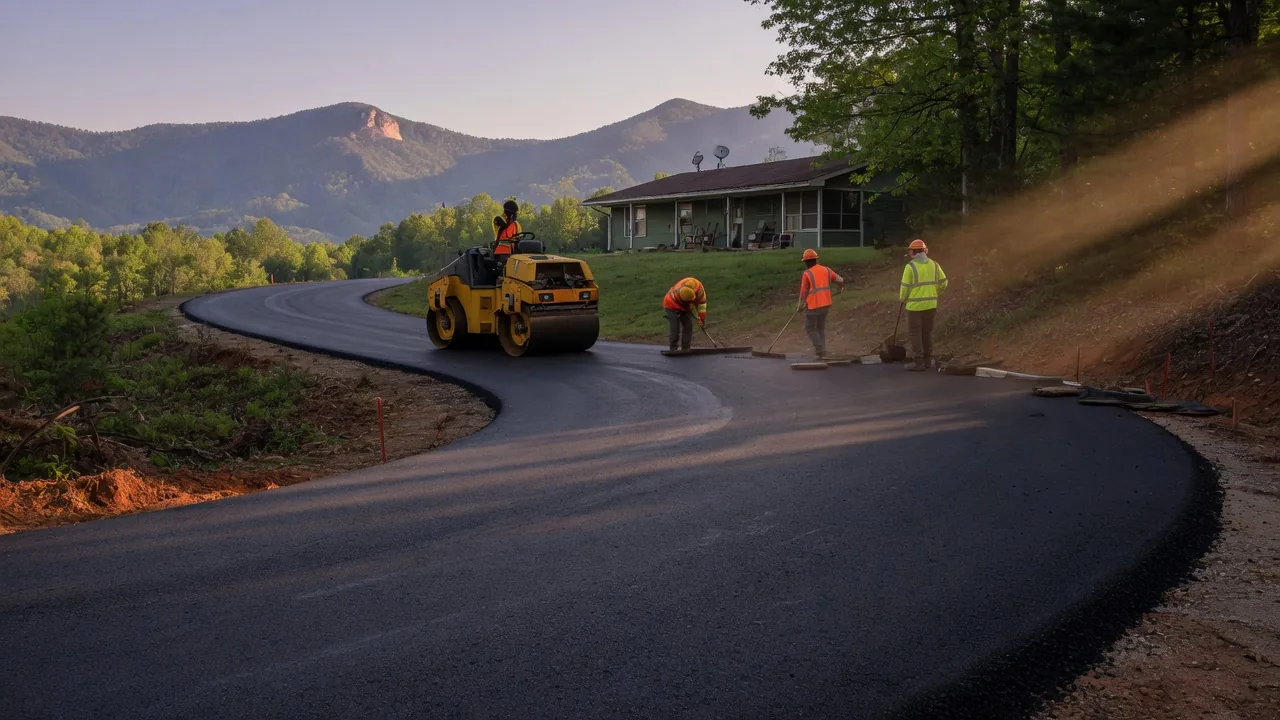
A flat, straight driveway off a state-maintained road near the river is a fast stop. A steep, narrow, switchbacked driveway up a ridge off a county road is a different day. If the tandem-axle dump truck and the roller cannot get up your grade or turn around at the top, the crew hand-shovels and wheelbarrows the mix, lays it out in smaller lifts, and burns time that shows up on your bid. Ask any paving quote in Canton to explain the access plan before you compare the numbers.
Access affects more than labor. A truck that cannot reach the work area has to stage mix farther down the drive, and mix cools as it sits. Cooled mix does not compact the same way. Crews working the steep hollows above Canton sometimes have to order smaller loads so the material stays workable through the whole pour, which can mean more truck trips and a higher mobilization cost. None of that is hidden; it is simply part of the geography. When you see two bids for what looks like the same driveway, the difference is often in what each contractor assumes about how the mix gets from the road to the repair.
Turn-around space matters just as much as grade. A wide pull-off at the top of a drive lets the truck dump and leave in minutes. A narrow drive with a retaining wall on one side and a drop on the other means the crew backs down carefully, dumps in small piles, and walks the mix in. The roller, if it can fit at all, may have to make fewer passes than the material really wants. That is the kind of detail that separates a bid written from a driveway photo album from one written after somebody stood at the bottom of your hill and looked up.
What actually fails on a Haywood County driveway
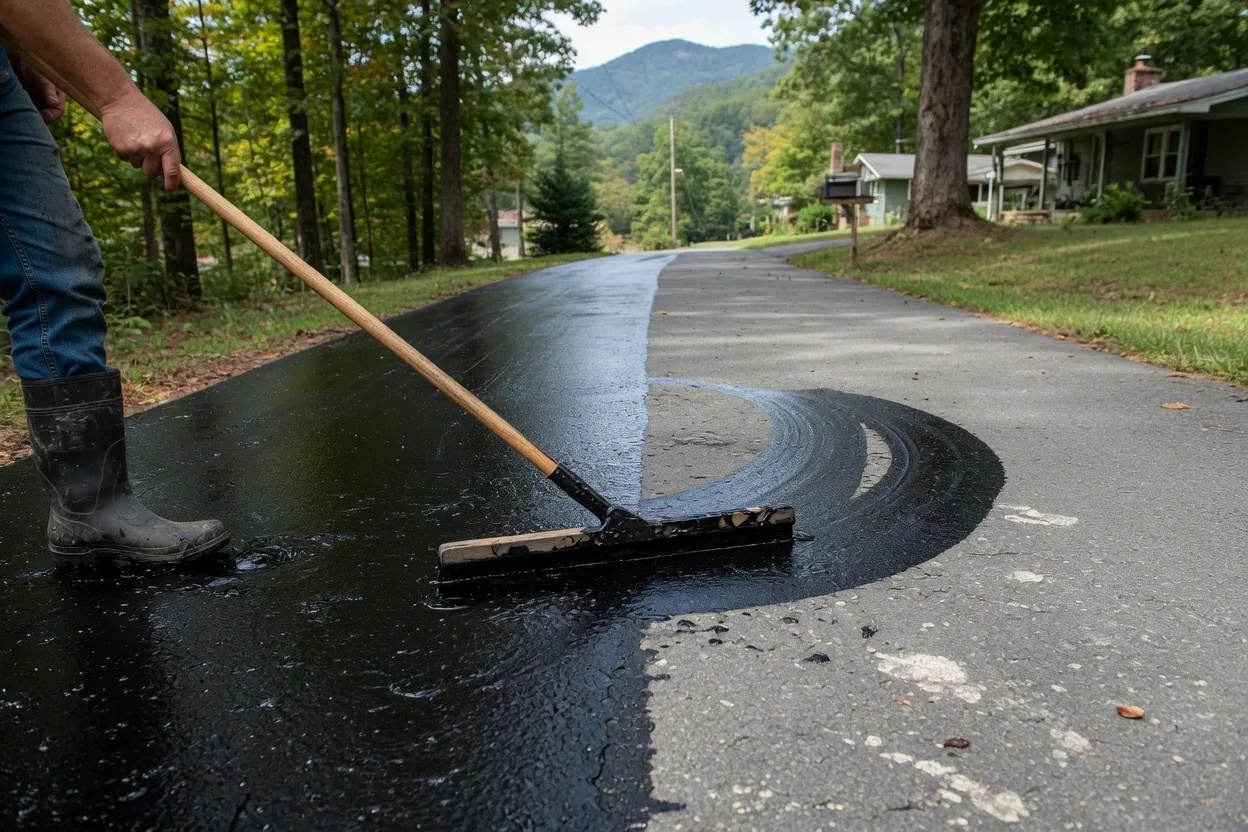
The repairs here split into two families. Surface failures are the cosmetic and functional ones: alligator cracking where the base is moving, raveling where the binder has oxidized, potholes at the mouth where plow blades and tires chew the edge, and settled spots where water has been pooling for years. These are fixable with patching, crack sealing, or a new wearing course.
Then there is the base. A driveway that fails because the subgrade was never right in the first place cannot be saved by another layer of asphalt. On the sloped lots common above Canton, water running down the driveway acts like a blade, cutting the shoulder and undermining the edge. Any honest scope starts by asking where the water goes before it asks how many tons of mix you need. A driveway that was graded to shed water toward the house or the garage will keep failing no matter how many times it is resurfaced.
Haywood County's freeze-thaw cycle adds its own wear. Winter nights drop below freezing, then daytime sun warms the black surface, and the cycle opens cracks that were only hairline in October. Water gets in, freezes, expands, and the crack becomes a pothole by spring. Driveways shaded by hemlocks or tucked against a north-facing ridge hold frost longer and see more of this. A crack that gets filled in the fall often survives the winter that would have turned it into a patch job.
Typical repair scopes and what they cost in Canton
Numbers below are working ranges for this part of Haywood County, not quotes. Driveway size, access, and how much base work is exposed after cleaning all push the final figure. The full Haywood County cost breakdown runs the line items in more detail, and the driveway repair overview covers how to tell which scope you actually need.
| Scope | What it involves | Typical range |
|---|---|---|
| Crack filling and sealing | Clean and fill cracks, seal coat prep | $450–$1,800 |
| Patching and pothole repair | Cut out failed sections, compact, patch with hot mix | $600–$2,500 |
| Edge and shoulder repair | Rebuild undermined edge, restore drainage away from surface | $800–$3,000 |
| Resurfacing (overlay) | Clean, tack, and lay a new wearing course over sound base | $2,500–$6,500 |
| Spot base reconstruction | Remove failed asphalt and base, rebuild subgrade, repave section | $3,000–$8,500 |
Two driveways of the same square footage can land at opposite ends of these ranges. A half-mile gravel approach off a county road above Canton may need grading before any asphalt goes down, which is base work priced by the hour of equipment time, not by the ton of mix. A short drive right off US-19 with a wide turnaround is a half-day job. The range is honest because the variables are real.
Storm water is the repair nobody wants to buy
Western North Carolina's federal disaster record is mostly storm and flood events; 19 declared events touch this county across 1973-2026. That history is not abstract on a Canton driveway. Every heavy rain season sends water down the same slopes, and a driveway is often the path of least resistance. When the surface is crowned wrong or the shoulder has washed out, the water finds the base and the base fails.
The drainage fix is unglamorous: correct the grade so water sheets off instead of standing, restore the shoulder so it holds the edge, and make sure the culvert or swale at the road carries runoff under or away from the drive. The NC Department of Insurance Engineering and Codes division treats site drainage as a real code concern for a reason. If a paving bid does not mention where the water goes, it is selling you a surface, not a solution.
On the steepest drives, water does not just pool; it accelerates. A driveway with a 15 or 20 percent grade turns runoff into a small river during a summer downpour, and the asphalt edge takes the hit. Homeowners who have watched gravel wash into the road below know the pattern. The fix is usually a combination of a crowned surface, a proper shoulder, and sometimes a shallow swale or diversion at the top that sends water around the drive instead of down it. The National Weather Service tracks the rainfall patterns that drive this, and the repair logic is simple: move the water deliberately or it will move your driveway for you.
Permits, licensing, and when you need either
Resurfacing or patching an existing driveway on your own property generally does not require a permit. If the work touches the connection to a state-maintained road, the rules change: driveway connections onto NCDOT-maintained roads need a driveway permit, and the application process runs through NCDOT Connect, with general program information at NCDOT. Larger grading or drainage changes that alter how stormwater leaves your property can trigger local review as well.
On the contractor side, North Carolina sets a licensing threshold for general contracting work, and the NC Licensing Board for General Contractors is the place to verify whether a contractor and their license status check out. For a straightforward residential driveway repair, many jobs fall below that threshold, but a project that includes significant grading, base reconstruction, or structural retaining work can cross it. Ask before you sign, not after. The Canton paving contractor guide walks through the questions that separate a paving crew from a driveway contractor.
There is one more layer worth knowing about. If a repair touches how stormwater leaves the property, local ordinance and state environmental rules can come into play, especially near the Pigeon River or its tributaries. The EPA maintains the federal stormwater framework that many local rules build on. Most driveway patches never get near this, but a grading project that redirects runoff toward a stream or a neighbor's property is a different conversation. Scope the work honestly, and the permitting question usually answers itself.