The paving calendar in Leicester is set by temperature, not by the calendar
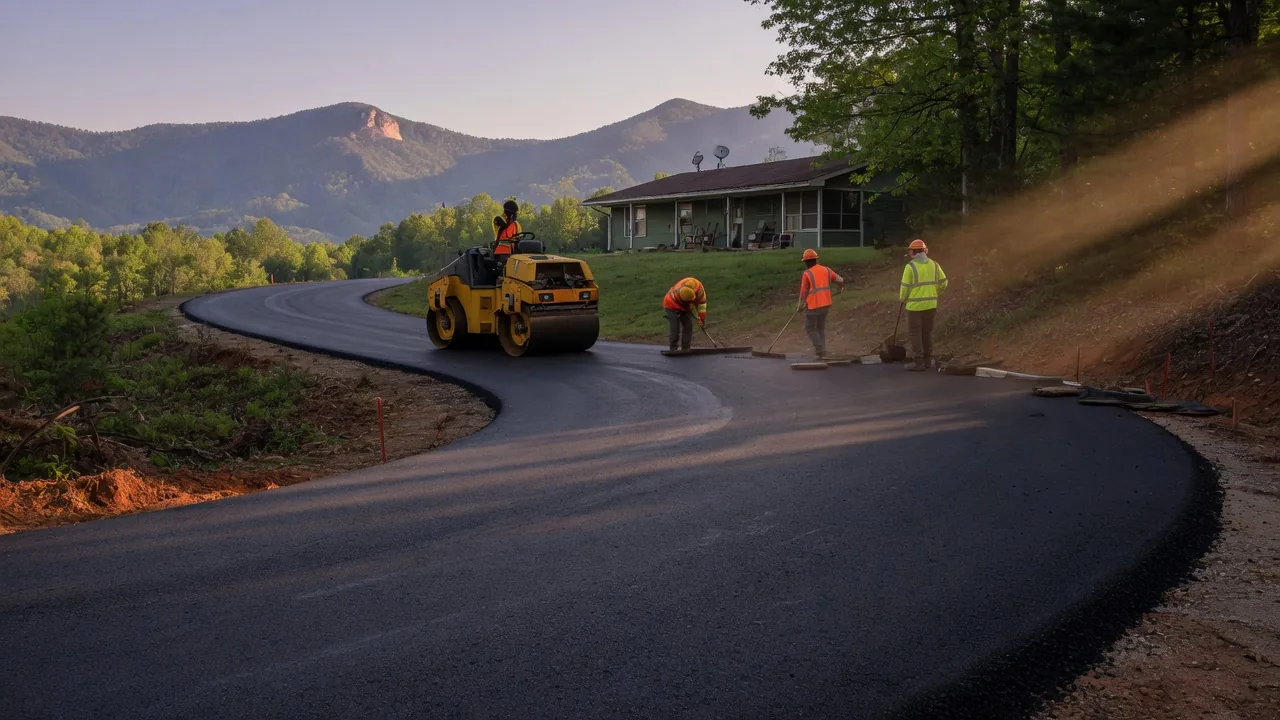
Leicester sits in the western Buncombe County hills, where the growing season is late and frost arrives early. That matters more than most homeowners realize. Asphalt is placed hot and rolled while it's still workable, and if ground temperatures are too cold the mat cools before it compacts. The result is a driveway that looks finished in October and starts raveling by spring. Local crews generally try to finish their asphalt calendar by mid-to-late October and don't return until the ground has warmed in late March or April.
Add the mountain shade problem. A south-facing driveway on a cleared ridge off New Leicester Highway might hold heat and cure evenly. A shaded drive cut through the trees a few miles toward Sandy Mush is another story entirely. Shade slows curing, keeps frost in the ground longer, and makes the grading contract the base has to reach before a single ton of asphalt shows up. If a contractor treats the job like flatland work, the quote is wrong before you sign it.
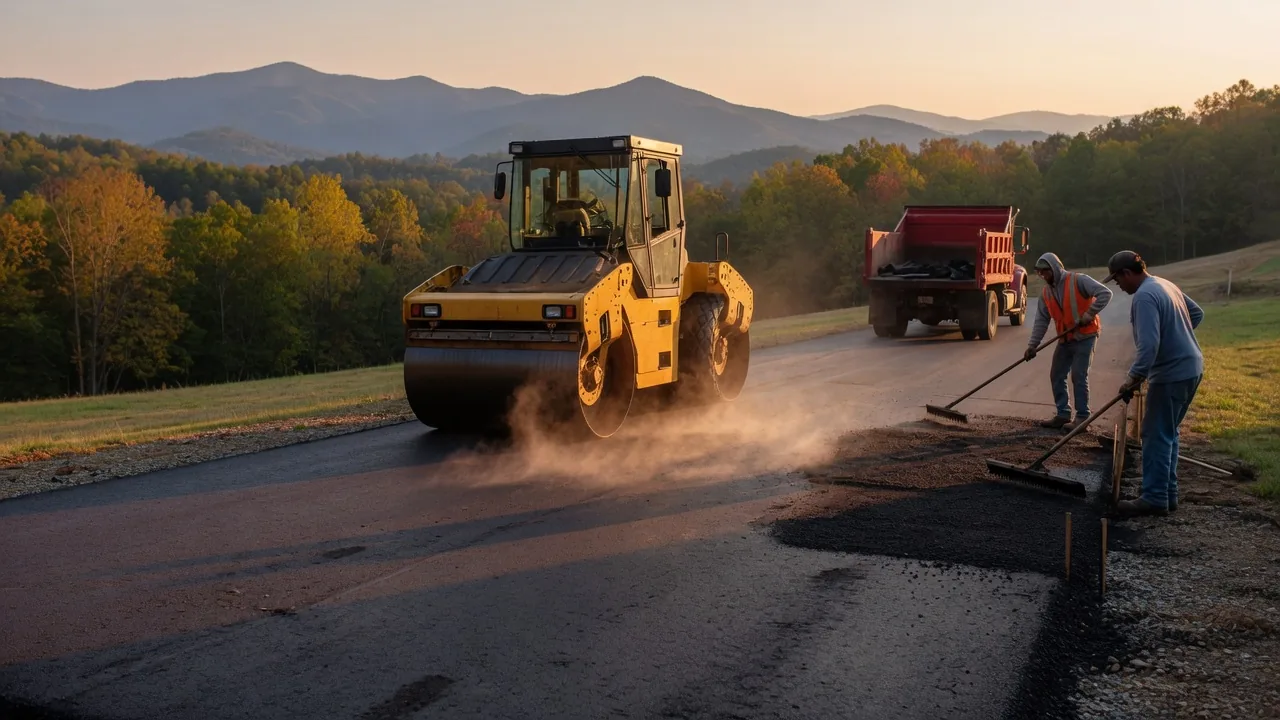
Plant mix doesn't come out of thin air here, either. Hot-mix asphalt is batched at regional plants that typically ramp up in spring and wind down before the hard frosts, and the trucks that haul it have to keep the load hot on the climb up the ridges. When a plant stops running for the season, it doesn't matter that your driveway looks dry — there's no mix to place. That's why a Leicester job scheduled for the first week of November is usually a Leicester job that gets pushed to April.
The freeze-thaw cycle is the second half of the season story. Through winter, water in every crack and every low spot swells and contracts, and a mat that was laid too thin or over a soft base gets worked apart from underneath. By the time the redbuds open along the creek bottoms, a drive poured in cold weather is already showing the failure lines a homeowner thought they'd avoided by getting it done before winter.
What converting a gravel drive actually involves
A gravel-to-asphalt conversion isn't a resurfacing job. The old drive is a base, and a base only works if it's graded, crowned, and drained. The sequence usually runs: reclaim or reshape the existing gravel, correct the crown so water sheets off instead of pooling, compact the base, place a binder course, then place a top course. Skipping the binder because "the gravel is already there" is the most common shortcut, and it's the reason converted drives crack along the centerline within two seasons.
Drainage is not optional here. Buncombe County's federal disaster record tells the story: 19 declared events touch this county over 1973-2026, overwhelmingly flood and storm family. Mountain runoff doesn't politely follow a gravel drive — it cuts ruts, erodes edges, and undermines whatever asphalt sits on top. Before a paving quote means anything, someone has to figure out where the uphill water goes.
On the ground in Leicester, that conversation is usually about the ditch line and the culvert, not the asphalt. A drive that climbs off a county road and crosses a slope is collecting water from above it as well as draining its own surface, and if the uphill swale isn't cut before the paving crew arrives, the first heavy summer storm will find the edge of the mat and start peeling it back. Contractors who pave in these hills often walk the drive in the rain, or ask the homeowner where the water stood last time it poured, because standing water and a soft base are the same problem wearing different clothes.
Base depth is a judgment call made in the field, not over the phone. The material under a Leicester drive might be decades of dumped gravel, or it might be a few inches of crushed stone over clay that saturates every spring. The only honest way to know is to dig test pits along the length of the drive, check how deep the stone goes, and see how the base holds up under a plate compactor. That inspection is where a real conversion quote starts, and it's why two contractors can look at the same driveway and come back with numbers thousands of dollars apart.
Leicester conversion costs, scope by scope
Real numbers, not sales numbers. The table below is what these line items typically run in the western Buncombe County market. Length, slope, and how much base repair is needed move the total more than anything else.
| Scope item | Typical range |
|---|---|
| Full gravel-to-asphalt conversion, standard 300-500 ft drive | $4,200-$9,800 |
| Base regrade, crown correction, and compaction only | $900-$2,600 |
| Asphalt overlay over existing compacted gravel (no base work) | $2,400-$5,500 |
| Drainage corrections: swale, culvert, or edge stone | $600-$2,800 |
| Per-ton asphalt delivered and placed | $110-$175 |
See the full Buncombe County asphalt driveway cost breakdown for a line-by-line picture. The head-scratcher for most homeowners is that a cheap overlay quote sometimes outranks a full conversion quote by thousands — and then fails first, because the base underneath was never fixed. A quote without base numbers is a quote for half a job.
Slope is the quiet cost driver specific to this part of Buncombe County. A driveway that gains serious elevation over its run needs more stone to hold the crown, more compaction passes, and often a wider apron where it meets the road so the transition doesn't break down. A short, nearly flat drive on a cleared lot costs meaningfully less per foot than a long, climbing drive cut into a wooded slope, even when the surface area is similar. Length alone never tells the full story.
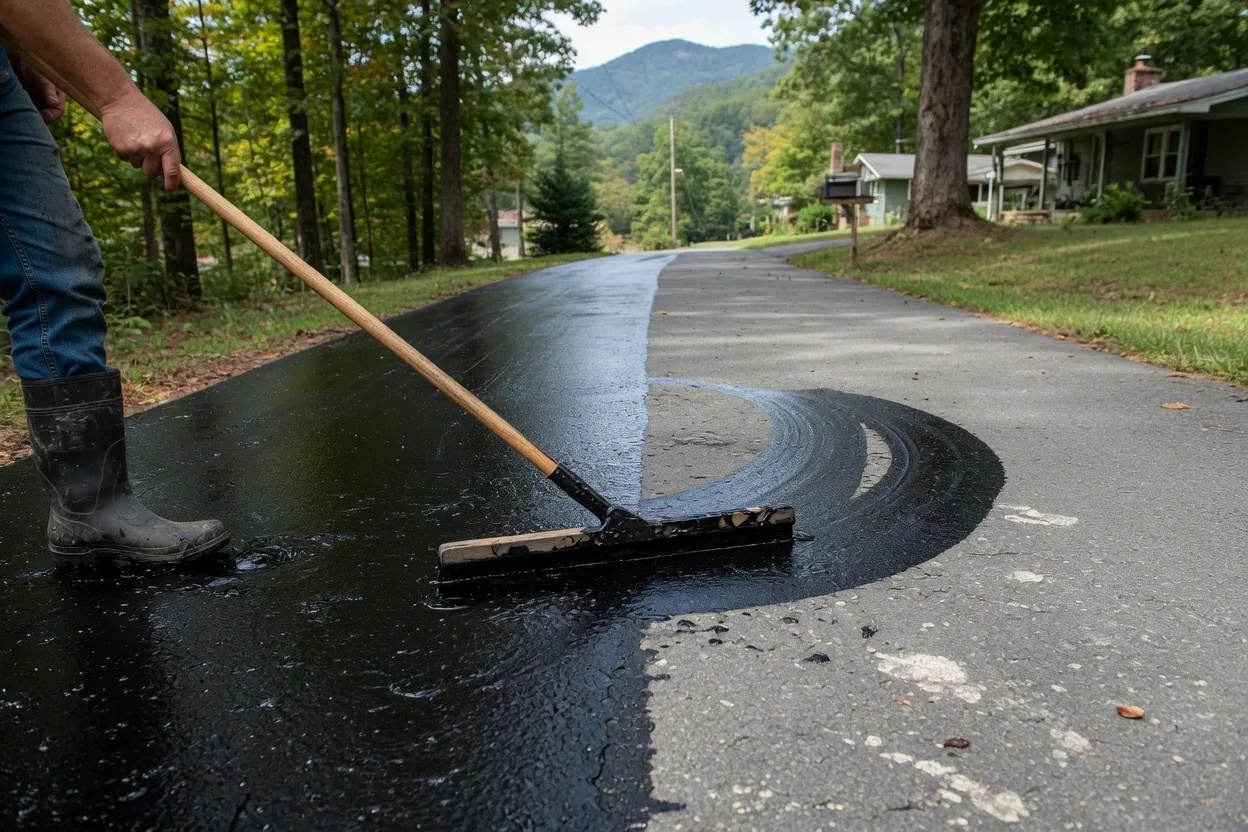
It also helps to separate one-time costs from recurring ones. Asphalt is a maintenance surface up here, and sealing every few years is part of owning one. A homeowner comparing a conversion quote against a lifetime of gravel deliveries and grading should count the sealcoating cycle in, because a drive that's never sealed in a mountain freeze-thaw climate will weather far faster than one that is.
Licensing, permits, and what to check before you hire
North Carolina sets a general contractor licensing threshold, after which the NC Licensing Board for General Contractors applies. Verify any contractor's status there directly rather than taking a business card's word for it. If the work touches the public right-of-way or a state-maintained road, a driveway permit is typically required through NCDOT Connect before excavation starts, and the state maintains its own access guidance at NCDOT. For a rural Leicester drive off a private road, the exposure is usually smaller, but the qualification question still matters.
Also check insurance and ask how the crew handles the transition between driveway and county road — that apron is where a lot of poorly built driveways fail. Our Leicester paving contractor guide covers what to ask and what a written scope should contain before you commit.
Where the work touches drainage that feeds a creek or a wetland, the environmental rules that apply are worth understanding before dirt moves. The U.S. Environmental Protection Agency (EPA) publishes the framework for stormwater and runoff, and the NC Department of Insurance / Office of State Fire Marshal - Code Officials is the source for current code guidance. Weather is the other permitting-adjacent variable: the National Weather Service is the reference for local forecasts, and a crew that watches it before scheduling a pour is a crew paying attention to the same temperature window that governs whether the mat cures.
Finally, get the scope in writing with the base prep spelled out. "Regrade and compact" means nothing if it doesn't say how deep, how wide, and how the crown is checked. A written scope that names the binder course, the top course thickness, and the drainage work is the difference between a contract and a handshake with a risk attached.
When a gravel drive should stay gravel
Not every Leicester driveway is a conversion candidate. A steep, narrow, switchback drive on a heavily shaded north slope may never hold asphalt well, and the honest answer is that crushed stone with proper drainage outperforms a failing asphalt mat. The same goes for drives where the base is so undermined by runoff that fixing it would cost more than the paving. The gravel to asphalt conversion guide walks through the conditions that make a drive worth converting and the ones that argue for staying with gravel.
The test is simple: if the gravel drive drains somewhere and stays put, converting it is usually a sound investment with a decade-plus lifespan. If water is running across it, under it, or through it, solve that first. Paving over a drainage problem just caps it.
There's also a seasonal patience argument for staying gravel, at least for another year. If a drive already shows ruts after a wet spring, that's information — it tells you the base and drainage aren't ready for asphalt, and the fix will be cheaper as stone work than as a torn-up conversion later. A contractor who tells you to wait isn't losing you as a customer; they're telling you the driveway told them no.