What the asphalt is actually resting on in Biltmore Forest
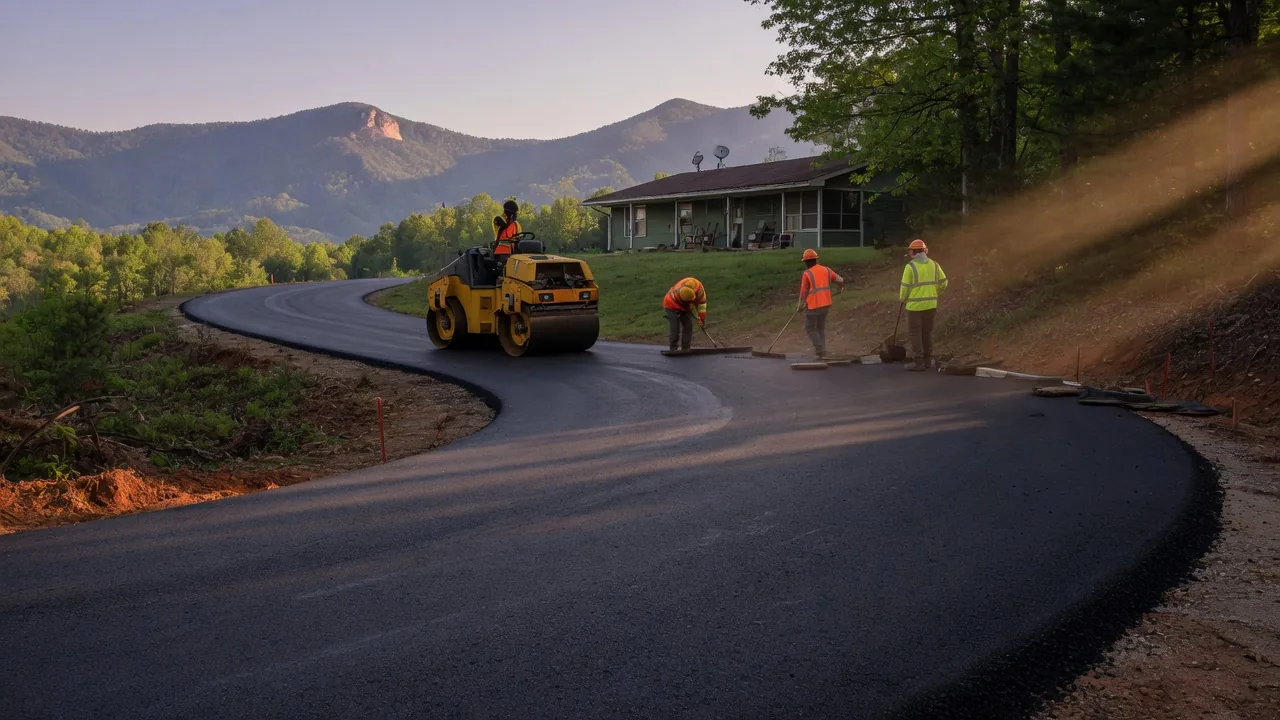
Biltmore Forest was laid out as one of the region's first planned residential villages, and many of its driveways were cut generations ago over whatever the slope handed the builder: red Buncombe County clay, leftover gravel from an earlier turnaround, or fill pushed in to level a hillside approach toward the estate. That history, not the sealer brand, is the single biggest variable in any sealcoating quote here. A drive with a deep, compacted stone base will take a fresh coat and hold it for years. One with clay migrating up through a thin gravel layer will keep cracking no matter how good the product is.
The practical test is a probe, not a look. A reputable crew checks base depth at several points along the drive, notes where water pools after a storm, and tells you plainly whether you're buying a maintenance coat or setting money on top of a problem. Driveways winding up toward homes off Vanderbilt Road, and the long shaded approaches on the wooded lots near the Biltmore Estate entrance, tend to be slow to dry and heavy under tree cover, which changes both the prep plan and the coating window.
Because so many of these drives were cut into a slope rather than graded flat, edge loss is common. Water running the length of a steep approach finds the seam where asphalt meets grass or stacked stone and starts working underneath it. That is a base question disguised as an edge question, and no coat fixes it.
How shade, slope, and drainage rewrite the estimate
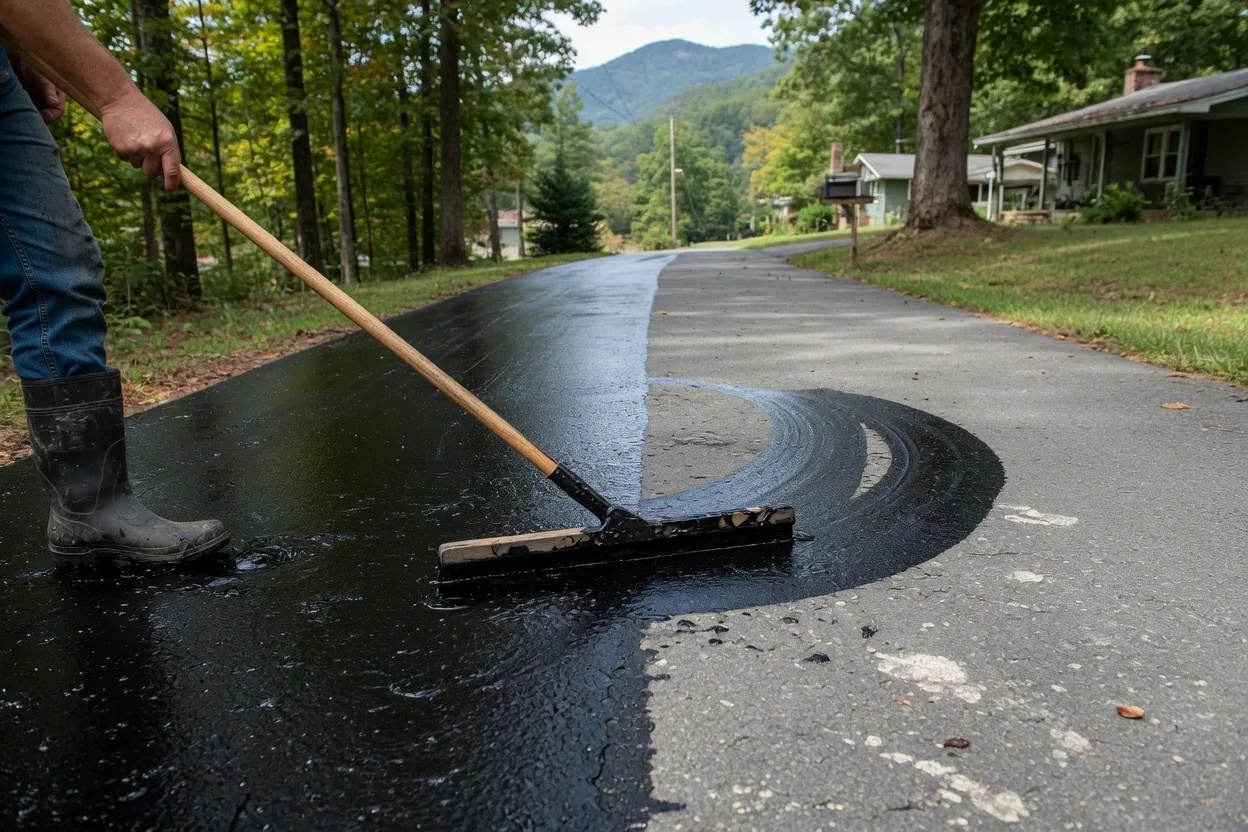
Shade, slope, and drainage decide how a sealcoat performs in this village far more than the product label does. North-facing drives under mature hardwoods stay damp long enough that oil-based sealer can fail to cure properly, and the damp organic debris that collects along the edges is exactly where the first cracks open. Steep approaches shed water fast but also let it undercut the edges and, over time, the subbase. A proper walkthrough flags all three before anyone writes a number.
For the broader service context, the sealcoating overview lays out the difference between a maintenance coat, a crack-and-fill prep, and a full resurface, because those are the three options almost every homeowner here ends up choosing between. Long estate drives often need the middle option, not a simple recoat.
What a sealcoat costs across the village's drive types
Ranges reflect drive size, prep needed, and access. Long, sloped, or heavily shaded drives sit at the top of each band, and estate lots with gated or narrow approaches may add mobilization time.
| Scope | Typical range |
|---|---|
| Single maintenance coat, clean and ready | $0.18-$0.25 per sq ft |
| Coat with crack fill and edge cleaning | $0.22-$0.30 per sq ft |
| Coat plus spot patching over settled areas | $0.28-$0.35 per sq ft |
| Base repair or gravel top-up before coating | quoted separately by the ton |
| Typical residential drive, 1,500-3,500 sq ft | $450-$1,400 total |
For the wider picture on paving line items, the Buncombe County asphalt driveway cost breakdown is the working reference for this county, and it separates base work from surface work so the two don't get blurred in a bid.
Red clay, old fill, and how much stone a base really needs
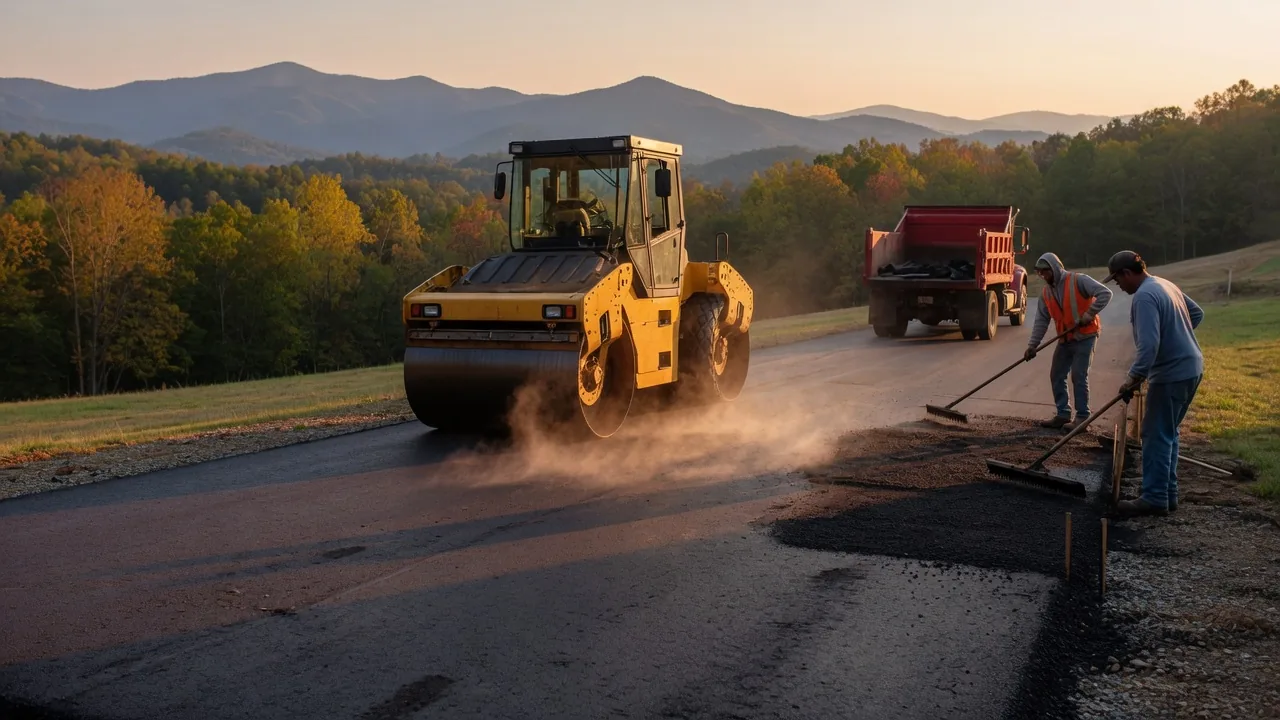
Red clay is the defining ground condition across Buncombe County, and it swells and shrinks with moisture in a way that gradually works cracks up through any asphalt above it. Where a Biltmore Forest drive was built over old gravel or a former farm track, the base may already be adequate. Where asphalt was simply laid on graded clay, no sealer survives more than a season or two without re-cracking in the same lines. The honest answer when the base is thin is to add compacted crushed stone, then repave, then seal, rather than coat over a problem that will resurface next winter.
Base thickness is the piece homeowners here most often underestimate. A drive carrying only passenger cars needs less stone than one handling delivery trucks, landscapers, or a contractor's trailer, and estate lots see all of those. A crew that measures the base and asks what rolls across it is doing the job right. The NC Department of Insurance Engineering and Codes division publishes residential construction guidance that treats subbase preparation as a foundational requirement, and asphalt is no exception. Skipping it is the most common reason a sealcoat job underperforms and the reason some drives here look worn again within two years.
Permits, tree canopy, and the stormwater question
Any change to where a driveway meets a public street, or anything that alters stormwater flow, may require a permit through the NCDOT driveway permit portal. Routine sealcoating of an existing drive rarely needs one, but widening an apron, regrading an approach, or moving the point where water leaves the property can. Biltmore Forest's dense tree canopy and estate lots also mean crews frequently work close to protected trees and established landscaping, which adds time and care to any job and is worth asking about up front.
Stormwater is not a side issue in this village. Water that sheets across a drive during a heavy rain is often the same water quietly undermining the base beneath it, so drainage corrections and sealcoating genuinely belong in the same conversation rather than two separate visits. Homeowners with storm and flood history on their property should note that 19 federal disaster declarations have touched this county across 1973-2026, most tied to storm and flood events. That record is a reminder that managing where water goes matters as much as what gets spread on top.
For matching the right crew to this village's drive types, the Biltmore Forest paving contractors page lists what to look for when comparing bids, including how each one handles base inspection and edge work.
Timing a coat around Blue Ridge weather
Sealcoat needs a dry window with surface temperatures above roughly 50°F and no rain for at least 24 hours after application. In the Asheville area that means late spring through early fall is the reliable stretch, and even then the National Weather Service forecasts for the valley can miss the afternoon pop-up storms that roll off the Blue Ridge. A crew that watches radar and schedules flexibly will do better work up here than one running a fixed calendar, especially on shaded drives that stay cool longer into the morning.
Mountain microclimates matter at this elevation. A drive at the top of a ridge can be dry and warm while a shaded hollow lot a quarter mile away is still holding overnight moisture, and the same coat applied to both on the same day will behave differently. That variability is why a local walkthrough, not a phone estimate, is the only honest way to price a sealcoat in Biltmore Forest.