The haul is the first problem on a mountain driveway
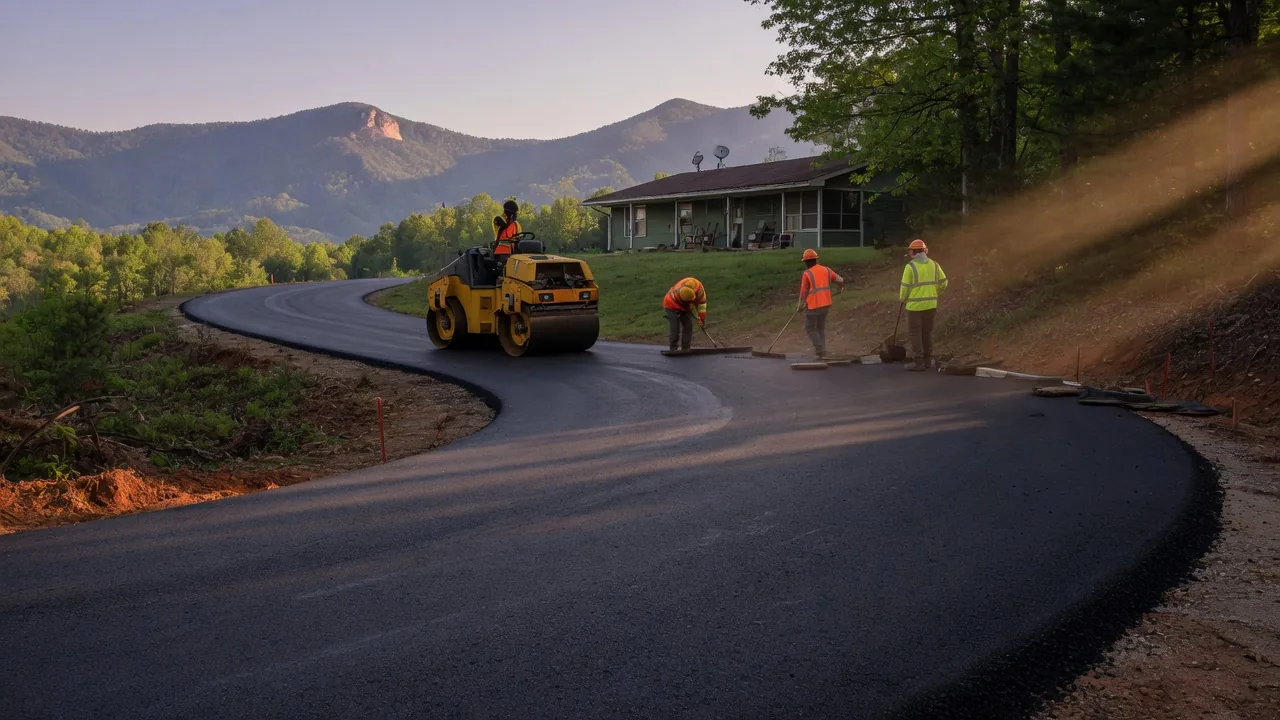
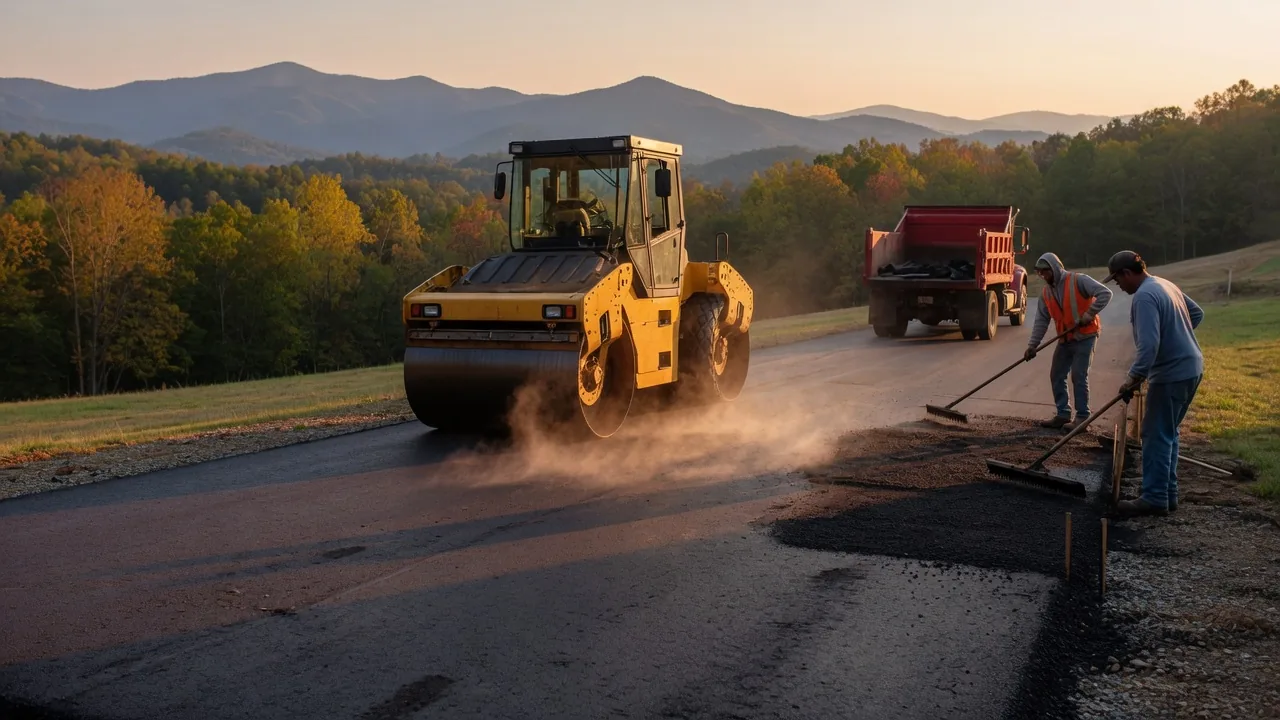
Hot mix leaves the plant at a set temperature, and the clock starts the moment the truck pulls out. On a flat commercial job in the Piedmont, that truck has a long window to place and roll. In Buncombe County, a load bound for a ridgeline driveway off Town Mountain Road or a switchback above Weaverville is climbing grades and taking switchbacks that cool the mat before the roller ever touches it. When mix is placed cool, it compacts shallow. Shallow compaction is exactly the condition that lets a steering tire smear the surface instead of riding over it.
That is why the first question about tire marks on a brand-new driveway should be about the day, not the mix. How far did the load travel, how steep was the pull, how tight was the turnaround at the top, and did the crew have enough roller passes before the mat dropped below working temperature. On long, steep, tight access, those answers get worse fast, and the price reflects it: difficult-access paving in this county routinely runs 20 to 40 percent above a comparable flat-lot driveway because of truck time, smaller loads, and slower placement.
What you are actually looking at
Not every dark streak on fresh asphalt is a defect. There are three common things homeowners see in the first weeks:
Scuffing. Shallow, smeary marks where a tire turned while the surface was still warm and soft. Common at the top of a driveway, at a garage apron, and anywhere a vehicle sits still and turns the wheel. These are cosmetic and usually fade with traffic and sun.
Rutting at the turnaround. Deeper depressions where the same spot takes a loaded vehicle turning every day. This is a compaction and base question, not a cosmetic one.
Tack and diesel marks. Dark splotches from the paving equipment itself, sometimes from a truck's own tires tracking oil. These are the contractor's to fix, not yours to live with.
The tell is depth. Run a straightedge across the mark. If the surface is still flat and only the color or texture changed, it is scuffing. If you can feel a groove, that is a real conversation with the crew.
Steep, shaded, and hemmed in: the Buncombe pattern
Three local conditions make new asphalt here scuff more than new asphalt in the flatlands.
Grade. A 15 percent driveway puts shear stress on the surface every time a vehicle brakes or accelerates. Fresh asphalt is at its softest in the first summer.
Shade and canopy. Driveways cut through hardwood canopy hold moisture and stay cooler longer in the morning, so the mat cures unevenly. Cool-morning soft spots scuff when the first vehicle pulls out at 7 a.m.
Tight turnaround geometry. Mountain lots hand you a small parking pad at the top of a narrow run. Every arrival is a multi-point turn on the same square footage, which is exactly how tire marks on new asphalt get started and then stay.
Storm history matters here too: 19 federally declared events touch this county (1973-2026), and the ones that bring standing water tend to soften a fresh mat from below. If your driveway holds water after a storm, that is the drainage problem to fix before you blame the asphalt.
What it costs to fix, and what to leave alone
Most tire marks resolve themselves. New asphalt continues to cure and harden through its first warm season, and marks that were obvious in June are often gone by October. Nothing to spend.
If marks persist, deepen, or reappear in the same spot every year, the fix is diagnosis first, surface second.
| What you are dealing with | Typical regional range | Notes |
|---|---|---|
| Cosmetic scuffing, first season | $0 | Wait one full warm season before spending anything |
| Surface re-roll or light re-compaction of a soft area | $150-$600 | Small area, crew with a roller already in the county |
| Localized patch and re-grade at a turnaround | $400-$1,200 | Includes cutting out the soft spot |
| Drainage correction (grading, swale, or culvert) | $600-$2,500 | Often the actual root cause |
| Overlay of a rutted section | $1.50-$3.50 per sq ft | Only after base and drainage are addressed |
| Full removal and re-pave | $3-$6 per sq ft | Reserved for genuine base failure |
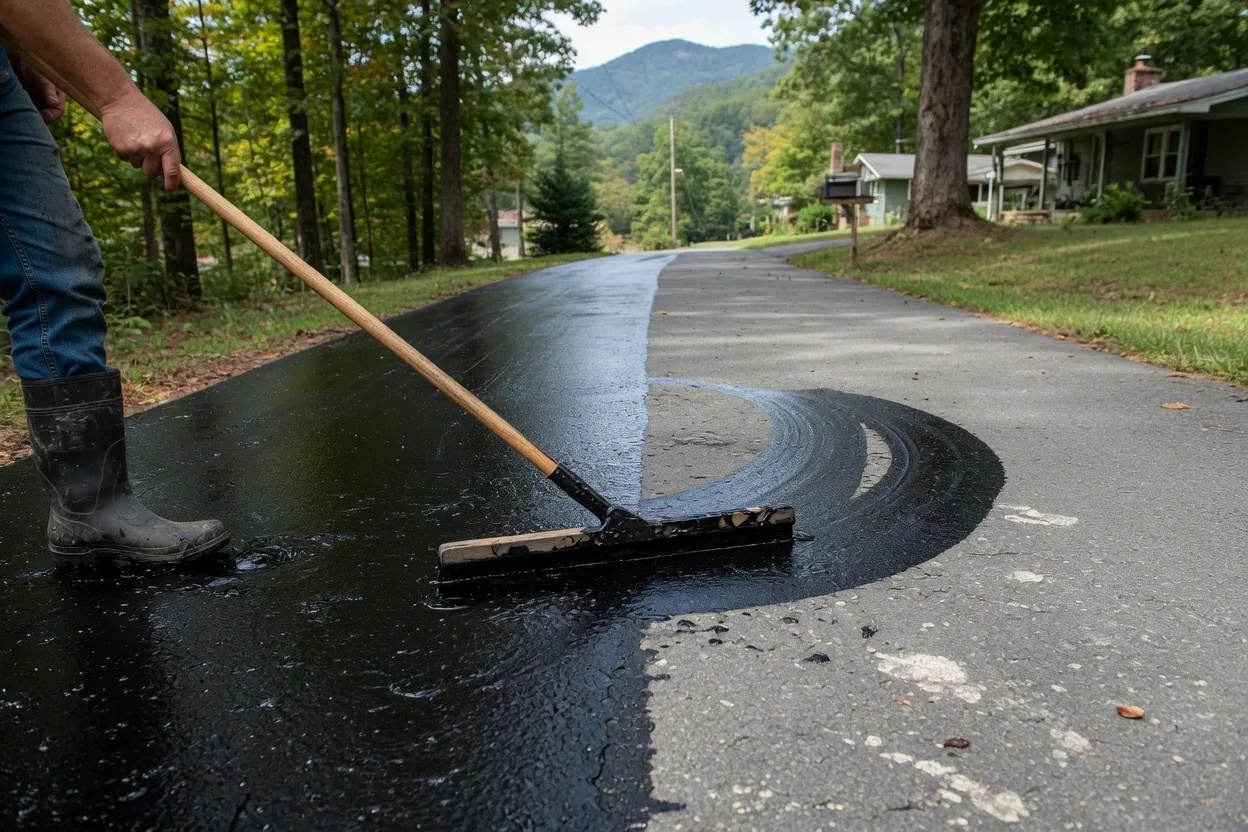
One caution: do not let anyone sell you a sealcoat as the fix for tire marks. Sealer is a thin surface film and it does nothing for a soft or under-compacted mat underneath. Our sealcoating page covers what sealer actually does, and the timing guide explains why sealing a driveway too soon after paving can trap the problem in place. If you have not yet paved, the asphalt driveway guide walks through how base prep and access planning prevent most of this.
Getting the crew back, and knowing your rights
Workmanship on a new driveway is a contract matter, and North Carolina sets a threshold for who may take on larger paving contracts: the NC Licensing Board for General Contractors publishes the dollar figure at which a project requires a licensed general contractor. Ask a paving company how they handle that line. A straight answer is a good sign.
If your driveway ties into a state-maintained road, the apron and any change to the shoulder can also touch NCDOT's driveway permit process. That permit is normally the contractor's job to pull, and asking who is pulling it tells you whether you are dealing with a company that works this county regularly.
For settlement or drainage questions that turn into a real dispute, the EPA's stormwater guidance at epa.gov is useful background on how runoff should be managed rather than dumped onto a neighbor. Weather itself is the wild card: the National Weather Service forecast at weather.gov is worth checking before any crew commits to a paving day in the mountains, because a cold front moving through Asheville can wreck a placement window that looked fine that morning.
Practical sequence: document the marks with photos and a date, note whether the surface is flat or grooved, wait one warm season if it is cosmetic only, and then call the crew with your evidence. Most reputable pavers will re-roll or patch a soft area in the first year without argument.