Which way the rain runs on a Canton lot
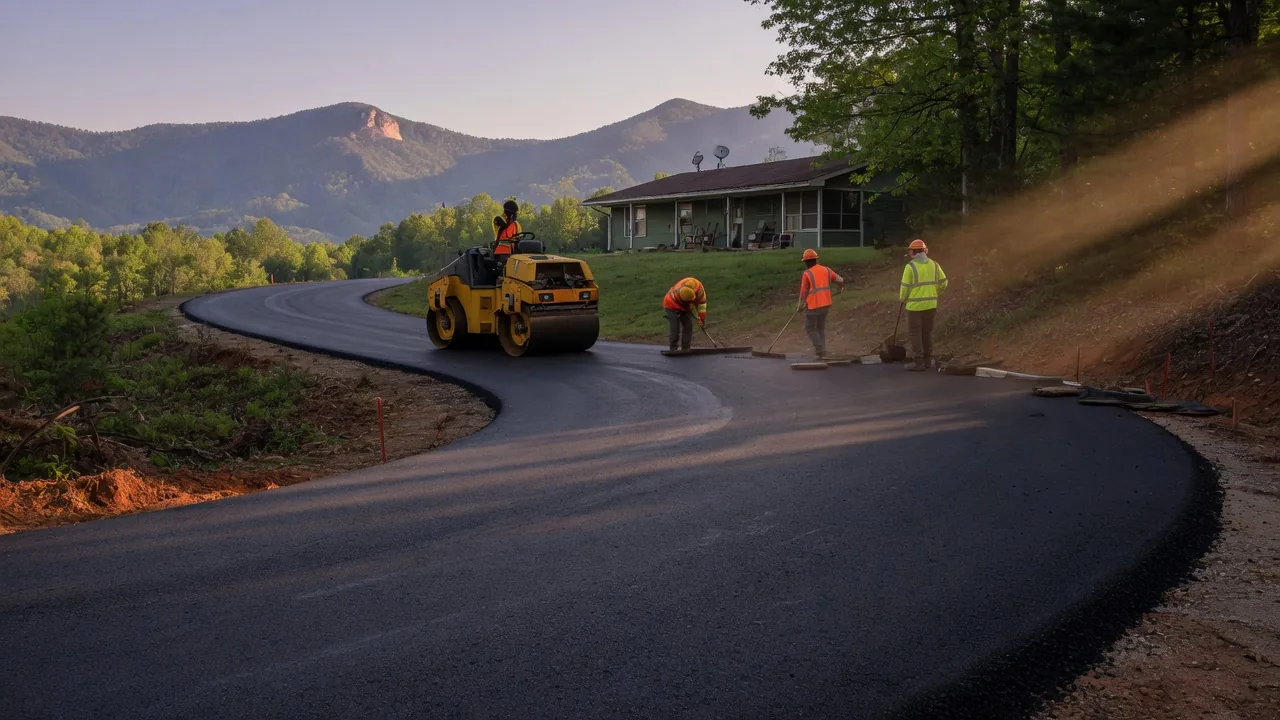
Drive through Canton and the first thing a paving crew notices is that almost nothing here is flat. The town sits in the Pigeon River valley, and most driveways either climb away from the street toward a hillside house or drop from the road down to a lot pad. That slope is the whole story of how a driveway ages. Rain that lands mid-drive is supposed to split and run to the edges, into the crown's tilt, then into a ditch or a turnout before it ever reaches the garage. When the crown has flattened out, water instead sheets straight down the surface, finds every hairline crack, and works under the edges — and edge failure is what actually kills most driveways in this county, not sun or traffic.
The tells are easy to read once you know them: soil or gravel washing onto the apron after a storm, a lip where the asphalt meets the grass on the downhill side, standing water that lingers a day after rain, and grass growing through a crack wider than a pencil. If the water has somewhere wrong to go, resurfacing without fixing that just buys you a nicer-looking failure.
Around Canton the slope runs both directions. In-town lots off the river flats often sit below street grade, so the drive has to shed water away from the house rather than toward it, and a shallow swale at the garage side does that work. Up the hillsides toward the Bethel and Beaverdam communities, drives climb at a grade that would make a coastal paving crew nervous, and the crown matters more than the mat thickness. A crew that reads the lot before quoting will point at the ditch line and tell you where the water has to end up. If they cannot, the price you are given is for asphalt, not for drainage.
What resurfacing fixes, and what it does not
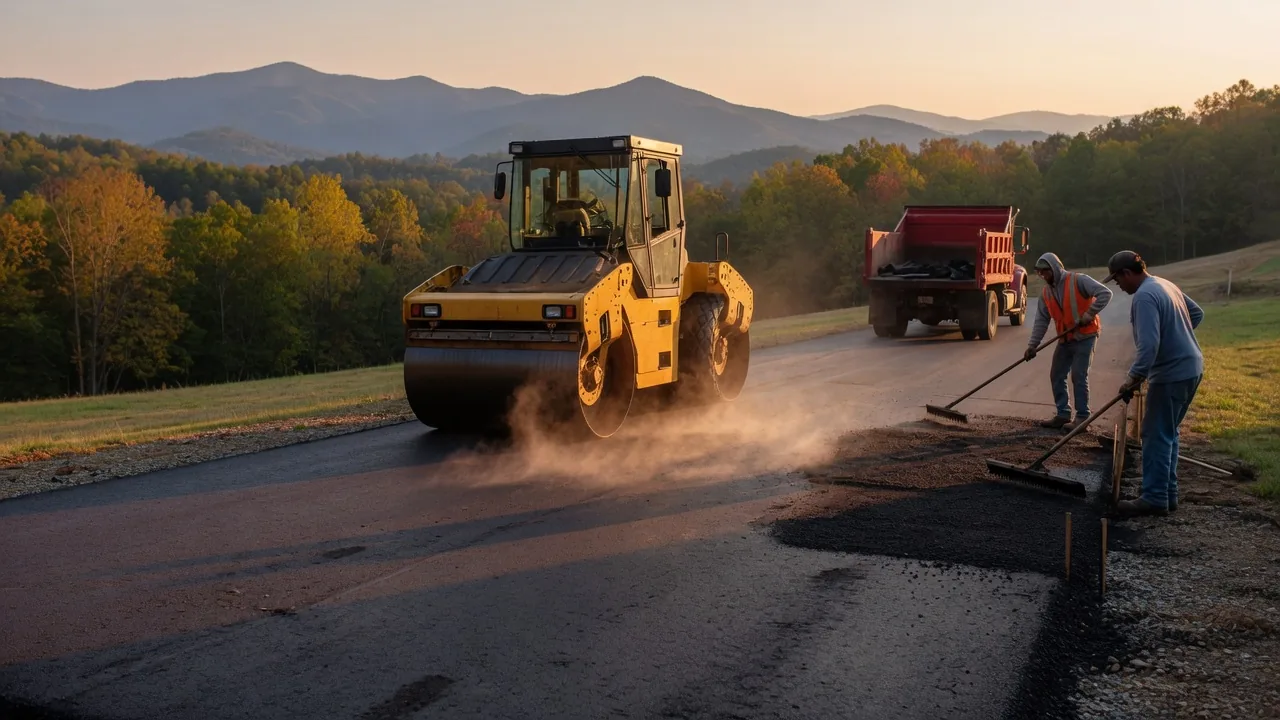
Resurfacing means putting a new asphalt wearing course over a prepared existing surface — usually after crack filling, spot patching, and edge repair. It is not a rebuild, and it cannot rescue a base that has gone soft. If a section of driveway pumps or flexes underfoot, the stone underneath has lost its drainage and no overlay will hold there.
Haywood County's freeze-thaw cycle matters here too. Water that gets into the base, freezes, and expands heaves the surface, and repeated cycles open the same cracks wider every winter. That is why the National Weather Service guidance on freeze-thaw timing is worth a glance when scheduling: late-season work on a saturated base is money spent on a surface that will not survive its first spring. The honest rule for this valley is water first, edges second, surface last.
There is also a regulatory edge to keep in mind. If your drive drains toward a creek, a ditch that feeds the Pigeon River, or a storm inlet, the runoff has to be handled so it does not carry sediment or oil off the pavement. The NC Department of Environmental Quality has jurisdiction over stormwater and water-quality concerns in the state, and on larger or commercial lots that can shape how drainage is built. For a residential resurface it rarely changes the scope, but it is one more reason to fix water at the source rather than let it run.
Storm history is part of the picture here, as it is anywhere in the mountains. FEMA has recorded 19 federal disaster declarations in this county across 1973-2026. Many of those were flood events along the Pigeon and its tributaries, and the driveways that came through them best were the ones with the grade and drainage already doing their job. That is not a sales point; it is the local record.
The Canton price picture
Residential work here prices off square footage, access, and how much prep the base needs. A straightforward overlay on a sound driveway is one kind of job; a sloped drive with a failed culvert, rotted edges, and drainage to correct is another. See the full Haywood County cost breakdown for the working table, and treat any bid that skips the prep line as incomplete rather than cheap. Where work crosses into a street or right-of-way, the NCDOT driveway access permit rules apply, and the permit asks for details — grade, drainage, and apron — that a proper scope should already answer.
| Scope | Typical range |
|---|---|
| Crack fill and sealcoat only | $300–$900 |
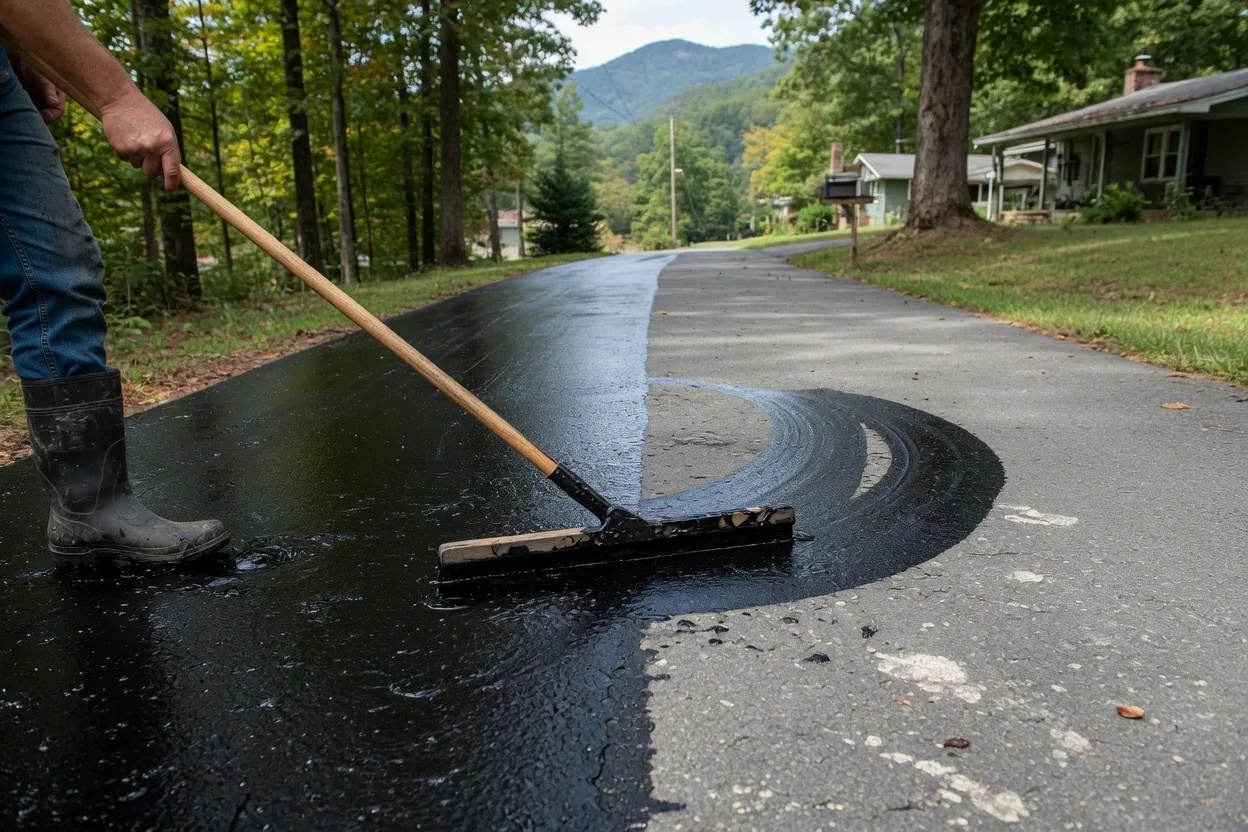
| Overlay on sound driveway, standard width | $1,800–$4,200 |
| Overlay plus edge rebuild and drainage correction | $3,500–$6,500 |
| Full-depth repair of failed sections before overlay | Quoted per square foot, above base overlay |
Ranges are what local work typically lands in, not a flat rate. Access matters on these lots. A narrow drive that a dump truck cannot back into, or a slope steep enough to need a smaller machine, moves the number.
Two more cost drivers show up on Canton-area quotes. One is edge material: rebuilding a failed shoulder on a downhill drive means importing stone and compacting it, not just laying a bead of asphalt along the lip, and that is real labor. The other is the curb cut and apron at the street. If the apron has settled or the culvert under it is crushed, correcting that before the overlay is often the difference between a job that lasts ten years and one that shows reflection cracks the first winter. Neither line is dramatic on a quote, but together they are frequently why two bids for the same driveway land a thousand dollars apart.
Hiring well on a hillside
Three checks worth making before you sign anything in Canton. First, ask what the crew intends to do about drainage, specifically — where the water goes off the drive and how they will prove it once they are done. If the answer is only about asphalt thickness, keep looking.
Second, ask who is doing the work and whether the job crosses the licensing threshold; the NC Licensing Board for General Contractors sets those rules, and a legitimate outfit will not dodge the question. Third, ask for the sequence: prep, then drainage, then paving. Crews that pave first and promise to fix water later have the order backwards. When comparing bids, the resurfacing guide walks through what a complete scope includes, and the Canton contractor page covers how to vet local crews.
Watch for one more habit that separates a good hillside crew from a fast one: they walk the driveway with you before the machine ever shows up, and they mark the low spots, the soft section, and the ditch line. If a quote arrives without anyone having stood on the drive, it is a guess, and on a slope a guess is the most expensive line in the job. Ask for the plan in writing, including where the water exits the property.
How the seasons shape the calendar
Canton sits high enough that fall arrives early and spring takes its time. Asphalt needs warm, dry conditions to compact properly, and the base needs to have drained after winter. That narrows the good window to roughly late spring through early fall. Paving in a wet stretch traps moisture under the new surface, and that moisture works on the base all winter.
Fall work has its own logic. A driveway resurfaced in September or early October has weeks of warm weather to cure before the first freeze, and by the following spring the surface has already proven whether the drainage is right. If you are on a hillside lot, that first spring will tell you more about the job than anything the contractor says on the day of the pour. This is another place where a quick look at NWS seasonal outlooks is a reasonable habit, not because it guarantees a dry week, but because it can keep you from scheduling into a known wet pattern.
Winter itself is not the enemy of a sound driveway; it is the enemy of a weak one. The driveways that survive a Haywood County winter without new cracks are the ones that were shedding water correctly before the first frost. That is the quiet argument for doing the drainage work as part of the resurface rather than after it.