When the plants roll in Transylvania County
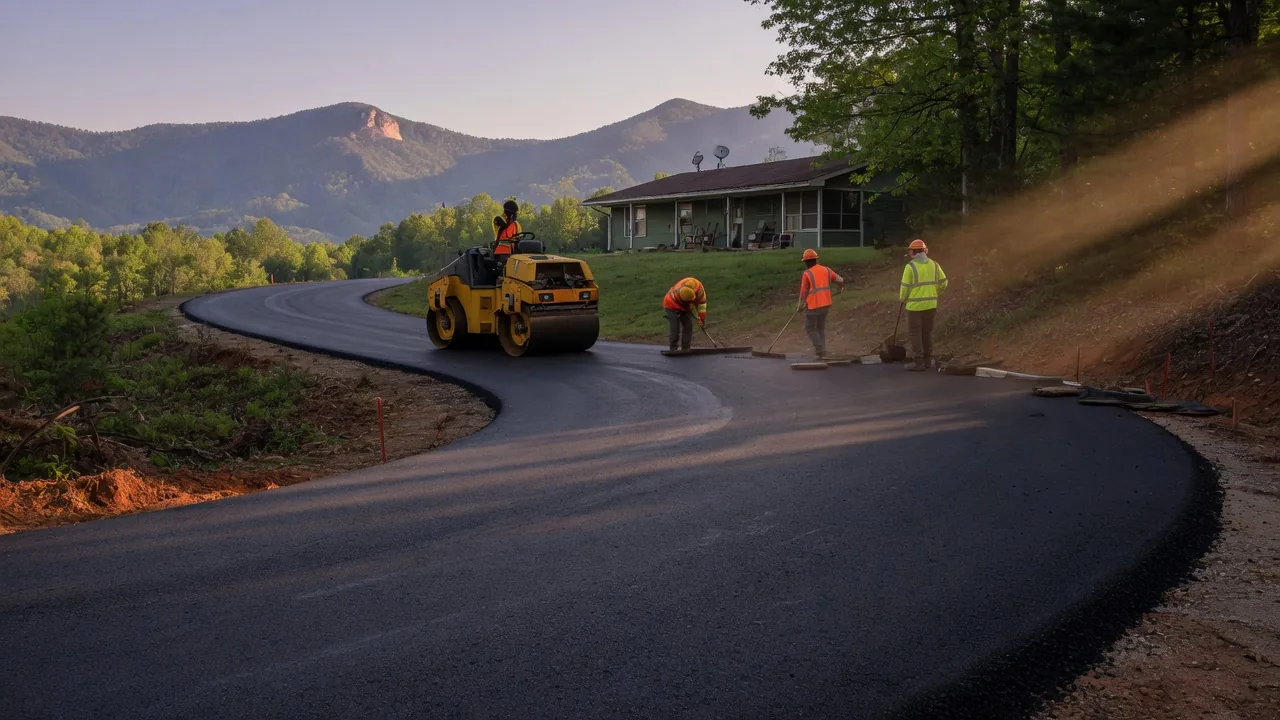
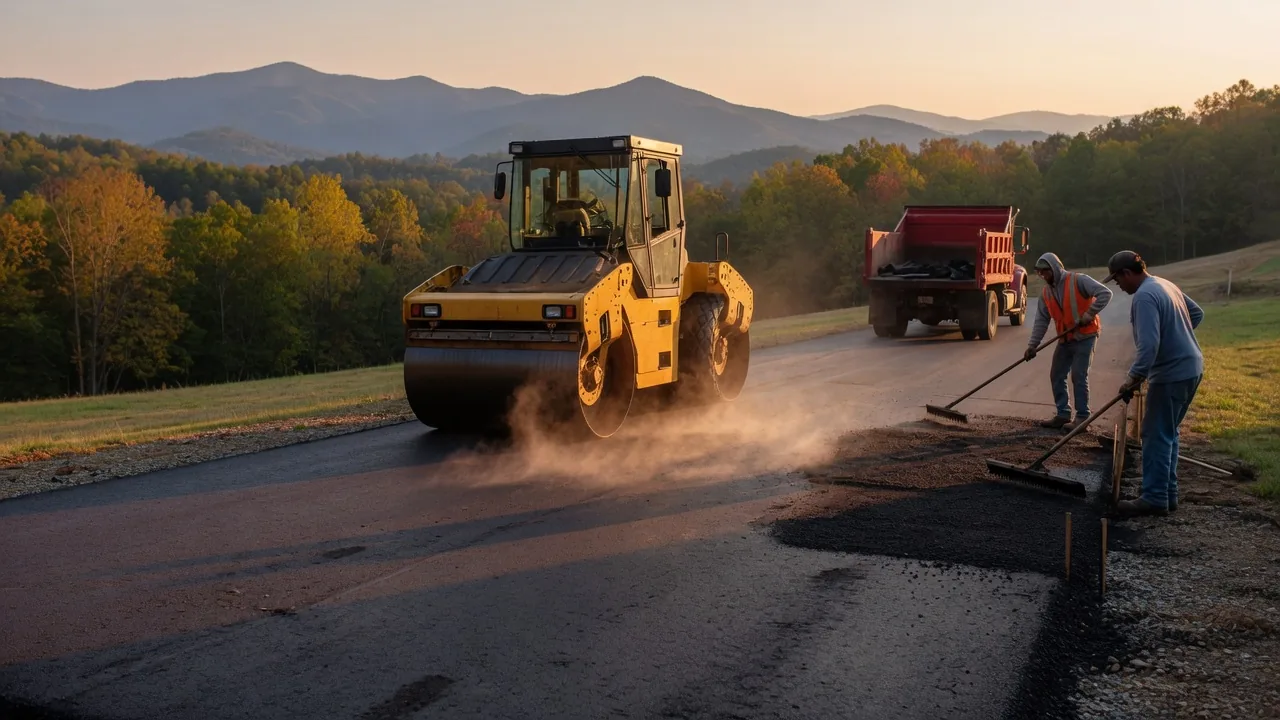
Brevard sits in a basin rimmed by the Pisgah National Forest, and that geography sets the paving calendar more than any marketing schedule does. Asphalt plants in this part of the mountains open when overnight lows stop threatening the mix and close before the first hard freeze, so most driveway work lands in a spring-through-fall window. Hot-mix asphalt needs warm ground and warm air to compact and bond; laid too cold, it stiffens in the truck, rakes poorly, and never reaches the density that makes a driveway last.
The rolling window matters as much as the calendar. Crews want air temperatures comfortably above the mid-40s and rising, with dry stone underneath. In Brevard that often means a mid-morning start after the valley fog burns off, because a shaded north-facing drive on a wooded lot can sit ten degrees cooler than a sunny one a mile away. If a contractor quotes you a hard date in January, ask what mix and what temperature they're planning around.
Transylvania County's terrain varies more than outsiders expect. A lot off a forest road near DuPont State Forest may sit at a different elevation and aspect than one down in the town grid, and those differences shift when the ground warms in spring. Contractors who work this county regularly know which hollows hold frost longest and which ridges dry out first. That local knowledge is worth more than a low bid from a crew that rarely crosses the county line.
The working season also compresses because so many driveways here are long, steep, and lined with mature trees. A job that would take one day on a flat suburban lot can stretch to two or three when the paver has to back down a narrow gravel lane and the roller can't reach every edge. That reality shapes both scheduling and price, and it's why honest bids in Brevard tend to cluster rather than spread wildly.
Shade, frost, and why mountain asphalt cures differently
Transylvania County is wet and green for a reason, and that same canopy that makes Brevard beautiful slows asphalt down. A driveway under white pines or hemlocks stays damp longer after rain, holds cooler surface temperatures, and cures more slowly than an open pasture drive. Slow curing is not automatically bad, but it changes when you can park on it, when you can seal it, and how the first winter treats it.
Frost is the other local variable. Our freeze-thaw cycles work on the edges and the base as much as the surface. Water that gets under a driveway, freezes, and lifts will crack even a well-laid mat, which is why grading and drainage get discussed before the first ton of asphalt. The International Code Council codes that North Carolina adopts treat site drainage and paving subbase as real requirements, not afterthoughts, and the mountain makes that plain every February.
Homeowners on wooded lots often notice the difference in small ways. The drive stays darker longer in the morning, moss creeps along the shaded edge, and the first freeze seems to bite harder where tree roots have already loosened the soil. None of that means asphalt is the wrong choice. It means the base prep and edge treatment have to be done with the site in mind, not copied from a spec sheet written for flat farmland.
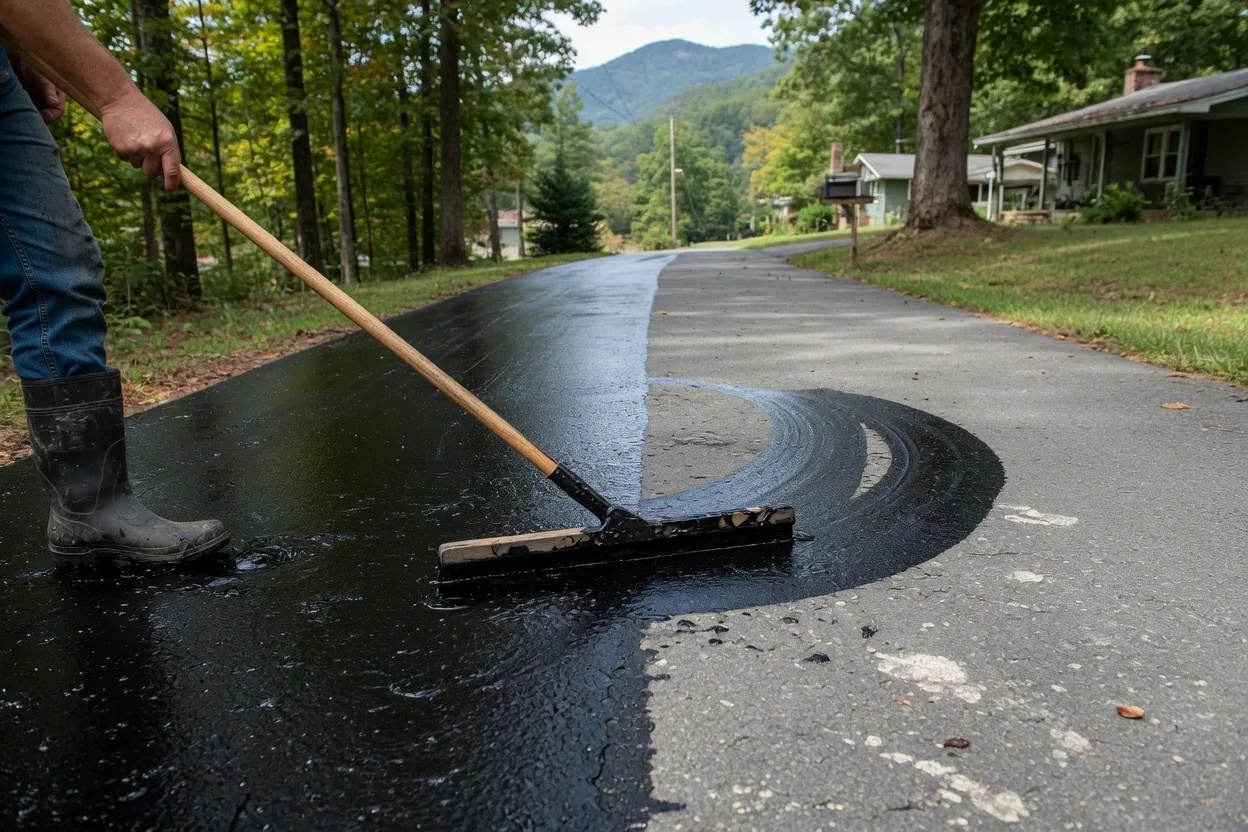
Sealcoating timing is the practical consequence. In sunnier parts of the state a new drive might be ready for sealer in six months. Under a heavy Brevard canopy, a full year is more realistic. Pressure-washing and patching before sealing also matter more here because organic debris and moisture linger. Rushing the sealer on a slow-curing mountain drive is one of the most common and most avoidable mistakes we see.
What Brevard driveway work actually costs
Pricing here tracks scope: new construction on prepared base prices differently than resurfacing over an existing mat, and a steep, curved drive off a forest road carries more labor than a straight run on a level lot. The table below shows honest working ranges for Transylvania County. Treat any bid far under these as a sign the base or the drainage got skipped. Our Transylvania County cost breakdown goes line by line.
| Scope | Typical range |
|---|---|
| Patch and crack repair only | $300-$1,200 |
| Resurface / overlay existing drive | $2,400-$5,500 |
| New asphalt driveway, standard lot | $4,500-$9,500 |
| Steep or long mountain drive with base work | $9,000-$20,000+ |
| Sealcoat (after full cure) | $0.20-$0.35 per sq ft |
These are ranges, not quotes. Length, width, thickness, base condition, and access for the paver and roller move the number more than anything else.
A few local factors push jobs toward the higher end of those bands. Driveways that cross culverts or drain toward a crawlspace need extra grading and sometimes a new culvert pipe. Slopes steeper than about ten percent require careful lift thickness and may need a tack coat between lifts to keep the mat from sliding. And long drives far from the plant mean trucking time, which shows up in the bid even when the asphalt itself is the same mix.
Homeowners sometimes ask whether winter is a good time to get a discount. In this county the answer is usually no, because the plants aren't running and the work can't be done safely. The better strategy is to book a fall or spring slot early and let the crew do the job right rather than chase an off-season price that doesn't really exist here.
Sealing, permits, and the paperwork side
New asphalt should cure for months before sealcoat, and in shaded Brevard lots that wait runs longer. Sealing too early traps solvent and moisture and can leave a soft, gummy surface that never sets right. Waiting a full season is normal here.
If your driveway meets a state-maintained road, the connection is a driveway permit matter, not a handshake. The North Carolina Department of Transportation controls access to its right-of-way, and applications run through NCDOT Connect. Larger or commercial paving projects can also cross the threshold where North Carolina general contractor licensing applies, so it is fair to ask who holds the license on a big job. For residential driveways our asphalt paving overview covers what a proper installation includes from excavation to final roll.
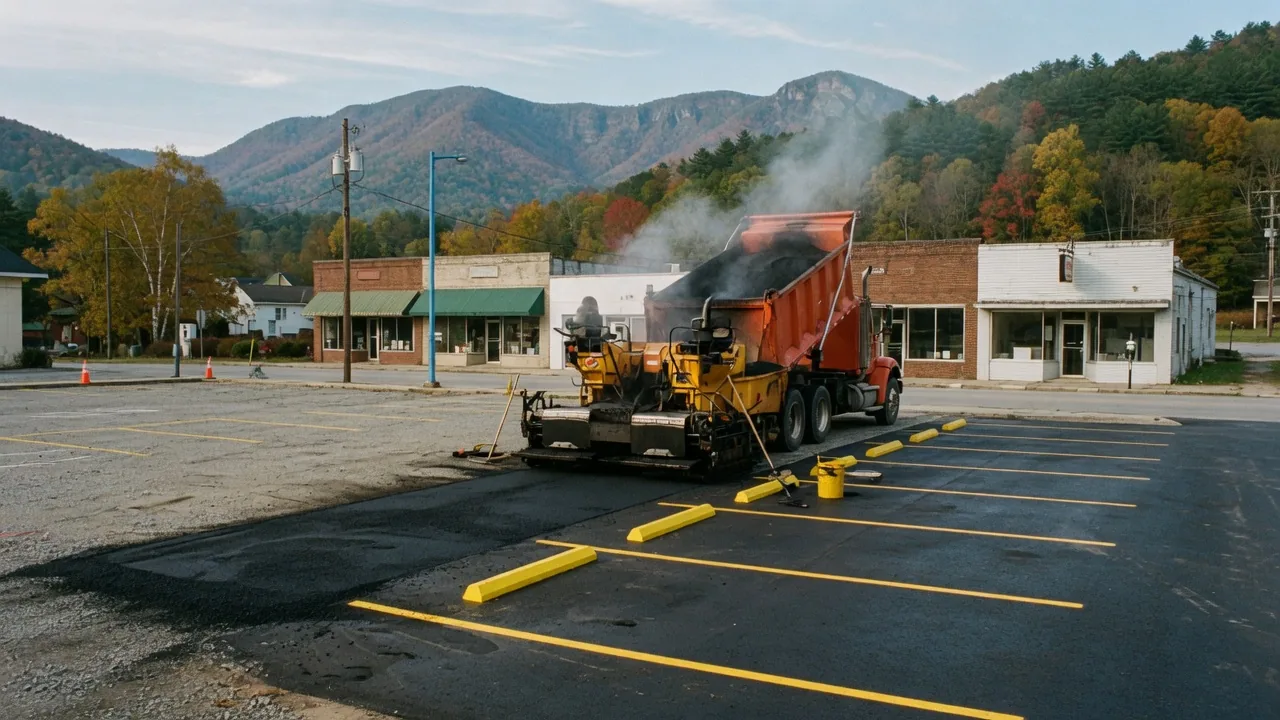
Stormwater is the other piece of paperwork that matters in the mountains. Transylvania County gets intense rain, and the EPA's stormwater guidance under the Clean Water Act is the backdrop for local erosion-control rules on larger projects. The U.S. Environmental Protection Agency publishes plain-language material on why runoff from paving and grading needs to be managed, and that logic applies whether you're repaving a quarter-mile drive or building a new parking area. A contractor who talks about where water goes, not just where asphalt goes, is usually the one to hire.
For any project that touches a slope near a stream or a septic field, it's also worth checking with the county before work starts. Rules vary by parcel, and a short conversation up front can save a tear-out later.
Getting on a Brevard crew's schedule
Because the working season is compressed, good crews in this county book out weeks ahead once the plants open. That means the best time to get a site visit is before you think you need one. A walkthrough should cover base condition, drainage away from the house and the drive, slope, tree shade, and where the equipment can safely turn around. If your drive is on a narrow forest road, access alone can decide the schedule.
Ask for the scope in writing: how many inches of base, what mix, how thick the compacted lift, and what happens at the edges. Then compare bids on scope, not just the bottom line. When you're ready to move, our Brevard paving service page is the place to start.
It also helps to think about timing from the other direction. If your drive survived last winter with only minor cracking, late summer or early fall is often the best window to resurface before the next freeze cycle. If it's already rutting or the edges are crumbling, waiting another season usually means a bigger repair, not a smaller one. Brevard's freeze-thaw pattern rewards homeowners who fix problems while they're still small.
Finally, be honest with the crew about how you use the drive. A daily driver, a heavy truck, a boat trailer, or a delivery vehicle all change what the base and thickness need to be. Contractors here would rather spec the job correctly the first time than come back to patch a drive that was built for lighter use. That conversation is part of a good site visit, and it costs nothing to have.