When Fletcher asphalt actually gets laid
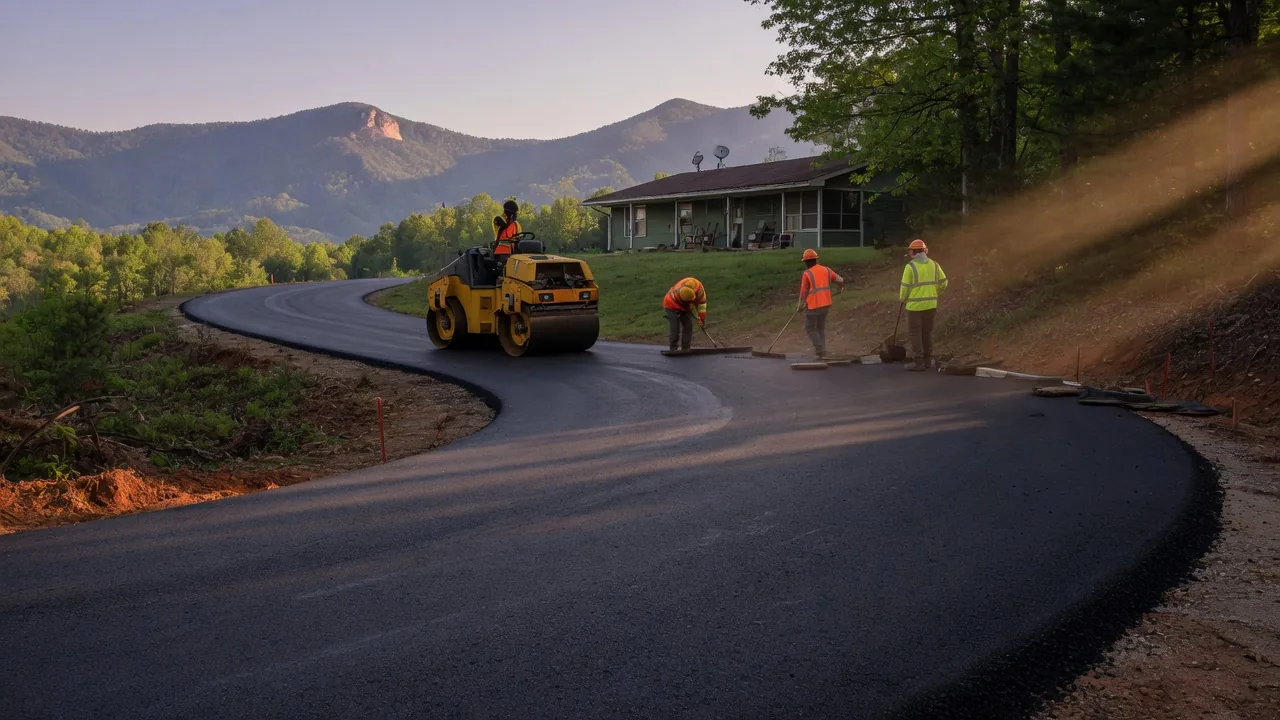
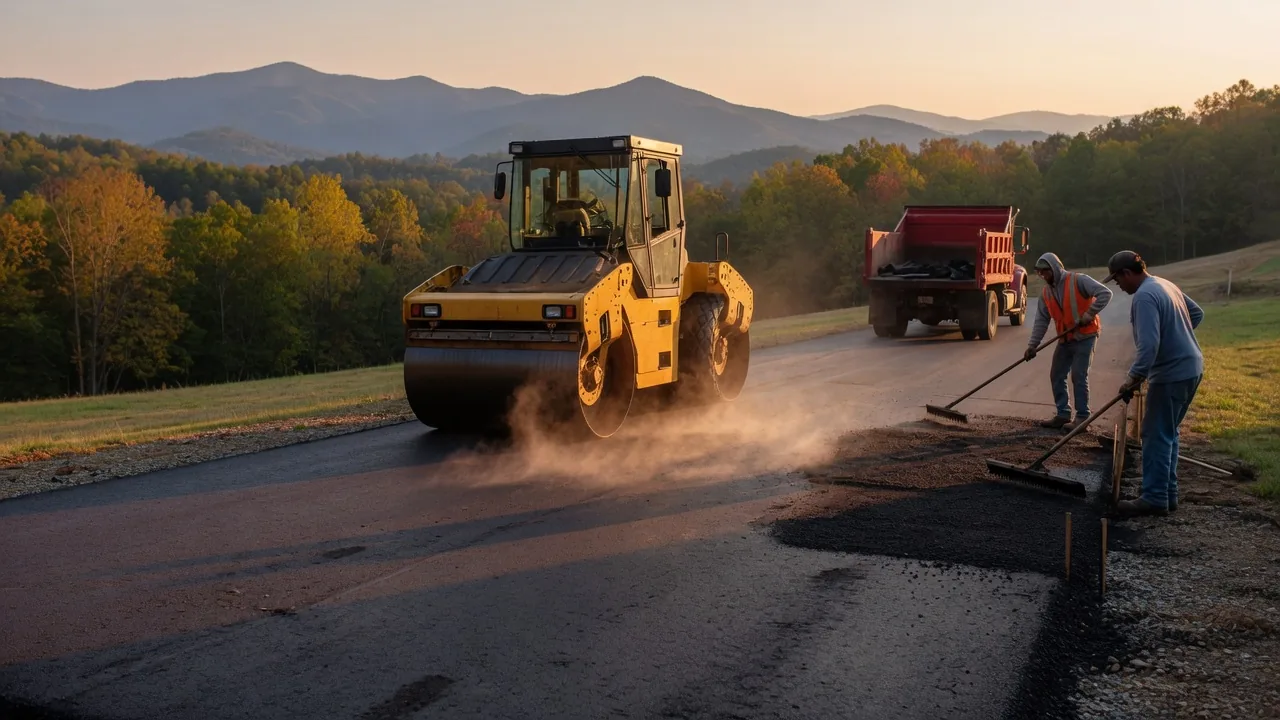
Fletcher sits in a thermal pocket that most paving crews in Henderson County plan around: hot enough on summer afternoons that fresh asphalt stays workable through the roll, cool enough in the shoulder months that a driveway poured too late in the day won't finish before the surface temperature drops out of range. The practical laying window runs roughly April through October, with the sweet spot in late spring and early fall when overnight lows stay above what the mix needs to cure without raveling.
Mountain shade is the local wrinkle. Lots tucked against the tree line off Howard Gap or down toward the Cane Creek bottomland hold moisture into the morning and cool off earlier than the open ground out by the airport. A crew that reads the site will schedule around shade rather than fight it — laying into a shaded driveway in November is how homeowners end up with a raveled surface by the following spring. The asphalt paving overview walks through what a legitimate mix design and compaction plan should include before anyone shows up with a paver.
What a Fletcher driveway scope actually looks like
Asphalt is a system, not a surface: subgrade, base, binder, and wearing course, each doing part of the work. Fletcher's mix of new subdivisions off Naples Road and older farm-lot driveways on the Hendersonville side means estimates swing widely once the base is exposed. A driveway that was stripped of its topsoil and properly stoned when it was built takes an overlay cleanly. One that was scraped and paved over clay will fail in a season no matter how good the top lift looks.
That's why a real quote starts with a probing or coring to see what's under the surface, then prices the repair scope rather than just the visible surface. Anyone quoting a square-foot number from the truck without checking base depth is guessing on your dime. When a driveway is too far gone for overlay, full-depth replacement is the honest answer, and the Henderson County cost breakdown shows what each of those paths typically runs.
Typical scope and price ranges in Henderson County
The table below reflects residential and light commercial work across Fletcher and the surrounding county. Commercial parking lots price differently because they carry heavier loads, tighter compaction specs, and striping scope — treat the ranges as directional and always ask for a line-item scope.
| Scope | Typical range | Notes |
|---|---|---|
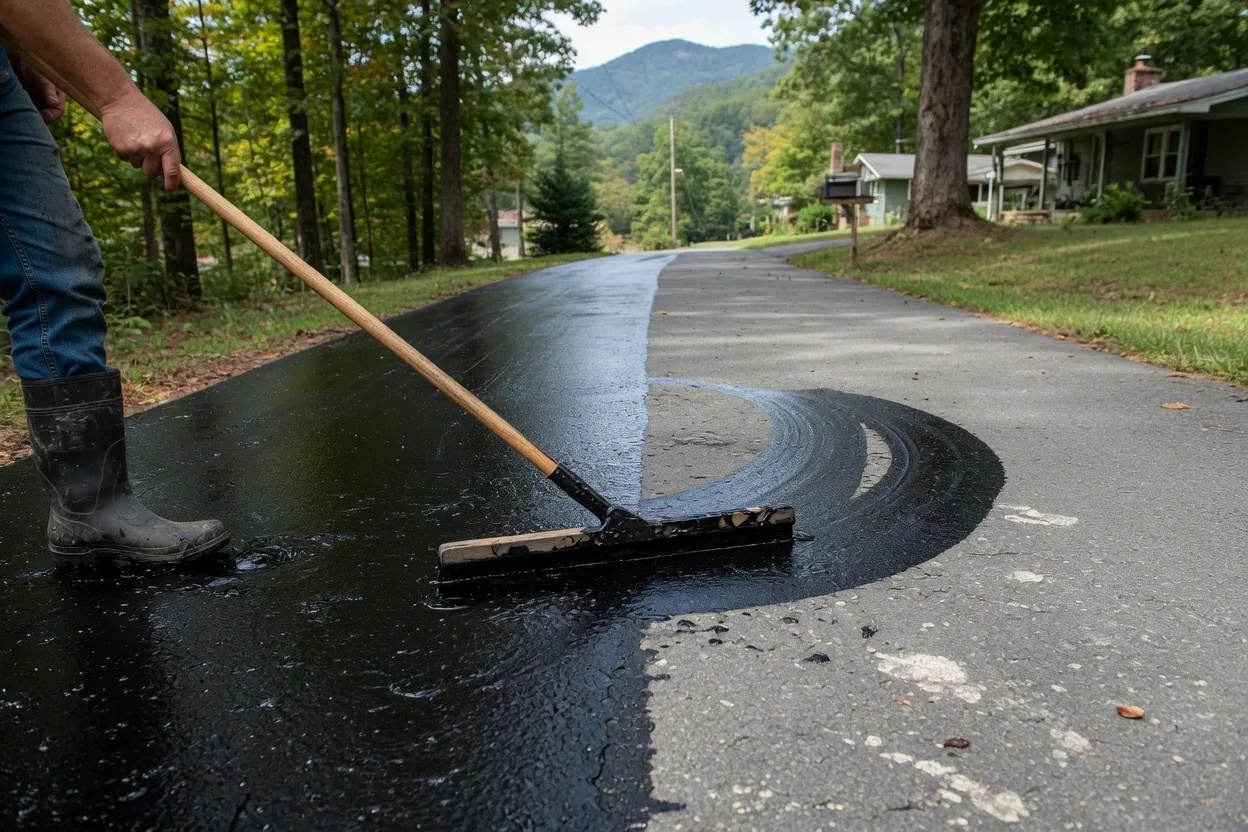
| Crack fill and sealcoat (routine maintenance) | $0.20–$0.40 / sq ft | Best done on sound pavement, not as a substitute for repair |
| 1.5" asphalt overlay over sound base | $3.00–$4.50 / sq ft | Requires a clean, structurally sound existing surface |
| Mill and replace top 2" | $4.00–$6.00 / sq ft | Handles surface cracking and rutting without a full rebuild |
| Full-depth driveway replacement | $8.00–$14.00 / sq ft | Includes stone base, binder, and wearing course |
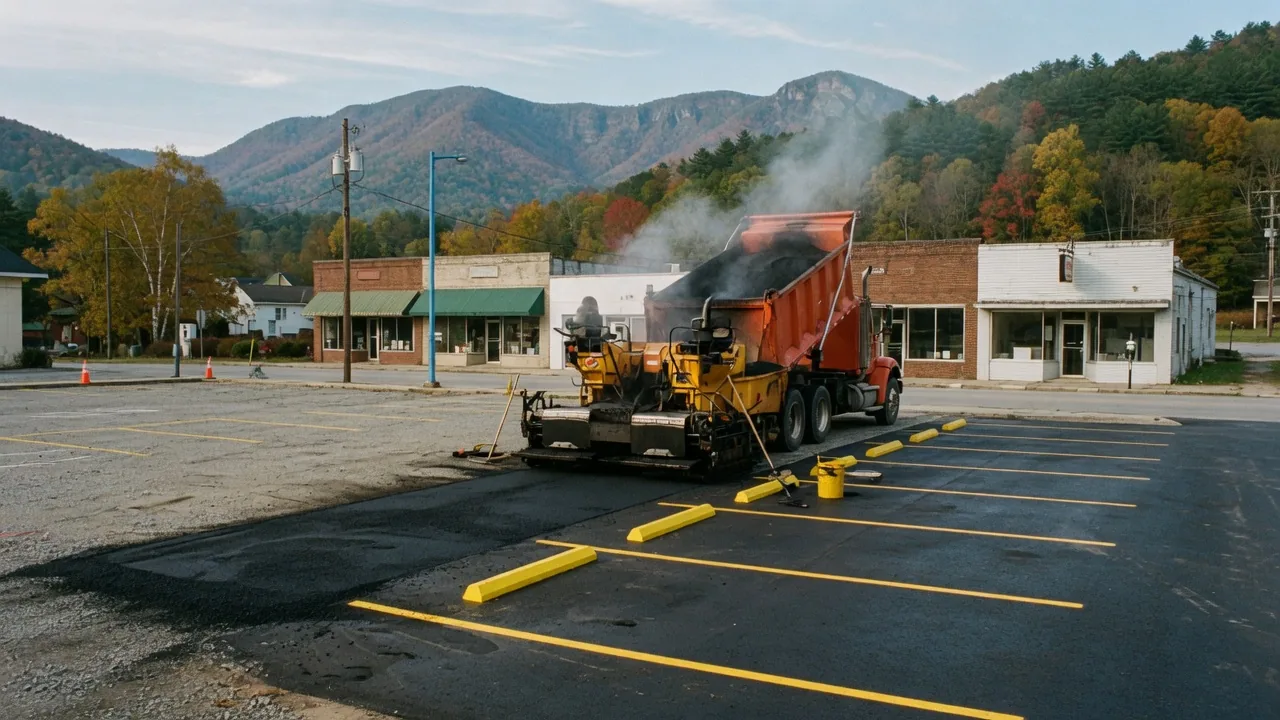
| Commercial lot paving | $2.50–$6.00 / sq yd | Load rating, drainage, and striping drive the scope |
Henderson County's residential lot sizes mean a standard two-car driveway often lands in the $3,800–$9,500 band for overlay or partial-replacement work. Anything north of that usually means the base is compromised and a rebuild is on the table.
Permits, access, and the driveway apron
Any change to where a driveway meets a state-maintained road runs through NCDOT, not the town — driveway permits and access management rules are handled at the state level, and the application process lives on NCDOT Connect. That matters more in Fletcher than in a dense downtown because so much of the housing stock sits off two-lane routes with drainage ditches, and a widened apron changes how stormwater leaves the road.
On the construction side, larger paving and grading scopes can cross North Carolina's general contractor licensing threshold, which is set and enforced by the NC Licensing Board for General Contractors. For a homeowner, this is mostly a screening question: ask whether the scope of your project triggers a license, and whether the crew carrying it holds one. If they dodge the question, that's your answer. Stormwater is the other local consideration — Fletcher's position between the French Broad and Mud Creek watersheds means drainage on new or expanded paved areas is not optional, and a good paving plan handles it at the subgrade rather than letting it pool at the apron.
Reading a paving bid without getting burned
Three things separate a real paving bid from a low number that grows: the base scope, the compaction plan, and the schedule window. A legitimate bid says how much existing material is being removed, what stone is going in, how thick each lift is, and when the work will happen relative to the weather. A suspect bid quotes a square-foot price and a start date with nothing underneath.
This matters more than usual in Fletcher because the terrain varies block to block — a driveway on a slope draining toward the road needs different water management than a flat lot behind a subdivision pond. Ask how they plan to keep water moving off the finished surface and away from the base, and ask for references on similar driveways. For a deeper look at the specific scope you're pricing, asphalt driveway paving in Fletcher covers the details worth checking before you sign. The best time to ask hard questions is before the paver shows up, not after the first winter.