Grading is the paving job here
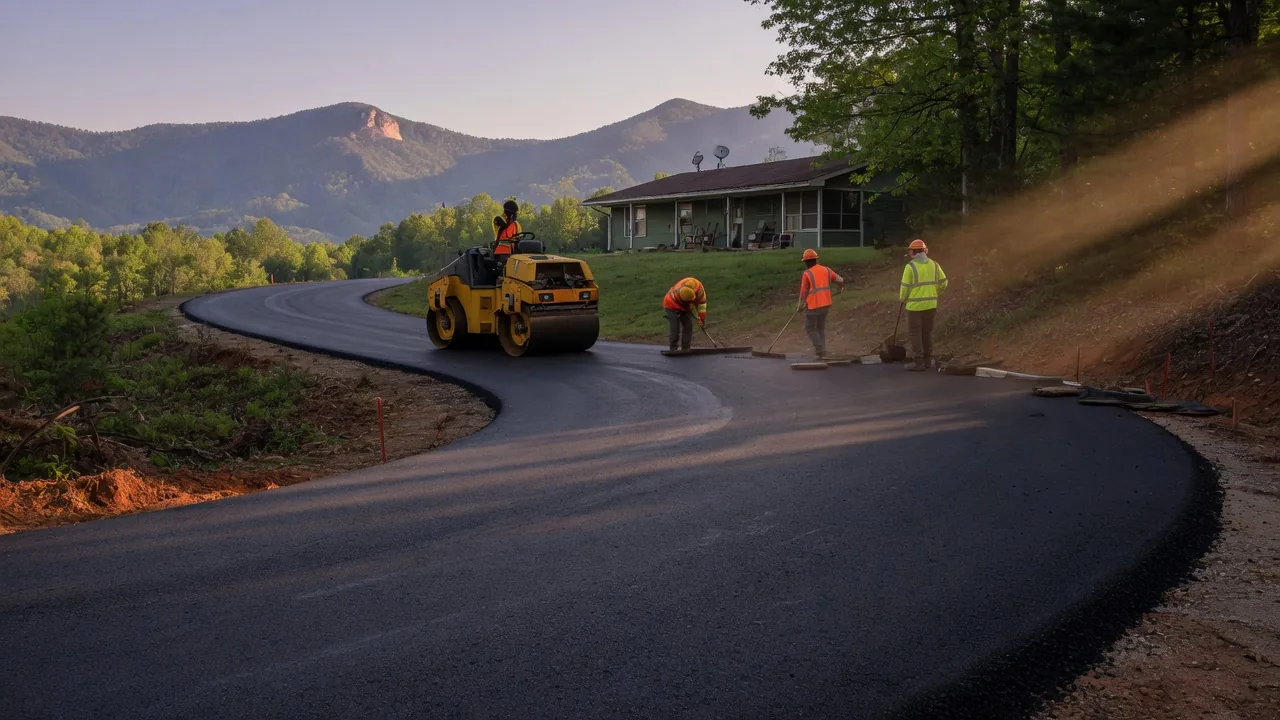
Drive a few roads off the Blue Ridge Parkway side of Buncombe County and the pattern is obvious: the driveways that fail are almost never the ones where the asphalt mix was wrong. They are the ones where the rain was never given an exit. Mountain lots shed runoff fast, and a steep gravel or worn-asphalt drive with a flat crown drops water onto one edge, sheets it against the garage, and then lets it run down the drive surface eating a channel all the way to the road. Pavers working this county cannot treat grade as an afterthought, and honestly, the ones who get it right spend as much time thinking about where the water goes as they do about the mat.
So the first real question on any Hillside or valley-floor lot is which direction rain runs, and second, what is at the bottom of that run. That is a grading question before it is a paving question. Asphalt driveways on mountain terrain need a crown that matches the slope, edges keyed into a shoulder or curb or ditch that can carry flow without undermining the subgrade, and, wherever the driveway meets the house, a way for water to go around rather than in.
Subgrade and stone: what lies under the blacktop
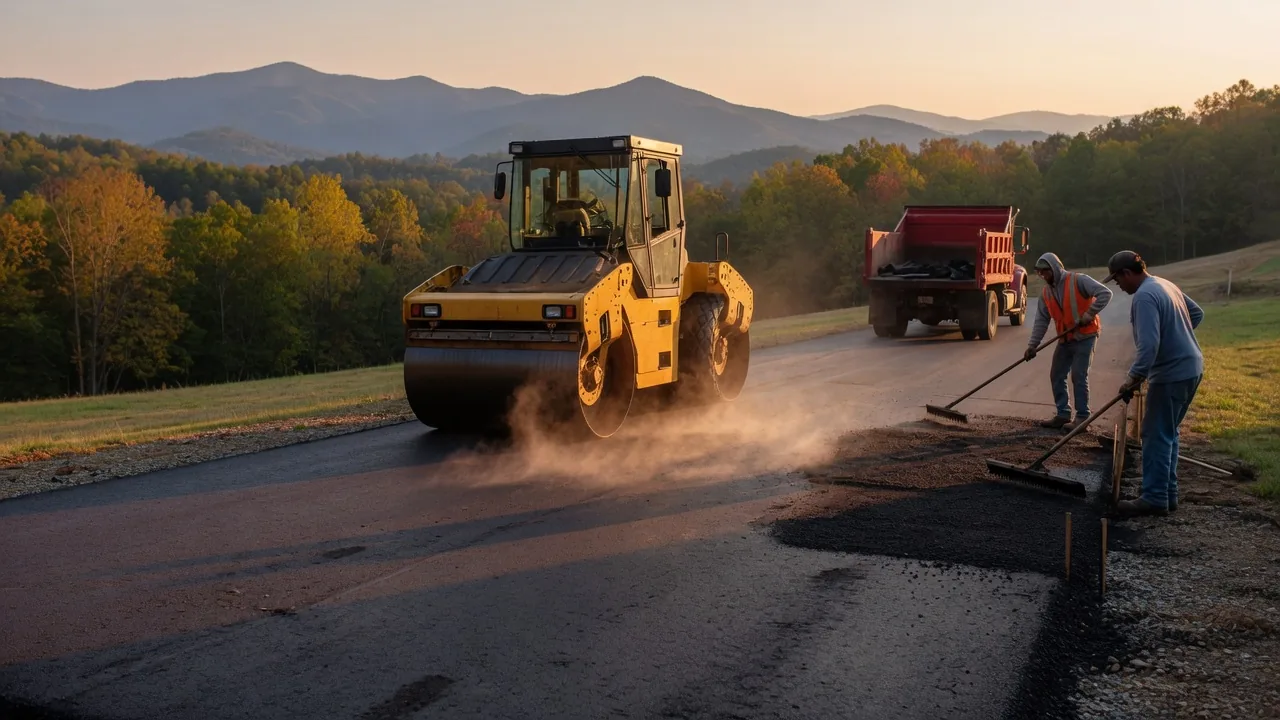
Most driveway failures in western North Carolina start with subgrade. Our soils run the range from clay-heavy red dirt on the lower slopes to rock and broken fill on graded pads, and water behavior is completely different on each. A paver should be excavating, shaping the subgrade to the drainage design, and compacting a compacted crushed-stone base at a depth the traffic actually demands. A car driveway is one thing; a driveway taking a loaded truck is another, and the base depth, stone size, and compacting pattern should be specified in the quote, not assumed. If a bid doesn't mention base depth, ask.
The NC Department of Insurance and the state building code treat driveways and lot grading as part of the same storm-water picture on residential sites, and the code's intent is simple: keep surface water moving off the structure and off the slopes. That means the asphalt work and the drainage work belong in the same conversation. Slope, subgrade, base, and mix design are a package.
What paving work costs in Buncombe County
Pricing in the Asheville area swings with access, slope, and how much of the job is actually repair versus fresh paving. The bands below are realistic for this region, not a flat rate, and every one of them assumes drainage grading is part of the scope. A driveway off a flat valley lot and a switchback on a steep wooded slope are not the same project.
| Scope of work | Typical price range |
|---|---|
| New asphalt driveway, car traffic, typical grade | $3–$6 per sq ft |
| New asphalt driveway, steep mountain grade or long run | $5–$9 per sq ft |
| Asphalt overlay over sound existing pavement | $1.50–$3.50 per sq ft |
| Full-depth repair of a failed section (remove, re-base, repave) | $4–$8 per sq ft |
| Sealcoating, single application | $0.20–$0.45 per sq ft |
| Grading, ditch and shoulder rebuilding, drainage improvements | Quoted per site |
For a fuller look at the line items, the cost page on our site walks through factors that move asphalt driveway costs, from square footage and thickness to base depth and whether a new crossing or driveway permit is needed.
Permits and access when the driveway meets the road
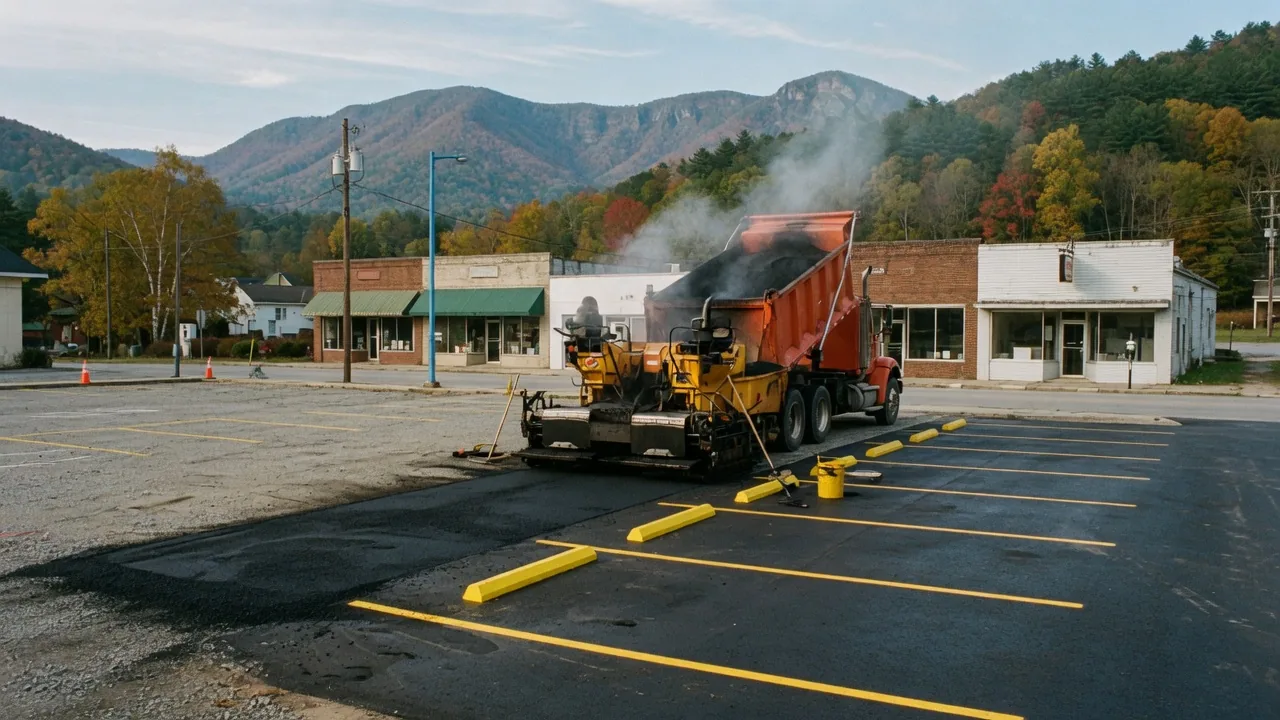
In Buncombe County, and anywhere the driveway touches a state-maintained road, you are dealing with more than the paving crew. NCDOT controls driveway access on state routes through its own permitting process, and anyone rebuilding an entrance or altering the ditchline at the road edge should be prepared for that. A contractor who does this all the time will know when the work needs a permit and when it does not, and will factor the approval timing into the schedule. Gravel-to-asphalt upgrades are where this bites: the crossing may need to meet a specific width, slope, and visibility standard before any asphalt is allowed near the right of way.
Erosion control is the other half of that picture. Western North Carolina gets intense rainfall, and disturbed ground sheds sediment into neighbors' property and streams unless it is managed. Practically, that means silt fence, straw, or a settling area depending on the site. The NC Department of Environmental Quality sets the erosion and sediment rules that govern disturbed areas here, and on a graded driveway with real exposure those rules apply. If a bid says nothing about keeping sediment on site, that is a bid that skipped a real cost.
Sealing, patching, and honest timelines
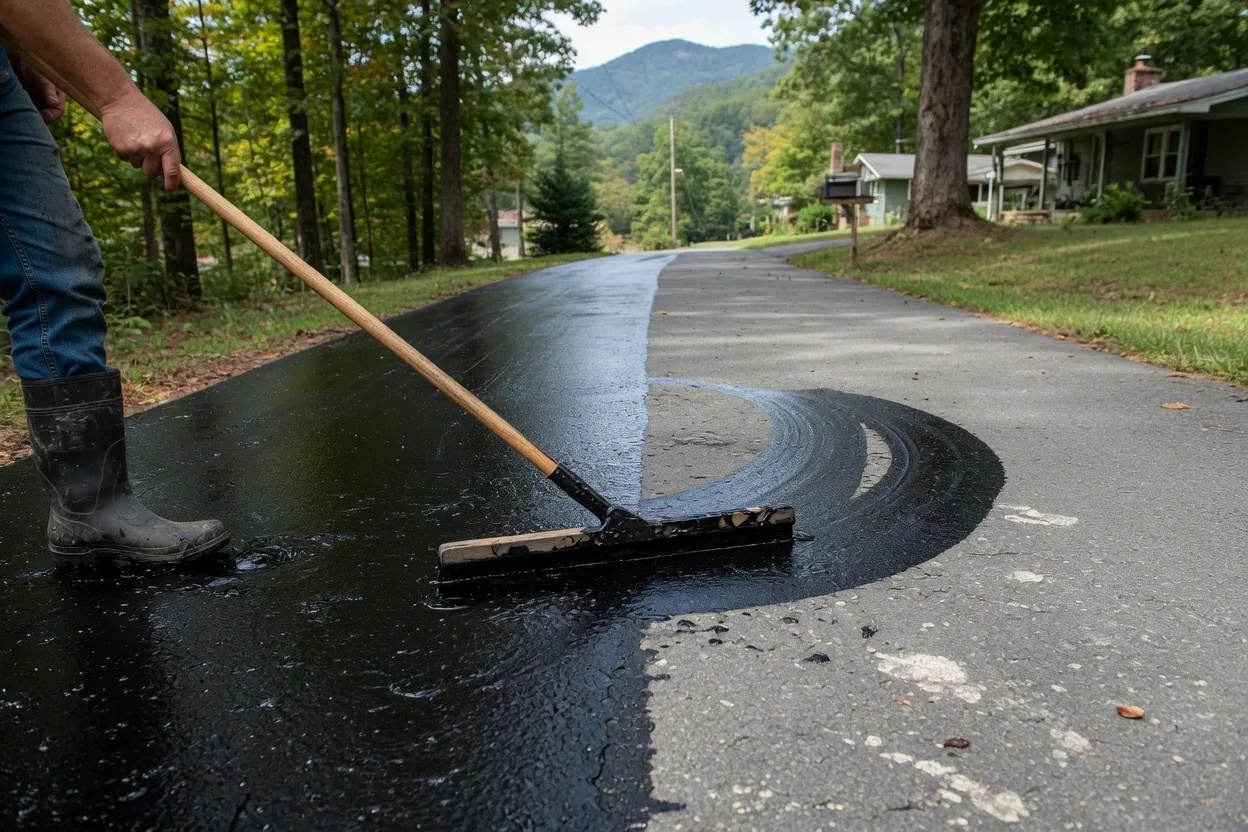
New asphalt cures fast in the sun and needs a season before it is ready to be sealed. Sealing is protective, not structural: it slows surface oxidation and keeps small cracking from becoming a channel for water, but it cannot fix a base that is moving or a section that is already broken. Sealcoating on a driveway that is still shedding water correctly extends its life, and a driveway with a bad grade will be back in the same condition the next wet season no matter how many coats you put on it.
The questions that keep a paving bid honest are the same ones any homeowner should ask. What is the base depth and stone specification? Where is the crown and where does the ditch discharge? How is the joint between new asphalt and the existing drive being treated? And during which season is the work scheduled, because asphalt placement has temperature limits and a winter pour on cold ground does not compact the way summer work does. Get the scope and the driveway plan in writing before anyone mobilizes equipment.
Storm and water history on this side of the mountains
Buncombe County has 19 declared federal disaster events on record going back 1973-2026, and what those events have in common around here is rain arriving faster than the ground can take it. That is not a sales talking point; it is the reason mountain driveways fail on their edges and ditchlines rather than in the middle of the mat. The National Weather Service's rainfall data and the county's history both point to the same design conclusion: build the driveway so the water gets out, not so the water just sits in the base.
When the asphalt on an Asheville-area drive is routed correctly, the crown spills to one side, the shoulder or ditch takes it, and by the time the next heavy rainfall arrives the surface sheds it without the base getting saturated. That is the work behind a driveway that lasts twenty years on a mountain slope.