The gravel tells you the price before any contractor does
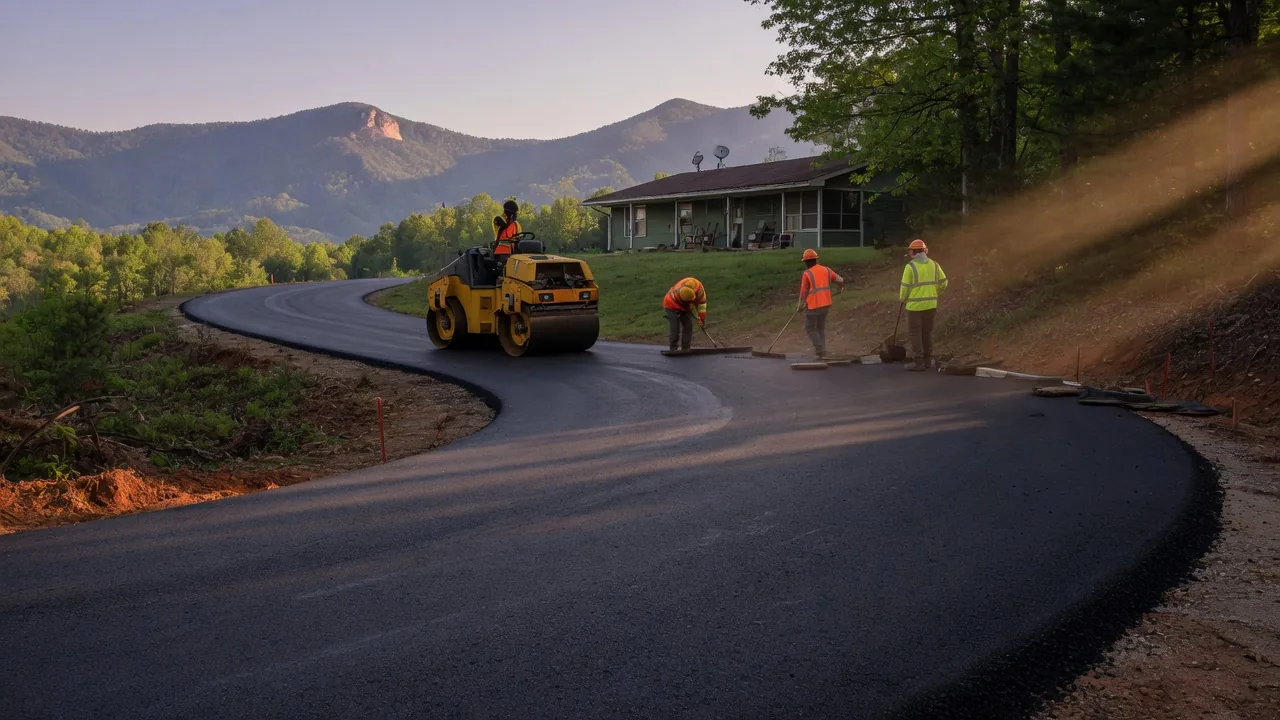
Drive the back roads out toward Leicester or Weaverville and you can read a failing driveway from the cab. The ones that refill potholes every March, the ones with a soft shoulder that swallows a boot heel, the ones where cracks fan out from the center because the base is moving underneath — those are not surface problems, and no amount of fresh asphalt fixes them. The ones that stay firm and shed water clean, even after a week of rain, are the overlay candidates. The gravel is doing the talking. Your job is to listen before you spend.
Buncombe County sits in the Blue Ridge, and the terrain is honest about it. Drives are long because the flat land is scarce. Grades are steep because the mountains do not negotiate. Several months of the year the ground is wet enough that a silted gravel base behaves more like a sponge than a roadbed. All of that means the money on a paving job here goes mostly into base correction and drainage — the asphalt is the cheap part. A homeowner who understands that walks into every bid with leverage.
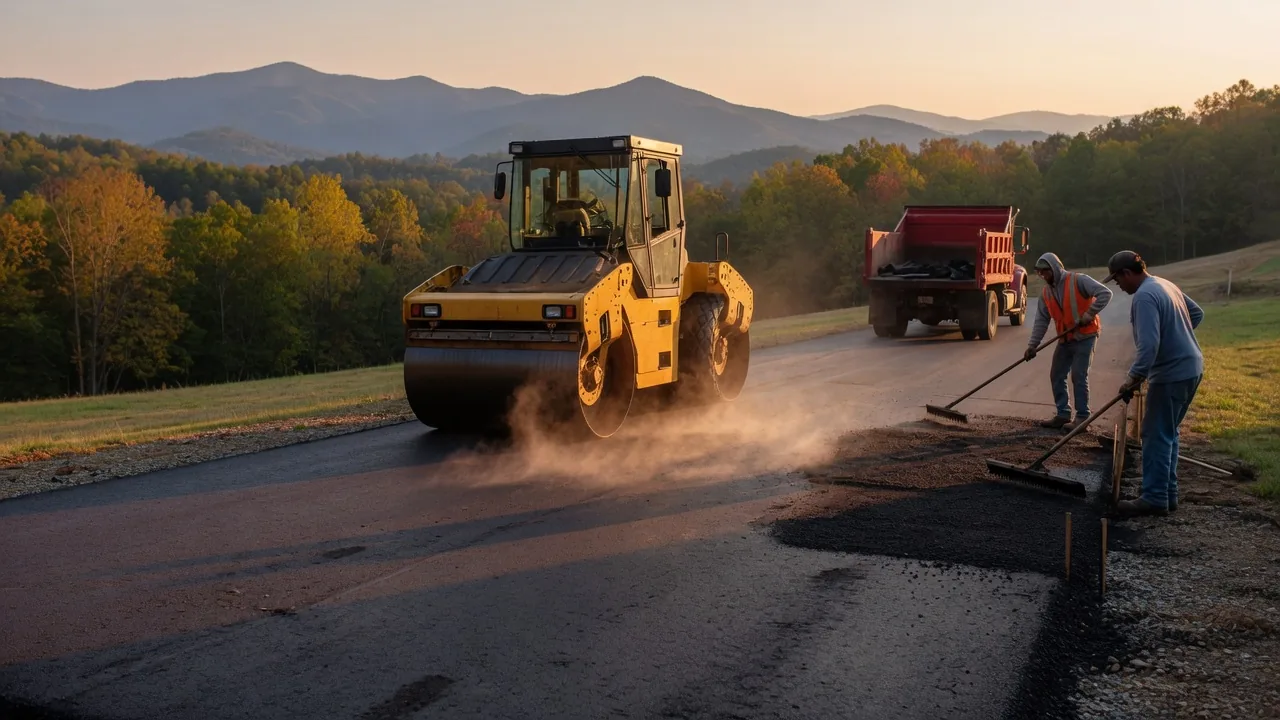
Before calling anyone, do three checks. Walk the drive after a hard rain and mark where water stands or runs. Probe soft spots with a shovel; gravel pumped full of silt will not compact, no matter how much plate work you throw at it. Look at the edges. If there is no defined shoulder and the grass has crept into the driving surface, the paved lane will be too narrow unless the base is widened first. Those findings, not a per-square-foot figure, set the quote. Our gravel to asphalt conversion guide walks the upgrade step by step once you know what you are looking at.
Working cost ranges on mountain drives
Asheville-area pricing sits above the flatland figures national sites quote, because drive lengths are longer, grades are steeper, and base correction on a slope is real excavation rather than a skim coat. The table below is a working range for planning, not a bid. A crew that hands you a firm number before probing the base is guessing with your money.
| Scope of work | Typical Buncombe range | What drives the number |
|---|---|---|
| Patch or level existing gravel (spot repair) | $1.50 - $4 per sq ft | pothole count, soft-spot depth, grading needed |
| Regrade and compact base, then pave | $6 - $10 per sq ft | base depth, compaction, drainage tie-in |
| Full base rebuild with new stone and geotextile, then pave | $11 - $16 per sq ft | excavation volume, slope, haul-off of bad material |
| Steep or winding drive with drainage correction | $16 - $24+ per sq ft | grade, retaining, culvert or swale work, equipment access |
A plain asphalt driveway without the conversion premium sits in a narrower band; see our asphalt driveway cost page for that comparison. If you are weighing surface types on a long rural run, tar-and-chip often lands cheaper per square foot and handles freeze-thaw cycles well — our tar and chip cost guide covers where it makes sense.
Slope, runoff and the reason drainage leads every bid
The county's storm record is not a scare tactic, it is a building condition. Buncombe County has seen 19 federally declared disaster events across a record that now spans 1973-2026, most of them storm and flood family. That history shows up on driveways as washouts, failed culverts, and gravel that migrates downhill every time a cell stalls against the ridge. A drive cut into a hillside also catches uphill runoff along its upper edge, and if that water is not directed away before paving, it will find the base and undermine it.
The practical consequence: on a graded mountain drive, a paving bid that does not address water is a bid for doing the job twice. The order is water first, then base, then surface. The National Weather Service keeps the local rainfall and storm record if you want to see what your drive is up against year over year. Pair paving with proper grading or a swale and the surface lasts. Skip it and you will be patching within two winters. On the steepest drives off the higher ridges, that drainage work can be the difference between the middle and the top of the cost table.
Permits, licensing and the rules that catch people
Most residential driveway paving on private property in North Carolina does not require a building permit, but the work still runs into state rules at certain thresholds. The NC Licensing Board for General Contractors sets the licensing threshold for general contracting, so on larger jobs — long commercial drives, extensive base rebuilds — the contractor should be licensed. The NC Department of Insurance and Building Code Council maintains the state codes governing site work standards.
Two more rules snag people here. If your driveway meets a state-maintained road, the connection point needs a driveway permit from NCDOT, and the apron must be built to their specification; paving past that point without the permit creates a problem at resale. And any work that alters drainage onto a neighboring property or into a stream can bring in NC Department of Environmental Quality oversight. Ask your contractor which of these apply before the first load of stone arrives. How they answer tells you whether they have done this before in the county.
Patch, overlay or tear out: making the honest call
On most gravel drives here, the right answer is overlay after correction, not a full tear-out — but only if the base reads solid and the drainage is fixed first. A patch is right when damage is isolated: one pothole, one soft spot, one settled section where a spring crosses the lane. An overlay is right when the drive is structurally sound but the surface is rough, dusty, or losing gravel into the yard. A tear-out is right when the base has failed across the full length, when the grade is wrong, or when water has been undermining the subgrade for years. Paying for a tear-out you did not need is expensive. Paying for an overlay over a failed base is worse, because you do it twice.
Three moves keep the price honest. Get the drainage story first — ask every bidder what the water is doing before you talk about asphalt. Price the base separately from the surface so change orders stay clear and comparable. And benchmark against the county range above; if a bid lands far outside it, make them walk you through why, whether that is depth to rock, haul distance, or equipment access on a narrow mountainside lane. How they explain it tells you everything about how the job will go.