How Black Mountain driveways differ from Asheville's
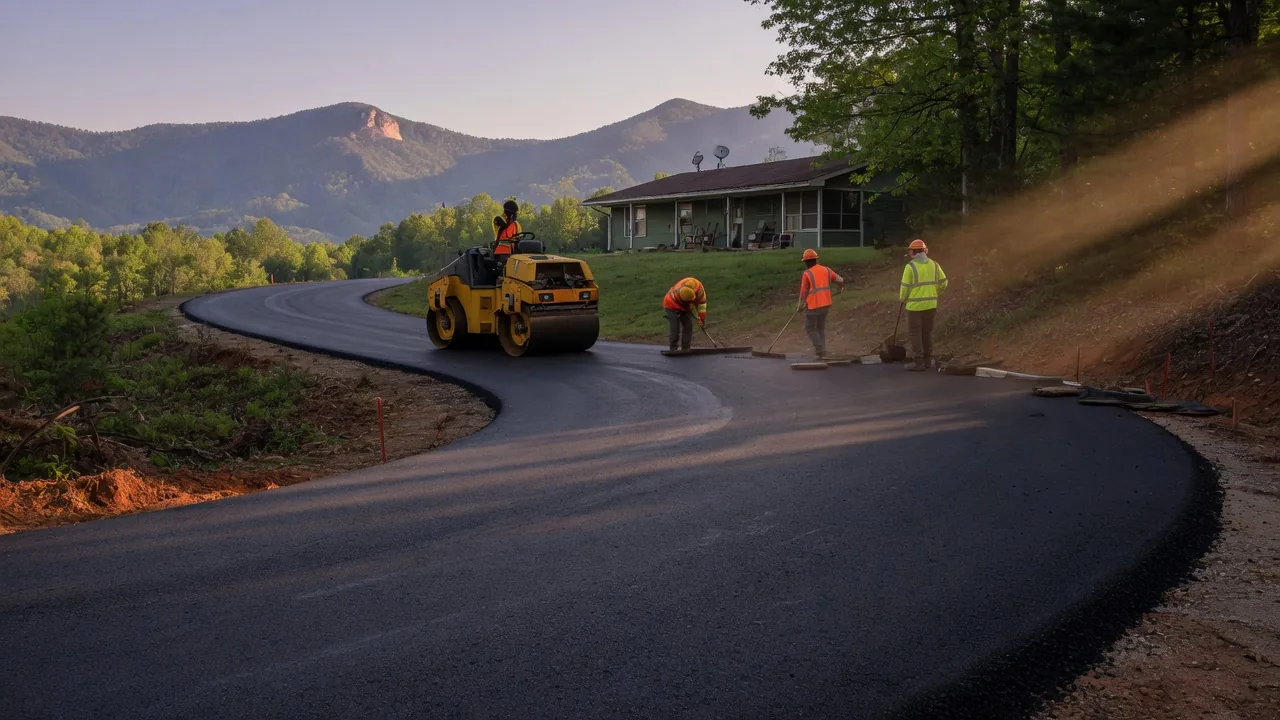
Black Mountain is a small town wrapped around the base of the Seven Sisters ridge, and the driveways here show it. A typical lot in the older blocks near Cherry Street or along Vance Avenue hosts a narrow ribbon of asphalt tucked between stone walls and mature oaks, running twenty or thirty feet uphill to a carport. Out toward the golf course and the newer ridge subdivisions, drives stretch a hundred feet or more, often in two tiers, sometimes with a switchback. Those two shapes fail differently.
Shaded, short, slow-draining drives grow moss at the edges and crack along the joint where the apron meets the street. Long, steep, sun-exposed drives oxidize faster, dry out, and lose their surface binder while the sub-base beneath stays questionable. The repair scopes people ask for are rarely apples-to-apples, which is why a quote that sounds high on a 90-foot slope drive may be reasonable, and one that sounds low on a 25-foot flat apron might be missing base work entirely.
The difference between Black Mountain and Asheville proper comes down to lot geometry. Asheville has plenty of flat, gridded neighborhoods where a driveway is a simple rectangle off an alley. Black Mountain's terrain pushes builders to work with the slope, so you get drives that climb, curve, and often dead-end at a parking pad carved into the hillside. Those drives shed water fast, which sounds good until you realize fast water scours the edges and finds every weak point in the base. A driveway that would last fifteen years on flat ground in West Asheville may show edge failure in seven or eight here because of how the runoff concentrates.
Another local factor: many of the older drives around town were poured or paved decades ago when the standards for base depth were thinner. Those drives are now at the end of their surface life, and the question isn't whether to repair but whether the base underneath is worth saving. That's why a site visit matters more here than in a newer subdivision where the base was built to current spec.
What usually needs fixing, and what it costs here
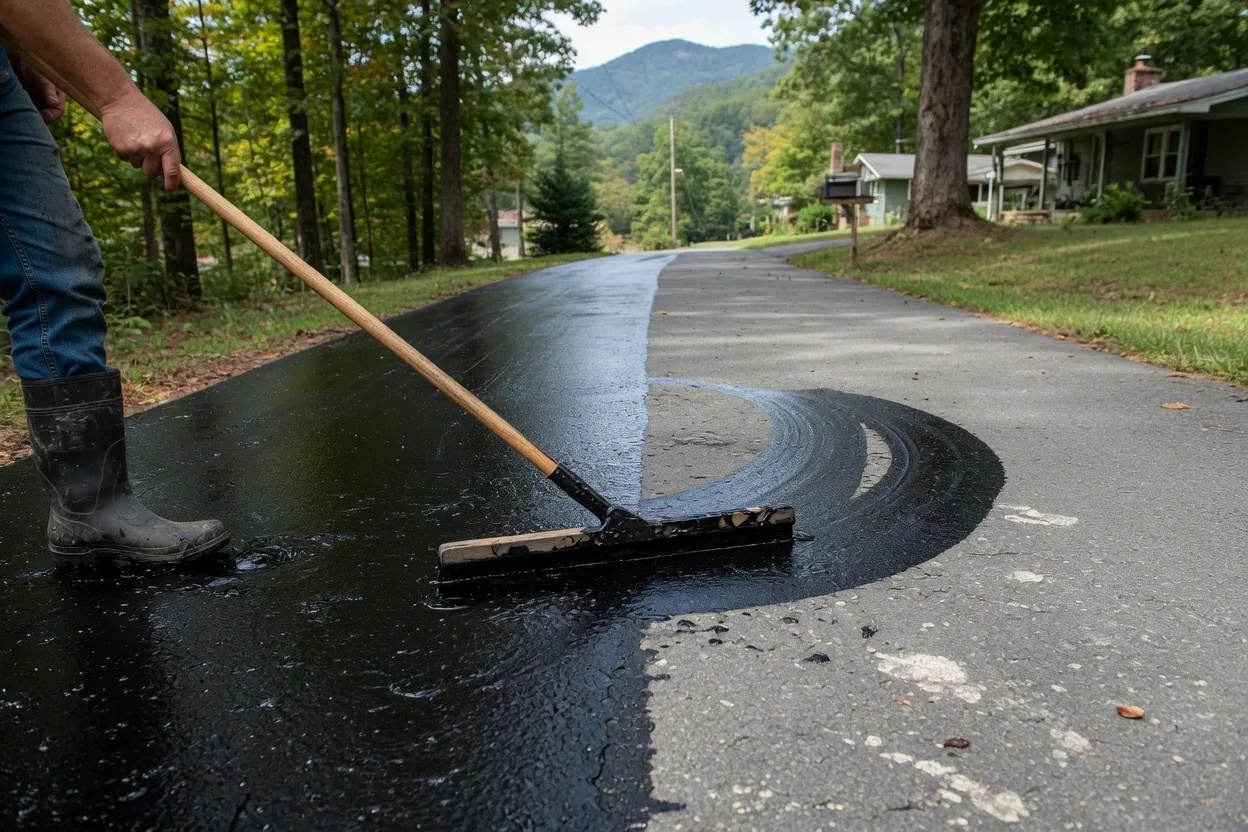
Four repair categories cover the vast majority of calls in town. Crack filling and edge sealing are maintenance plays on drives that are otherwise sound. Patching addresses potholes and alligatored sections. Resurfacing is for a surface that has aged out but still has a functional base. Full replacement with a new base is reserved for drives where water has undermined the subgrade, common on the steep ones feeding off the ridge roads.
| Scope | Typical range | When it applies |
|---|---|---|
| Crack fill and sealcoat | $350–$900 | Sound drive, cracks under half an inch, no base movement |
| Patching and pothole repair | $400–$1,400 | Localized failures, alligator cracking, edge breakdown |
| Resurfacing (overlay) | $1,800–$3,400 | Aged surface, base still solid, no widespread ponding |
| Full rebuild with base | $3,500–$9,000+ | Undermined base, severe rutting, drainage failure |
Those ranges move with length, access, and the number of loads the crew has to bring up a hill. See the full Buncombe County asbestos-free cost table for line-item detail, and review the general asphalt driveway repair overview for what each scope actually involves.
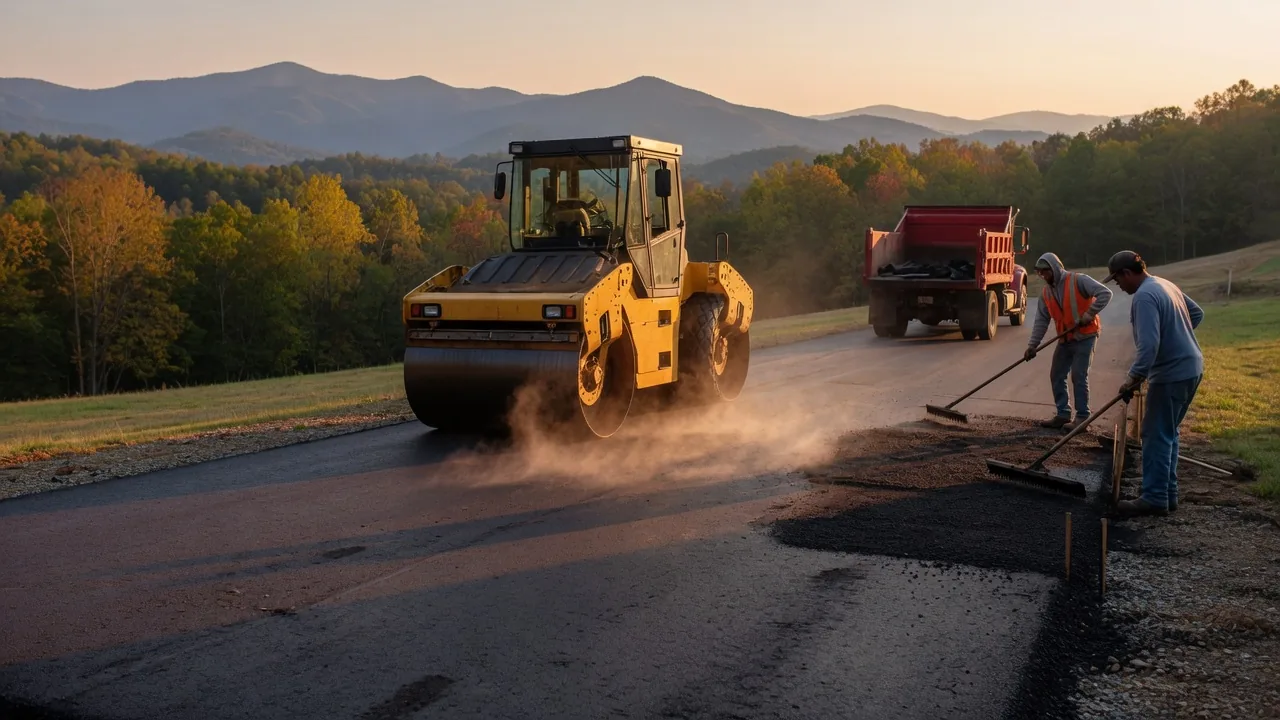
Access is a hidden cost driver in Black Mountain that doesn't show up in flatland pricing. If a drive is too narrow for a tandem dump truck, the crew has to shuttle material in a smaller trailer or wheelbarrow it from the street, and that labor adds up fast. If the slope is steep enough that a roller can't safely operate, compaction gets done with plate compactors in lifts, which takes longer. These aren't excuses to inflate a bid, they're real constraints that separate a realistic quote from one that will mysteriously grow once work starts.
Tree canopy matters too. A drive under heavy shade near the older neighborhoods dries slowly after rain, and crews sometimes have to wait for a dry window before sealing or overlaying. That scheduling constraint can push a job back a week or two in a wet spring, and it's one reason local crews who know the microclimates here bid differently than an out-of-county outfit.
Water, roots, and the freeze-thaw cycle
The federal disaster record for this county explains most of the calls that are not purely age-related: 19 declared events touch Buncombe County across 1973-2026, weighted toward storm and flood families. Each one pushed water at driveways and their subgrades, and the driveway that survived the storm is often the one that starts cracking the following spring. Black Mountain's freeze-thaw pattern compounds it. Water gets into a surface crack, freezes overnight, expands, and widens the crack a little more. Over a few winters, that hairline becomes a pothole.
The National Weather Service keeps the local freeze-thaw and precipitation history, which is a useful sanity check for whether a driveway's problem is surface or drainage. Where drainage reconstruction is part of the scope, crews should be working to standards consistent with the International Code Council family of codes adopted in North Carolina, not just eyeballing a swale.
Tree roots are their own category of problem here. The mature oaks and maples that make Black Mountain's older blocks so attractive also send roots under driveways, and those roots lift and crack the surface from below. A patch over a root-lifted section will fail again because the root is still growing. The honest fix usually involves either cutting the root (which can harm the tree and requires care), rerouting the drive, or accepting that the section will need periodic patching. No reputable crew promises a permanent fix over an active root without addressing the root itself.
Drainage off the ridge is another local reality. Drives that sit below a slope often take on water from above, and if there's no swale or French drain to intercept it, the driveway becomes the drainage channel. That's a design problem, not a resurfacing problem, and it's worth asking any contractor how they plan to manage water before they talk about asphalt thickness.
Permits, right-of-way, and who is allowed to do the work
Any work that touches the street apron, the culvert, or the right-of-way along a town or state road needs a driveway permit, and in Black Mountain that frequently means the North Carolina Department of Transportation is involved because several of the main corridors through town are state-maintained. Start at the NCDOT site and the NCDOT Connect portal for the current application path. Skipping that step is the single most common reason a driveway job gets stopped mid-pour.
On the contractor side, the North Carolina Licensing Board for General Contractors sets the threshold at which a paving job requires a licensed general contractor. Small repairs stay under it; full rebuilds and structural driveway work frequently cross it. Ask which side of that line your project falls on before signing anything.
There's also an environmental angle that catches some homeowners off guard. If a driveway project involves moving soil near a stream or altering drainage that feeds a protected waterway, state and federal rules can apply. The EPA maintains the stormwater and erosion-control guidance that underlies many of those requirements. In a town like Black Mountain, where creeks run close to a lot of properties, it's worth asking whether your project triggers any of that before work begins, rather than after a neighbor complains.
The practical takeaway: most straightforward repairs on private property don't need permits, but anything touching the street connection, a culvert, or a creek-adjacent slope should be checked first. A five-minute call to the town or NCDOT can save a stopped job and a fines bill.
Choosing a crew for a Black Mountain driveway
Ask three questions. First, can the equipment actually reach the work area? A narrow drive lined with stone walls will not admit a full-size paver, and a crew that shows up with the wrong iron will either decline or improvise badly. Second, how is the base being handled? A resurface over a failing base is a two-year repair, not a fix. Third, what does the quote say about drainage, edges, and the apron detail? Those line items separate crews who understand water from crews who understand asphalt.
If you are still gathering names, the Black Mountain paving contractor guide covers what to look for and what to ask. It is worth reading before the first site visit, so the questions you ask are the ones that actually separate bids.
One more local consideration: ask whether the crew has worked on slopes like yours before. A contractor who mostly does flat commercial lots in Asheville may not have the fine-control experience for a steep residential drive where the paver can't just crawl straight. Experience with the specific terrain is a legitimate question, not a rude one, and good contractors will answer it directly.
Finally, get the scope in writing with square footage, asphalt thickness, base prep described, and what happens if they find bad base once they start. The best bids here include a contingency line for unexpected base repair, because on older Black Mountain drives, that surprise is more common than not.