Thickness and lifts: the two decisions that set your Candler price
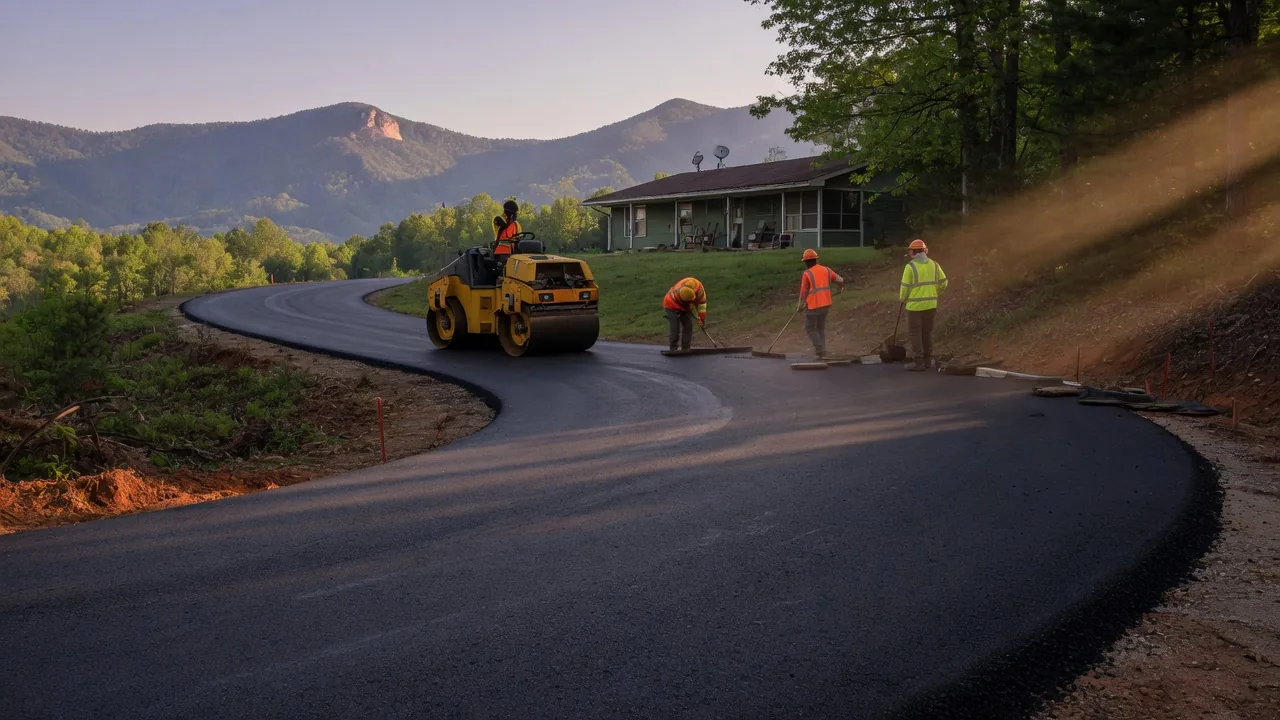
Candler driveways are not all the same road. A gravel lane off a flat stretch near the Enka side carries a sedan and a trash truck. A gravel driveway climbing a graded slope toward a ridge lot off Pisgah Highway carries a full-size pickup, a horse trailer, and whatever the county sends up in a storm. Those two driveways should not get the same asphalt thickness, and the quote should not pretend they can.
Two inches compacted is the minimum that performs when the gravel base is sound, uniform, and well-drained. Three inches, placed as two separate lifts so the first can be rolled before the second goes down, is what we expect on longer runs, steeper grades, and anywhere the driveway sees regular truck or trailer load. On a Candler slope, a single 3-inch lift often compacts unevenly and traps soft spots under the surface. Two lifts cost more in labor but reveal base failures before they're sealed under asphalt.
Reading your existing gravel before anyone quotes asphalt
Gravel fails in three ways that change the scope. First, it's too thin: two inches of stone over red clay loads like a paved surface for a season, then rut. Second, it's contaminated: years of leaf litter and clay fines have mixed into the top few inches, which needs to be re-graded or capped with clean crushed stone before paving. Third, drainage is wrong: water ponds at the edge of the lane, or the uphill side sheds runoff onto the driveway.
Storm history is the honest frame here. 19 declared federal disaster events have touched Buncombe County across 1973-2026, mostly flood and storm family. Practical translation for a Candler driveway: whoever quotes your asphalt should be able to say what happens to the base during a heavy rain event, not just how thick the mat will be. If the answer is silence, the quote is incomplete.
What the conversion actually costs in Buncombe County
Numbers below are working regional ranges, not quotes. Length, grade, base condition, and whether a permit is triggered all move the final figure. Full line-item breakdowns live in the Buncombe County asphalt driveway cost table.
| Scope | Typical range |
|---|---|
| 2-inch overlay on sound existing gravel, short flat run | $4,200-$6,200 |
| 2-inch overlay, longer run or moderate grade | $6,000-$8,000 |
| 3-inch, two-lift build with base re-grading | $8,000-$13,500 |
| Add drainage correction (culvert, swale, shoulder stone) | $900-$3,500 |
| Remove and replace failed base section | $8-$18 per sq ft |
Anything under two inches is a seal coat, not a driveway. If a bid lands well below the bottom of these bands, ask what thickness and how many lifts are actually being placed.
Candler's turning loads and why thickness matters here
Candler isn't flat-town paving. The corridor along Smokey Park Highway and the side roads feeding off it sees heavy pickup traffic, work trucks servicing the industrial spine between Candler and Enka, and trailers turning into driveways above the grade where a normal car would scrape. Turning is where thin asphalt fails first. The lateral force at the apron and the inside wheel path pulverizes a 2-inch mat that was already marginal.
If your driveway ends at a county road, the apron is where the load transfers and where a driveway-and-street-access permit may enter the picture. NCDOT regulates access to state-maintained roads, and the NCDOT permit process applies to any new or altered connection. For driveways off private lanes well inside the property, that doesn't apply, but a contractor who knows the difference is worth keeping.
Choosing and vetting a paving crew for the conversion
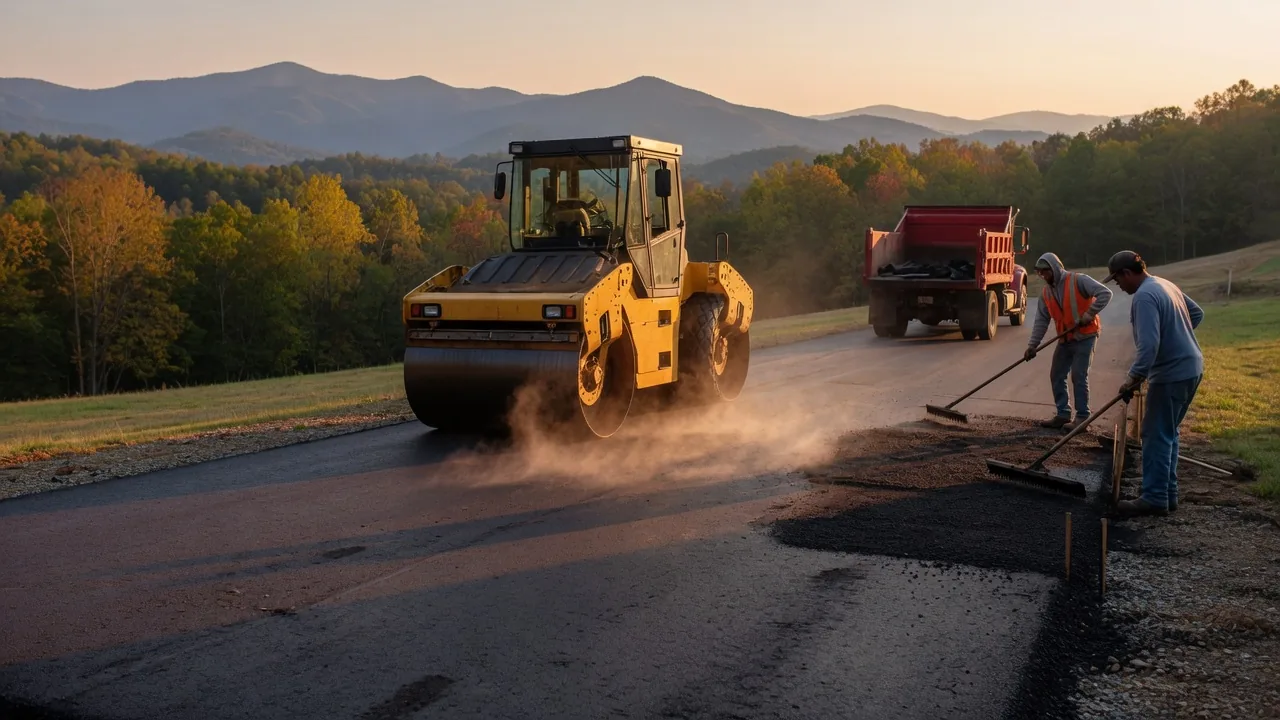
Paving is one of the trades where the same crew can do good work or bad work on the same week depending on how the truck schedule lines up. Three specifics worth asking: What temperature is the mix at placement? (Below roughly 250°F, the mat loses density and never fully recovers.) What compaction equipment is on the job, and how many passes? And is the tack coat between base and asphalt being applied, or skipped to save a step?
On larger-residential scopes, general contracting rules come into play. The NC Licensing Board for General Contractors sets threshold-based license requirements, so on a project above the statutory amount, verify the license. Below it, there are still crews who do it right and crews who don't. Local references on Candler and Buncombe County driveways, especially on sloped lanes, tell you more than a portfolio of flat-lot photos.
Where a conversion sits between DIY-gravel-checking and a full contractor job, the gravel to asphalt conversion guide walks through the decision in a bit more depth. When you're ready to start collecting quotes, local paving contractors are the next step.
Timing the job around Candler weather
Asphalt wants dry base, air temperatures reliably above 50°F, and no rain in the placement window. In Buncombe County that's roughly April through October, with the shoulder months carrying real rain risk. Summer placement is hot work but the most forgiving for compaction. Fall placement works if the schedule can flex around fronts coming off the mountains.
The National Weather Service forecast at weather.gov is the honest planning tool: check the 5-day for the drainage question and the 48-hour for the asphalt question. Any crew willing to guarantee a paving date two weeks out in Candler without a weather caveat is guessing. The good ones call the morning of and tell you if the mat will hold.