Thickness and lift count: the two numbers that decide how your Hendersonville drive holds up
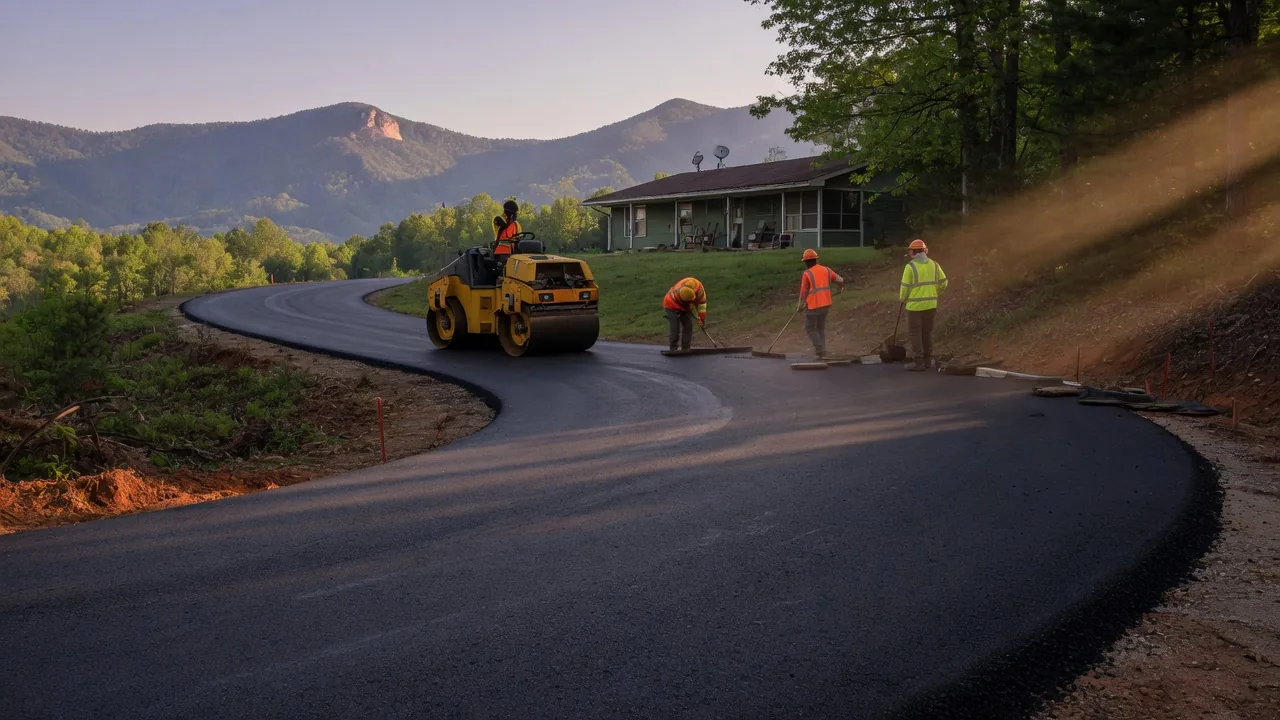
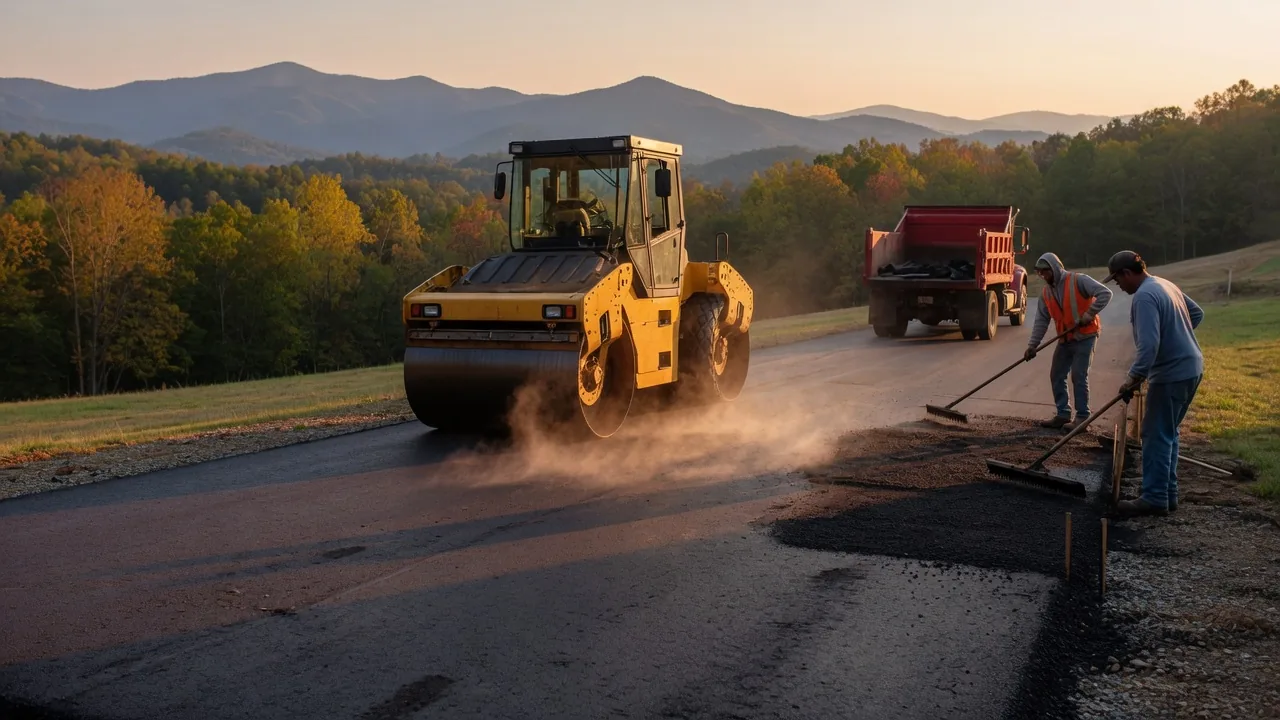
Hendersonville sits at roughly 2,200 feet in the Blue Ridge foothills, and that elevation drives the paving conversation here in ways it never does in the flatland. Water expands when it freezes, and a Henderson County driveway sees dozens of freeze-thaw cycles between November and March. Two inches of compacted asphalt laid in a single lift will survive most of those cycles. Three inches, laid in two separate lifts with a tack coat between them, survives them for a decade longer.
Which one you need depends on three things specific to your property: how steep the grade is (a 12% driveway off Kanuga Road shears differently than a flat pad in Flat Rock), whether loaded vehicles turn on it (a garbage truck's turning radius tears a thin surface fast), and how well the subgrade was built. A 300-foot climb with a curve at the bottom calls for three inches and a heavier base course. A short flat apron to a garage often doesn't.
Mix design matters as much as thickness. Asphalt is graded by climate zone, and a mix specified for the coastal plain will not hold up to the freeze-thaw cycling we get between the French Broad valley and the top of Bearwallow. When you get quotes, ask what PG grade the mix is and whether it's specified for this region. A crew that has paved in Henderson County for years will answer without hesitation. A crew that has mostly worked east of Charlotte may not.
What asphalt work actually costs across Henderson County
Prices below are typical working ranges for residential and light commercial work in the Hendersonville area, not quotes. Base prep, grades, and haul distances move them fast in both directions. Full detail on the breakout is in the Henderson County cost table.
| Scope | Typical range |
|---|---|
| Crack fill (per linear foot, small jobs) | $4-$9 |
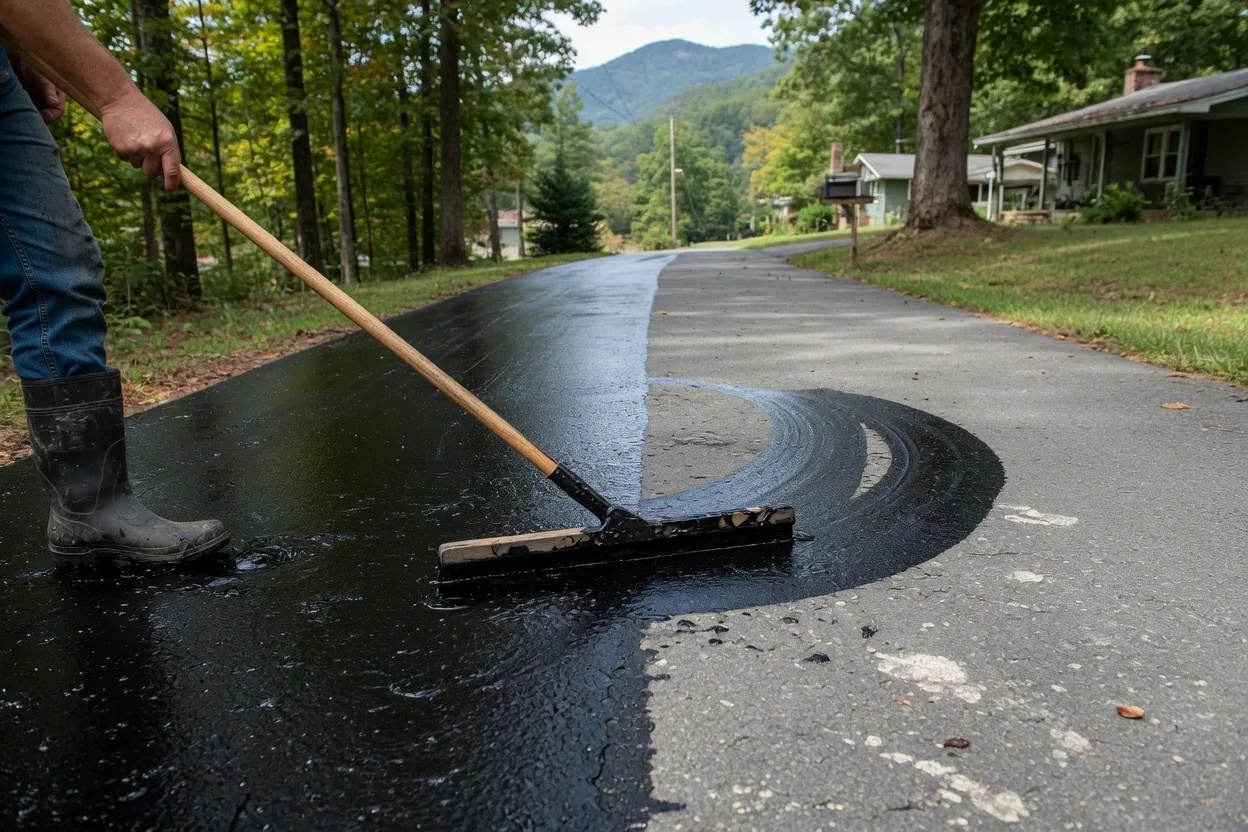
| Sealcoat, standard residential drive | $0.22-$0.40 / sq ft |
| New 2-inch asphalt over existing gravel | $3.50-$5.50 / sq ft |
| New 3-inch, two-lift asphalt over prepared base | $5.50-$8.50 / sq ft |
| Full tear-out, regrade, 3-inch replace | $8.50-$13.00 / sq ft |
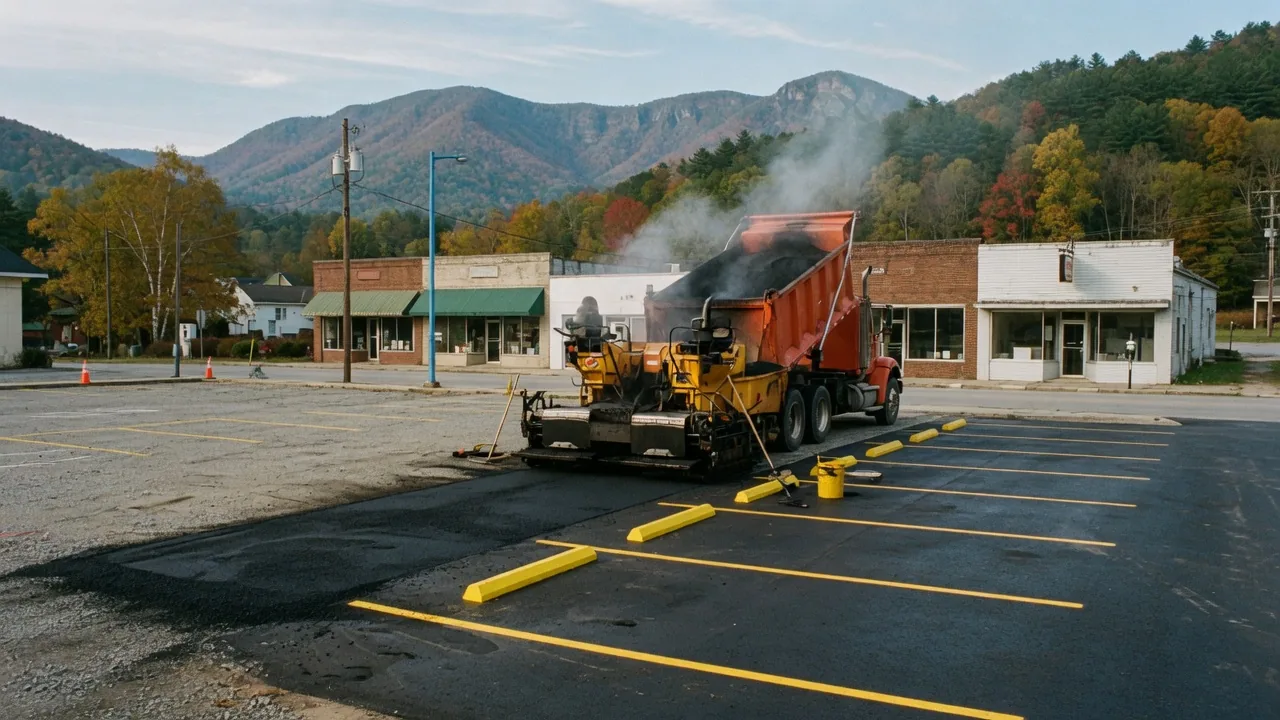
| Commercial lot, 4-inch binder + surface | $6.50-$11.00 / sq ft |
| Long mountain drive (over 400 ft, added drainage) | Quoted by slope and cu yd of base |
The pattern locals learn: the line item that quietly decides cost is base. Hendersonville's red clay subsoil pumps when wet, and a driveway that skips a compacted gravel base will crack within three winters no matter how thick the asphalt. Any quote that lists asphalt thickness but no base depth is incomplete.
Haul distance also moves the number in ways that surprise people. A job off Upward Road is a short run from the nearest plant; a job out toward Tuxedo or up toward Saluda can add real dollars per ton in trucking. Contractors who bid both ends of the county will price them differently, and they should.
Traffic, trucks, and turning loads on Hendersonville driveways
Hendersonville is a small city, but it sits on two truck corridors — US-25 and US-176 — and plenty of properties here take delivery vehicles, dumpsters, propane trucks, and horse trailers. That traffic loads asphalt in a way no passenger car does. A surface designed for cars will rut under a loaded dump truck in a single summer. If your driveway serves any commercial use, or simply receives heavy seasonal deliveries, the answer is a thicker base course, a 3-inch surface, and a properly sized turnaround so no one drags a steer tire across your finished mat.
Commercial and multifamily lots in the county fall under stricter structural requirements than a residential driveway. Local builders work from standards adopted through the International Code Council family of model codes, and NCDOT controls anything that touches a state-maintained road — not just the apron. Any paving work that changes a driveway connection along a state route (and a great many Hendersonville driveways connect to one) requires a driveway permit through NCDOT Connect before the first load of asphalt arrives. Contractors who know this pull the permit for you; contractors who don't will let you find out at inspection.
Turning is the other quiet destroyer. A cul-de-sac pad or a wide apron at the garage door spreads that load. A narrow drive with a hard 90-degree back-in forces tires to scrub the mat every time someone parks. On hillside properties off Willow Road or along the eastern slope toward Edneyville, adding a flare or a small turn pad during the original pour costs far less than rebuilding the mat four years later.
Water does most of the damage before the asphalt fails
The federal record explains most of the premature driveway failures in this county: 16 declared disaster events have touched Henderson County across 1978-2026, predominantly storm, flood, and winter weather events. Every one of them pushed water against driveways graded for a drier assumption. Before anyone quotes you a new surface, the real question is where the water goes. Grading, culvert sizing, gutter extensions, and uphill runoff all have to be handled in the same plan as the asphalt, or the new mat is a cosmetic fix on a structural problem. The asphalt paving guide covers the sequence in detail.
On Henderson County hillsides, the specific failure mode is almost always uphill water. A driveway cut into a slope acts as a small dam unless there's a proper swale or ditch on the high side to intercept runoff and carry it to daylight. When that swale is missing or undersized, water sheets across the asphalt, finds a seam, and freezes inside it. Multiply by a February and you have a crack that opens into an alligator patch by the following spring. Culverts under the drive need to be sized for storm flow, not just average flow, because our summer thunderstorms drop a lot of rain in a short window. Local crews who've replaced enough failed drives can usually read the slope and tell you in one visit whether the current drainage plan is adequate.
Hiring a paving crew around here
Ask three questions specific to Hendersonville. First: how deep is the compacted base going, and how will it be tested? (The answer should mention grading and compaction in lifts of no more than 6 inches of gravel.) Second: what mix are you using, and is it made for this climate? Asphalt mix design varies by region, and a Henderson County driveway should get a mix intended for a freeze-thaw climate. Third: will the surface be a single 2-inch lift or two lifts? A crew that can't answer clearly is used to flatland jobs. On any project above the residential remodeling threshold, verification of contractor licensure runs through the North Carolina Licensing Board for General Contractors. For county-specific driveway work and how it fits the broader pattern of paving here, see the Hendersonville driveway paving page.
A fourth question worth asking on any property in the county: does the crew know the difference between paving in June and paving in October? Cool-weather paving is possible when the plant runs a warm mix and the crew protects the mat, but it's a different job than a summer pour. Ask how they handle late-season work; the answer tells you whether they plan around the climate or just show up. It also helps to ask how long the crew has been together — paving is a choreographed sequence, and new hands on the rakes and the roller show up in the finished surface.