The mix has a clock, and your driveway starts it
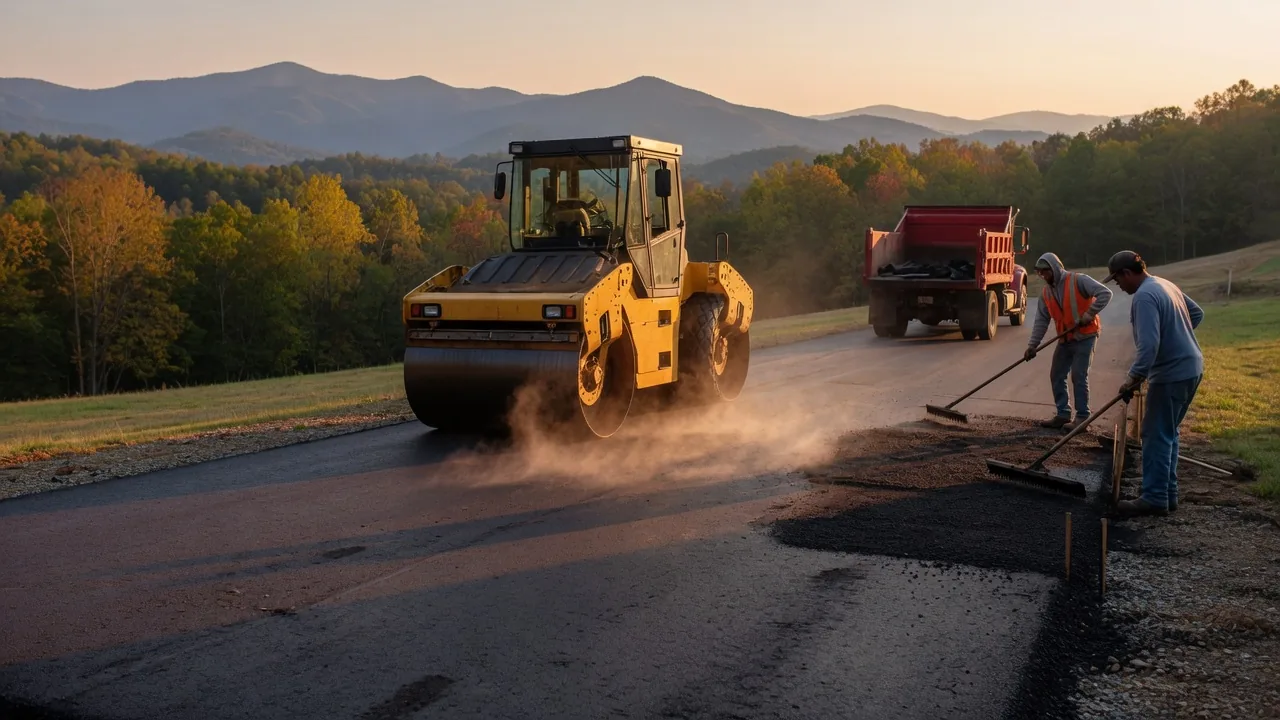
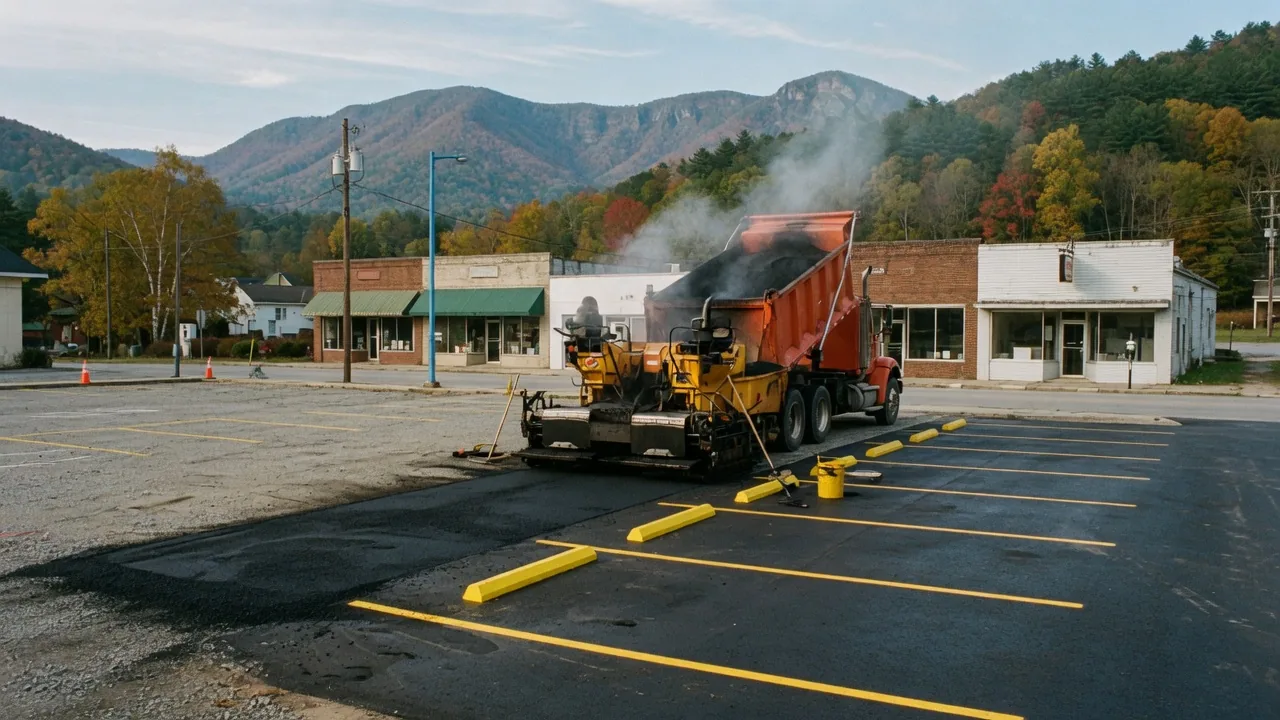
Hot mix asphalt leaves the plant at roughly 300 degrees and has a workable window measured in hours, not days. Brevard's paving supply sits off the US 64 corridor and the larger plants sit down toward Hendersonville and Asheville — which means a driveway up a switchback off the Pisgah ridge or out past Rosman isn't just a longer drive. It's fewer tons per load, more trucks, and a schedule built around getting the mat down before the mix stiffens. That haul math is the single biggest reason two driveways of identical square footage in this county can come in $4,000 apart.
Transylvania County's terrain drives the rest. A driveway cut into a 12 percent grade needs the paver worked differently than one on flat bottomland near the Little River — and a gravel drive that looks fine from the road can be hiding a crumbling base that will eat the asphalt within two winters. That's why the first real question isn't price. It's whether your existing gravel is actually a base or just a surface.
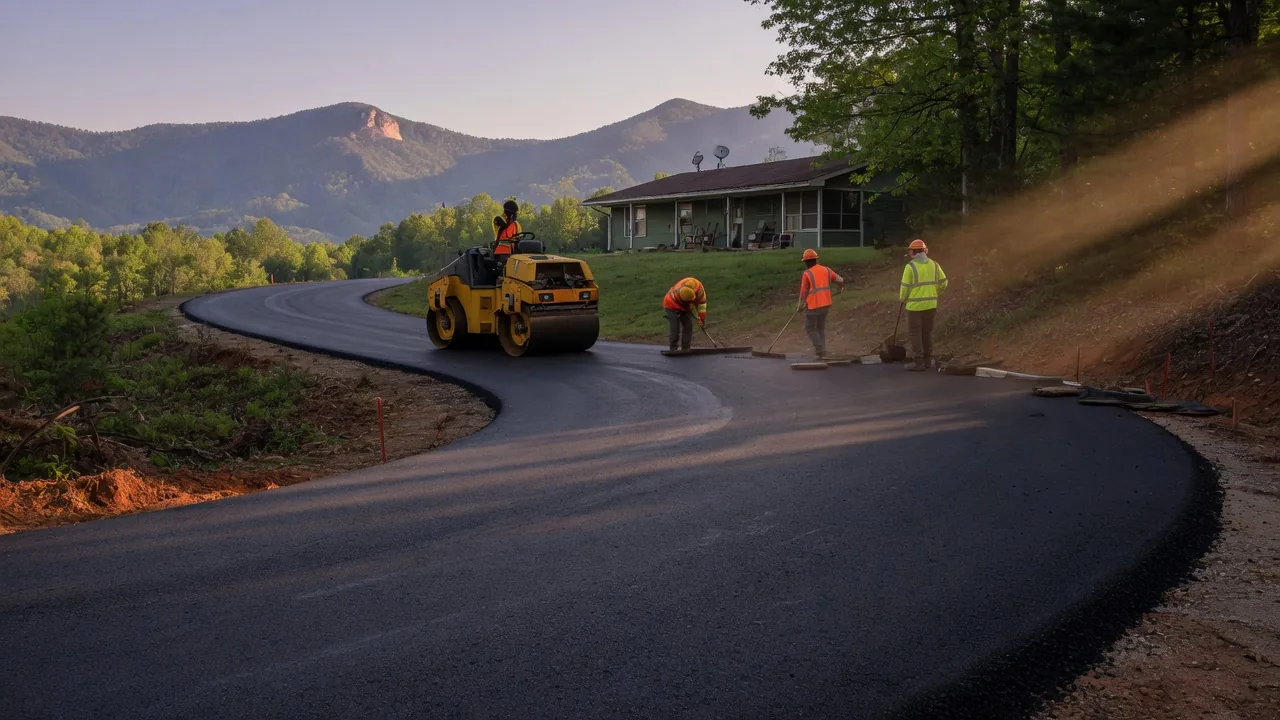
Think about what that clock means on a real Brevard job. A tight driveway off a ridge above the French Broad headwaters might only take two loads of binder, but each load is a slow crawl up a gravel grade with a truck that can't turn around at the top. The crew ends up laying a smaller mat per hour than they would on a flat lot in town, and the paver sits idle while the next truck backs down. That idle time is real money, and it shows up in your quote whether or not the estimator spells it out. A flat driveway near Brevard College or along the Davidson River corridor can absorb three or four loads in the same window because the trucks cycle fast and the paver never stops. Same square footage, very different day.
What the conversion actually involves
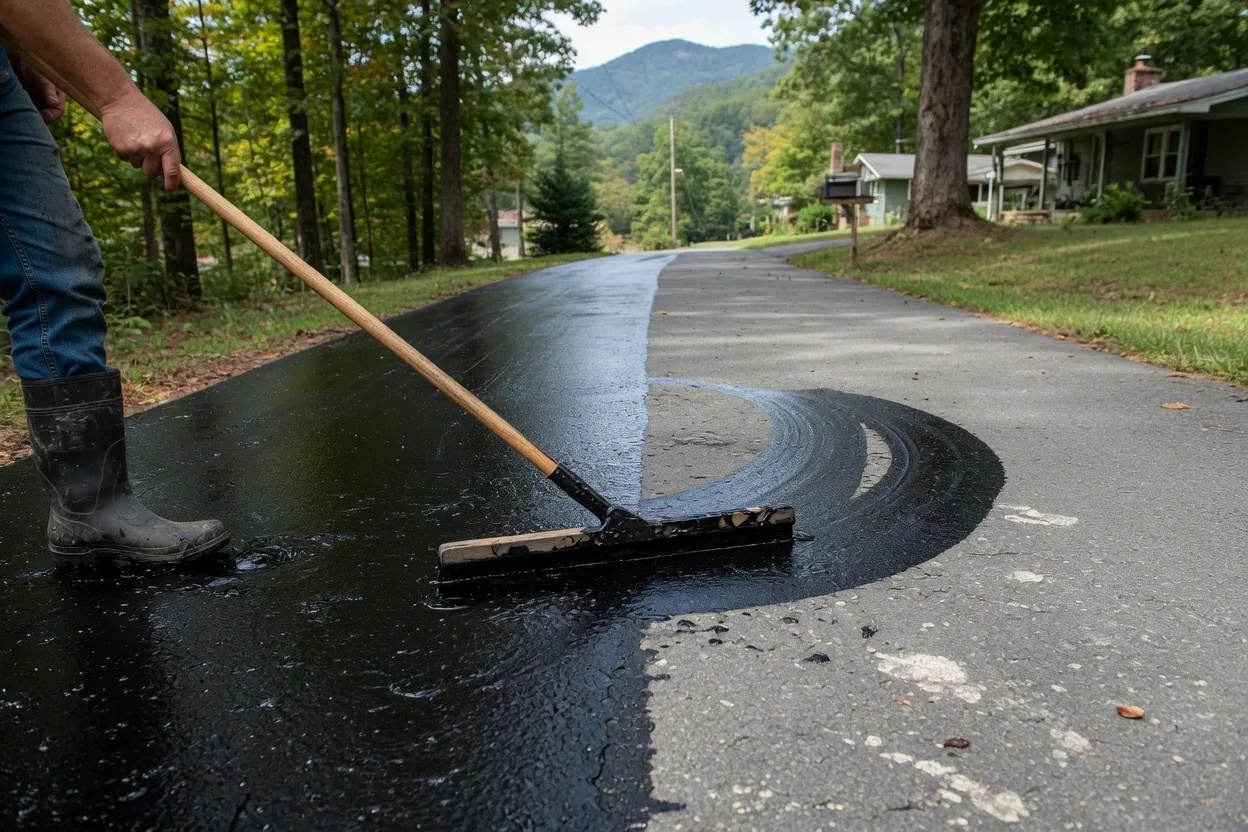
Gravel-to-asphalt is not a skim coat over what you have. The honest sequence: assess the existing base depth and drainage, correct grading and add or recompact stone where it's short, install proper edging, then lay a binder and a surface course. Moisture is the enemy underneath — EPA stormwater guidance and basic driveway drainage practice both point the same direction: solve where water goes before you cap the base.
Where a driveway meets a public road, the connection itself may need an NCDOT access permit depending on the road classification — the application path runs through NCDOT Connect. That's a paperwork step crews hit regularly on anything fronting a state-maintained route, so ask who is pulling it before work starts. Full-service scope is covered in our gravel to asphalt conversion guide.
In practice, a driveway that drains toward the house or pools at the garage door is the one that fails first. Brevard sits in a bowl of sorts, with the French Broad and Little River drainages pulling water off the ridges, and a gravel drive that has never been crowned will hold a puddle in the middle until the stone underneath turns to mush. The fix isn't more asphalt on top. It's regrading the subbase so water sheets off the edges, adding a ditch or a culvert where the drive meets a hillside, and compacting in lifts so the stone actually locks together. That work happens before a single ton of mix shows up, and it's why a bid that only quotes asphalt square footage is missing the part that determines whether the driveway lasts five years or fifteen.
Brevard conversion price picture
Ranges below reflect typical Transylvania County conditions as of recent seasons. The wide band on add-on work is the point: on a steep or long drive, the base correction is often the largest line item, not the asphalt.
| Scope | Typical range |
|---|---|
| Prep, grading, and compaction (existing good base) | $1,500-$4,000 |
| Base correction — add/recompact stone, address soft spots | $2,500-$9,000 |
| Binder and surface asphalt, standard residential drive | $5,000-$14,000 |
| Edging, drainage corrections, culvert work | $800-$3,500 |
| Steep/long-drive haul and small-load premium | $1,500-$6,000 |
Line-item context for the county sits in our Transylvania County asphalt cost breakdown. Treat any bid that skips the base line as incomplete, not cheap.
Why does the same square footage swing so widely? A short, flat driveway off a paved road near downtown Brevard might only need a light regrade and one full day of paving. A long drive climbing a ridge off the Pisgah National Forest side might need the base rebuilt in sections, a culvert replaced where it crosses a seasonal creek, and two days of paving split around the plant's schedule. The asphalt line itself may be similar; everything around it isn't. When you compare bids, ask each contractor to separate the base work from the asphalt so you're comparing the same scopes. A low bid that quietly assumes your gravel is fine isn't a bargain if the base fails in year two.
Why the county's storm record matters to your base
16 federal disaster declarations touch this county across 1993-2026, and the pattern is water — heavy rain events that saturate the ground under gravel drives and wash out stone that was never edged or crowned. You can check the current forecast pattern any week through the National Weather Service. Every one of those events reshuffled somebody's base. If your gravel has been the driveway through a few of them without correction, the asphalt will mirror the failure underneath it within a season or two — which is why the honest crews here spend the first visit walking the drainage, not the square footage.
It's not just the big events. Transylvania County gets long, soaking rain periods in the mountains that keep the ground saturated for days, and a gravel drive that lacks a crown or proper ditching will let that water sit. Stone that stays wet loses its load-bearing capacity, and asphalt laid over saturated base will crack and rut as the subgrade moves. A driveway that survived a wet winter without visible ruts might still have a soft spot six inches down where a spring seeps under the roadbed. That's the kind of thing a base inspection finds and a square-footage estimate misses.
Choosing a crew when the hills set the rules
General contracting in North Carolina crosses a licensing threshold at certain project values, and the rules live at the NC Licensing Board for General Contractors. Paving itself isn't a licensed trade in the same way, so the useful filter is narrower: ask how many tons the job takes at your grade, how many loads that is from the plant, and how they handle a partial load when the driveway is too narrow for the truck to turn. Stack those answers next to the Brevard paving contractors who actually work this terrain — and be skeptical of any bid that doesn't reflect a real look at the slope.
The follow-up question that separates the local crews from the drive-throughs: how do you get the roller to the top of the hill? A driveway that switches back twice may need the paver and roller staged differently, and a crew that hasn't thought about it will either tear up your lawn turning around or leave a section uncompacted. Ask whether they've paved a drive on a grade like yours recently, and ask what they did about the transition at the bottom where the steep section meets the flat apron at the road. That transition is where a lot of mountain driveways fail — water runs down the hill, hits the flat, and sits right at the weakest joint. A crew that brings it up before you do is a crew that's been here before.