Every Arden job runs on a clock before the first roller moves
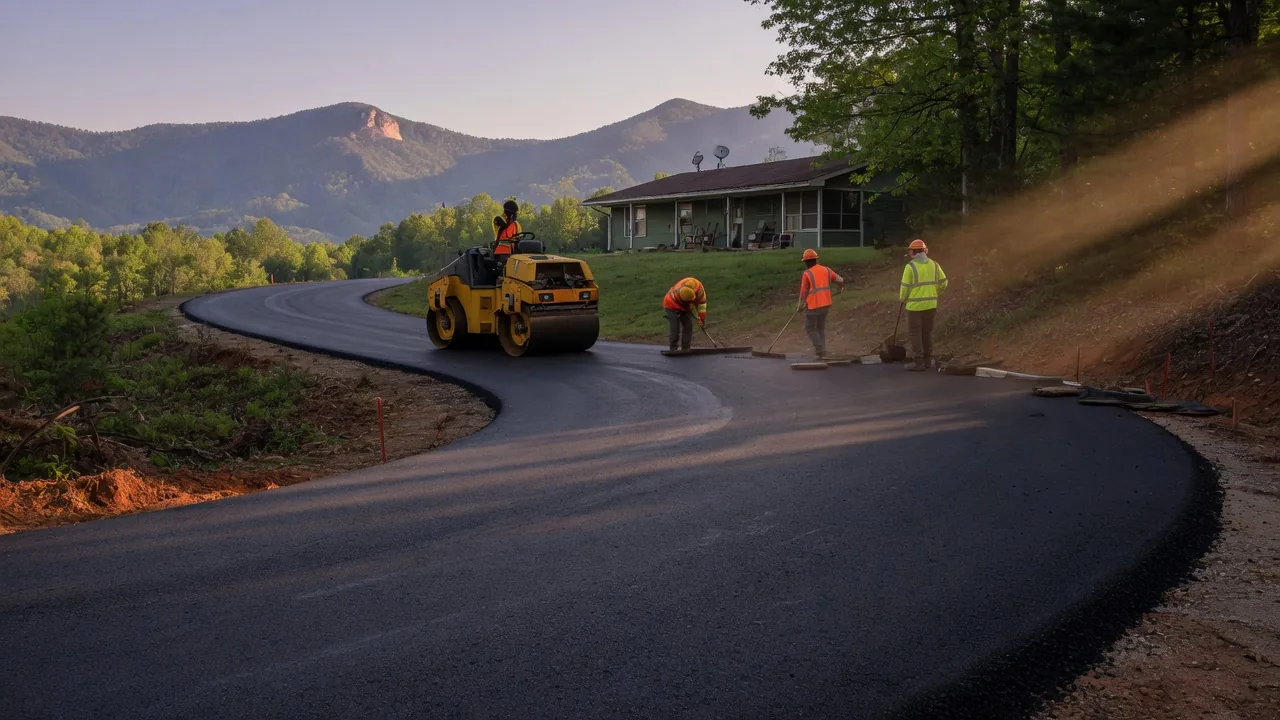
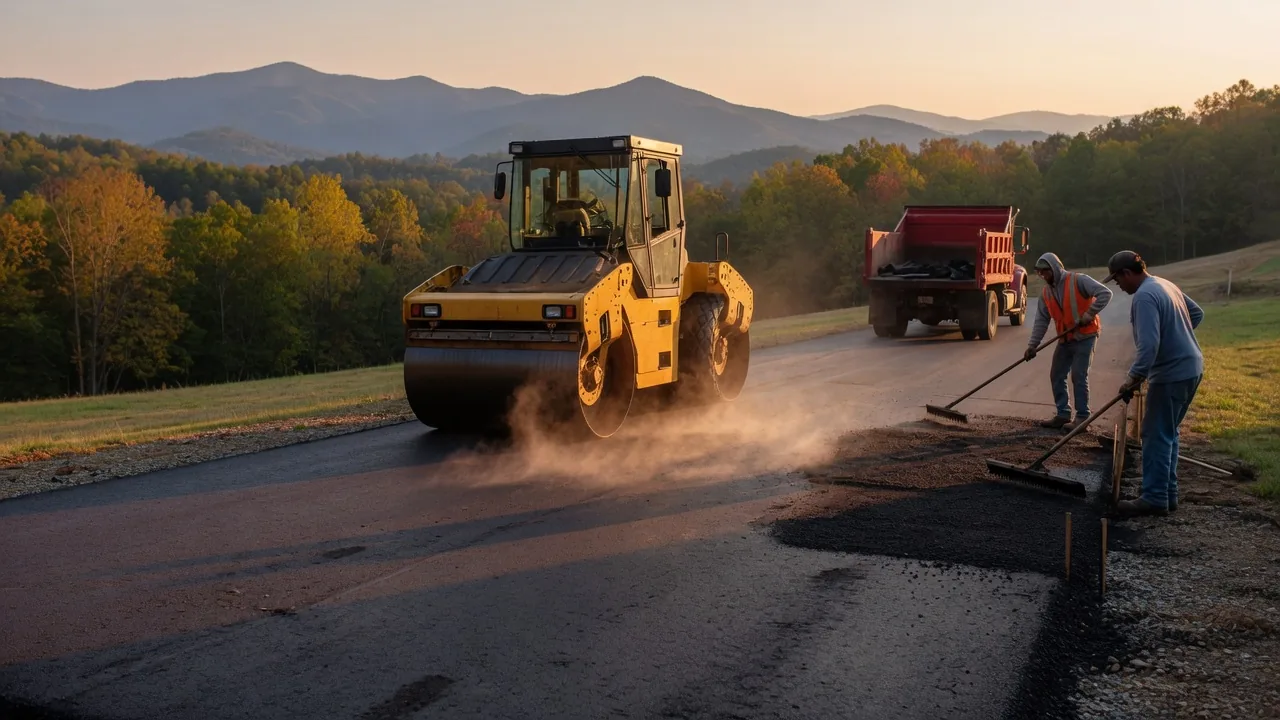
Asphalt is a perishable product. Hot mix has to leave the plant, arrive, and be placed and compacted while it is still workable, which in practice means a window measured in hours, not days. Arden sits south of Asheville in Buncombe County, and commercial paving here depends on mix trucked in from plants around the county. That puts every Arden job on a clock before the first roller ever touches the mat.
What that means for your bid: a straight, open lot with room for trucks to turn and dump is a fast, cheap day. A tight lot behind a strip center off Long Shoals Road, a steep entrance climbing off Airport Road, or a long private drive that has to be paved in narrow pulls is a slow one. Haul time and truck-cycle time are real line items whether the contractor shows them or not. Ask any bidder how many tons per hour they actually expect to place on your job, and you will start to see why two quotes for the same square footage can differ by thousands.
The terrain makes this worse. Arden's commercial corridors cling to the French Broad bottoms and the ridges above them, so grade changes that a flatland lot never sees become daily problems here: trucks that cannot back straight in, entrances that shed water toward the building, and pavement that has to be laid in short pulls because the equipment cannot reach the far corner. Those are the conditions that turn a one-day overlay into a two-day job.
What the ground under an Arden lot is actually hiding
This part of Buncombe County mixes older roadside commercial with newer build-out, and the subgrade under a lot is rarely what a quick walk suggests. Plenty of Arden parking areas sit on shallow fill over clay-heavy soil, and the county gets enough rain that a base which was fine for years starts pumping and rutting once drainage backs up.
The honest first step on any Arden lot is figuring out what is failing: the surface course, the base beneath it, or the water getting into both. A lot that is alligator-cracked but still holds its shape can often be milled and overlaid. A lot with soft spots, ponding at the low corner, or wheel ruts that return after every storm is a base-and-drainage job, and no amount of new asphalt on top will fix it. That distinction, more than anything else, is what separates a real scope from a sales pitch.
The Arden price picture
Commercial paving prices move with tonnage, haul distance, access, and drainage, so any number is a range until someone walks the lot. The working bands for this area look like this. Use them to sanity-check bids, not to set a final budget:
| Scope | Typical price range | What drives the number |
|---|---|---|
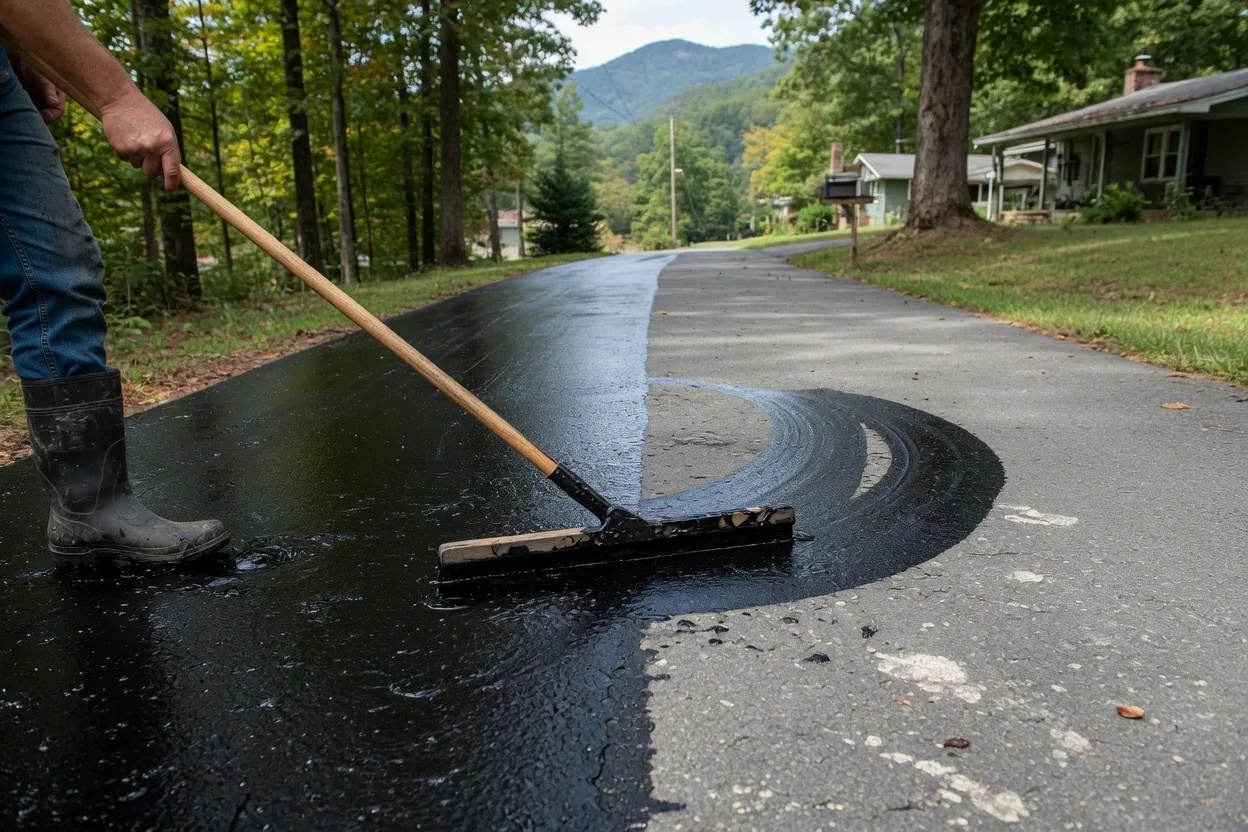
| Sealcoat + crack fill only | $0.15-$0.35 / sq ft | Surface condition, crack density, prep |
| Mill and overlay (1.5"-2") | $2.75-$6.50 / sq ft | Tonnage, haul distance, access, tack and edge work |
| Spot base repair before overlay | $6-$14 / sq ft (repaired area) | Depth of failed base, how soft the subgrade is |
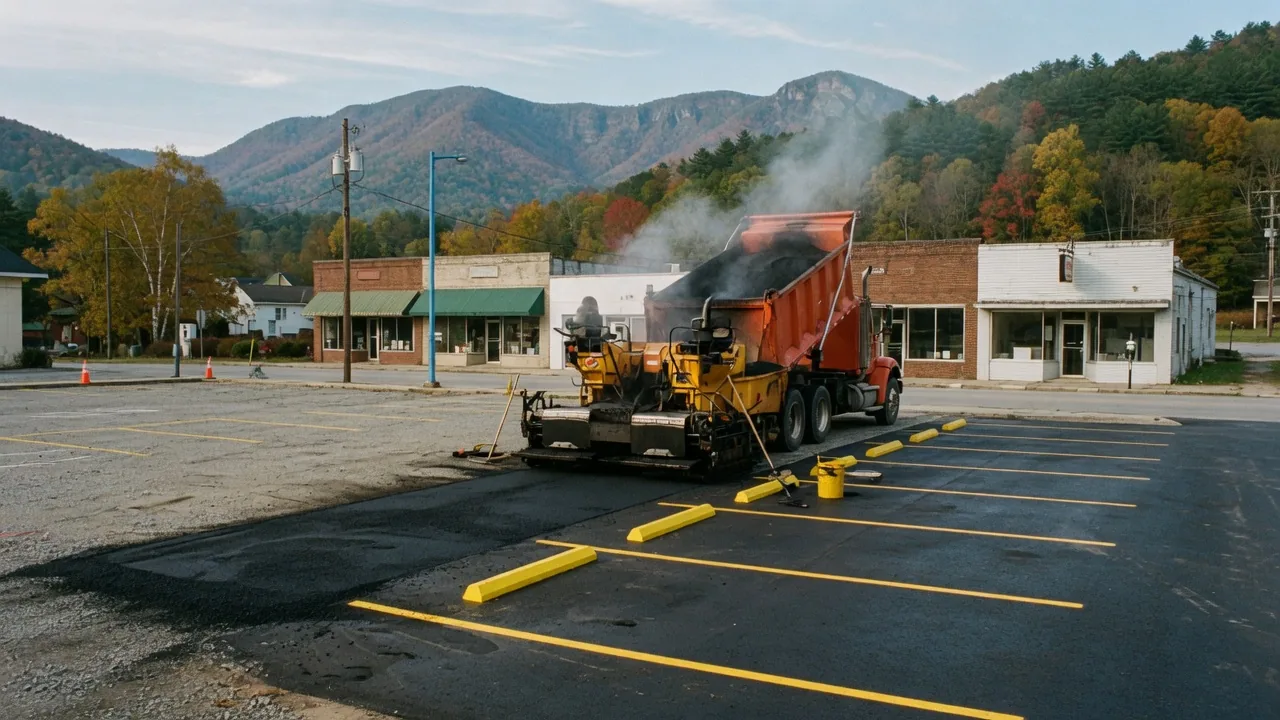
| Full-depth new lot (asphalt over new stone base) | $4.50-$9.00+ / sq ft | New stone, grading, drainage, striping, plant haul |
| Line striping / layout | Quoted per stall or per lot | Stall count, layout complexity, ADA striping |
Steep entries, tight truck access, and drainage corrections are the line items flatland quotes tend to leave out. For a fuller breakdown, see the Buncombe County asphalt cost table, which uses the same drivers on a smaller scale.
Water is the thing that keeps coming back
Buncombe County has a long federal disaster record, with 19 declared events over 1973-2026, mostly storm and flood family. Every one of them pushed water at pavement that was designed for a drier assumption. Arden's position along the French Broad corridor and its clay-heavy ground make ponding, edge undercutting, and base saturation the usual suspects behind a lot that keeps failing in the same spot.
Before anyone sells you a new surface, the drainage question has to be answered: where does the lot shed water, where does it collect, and where does it leave? Regrading, catch basins, and edge treatment are frequently cheaper than repaving the same failing area every few years. The EPA publishes stormwater guidance worth understanding if your lot discharges toward a creek or storm system, and it will shape what a compliant fix looks like.
Hiring and permitting in this market
Two checks worth doing before you sign anything in Arden. First, licensing: North Carolina sets a dollar threshold at which a project must be handled by a licensed general contractor, and commercial paving scopes cross it more often than people expect. Verify status through the NC Licensing Board for General Contractors. Second, access: if your lot ties into a state-maintained road, changing the driveway or street connection can require a permit through NCDOT Connect, and that paperwork sits with the property owner, not the paving crew.
The crews worth hiring will walk the lot with you, talk about base and drainage before they talk about asphalt thickness, and put tonnage and haul assumptions in writing. Our Arden paving contractor guide covers what a proper first visit includes, and the main parking lot paving service page lays out how a full-depth job differs from an overlay from start to finish.