Why thickness and lift count decide the price in Clyde
Clyde sits in the Pigeon River valley just east of Waynesville, and its driveways carry a load profile that flatland subdivisions never see. Log trucks pull off US 19, delivery vans work the commercial strip, and half the residential drives climb a grade off a valley road. That traffic doesn't just wear the surface — it flexes it. A one-inch skin patch over a failing base will look fine in April and be a jigsaw puzzle by the next February thaw. The honest question isn't "how many square feet" — it's two inches or three, and one lift or two.
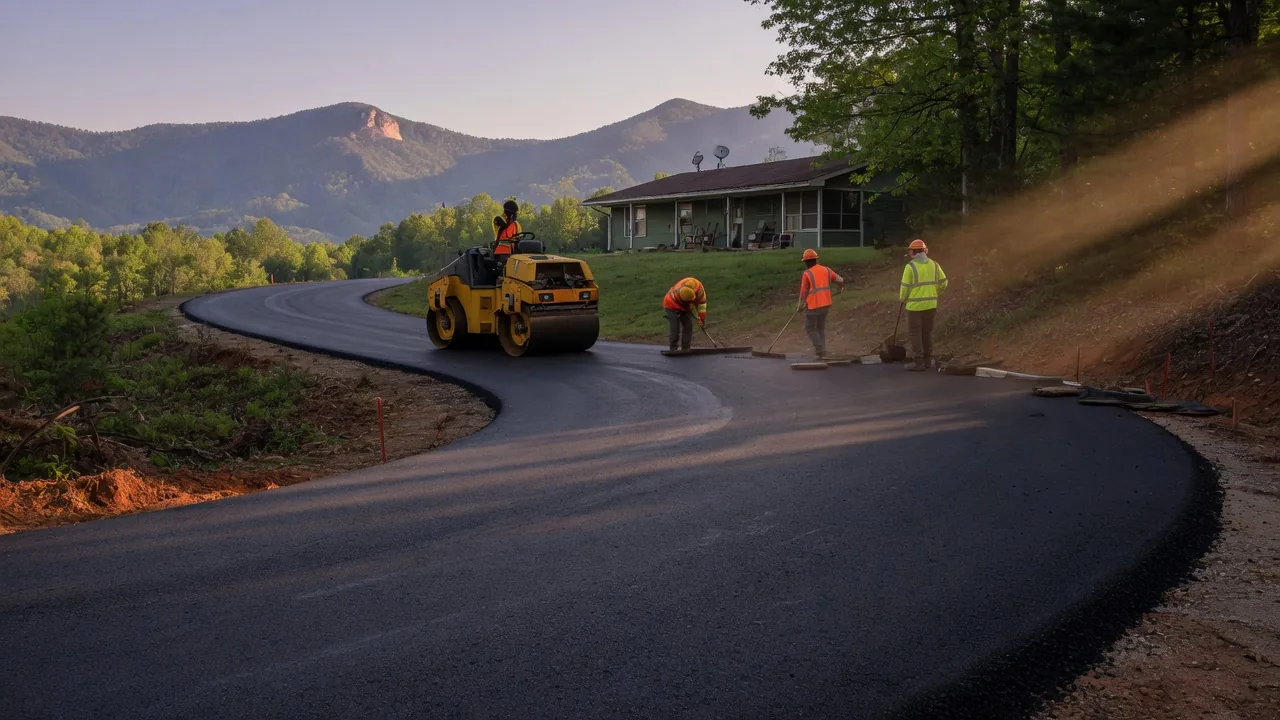
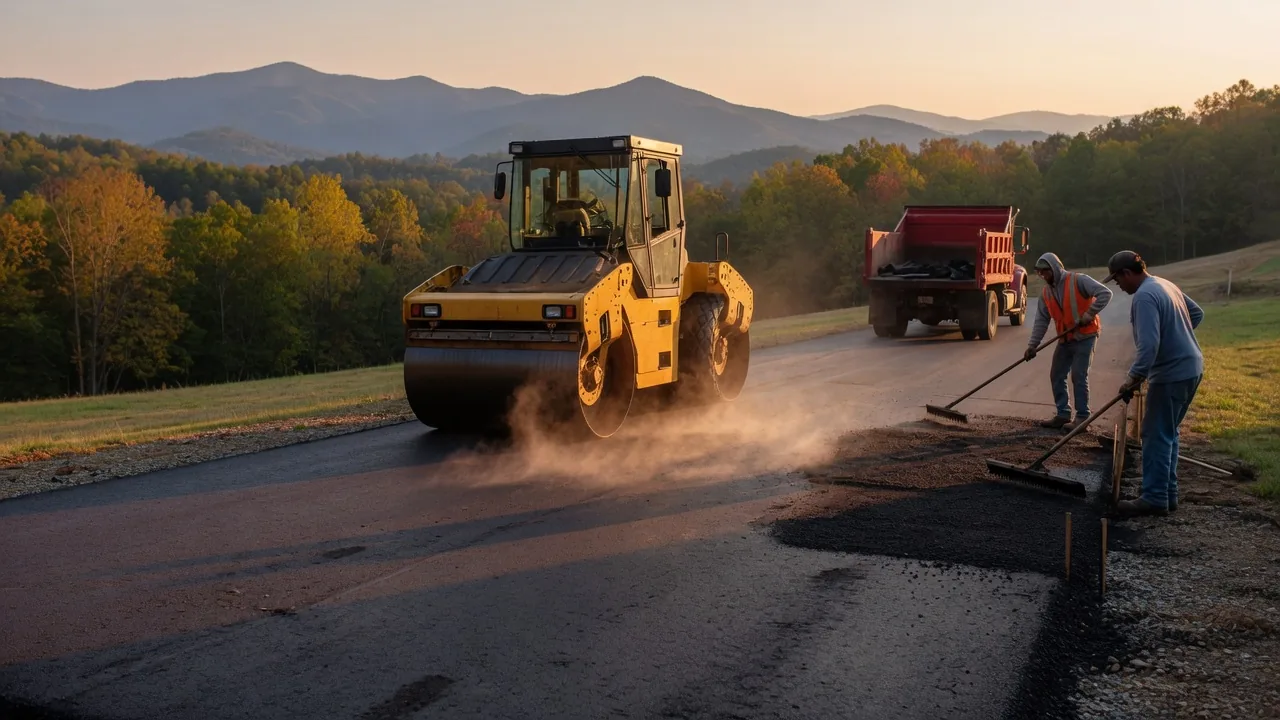
Two inches compacted in a single lift is the floor for a passenger-only drive with a sound base. Three inches in two lifts is what a drive that sees a work truck, a trailer, or regular turning loads actually needs. Turning loads matter more than straight-line traffic: tires scrub asphalt at the apron and turnaround, and scrubbing destroys thin lifts first. If your drive ends in a tight Y or backs onto a county road, budget for the heavier spec before you budget for the pretty finish.
What repair scopes actually cost in Haywood County
Ranges below are for typical Clyde-area residential drives. They assume standard access — no removing a fence, no working around a retaining wall the previous owner built out of whatever was on hand. The full line-item breakdown lives in the Haywood County asphalt driveway cost table, but here's the working version:
| Scope | Typical range | When it's the right call |
|---|---|---|
| Crack fill & seal coat | $250–$650 | Hairline and working cracks, drive otherwise sound |
| Pothole / alligator patch (mill and fill) | $400–$1,200 per area | Localized base failure, rest of drive holding |
| 2-inch overlay, single lift | $2,200–$3,800 | Sound base, passenger vehicles, mild grade |
| 3-inch rebuild, two lifts | $3,800–$6,500 | Truck or trailer traffic, tight turns, failed base |
| Full removal & new build | $7,000–$14,000+ | Base gone, drainage wrong, or both |
Notice the jump between overlay and rebuild is smaller than most homeowners expect. If a crew quotes you an overlay on a drive that needs a rebuild, the number is low because the work is temporary. The asphalt driveway repair overview walks through how to tell which one you're looking at before anyone quotes.
The valley's freeze-thaw and what it does to repairs
Haywood County's federal disaster record tells the story of what hits this ground: 19 declared events touch the county across 1973-2026, and the pattern is water and winter rather than anything exotic. That matters for asphalt because water is the enemy, and freeze-thaw is water's enabler. Moisture gets into a crack, expands overnight, widens the crack, and repeats. A drive on a shaded north-facing grade off a Clyde side road will cycle harder than the same drive in full sun.
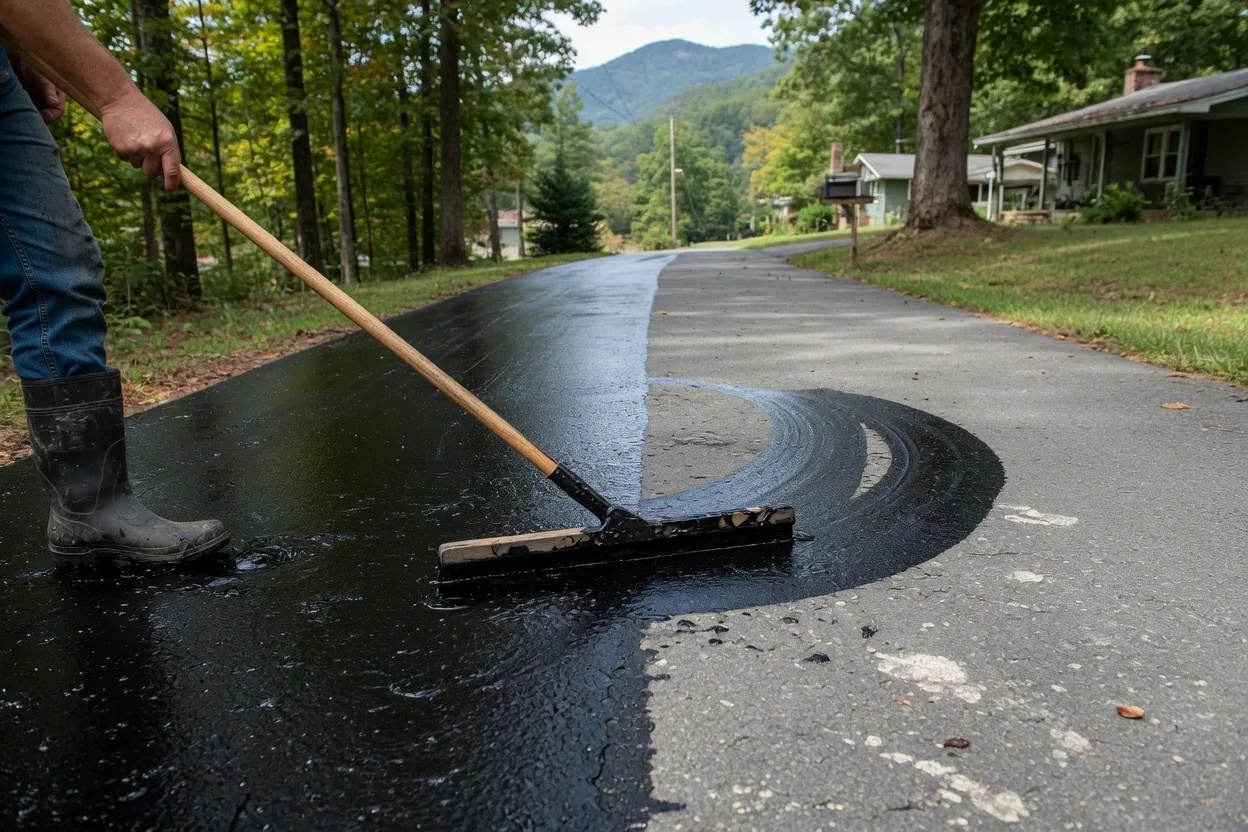
Practical consequence: patching without addressing where the water goes is a subscription, not a repair. If a low spot holds water after rain, that's the first line item, not the last. The National Weather Service outlook for the mountains is a reasonable planning tool for scheduling seal work before the first hard freeze, and the EPA's stormwater guidance explains why keeping runoff off the pavement in the first place beats every repair method on the table.
Access, right-of-way, and who signs off
Many Clyde drives meet a state-maintained road, and that intersection isn't purely yours to change. If a repair involves reworking the apron where your drive meets the street, changing the culvert, or altering the slope at the right-of-way, a driveway permit may be in play. NCDOT runs the permit process and NCDOT Connect handles applications; the department's main site publishes the current requirements. A contractor who works this county regularly will know before you ask.
For the work itself, North Carolina sets a dollar threshold above which a project needs a licensed general contractor. The NC Licensing Board for General Contractors publishes that threshold and the license lookup. Any paving job that crosses it without a licensed contractor on paper is a risk you're carrying, not the contractor. For a full rebuild number, that conversation belongs in the first phone call, not after the equipment shows up.
Reading a Clyde paving quote
Three things separate a real quote from a phone number. First, the mix: ask what asphalt mix is specified, because surface mix and base mix are different materials and a quote that names neither is guessing. Second, the lift schedule: two inches in one lift is not the same driveway as two inches in two, even though the invoice looks identical. Third, the disposal line — a rebuild generates old asphalt that has to go somewhere, and a quote that omits haul-off is a quote that will grow.
When you're comparing bids, the Clyde paving contractors page covers what to verify before signing. The short version: on this terrain and with this traffic, the cheapest bid is usually the one that skipped a lift, skipped the base, or skipped the permit. None of those are savings. They're deferrals with interest.