Where the money actually goes on a Hot Springs drive
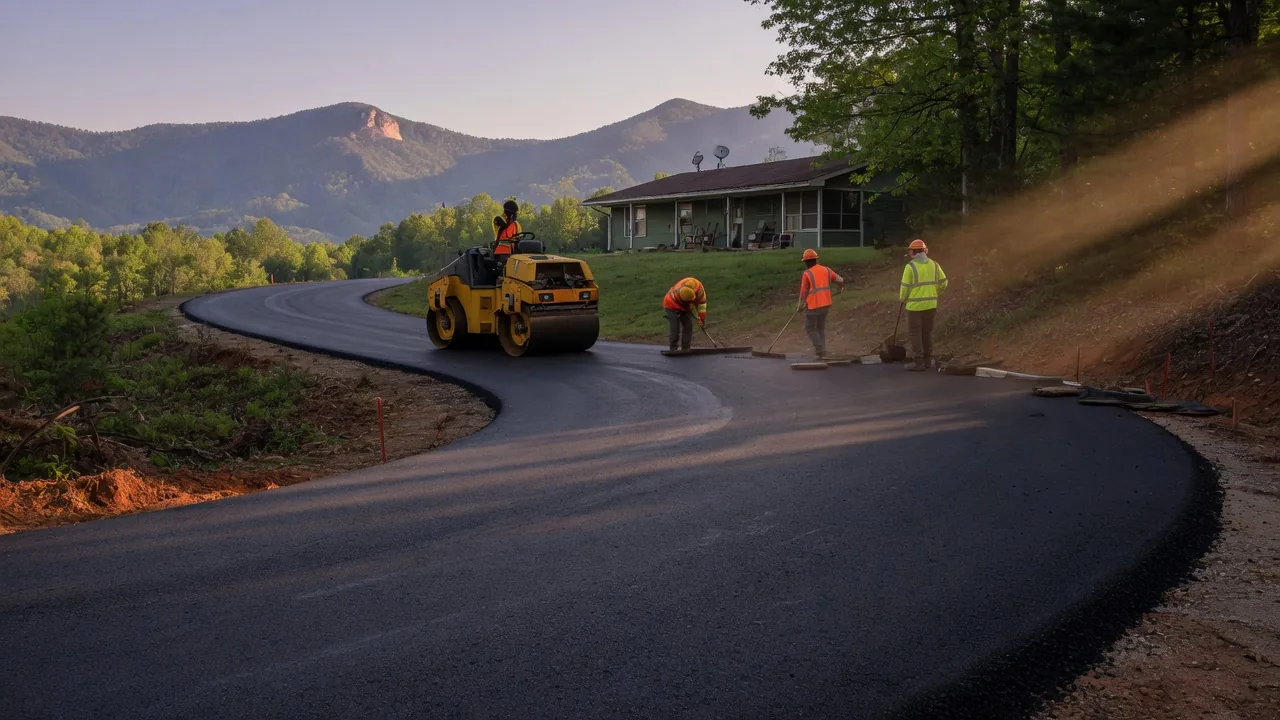
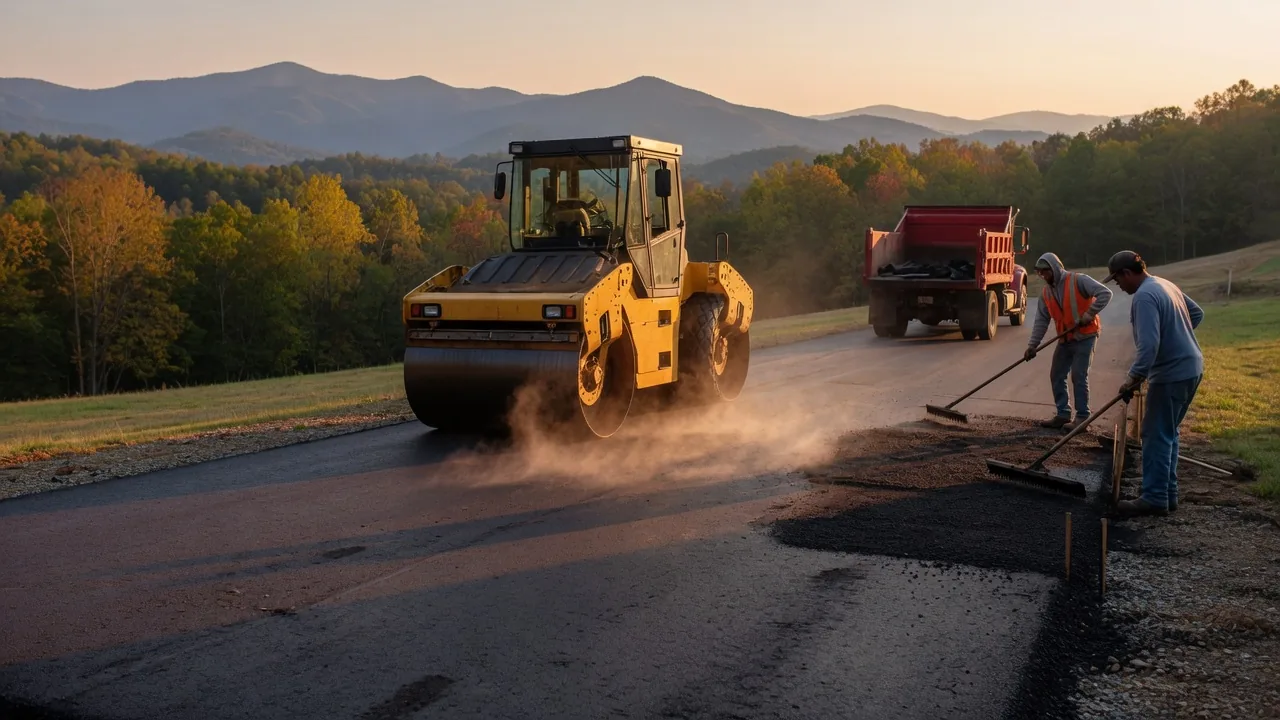
A tar and chip quote for a Hot Springs property reads like a short list, but the price lives in four line items: base preparation, binder application, aggregate, and trucking. Base prep is the quiet one. Most drives here start as dirt, old gravel, or cracked asphalt on ground that was never graded flat, so the crew often has to crown or re-shape before a single drop of binder goes down. That work is measured in hours of machine time, not square feet, and it is where two bids for the same driveway can differ by two thousand dollars.
Trucking is the other local variable. A spreader truck and a chip truck have to reach the work zone loaded, and properties up the river coves or off the steeper sections of US-25/70 can add real fuel and time. When a quote looks too low for Hot Springs, it usually means base prep was priced as an assumption rather than a line item.
Price ranges by scope
The table below reflects what typical Madison County work looks like. Treat it as a band, not a rate card — every drive gets measured and quoted on its own base condition.
| Scope | Typical range | What drives it |
|---|---|---|
| Tar and chip over sound existing gravel | $3.50-$4.75 per sq ft | Grading touch-up, single binder pass, one chip layer |
| Tar and chip with new base and grading | $4.75-$6.25 per sq ft | Added stone, compaction, crowning, drainage shaping |
| Full drive replacement after base failure | $7.00-$9.50 per sq ft | Removal or stabilization, thick base, full surface |
| Steep or long truck access | add 10-25% | Extra hauling time, safety staging, chip loss on grade |
| Culvert or drainage correction | $900-$3,200 each | Pipe size, ditch reshaping, riprap at outlet |
For a full line-item breakdown built around this county, the Madison County asphalt driveway cost page covers the parallel numbers for a hot-mix drive, which is useful for comparing the two surfaces side by side.
Why this ground is hard on driveways
Madison County sits in the French Broad watershed, and the ground reflects it: clay-heavy soils, rock close to the surface in places, and a lot of short steep pulls between the road and the build site. Water is the recurring problem. The National Weather Service's flood and precipitation records for this part of the mountains (21 federal disaster declarations have touched the county across 1978-2026) show how often heavy rain arrives here, and every one of those events sends runoff across driveways that were graded for gentler storms. For a surface like tar and chip, which depends on the base staying put, that matters more than the aggregate color or chip size. The NWS keeps the regional outlook that contractors watch when scheduling a chip seal in spring or fall.
The practical answer is drainage first. A drive that sheets water off its crown and into a defined ditch will hold up for years; one that ponds at the culvert will fail at the edge no matter what surface is on top.
Permits, access, and the rules that apply
If the driveway meets a state-maintained road, a driveway permit is generally required before construction, and the application runs through the NCDOT's online permitting system. Start with NCDOT Connect for the application and NCDOT for the access-management rules that govern sight distance and culvert sizing. This catches people off guard, especially on properties where the existing drive was built decades ago without paperwork and is now being replaced.
On the contractor side, North Carolina requires a general contractor license once a project crosses the state's cost threshold, so a driveway job bundled with other site work can trip that line. The NC Licensing Board for General Contractors is the place to verify whether a bidder is licensed for the scope they are quoting. For paving specifically, look for a contractor who can describe their base prep sequence, not just the surface specification.
What tar and chip does and does not do here
Tar and chip works well on rural drives in this county for a simple reason: it is flexible, inexpensive to refresh, and it grips on grades better than smooth asphalt does when the surface is wet. It is also a surface that wants a good base underneath, and it will telegraph whatever the base is doing. If the subgrade is moving, the chips will ravel at the edges within a season or two.
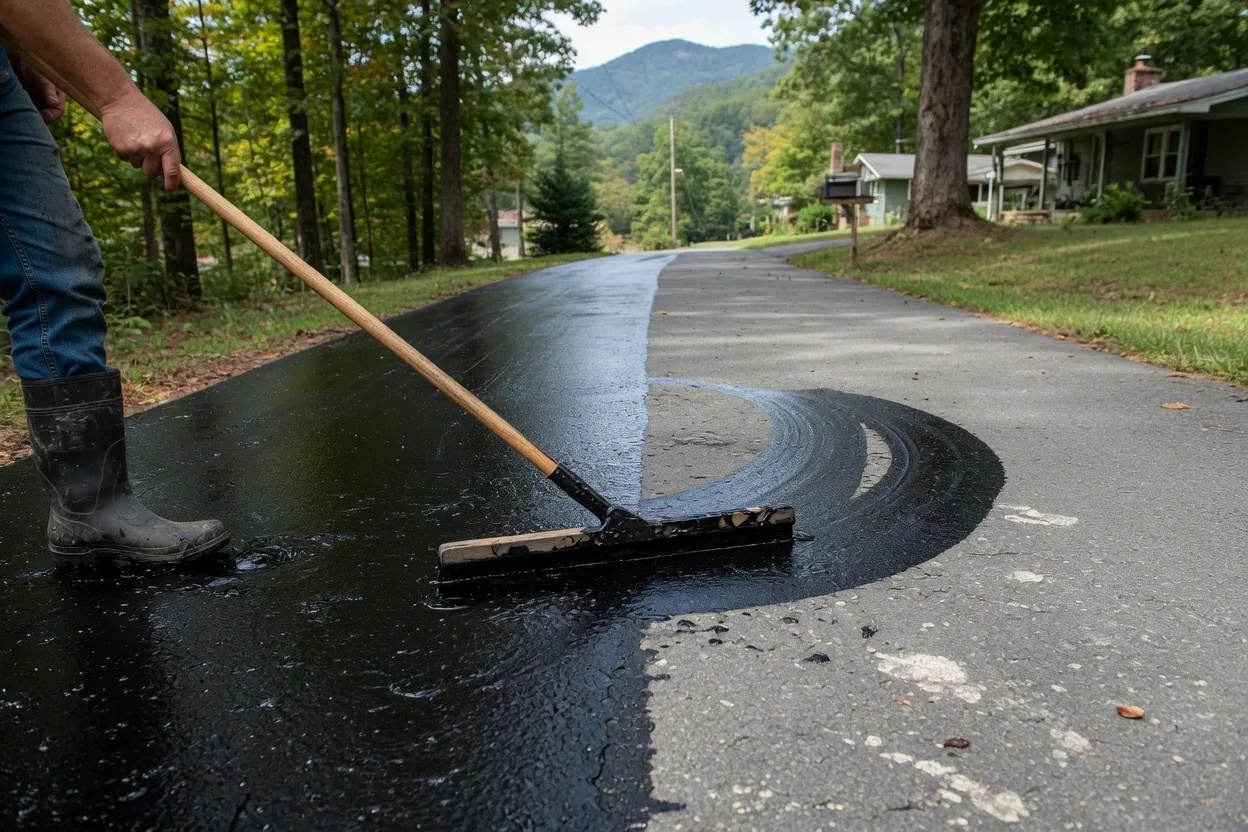
The refresh cycle is the other thing to plan for. A tar and chip drive in this climate typically wants a new chip seal every four to seven years depending on sun exposure and traffic, and that refresh is far cheaper than the original installation. Owners who plan for that cycle get decades out of the surface; owners who treat it as a one-time pour usually end up rebuilding the base instead. More on the surface itself is on our tar and chip overview, and if you would rather compare contractors directly, the Hot Springs paving contractors page covers what to ask before signing.