Asphalt paving and sealcoating, Maggie Valley NC

Paving Contractors in Maggie Valley, NC

Paving contractors Maggie Valley NC: clay-and-gravel subgrade work, $3-$8/sq ft installed, driveway and lot scopes with county cost table. Also in Maggie Valley: asphalt driveway paving, asphalt driveway repair and asphalt resurfacing. Hot-mix asphalt, tar and chip and sealcoating for mountain driveways, lots and private roads across five Western North Carolina counties.

  • Free on-site estimate, price in writing
  • Compacted stone base, then hot mix rolled tight
  • Crowned and edged so mountain rain runs off, not in
  • Illustrated below: what the finished job looks like

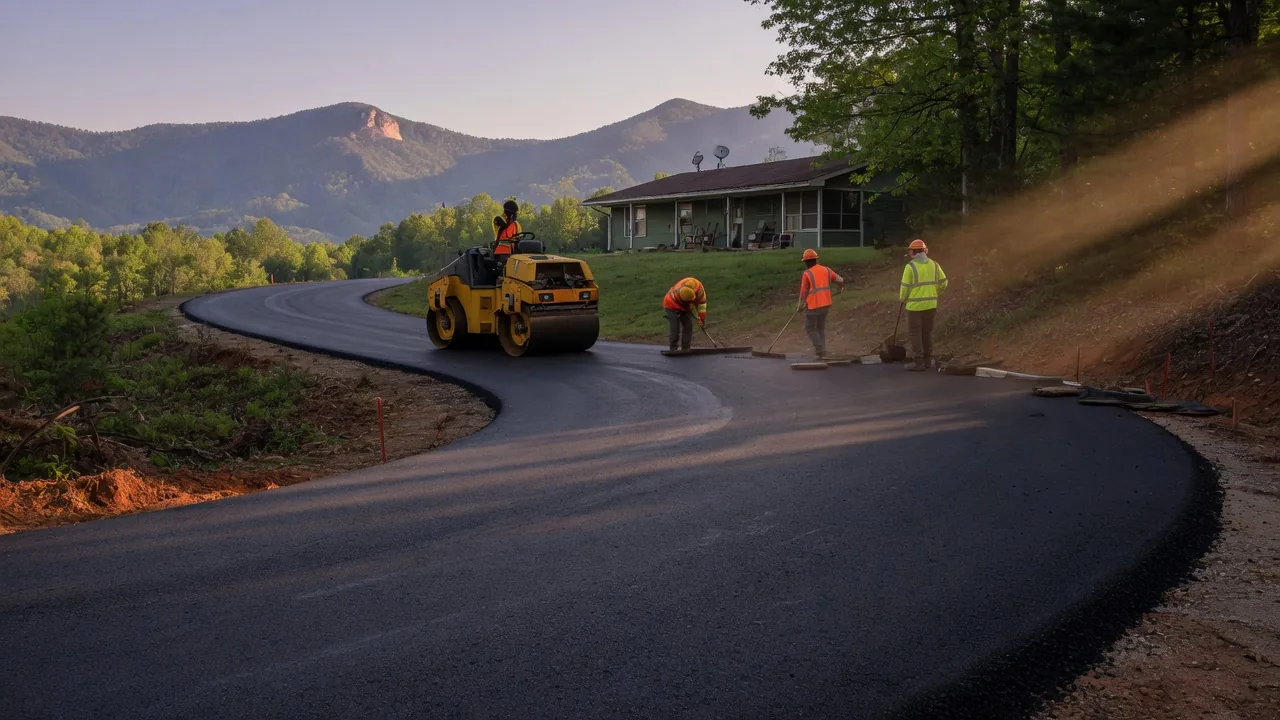
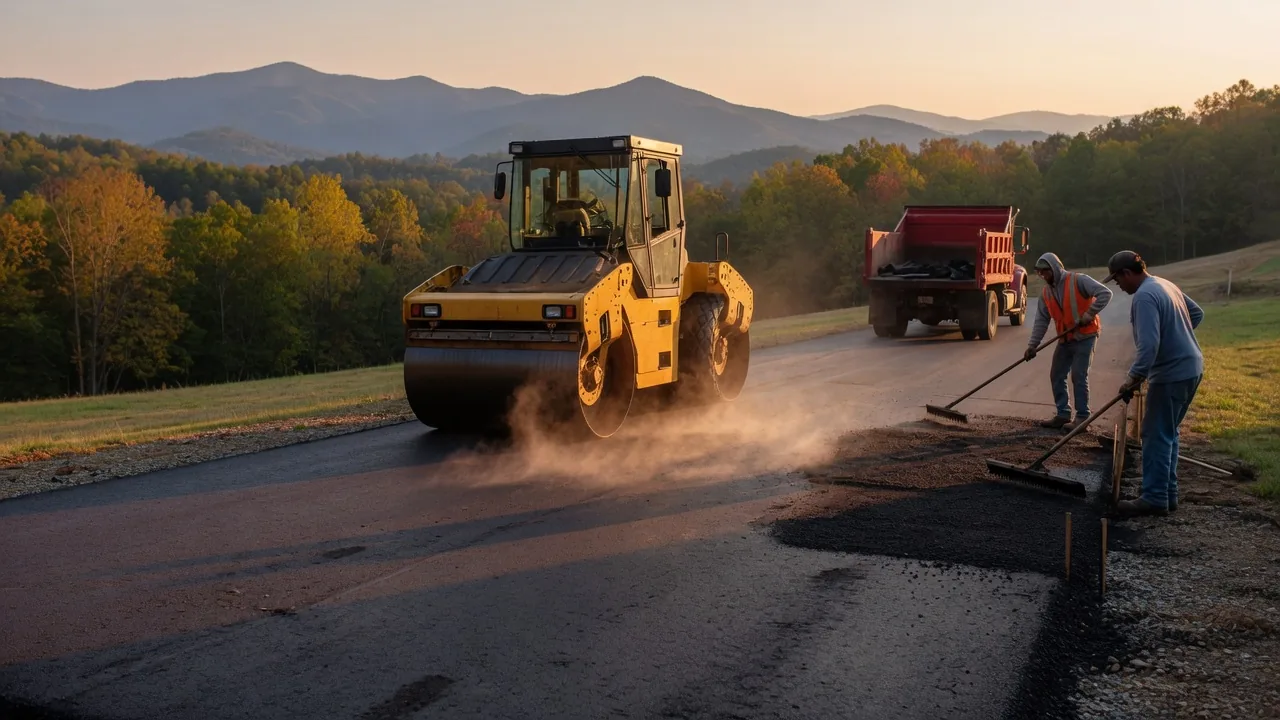
Pictured: illustration: a roller compacting hot-mix asphalt on a residential driveway. An illustration of the work, not a job photo.

Get a free estimate

Tell us about the driveway, lot or road. We measure it, check the base and the water, and put a real price in writing.

Free, no obligation. A written price after the site visit.

Free on-site estimateA real number, in writing, after we measure and check the base.
Base first, then blacktopCompacted stone, drainage, then hot mix, in that order.
Five countiesBuncombe, Haywood, Henderson, Madison and Transylvania.
Straight answersWe say when a patch or an overlay is the honest fix.
Quick answer
Paving Contractors in Maggie Valley, NC

Paving contractors in Maggie Valley NC typically charge $3 to $8 per square foot installed, with most driveway jobs landing between $4,500 and $14,000 once clay excavation, crushed stone base, and hot-mix asphalt are counted. The price swing is almost never the asphalt itself — it is how much unsuitable red clay and old gravel has to come out and how much stone goes back in before any mix is laid.

19
federal disaster declarations on record in Haywood County
Hurricane Dorian
most notable event in the federal record
1973–2026
span of the declaration record
Waynesville
Haywood County hub

What your driveway is actually sitting on

Maggie Valley lots rarely hand a paving crew a clean subgrade. The valley floor along Soco Road and the branches climbing toward the parkway share the same inheritance: weathered red clay, thin topsoil, and driveway beds that started life as gravel someone spread in the 1970s and topped with more gravel every few years. Clay pumps. It holds water, loses strength when saturated, and moves under load in a way that will telegraph straight through a two-inch asphalt mat within a season or two.

That is why a serious paving quote here starts below the surface. The excavator strips the old gravel and unsuitable clay, reshapes and compacts the subgrade, then rebuilds with crushed stone — often a six-inch compacted base for a residential drive, more where the slope is steep or the soil is fat. Only then does hot mix go down. A quote that lists asphalt tonnage but no excavation, no stone depth, and no compaction line is a quote for a cosmetic overlay, not a driveway.

How stone depth drives what you pay

Base stone is the single biggest cost variable on a Haywood County driveway, and the reason two neighbors with identical square footage can get quotes thousands apart. A well-drained bed on six inches of compacted crushed stone is a normal residential build. A wet clay pocket that needs twelve inches of stone, geotextile fabric, and underdrain before it holds anything is a different job entirely.

ScopeTypical installed range
Overlay on sound existing asphalt (1.5-inch mat, minimal prep)$2.50-$4.00 / sq ft
New driveway, good subgrade, 6-inch compacted base$4.00-$6.50 / sq ft
New driveway, clay excavation + 8-12 inch base$6.00-$9.00 / sq ft
Gravel-to-asphalt conversion (strip, reshape, full build)$5.50-$8.50 / sq ft
Small commercial lot, heavy-duty section$7.00-$11.00 / sq ft
Base repair / failed-section replacement only$9.00-$16.00 / sq ft of repair area

For a line-item view of how those numbers build up, the county breakdown at Haywood County asphalt driveway cost walks through excavation, stone, and mix separately, and the broader asphalt paving service guide covers what each phase actually accomplishes.

Slope, freeze, and the drainage question

Elevation does real work on a Maggie Valley driveway. Grades climb fast off the main roads, and water that sheets off an uphill neighbor's property has to go somewhere. If it crosses your drive, it will find every low spot in the asphalt and start working on the base underneath. Paving over a drainage problem simply relocates it.

Federal disaster records underline why: 19 declared events touch this county across 1973-2026, and the pattern is storm and flood driven. A driveway that survives a normal season and then fails after a heavy rain event is telling you the water story was never solved. Grading, a crowned surface, proper shoulder stone, and cross-drainage where the grade demands it are part of a competent scope, not add-ons. The EPA's guidance on stormwater and runoff at epa.gov is written for larger sites but the principle holds at driveway scale: manage where the water goes before you seal it out.

Permits and who is allowed to do the work

If your driveway meets a state-maintained road, the connection itself is regulated. NCDOT controls driveway and street access across North Carolina, and the permit application runs through the department's online portal at connect.ncdot.gov with general program information at ncdot.gov. Work that changes a driveway apron, culvert, or drainage crossing the right-of-way typically needs that approval before equipment shows up, and the requirements vary with road classification and sight distance.

On the contractor side, North Carolina sets a dollar threshold above which a project must be handled by a licensed general contractor, and the licensing rules live with the NC Licensing Board for General Contractors. A residential driveway usually sits under that threshold, which means anyone with a truck and a roller can legally bid it — exactly why the subgrade conversation matters more than the license check on small jobs. Larger commercial lots, subdivision work, and anything crossing into site-development territory do fall under the licensing rules, and a legitimate bidder will not hesitate to explain where their project lands. Code requirements for paving materials, thickness, and compaction are published through the International Code Council and adopted by reference in local ordinances.

Reading a bid when the base is the whole story

A usable Maggie Valley paving bid names four things: how much material gets excavated and hauled off, how many inches of compacted crushed stone go back, what compaction standard the crew is working to, and what asphalt section (binder and surface course thickness) sits on top. If any of those is missing, the bid is priced against an assumption you cannot see and cannot dispute later.

Watch for the classic shortcut: quoting a thin mat over existing gravel with a light regrade. It looks like a bargain per square foot and it will look like a bargain again in three years when the clay underneath has pumped it into a washboard. A properly built driveway on this soil costs more up front and then stops asking for money. The Maggie Valley driveway paving page covers scheduling and what a site visit should include, and if you want a number before anyone knocks on the door, the cost guide is the honest place to start.
Haywood County, NC: the storm record

Federally declared disaster events19
Named storms in the recordHurricane Dorian, Hurricane Florence, Hurricane Helene, Hurricane Ian, Hurricane Isaias, Hurricane Ivan
Incident typesFlood, Hurricane, Severe Storm, Snowstorm, Tropical Storm
Record span (fiscal years)1973–2026
Source: FEMA OpenFEMA disaster declarations. County-level federal declarations, not individual claims.
More in Maggie Valley

Everything we build in Maggie Valley, NC

Questions people ask

Straight answers

How much does asphalt paving cost in Maggie Valley NC?
Most residential driveway projects land between $4,500 and $14,000, or roughly $4-$9 per square foot installed. The spread is driven by how much clay and old gravel has to be excavated and how deep the crushed stone base ends up. See the Haywood County cost table for line items.
Can you pave over my existing gravel driveway?
Sometimes, but only if the gravel is clean, well-drained, and structurally sound. Most older Maggie Valley gravel drives have clay mixed into the top layer and need to be stripped and rebuilt with fresh compacted stone before asphalt goes down. Paving directly over contaminated gravel is the most common cause of early failure here.
How thick should the asphalt be?
A typical residential driveway gets 1.5 to 2 inches of compacted hot mix over a 6-inch compacted crushed stone base, with a heavier section where vehicles turn or park. Thinner mats over inadequate base are the standard shortcut bid in this market.
Do I need a permit to pave my driveway in Haywood County?
If your driveway connects to a state-maintained road, the access point is regulated by NCDOT and the permit runs through connect.ncdot.gov. Paving the surface of an existing, already-permitted driveway generally does not trigger a new access permit, but changing the apron, culvert, or drainage in the right-of-way does.
Is a paved driveway worth it on mountain grades?
Yes, if it is built for the grade. Steep drives need a heavier base, proper crowning, and drainage handled before the asphalt goes down. Done right, asphalt holds up well and beats gravel on traction, dust, and snow removal. Done as a thin overlay on a wet clay bed, it will rut and crack within a few seasons.
When is the best time of year to pave in Maggie Valley?
Late spring through early fall is the practical window. Hot-mix asphalt needs adequate air and ground temperatures to compact properly, and mountain elevations here cool faster than the valley floor in Waynesville. Crews typically schedule around that, so late-season quotes may push into the following spring.
How long before I can drive on new asphalt?
Usually 24 to 72 hours for normal vehicle traffic, longer for heavy trucks or hot weather. Your contractor should give you a specific cure window based on the mix and the day's temperatures.
Our work

Our work

Illustration: fresh black asphalt on a driveway curving up a wooded mountain lot. Built by Mountain Asphalt Paving.
Illustration: fresh black asphalt on a driveway curving up a wooded mountain lot.
Illustration: a roller compacting hot-mix asphalt on a residential driveway. Built by Mountain Asphalt Paving.
Illustration: a roller compacting hot-mix asphalt on a residential driveway.
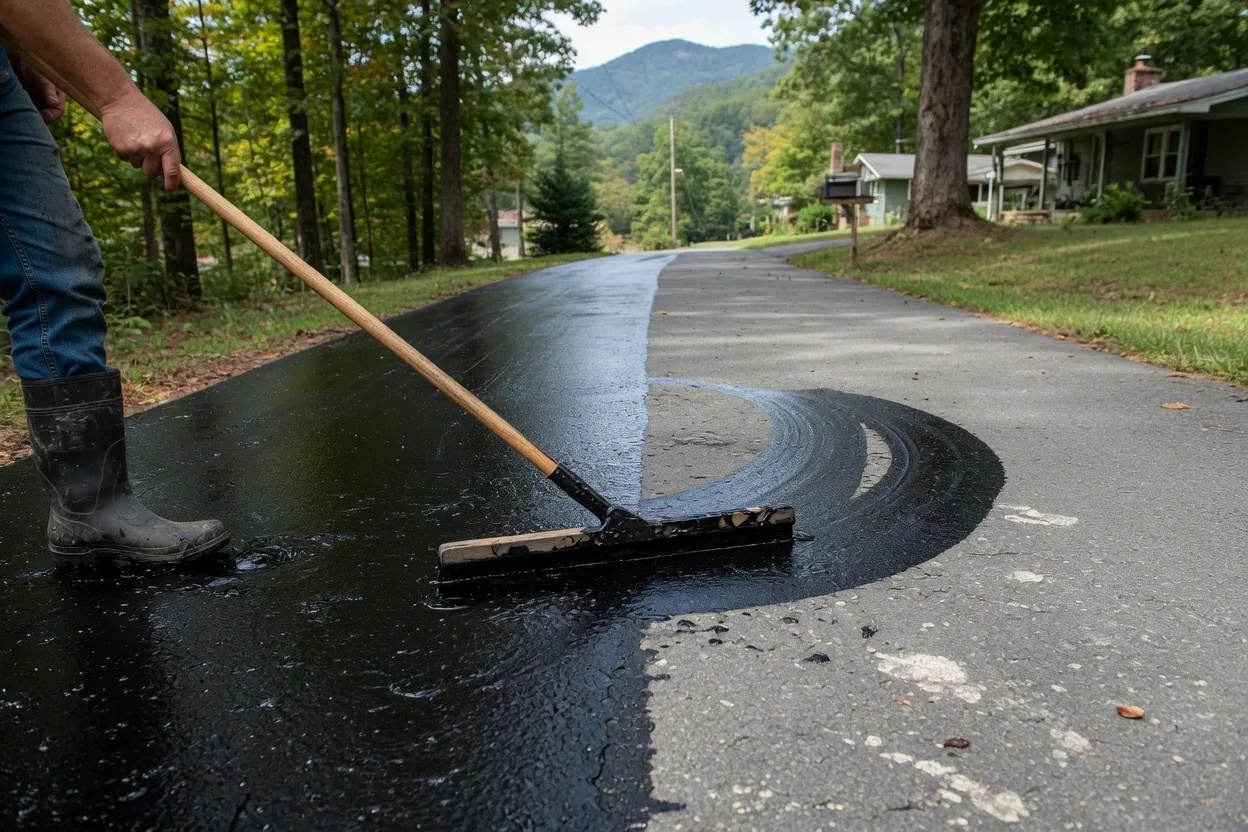
Illustration: sealcoat going down by squeegee, the treated half glossy black beside the faded half. Built by Mountain Asphalt Paving.
Illustration: sealcoat going down by squeegee, the treated half glossy black beside the faded half.
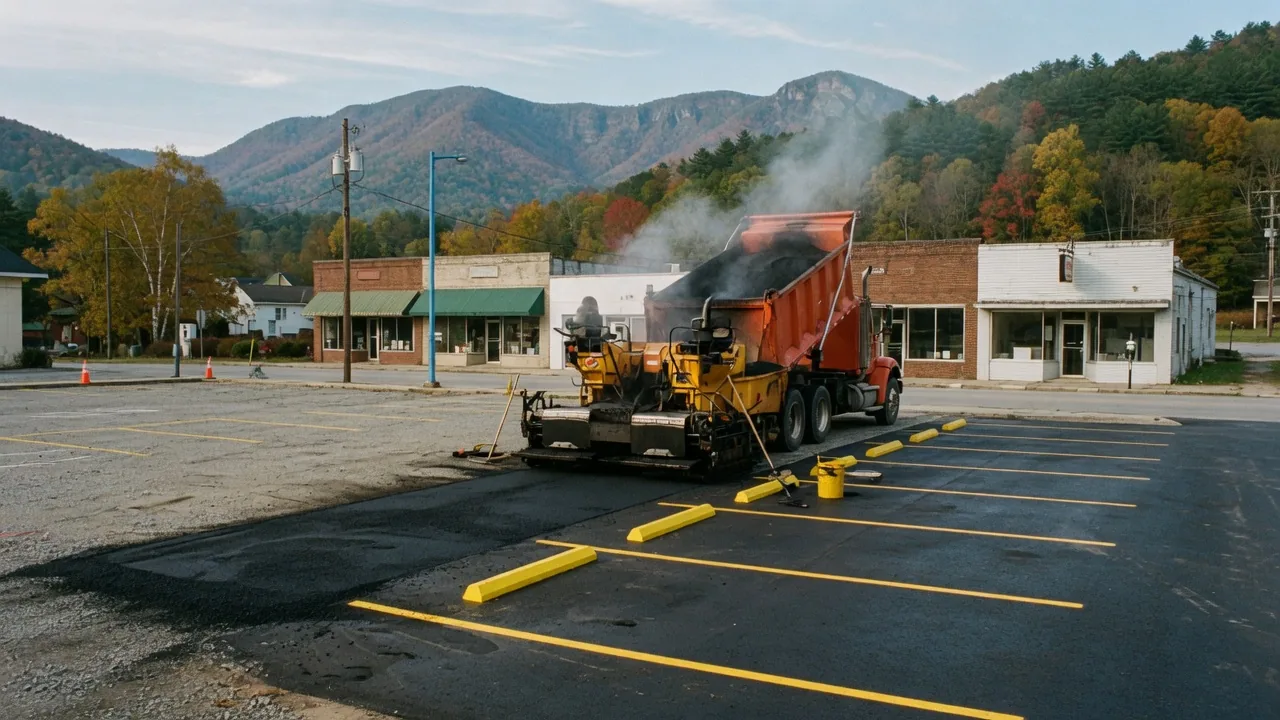
Illustration: a small parking lot being paved, with fresh striping on the finished half. Built by Mountain Asphalt Paving.
Illustration: a small parking lot being paved, with fresh striping on the finished half.
Get a quote

Tell us about your project. We price it straight.

Where it is and what you need — that's all it takes to start. You get a clear scope and an honest number, and your info never gets sold to a list.

Get a free estimate

Free, no obligation. A written price after the site visit.