Asphalt paving and sealcoating, Asheville NC

How Long After Paving Should You Sealcoat?

How long after paving to sealcoat in Buncombe County, NC — wait 6-12 months on new asphalt. Also useful: sealcoating, driveway sealcoating cost in NC and tire marks and scuffs on new asphalt. Hot-mix asphalt, tar and chip and sealcoating for mountain driveways, lots and private roads across five Western North Carolina counties.

  • Free on-site estimate, price in writing
  • Cracks filled first, then two coats of sealer
  • Keeps water and sun out of the asphalt
  • Illustrated below: what the finished job looks like

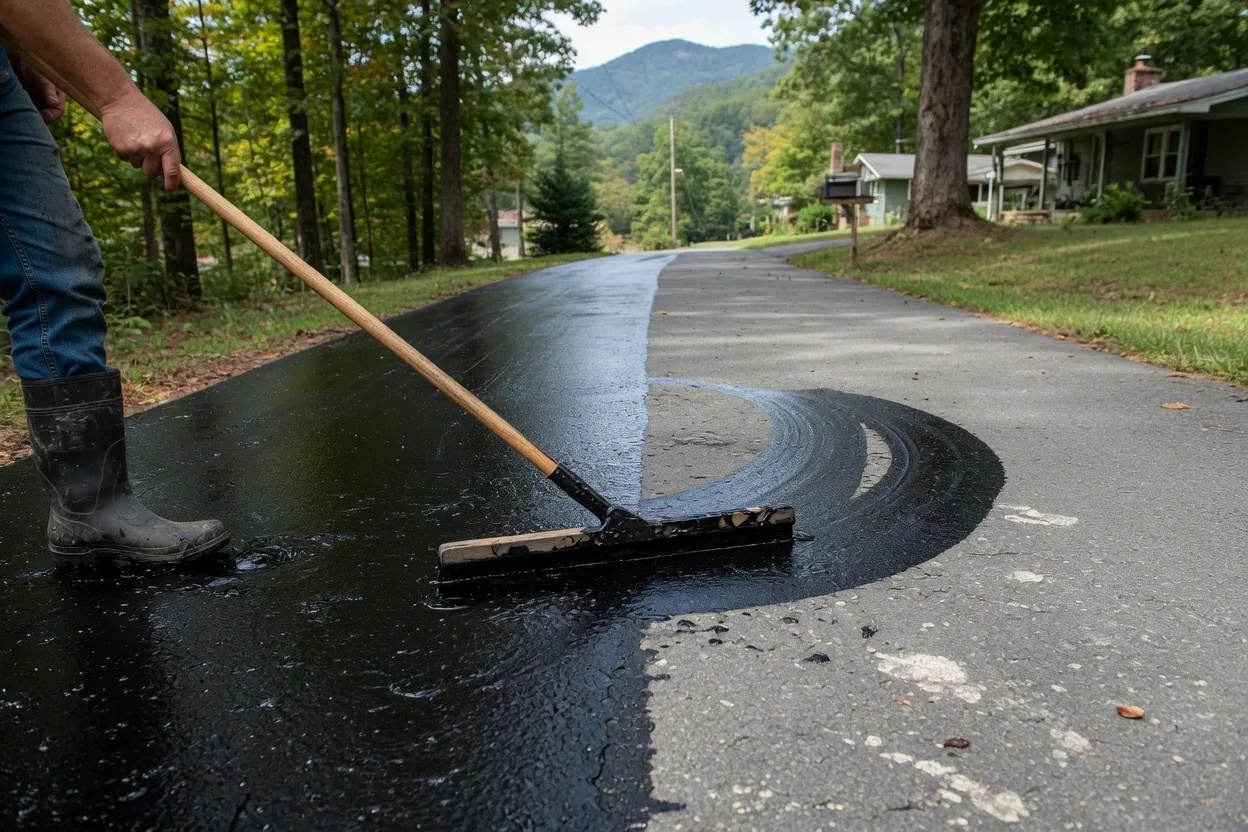
Pictured: illustration: sealcoat going down by squeegee, the treated half glossy black beside the faded half. An illustration of the work, not a job photo.

Get a free estimate

Tell us about the driveway, lot or road. We measure it, check the base and the water, and put a real price in writing.

Free, no obligation. A written price after the site visit.

Free on-site estimateA real number, in writing, after we measure and check the base.
Base first, then blacktopCompacted stone, drainage, then hot mix, in that order.
Five countiesBuncombe, Haywood, Henderson, Madison and Transylvania.
Straight answersWe say when a patch or an overlay is the honest fix.
Quick answer
How Long After Paving Should You Sealcoat?

For how long after paving to sealcoat, most asphalt in Buncombe County needs 6 to 12 months of curing before sealcoating, and the cost typically runs $0.15–$0.30 per square foot. But what sits under the asphalt here — red clay, old gravel, or fill — determines how much crushed stone went down first, and that stone base is what controls whether your new pavement is ready on time or needs longer.

19
federal disaster declarations on record in Buncombe County
Hurricane Dorian
most notable event in the federal record
1973–2026
span of the declaration record
Asheville
Buncombe County hub

What's actually under your new asphalt in Buncombe County

Before anyone talks about sealcoat timing, the asphalt itself has to be right — and in Buncombe County that starts a foot below the surface. This county sits on red clay that swells when wet and shrinks when dry, plus pockets of old gravel farm roads and cut-and-fill pads from subdivision development. A driveway off a slope in Weaverville or a parking lot in Arden is not resting on the same material as one off Airport Road on flatter ground.

That soil matters because new asphalt cures from the bottom up as much as the top down. If a contractor laid hot mix over 2 inches of stone on clay, the pavement will flex and settle faster than one laid over 6 to 8 inches of compacted crushed stone with proper drainage. The sealcoat clock starts when the asphalt has finished curing — and thicker stone bases let the mix cure more evenly, often inside the 6-month window. Thin bases on clay push that closer to 12 months, and sometimes longer if the first wet season shows rutting.

The cure window that actually applies here

Asphalt cures as lighter oils evaporate from the binder. Cooler mountain nights and long springs in Asheville slow that process compared to the Piedmont. A driveway poured in March may not be ready until fall; one poured in August could be ready by the following spring. The practical rule: wait until the surface has gone from dark, oily black to a settled matte charcoal and no longer smells like fresh mix on a warm afternoon.

Applying sealcoat too early traps those oils and can leave a tacky, blotchy finish that peels within a season. Too late leaves the binder exposed to UV and to the freeze-thaw cycles that chew up unsealed asphalt across the county. If you're weighing the timing against a budget, the sealcoating cost breakdown shows why waiting a few extra months costs less than stripping a failed coat.

What drives the sealcoat price in this county

Sealcoat pricing in Buncombe County is less about square footage than about prep. Cracks that opened during the first curing winter need hot-pour filler before any sealer goes down, and a driveway on a clay slope needs edges cut in and drainage checked first. Oil spots — common on any lot that saw construction traffic — get primed or the sealer won't bond. Here is how typical scopes price out.

ScopeTypical price range
Sealcoat only, clean surface, under 2,000 sq ft$0.15-$0.25/sq ft
Sealcoat with crack filling and oil-spot priming$0.20-$0.30/sq ft
Add a second coat+$0.08-$0.15/sq ft
Edge cutting and prep on sloped or clay-base drives$150-$500 per job
Full driveway reset — grading, stone, then seal after cure$3.50-$7.00/sq ft

Those numbers move with access. A tight driveway off a switchback in Black Mountain takes longer to prep than a straight run off a county road, and labor is the biggest line. The sealcoating service overview walks through what a proper prep sequence looks like before the sealer ever gets opened.

Storm and water history shapes the answer too

Buncombe County has seen 19 federally declared disaster events over a recorded span of 1973-2026, and the pattern is consistent: heavy rain, flooding, and slope movement. That history matters for sealcoat timing because water is what turns a not-quite-cured driveway into a rutted one. If your new asphalt went down just before a wet stretch, the surface may still look fine while the subgrade underneath is still consolidating.

The National Weather Service forecast for the Asheville area is worth checking before you schedule sealing — a coat applied right before a multi-day rain event can wash or streak. The NWS publishes local outlooks that contractors here watch before committing to a seal date.

Tire marks, curing, and other first-year issues

New asphalt in Buncombe County often shows scuffing and dark tire marks in the first summer, especially on driveways with a grade. That's the binder still soft, not a defect — and it's one more reason to hold off on sealcoat until the surface firms up. Our notes on tire marks on new asphalt explain what's normal and what signals a base problem that sealcoat will not fix.

One more local check: if the paving job required any driveway permit or right-of-way work through NCDOT, confirm that everything was signed off before scheduling the sealcoat — the NCDOT handles those permits for state-maintained roads and driveways. Sealcoating over an unresolved access issue just hides it until the next inspection.

When to call a pro instead of waiting

Sealcoat timing is straightforward if the asphalt was laid correctly. It stops being straightforward if the base was thin, the drainage slopes the wrong way, or the first winter opened cracks wider than a pencil. At that point you are not scheduling a sealcoat — you are looking at base repair, and no sealer will hold over a failing subgrade.

Hiring matters here. Sealcoating itself is not a licensed trade in North Carolina, but the paving and grading work that often comes with it can fall under the NC Licensing Board for General Contractors depending on the job value and scope. Ask any contractor whether the underlying paving and stone work is covered, and get the answer in writing before you book the seal date.
Buncombe County, NC: the storm record

Federally declared disaster events19
Named storms in the recordHurricane Dorian, Hurricane Florence, Hurricane Fran, Hurricane Helene, Hurricane Ian, Hurricane Isaias
Incident typesFire, Flood, Hurricane, Severe Storm, Snowstorm
Record span (fiscal years)1973–2026
Source: FEMA OpenFEMA disaster declarations. County-level federal declarations, not individual claims.
Questions people ask

Straight answers

Can I sealcoat my new driveway after 3 months?
Usually no. Three months is too soon for most asphalt, especially in Buncombe County where cool nights and clay subgrades slow curing. Six months is the earliest safe window, and 12 months is safer for drives on thin stone bases.
How much does sealcoating cost in Buncombe County?
Most jobs run $0.15-$0.30 per square foot depending on prep, crack filling, and access. A sloped driveway on a clay base with edge work will land at the higher end. See the cost page for line items.
Does the crushed stone base affect sealcoat timing?
Yes. A thicker compacted stone base under the asphalt lets the mix cure more evenly and supports the surface so cracks don't open early. Thin bases over red clay commonly push the seal date past 12 months.
What happens if I sealcoat too early?
Sealer can trap curing oils, leaving a tacky, blotchy surface that peels within a season. You may also seal in moisture and prevent the asphalt from finishing its cure, which shortens the pavement's life instead of extending it.
Do I need to fix cracks before sealcoating?
Yes. Cracks wider than a pencil should be filled with hot-pour rubberized filler before sealer goes down, and oil spots need priming. Skipping either step means the sealer fails at the exact spot you were trying to protect.
Does rain affect when I can sealcoat?
It does. Sealer needs a dry surface and ideally 24 hours of dry weather after application. Check the National Weather Service for the Asheville area before scheduling — a wet forecast can wash a fresh coat.
Will tire marks go away after sealcoating?
Not necessarily. Tire scuffing on new asphalt is often the soft binder and usually fades with cure. If marks persist after a year, the cause is usually a base or drainage issue, and sealcoat will not fix it. See tire marks on new asphalt for details.
Our work

Our work

Illustration: fresh black asphalt on a driveway curving up a wooded mountain lot. Built by Mountain Asphalt Paving.
Illustration: fresh black asphalt on a driveway curving up a wooded mountain lot.
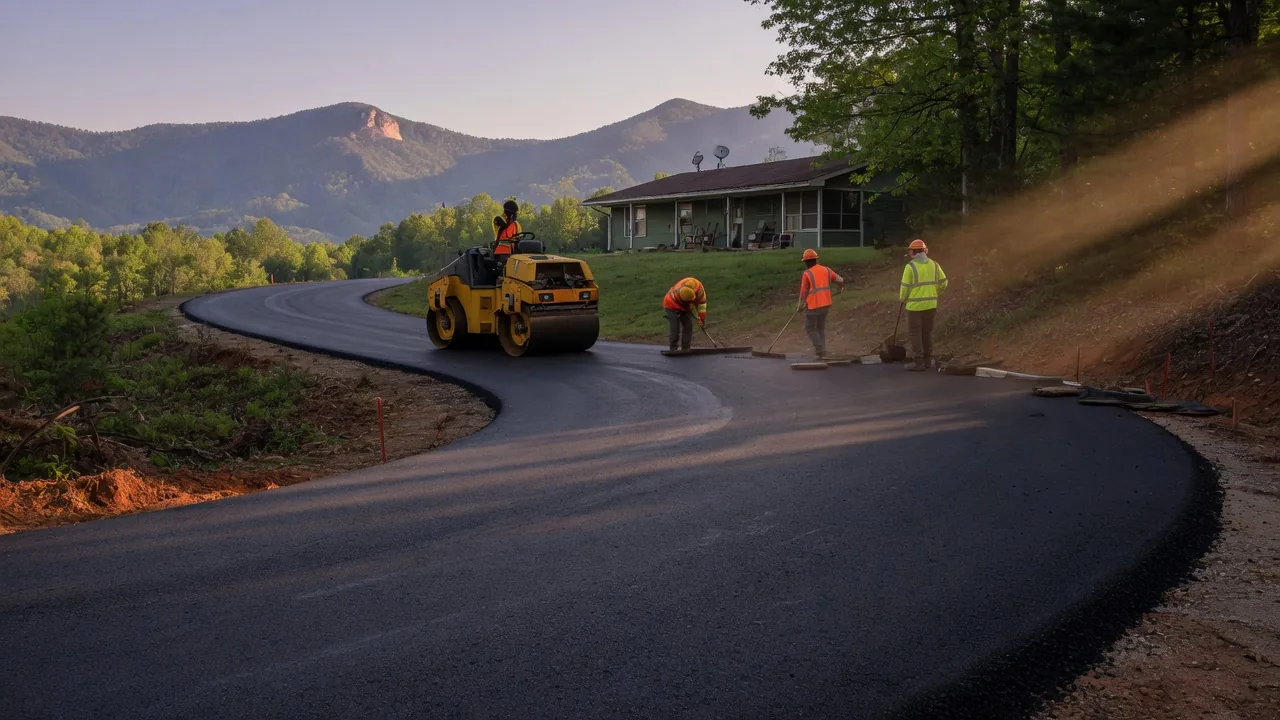
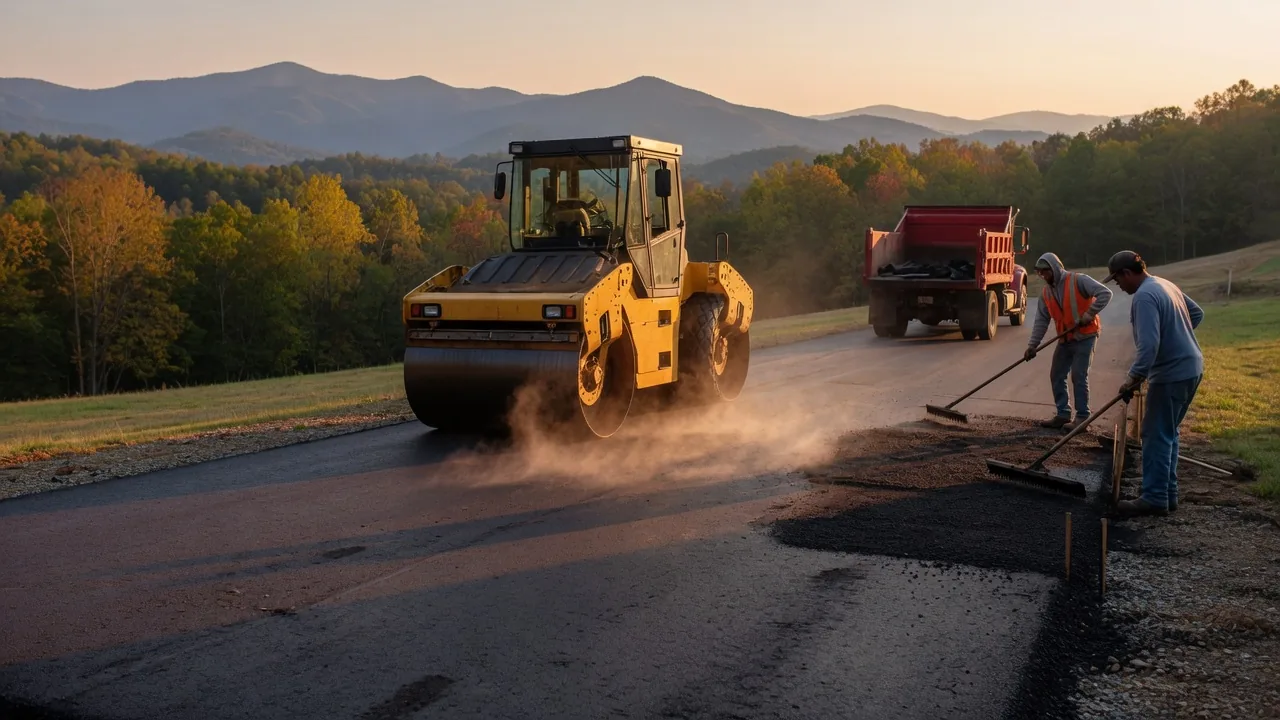
Illustration: a roller compacting hot-mix asphalt on a residential driveway. Built by Mountain Asphalt Paving.
Illustration: a roller compacting hot-mix asphalt on a residential driveway.
Illustration: sealcoat going down by squeegee, the treated half glossy black beside the faded half. Built by Mountain Asphalt Paving.
Illustration: sealcoat going down by squeegee, the treated half glossy black beside the faded half.
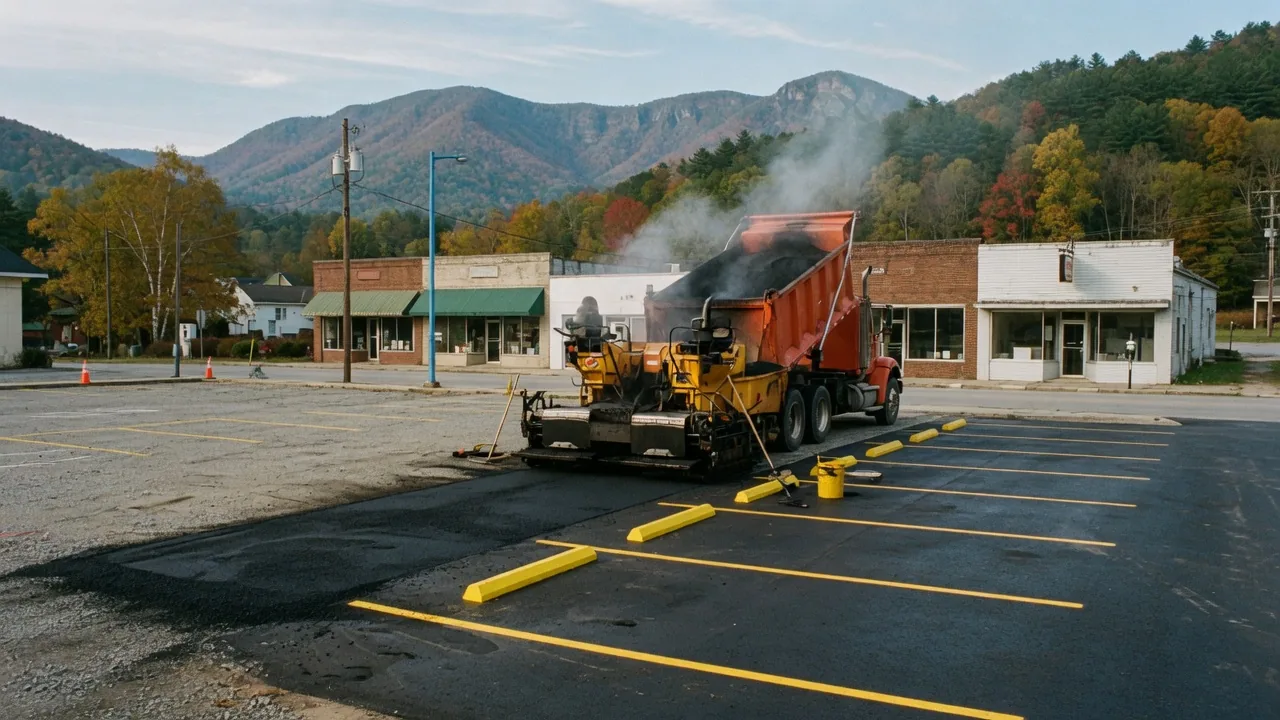
Illustration: a small parking lot being paved, with fresh striping on the finished half. Built by Mountain Asphalt Paving.
Illustration: a small parking lot being paved, with fresh striping on the finished half.
Get a quote

Tell us about your project. We price it straight.

Where it is and what you need — that's all it takes to start. You get a clear scope and an honest number, and your info never gets sold to a list.

Get a free estimate

Free, no obligation. A written price after the site visit.