Why mountain pavement fails in spring and fall
Buncombe County driveways live through freeze-thaw cycles that lowland North Carolina simply doesn't get. Asphalt laid at the bottom of a Shiloh or Leicester hollow collects cold air drainage overnight; a drive cut into a south-facing slope off Town Mountain bakes by day and drops hard after dark. That daily swing cracks pavement the way a bent paper clip cracks after enough flexes. The National Weather Service NWS records the freeze-thaw cycling that drives this, and it's the single reason alligator cracking is so common on older mountain drives.
Add the region's storm record — 19 federal disaster declarations touch this county across 1973-2026 — and the pattern is clear. Water gets in, ice pries it open, spring runoff saturates the base, and the mat starts pinging. The cracking you see on the surface is rarely where the problem started.
The paving window: when crews actually pave here
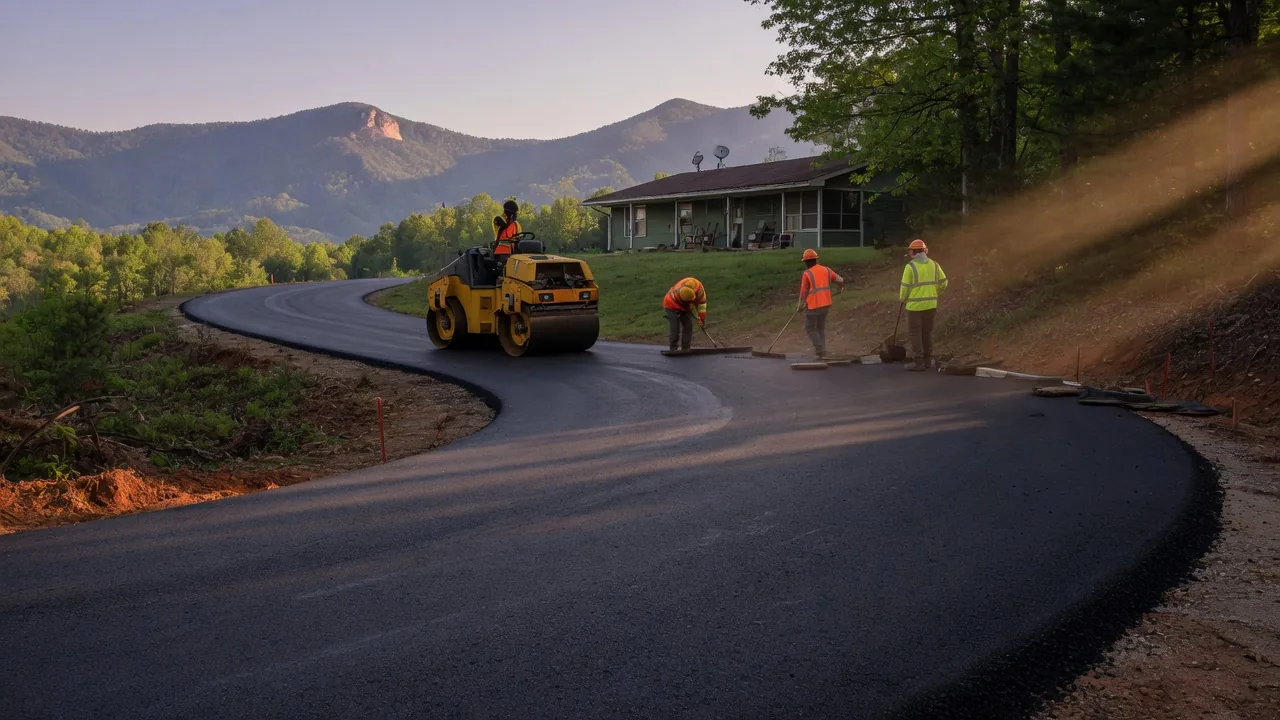
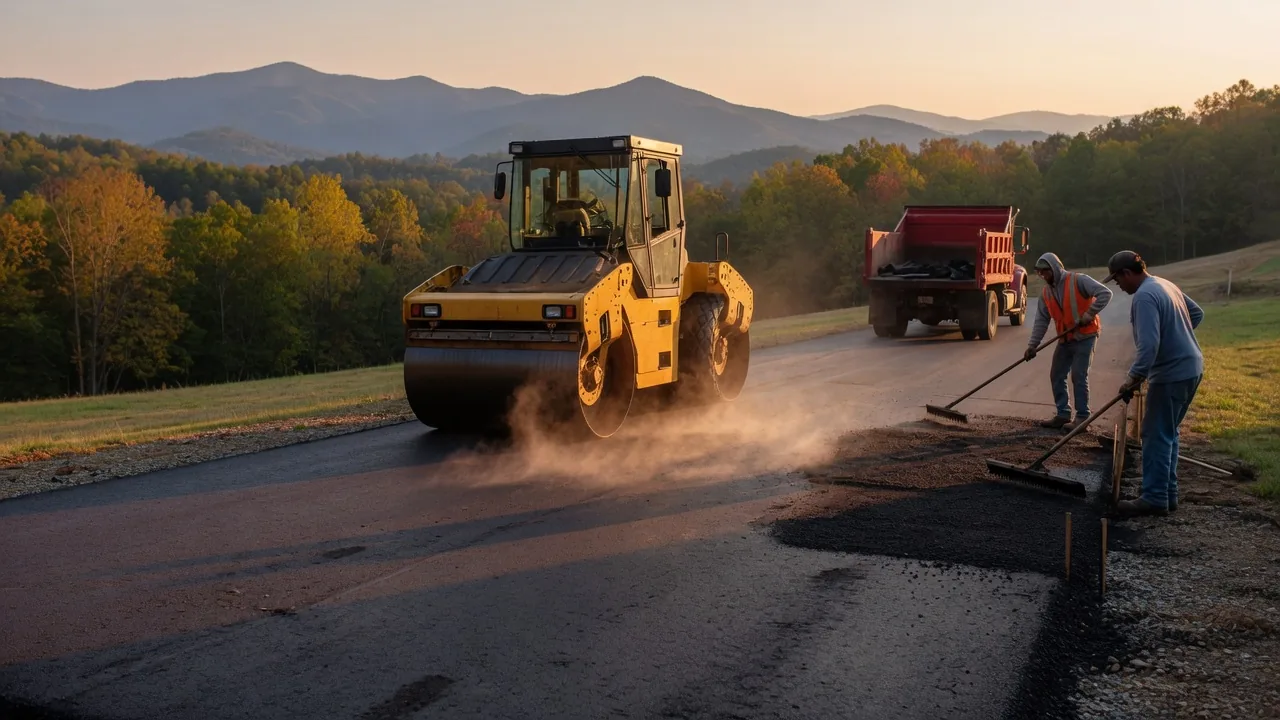
Local asphalt plants generally open in spring and run through late fall. The practical laying window for mountain work is roughly May through October, and even inside that window the temperature has to stay warm enough to roll the mat before it stiffens. A driveway in a deep cove that holds shade past nine in the morning may only take a finish pass like a flatland job would miss entirely.
Why that matters for alligator cracking: crews that paved in a hurry at the edge of the season — or laid cold mix into a damp base — often produce the very cracking you're inspecting now. Real repair means cutting back to sound asphalt, drying the base, and repaving in a window that lets the material cure. That's the plan for the rest of this page.
Reading the crack pattern before you call anyone
Alligator cracking looks like a chicken-wire web of interconnected cracks. In Buncombe County drives it usually points to one of three things: a base that never dried, a patched utility trench that settled, or drainage dumping roof and slope runoff across the pavement. If the cracking is confined to one area, the fix is local. If it runs the length of the drive, the base is already out of capacity and patching is money down a hole.
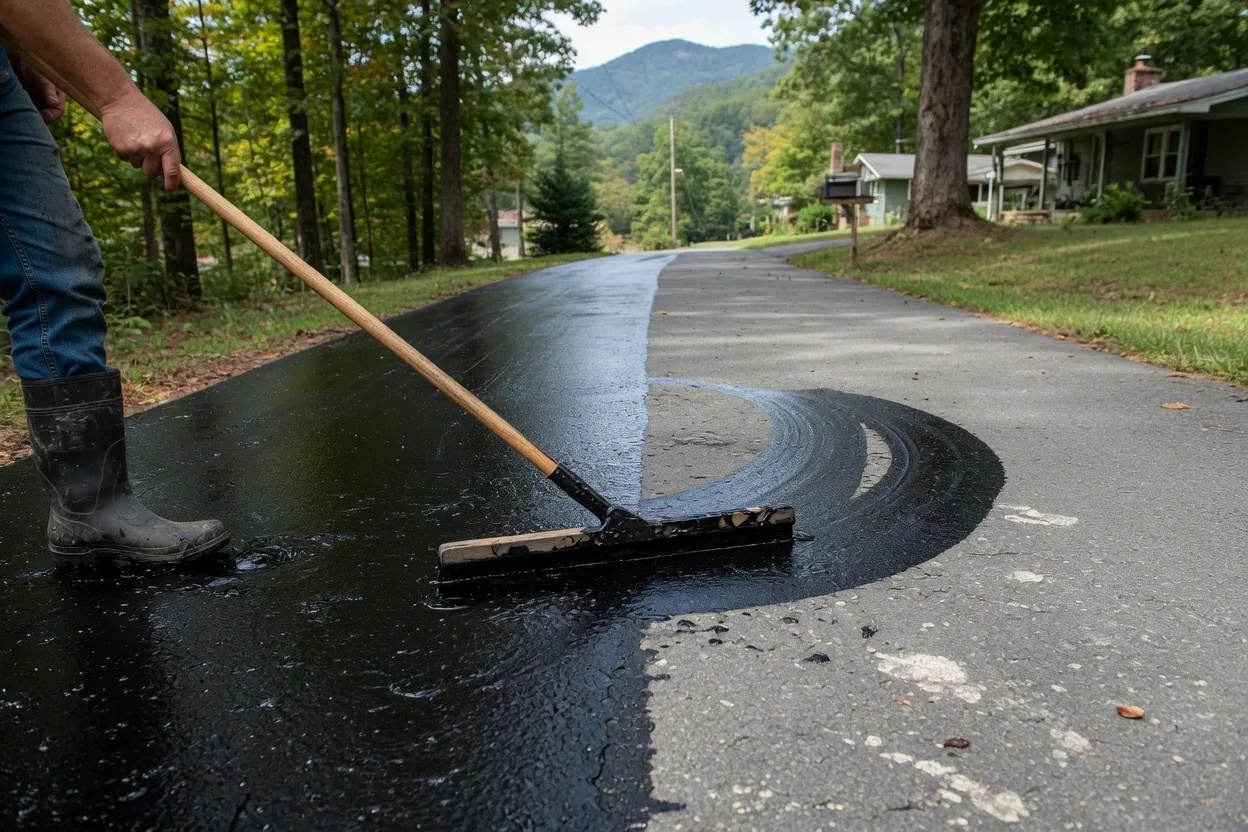
The test most useful to a homeowner: press a screwdriver into the crack. If it sinks, the subgrade under the asphalt is saturated. That alone pushes the scope from cosmetic seal to structural repair. Our asphalt driveway repair guide covers the field checks in order.
What repair actually costs in this terrain
Prices below reflect typical Buncombe County ranges as of recent work — your slope, access, and square footage will move them.
| Scope | Typical Price Range |
|---|---|
| Crack sealing / cosmetic treatment | $250-$650 |
| Localized full-depth patch (one area) | $1,200-$2,800 |
| Multiple patches with base correction | $3,500-$7,500 |
| Mill-and-overlay, sound base only | $3,000-$6,500 |
| Full removal and rebuild with drainage | $8,000-$20,000+ |
Steep drives where a dump truck can't back up to the work zone carry extra labor; drives with poor drainage carry extra tear-out. Those line items are legitimate, not padding. If a bid doesn't explain where water is going after the work, treat it as incomplete.
Resurface, patch, or replace — the honest call
Contractors who resurface over alligator cracking without addressing the base are selling you the same problem with a new coat. The cracks telegraph back through the overlay within a season or two. The decision comes down to how much of the drive shows the pattern and what the base looks like under it.
The choice tree is laid out in our resurface or replace driveway comparison, but the short rule: isolated areas get patched, widespread cracking with a drained base can take a resurfacing, and drives with active base failure need removal back to compacted stone. If your crack pattern is fresh and shallow, patching plus drainage correction usually buys years before the next decision.
Licensing and permits before work starts
Most residential driveway repair in North Carolina doesn't require a state general contractor license, but any job crossing the statutory threshold does, and the NC Licensing Board for General Contractors sets the line. If the work touches the right-of-way or changes stormwater flow into a public road, Buncombe County and the NCDOT driveway access permit rules apply. Asphalt paving also falls under EPA stormwater considerations because tear-out debris and sealant runoff enter local waterways — see epa.gov for the current guidance on paving runoff. Ask any crew you hire where the water will go after the job; the answer tells you whether they've done this in the mountains before.