Two inches or three: what Hot Springs traffic actually loads onto a driveway
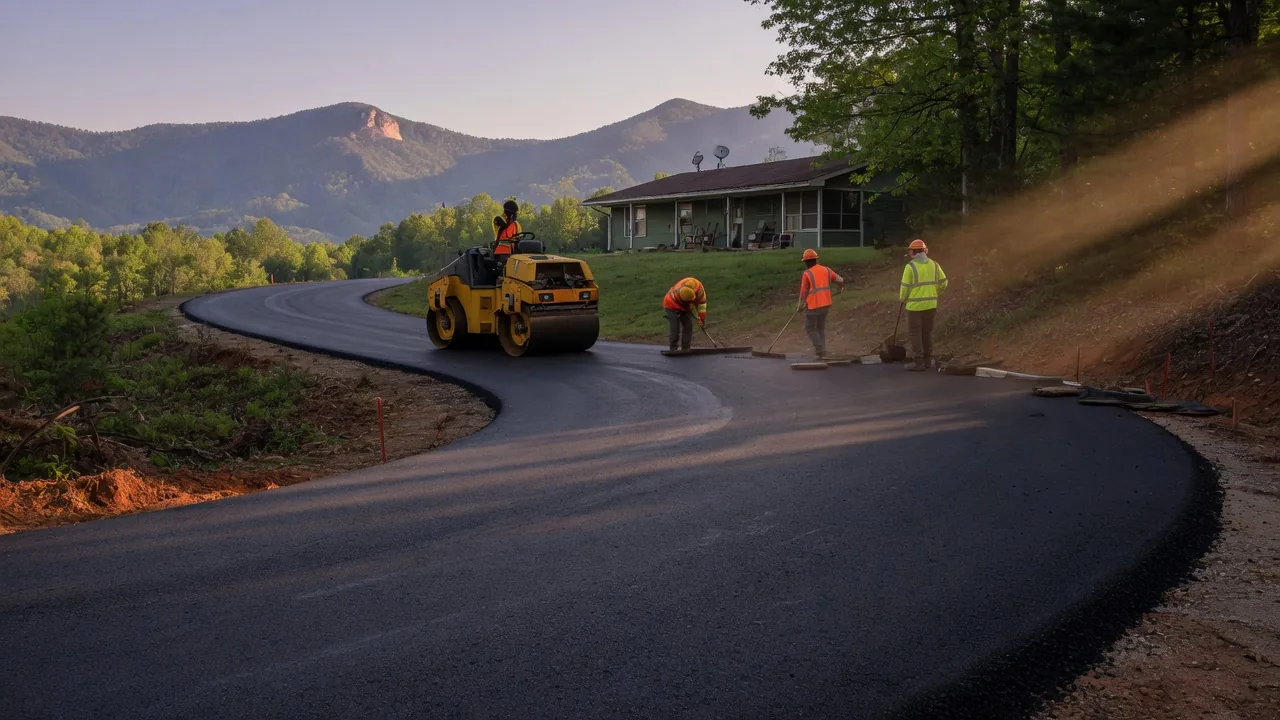
Most asphalt driveways in Hot Springs carry the same loads as anywhere else in Madison County: a half-ton pickup, a delivery truck backing to a porch, the occasional boom truck dropping a load of firewood. Two inches of compacted surface course over six inches of compacted base is the standard residential specification and is genuinely adequate for that pattern. Three inches, spread as one 2-inch binder lift plus a 1-inch top, becomes the right call when the drive is your only vehicle access in a storm, when a tanker or logging truck turns around on it, or when the grade off the river bluff forces slow, torque-heavy starts that scrub the surface from below.
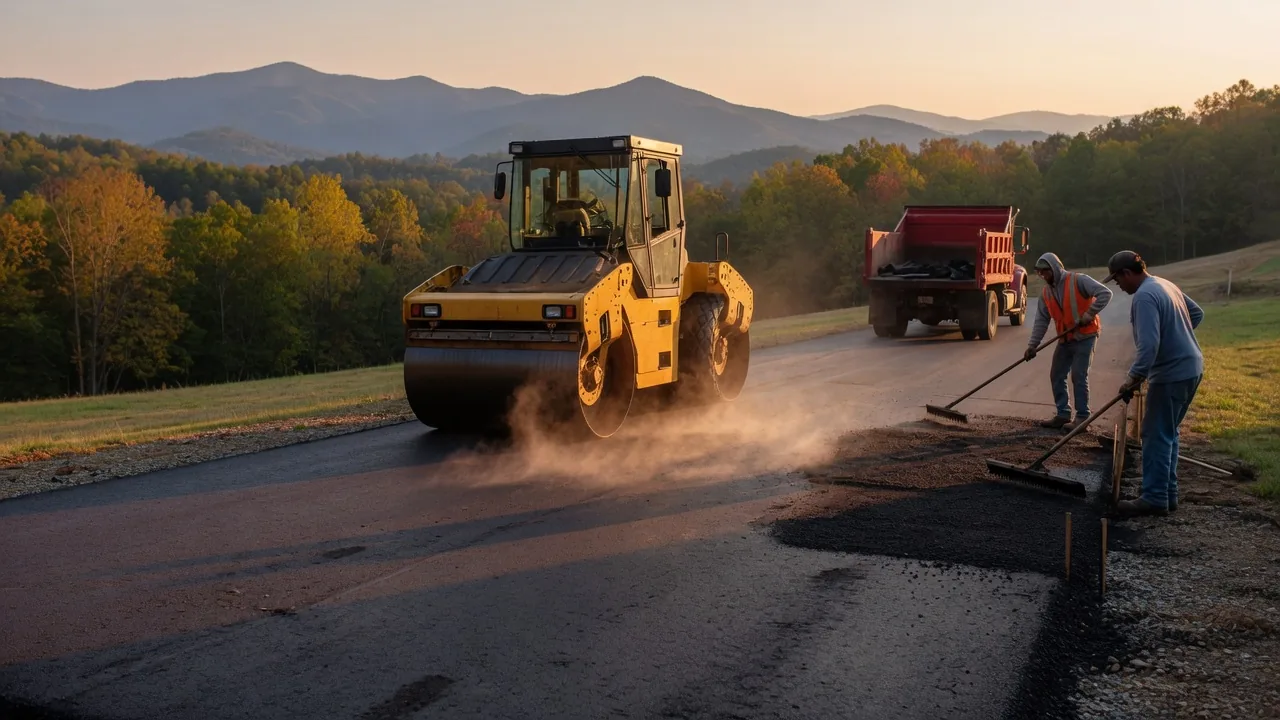
The mistake we see most often is a single 3-inch lift poured as one pass. Asphalt compacts from the bottom up, and a 3-inch single lift traps air and never reaches the density a two-lift job does — which is why the same total thickness can fail in three winters or last fifteen depending on how it was placed.
Base, grade, and the French Broad subgrade
Hot Springs sits in the floodplain and on the slopes above it. That produces two very different paving jobs inside the same zip code. A drive on flat bottomland near the river needs thicker aggregate base because the subgrade stays wet longer and has less bearing capacity in a wet spring. A drive cut into the slope above town frequently needs underdrain and a crowned surface so runoff has somewhere to go besides the downhill edge of the mat.
Whatever the grade, the specification that governs is the compacted base under the asphalt, not the asphalt itself. Six inches of compacted crush, placed in two lifts and proof-rolled, is the floor for residential work here. Cutting base to save money is the single fastest way to buy a re-pave in four or five years. When you get quotes, ask specifically how many inches of base and how many lifts. Bids that quote only a number per square foot for the asphalt surface, without stating base depth, are not comparable to bids that do.
What paving in Hot Springs costs, line by line
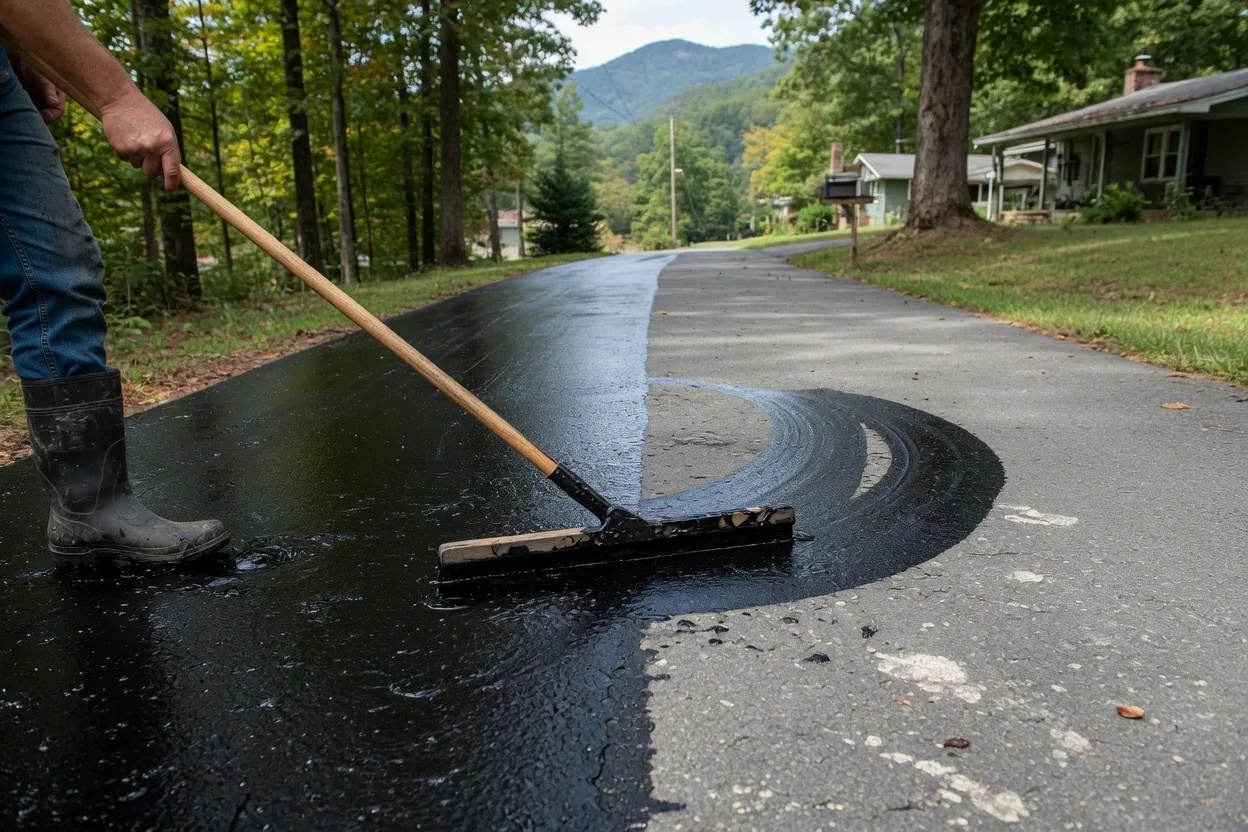
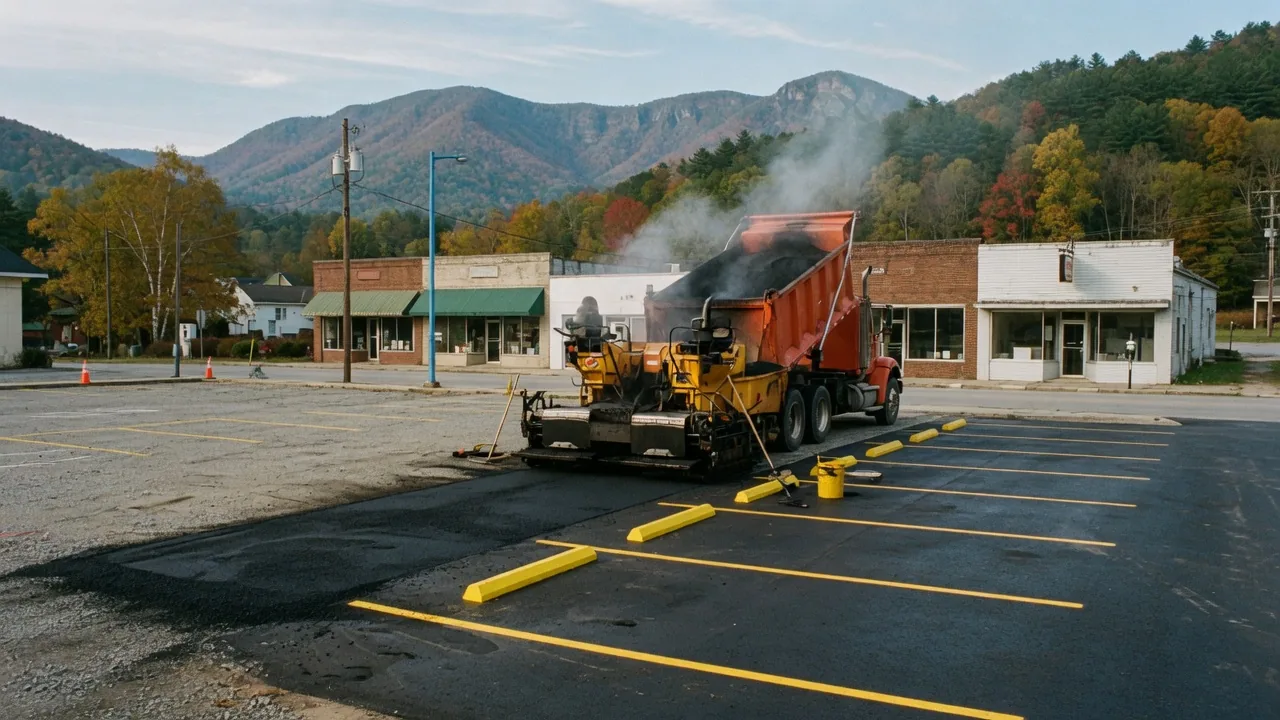
These are Madison County regional ranges for work that includes proper base prep and compaction, not asphalt-only overlays. Your actual quote will land inside or outside these depending on access, demolition, and how much grading the site needs up front. For a fuller neighborhood-by-neighborhood breakdown, see our Madison County driveway cost page, and for a walkthrough of what a proper residential job includes, our asphalt paving service overview is the place to start.
| Scope | Typical regional range | What drives it |
|---|---|---|
| Asphalt overlay on sound existing drive | $2.50-$5.00 / sq ft | Surface prep, crack fill, tack coat, thickness of overlay |
| Full-depth new asphalt driveway | $6.00-$12.00 / sq ft | Grading, base depth, number of asphalt lifts |
| Gravel-to-asphalt conversion | $4.50-$9.00 / sq ft | Base composition, whether existing gravel can be recompacted or must be removed |
| Steep or river-bluff access premium | +15-35% over standard | Equipment access, drainage, staged placement |
| Patching and potholes | $400-$1,500 per area | Square footage, depth of failed subgrade |
| Culvert or drainage additions | $1,200-$4,500 | Span, pipe diameter, NCDOT right-of-way involvement |
If your drive crosses or empties onto a state-maintained road, the drainage and apron work may require an NCDOT driveway permit. The application path runs through NCDOT Connect, and it is worth knowing before a contractor quotes an apron, because approval timelines do occasionally affect scheduling.
How to compare paving bids without getting buried
Ask every bidder four questions and you will separate crews that pave from crews that sell paving. First: how many inches of compacted base, and in how many lifts. Second: is the asphalt placed in one lift or two, and what is the aggregate size of the mix. Third: what happens with the existing surface — overlaid, milled, or removed, and is disposal included. Fourth: what is excluded, especially culverts, drainage, and permits.
North Carolina does not license paving contractors through a dedicated board the way it does general contractors. The NC Licensing Board for General Contractors governs projects above the statutory threshold regardless of trade, and for most residential driveway work you are relying on references, insurance, and a written scope rather than a state paving card. Get a certificate of insurance before work begins, and confirm the crew will be the one on the invoice.
Weather, water, and the paving calendar in this county
Asphalt needs warm, dry conditions to place and compact properly. Hot Springs and the rest of Madison County get a real winter, so the paving season effectively runs from late spring through early fall. A crew that offers to pave on a 45-degree morning after a week of rain is either using specialty warm-mix or cutting corners. Warm-mix asphalt extends the shoulder season somewhat, and the mix design has been reasonably well developed in this region, but standard hot-mix needs surface temperatures near or above 50 degrees and no rain in the window.
Water is the other calendar issue. This county has seen 21 federal disaster declarations over 1978-2026, and the storm and flood family dominates that record. Water that has damaged a driveway has usually also moved the subgrade under it. Re-paving over a washed-out base is the most reliable way to throw money at a problem twice. If your drive has a rut or a dip that holds water, fix the base and the drainage before the asphalt goes down, even if it means a smaller paved area this season. Our Hot Springs driveway paving page walks through what a proper site visit should check.