The haul math that drives every Swannanoa quote
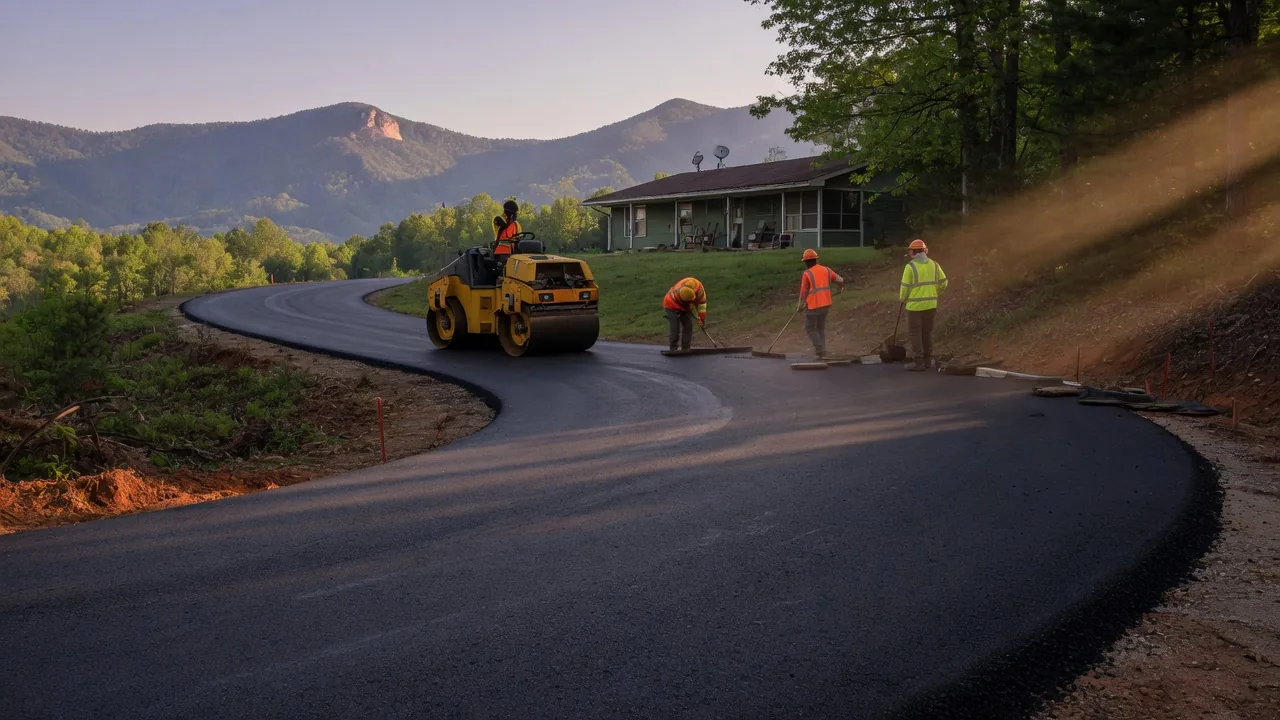
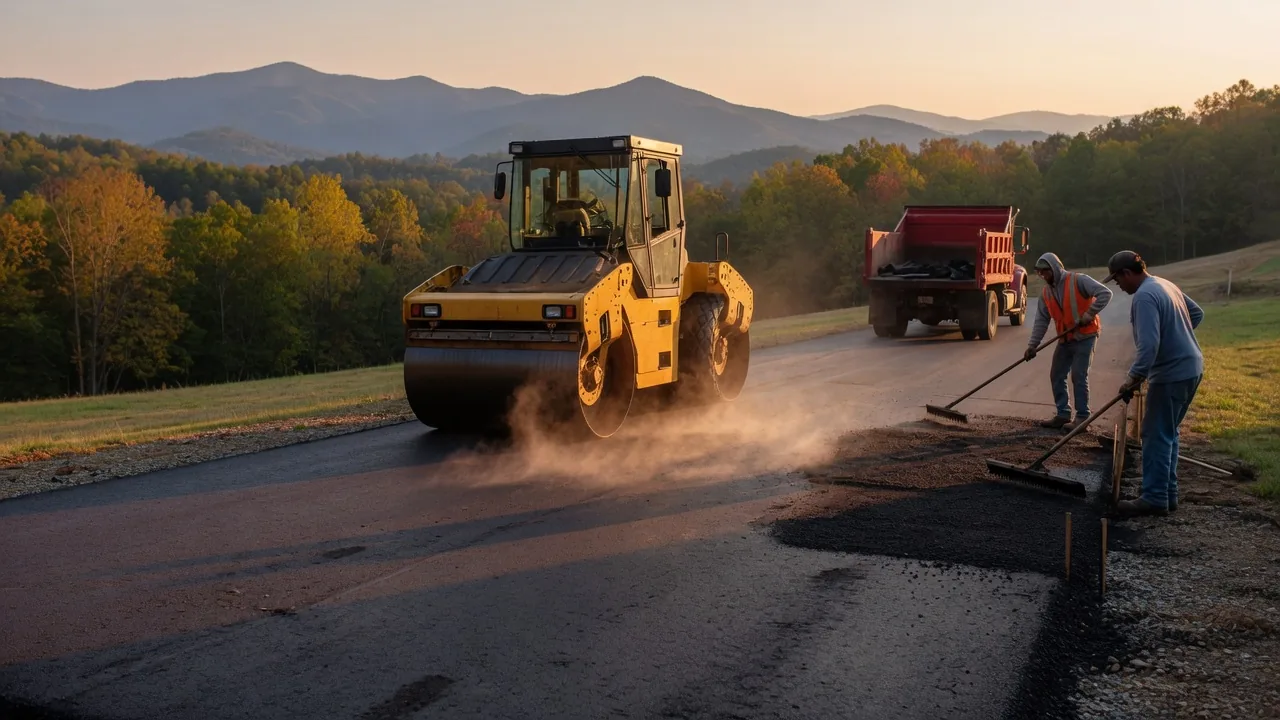
Swannanoa sits in the Swannanoa Valley east of Asheville, and the hot-mix plants that feed this trade are clustered around the city and the upper valley. That distance matters because asphalt is a perishable product. Mix leaves the plant at roughly 275 to 300 degrees and has a working window measured in minutes, not hours. Every mile between the plant and your driveway eats into that window, and every wasted minute on a steep, blind, or single-lane entry means the crew is laying cooler material or turning trucks around.
That is why two driveways of identical square footage in Swannanoa can price $3,000 apart. A short, flat entry off a state-maintained road lets trucks pull in, dump, and roll without drama. A long gravel run up a grade with a hairpin at the top forces the crew to stage equipment at the bottom, shuttle material, and often hand-work the last stretch because a tandem dump truck cannot safely back up the hill. That labor, plus the truck time, is what you are actually paying for.
Swannanoa's terrain is the reason the valley has so many long gravel drives in the first place. Parcels on the slope side of the valley, and the ones tucked back from the main corridors, were graveled because gravel forgives everything: roots, mud, drainage that shifts, and a grade that would make a paved surface shed water faster than it should. Before a conversion quote means anything, somebody has to walk the grade, measure the actual width, and figure out where the trucks can stand.
What conversion actually replaces, and what it costs
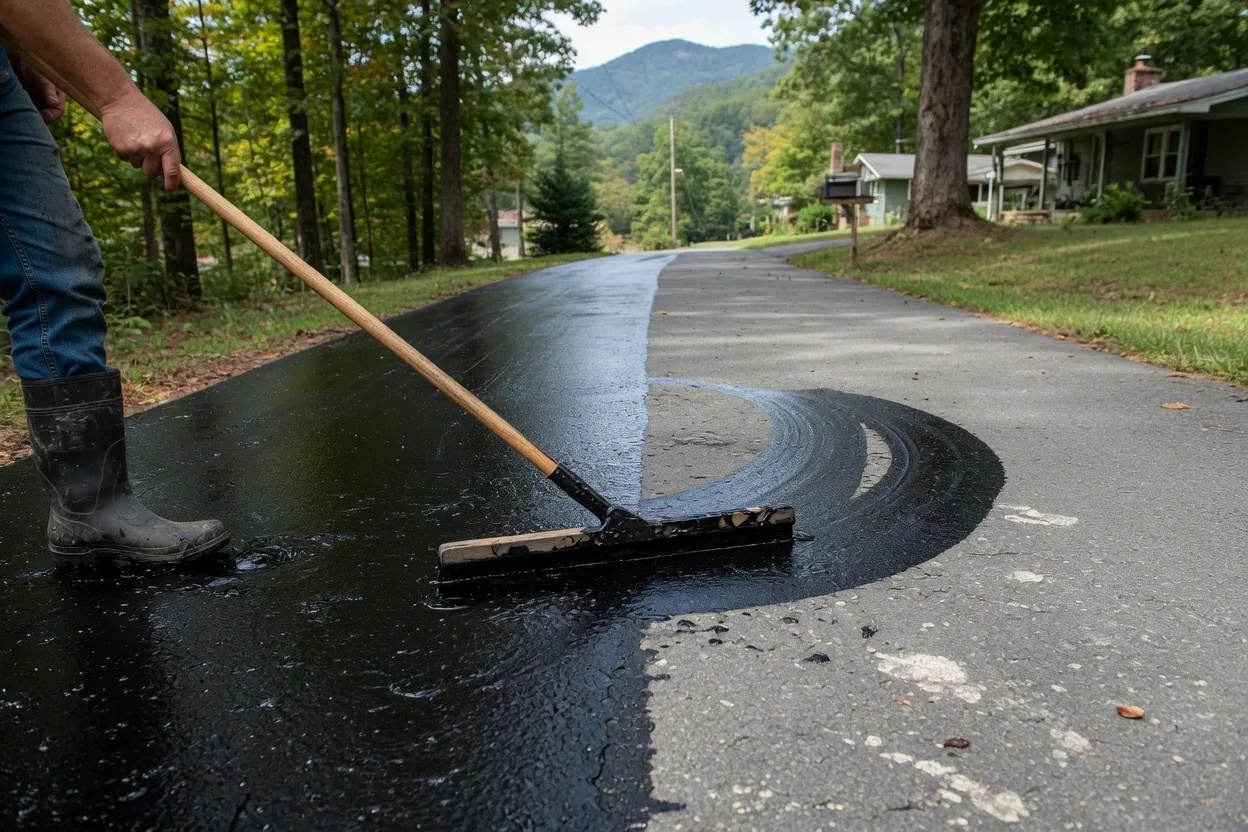
A gravel-to-asphalt conversion is not gravel plus a black topcoat. The gravel becomes base, and the base is the part that determines whether the asphalt lasts five years or twenty. That means grading and compacting the existing stone, adding crusher run or dense-grade aggregate where the stone is thin, cutting the edges so the asphalt has something to butt against, and achieving proper drainage fall so water leaves the surface instead of ponding at the garage door.
The table below reflects working ranges for Swannanoa and the surrounding Buncombe County valley. Real numbers depend on grade, length, base condition, and how much truck access the site allows.
| Scope | Typical price range | What moves the number |
|---|---|---|
| Short, flat drive, good existing base (under 600 sq ft) | $4,500-$7,000 | Minimal truck staging, base already sound |
| Standard two-car drive, moderate grade (600-1,200 sq ft) | $7,000-$11,000 | Base repair, edge cutting, rolling passes |
| Long or steep entry, limited truck access | $11,000-$18,000+ | Shuttle time, hand-work, deeper base build |
| Base rebuild, drainage correction, culvert work | $2,000-$6,000 add-on | Roots, soft spots, uphill runoff |
Asphalt itself is usually quoted per ton, and a two-car Swannanoa drive commonly takes 15 to 30 tons of surface mix over a proper base. See the Buncombe County asphalt cost breakdown for the working per-ton and per-square-foot math, and the gravel-to-asphalt conversion guide for the prep sequence step by step.
Drainage, grade, and why Swannanoa drives fail early
The quickest way to waste a new asphalt surface is to lay it over a base that still moves. Swannanoa's valley floor collects water from both ridges, and the same storms that make national records here push runoff at driveways that were graded for a drier assumption. The federal disaster record shows 19 declared events touching this county across 1973-2026, and the pattern is overwhelmingly storm and flood related. That history is not trivia; it is the reason drainage correction belongs in the conversion scope, not in next year's budget.
The U.S. Environmental Protection Agency treats stormwater runoff as a major water-quality issue, and the practical version for a homeowner is simple: where does the water go when it leaves the drive? Without fall, a crowned surface, or a proper swale, water sits on the asphalt, finds a seam, and starts working at the base. The EPA also notes that paved surfaces increase runoff volume, which is exactly why a conversion should not remove drainage the gravel was quietly providing.
On steeper Swannanoa entries, the National Weather Service at weather.gov is worth watching for the freeze-thaw cycle that cracks valley asphalt faster than traffic ever will. Freeze-thaw is why spring and early summer are the practical paving window here, and why a fall conversion on a shaded north-facing grade is a gamble.
Access, width, and the crew-day reality
A driveway the homeowner calls "wide enough" and a driveway a paving crew can actually work are two different things. A single-lane gravel run needs to be widened, or the crew loses hours shuffling vehicles and laying pavers by hand where the roller cannot reach. Culverts at the road, mailboxes, utility boxes, and low tree limbs all become line items once the paving train shows up and cannot fit.
If your drive connects to a state-maintained road, the entry apron is a separate conversation. NCDOT controls driveway and street access to the state system, and permits for that connection route through the department's permitting portal at connect.ncdot.gov. Do not let a crew quietly rework the road entrance without checking who owns that apron. More on the state road system is at ncdot.gov.
The right first call is a Swannanoa paving contractor who will walk the drive before quoting, not bid it from a satellite image. Ask them where the trucks will stage, how many loads the job takes, and what happens if the grade needs rework. The crew that answers those questions in specifics is the crew that quotes your driveway instead of a generic one.
Sequencing the job so the money sticks
A conversion done in the right order lasts. Grade and drainage first, base build and compaction second, asphalt last. Skipping the middle step is the single most common false economy in this trade, and it shows up two winters later as alligator cracking and edge failure.
One more regulatory note: asphalt paving generally falls below the threshold that requires a general contractor license in North Carolina, but larger residential or commercial site work can cross it. The licensing rules and thresholds are published by the NC Licensing Board for General Contractors. Ask any contractor bidding a bigger job for their license status, and get it in writing.