Rain on a Leicester lot goes where the grade says it goes
Most Leicester addresses sit on ground that was shaped by how water already wanted to move. Driveways off New Leicester Highway, Old Leicester Highway, and the roads running toward Sandy Mush tend to be cut into gentle-to-moderate slopes that sheet rain toward the road, the ditch, or a low corner of the yard. If the existing asphalt's crown has flattened and its edges have slumped, that water stops leaving and starts soaking the base instead. Resurfacing without restoring the crown and re-establishing the shoulder is paying to pave a bathtub.
The practical test is simple. Stand at the top of the driveway during a hard storm or right after one. Where does the water visibly pause? Where does it cross the surface instead of running off it? Those two spots are the ones a proper scope has to fix before a tack coat ever goes down. On Blue Ridge foothill lots in this part of Buncombe County, water that isn't sent to a ditch will find a crack, and a crack that holds standing water is the beginning of the end for the layer above it. The National Weather Service keeps the local precipitation record, and it explains why Leicester driveways pit and ravel faster than driveways in drier parts of the state.
When milling and overlay makes sense on these driveways
Resurfacing is not a coat of paint. It's a new wearing course laid over a base that has already been asked to carry years of traffic and runoff. If the existing drive is 1.5 inches or more thick, still bonded at the edges, and drying between storms, an overlay of 1.5 to 2 inches is usually the right move. If it's alligator-cracked across the wheel paths, if edges crumble when you probe them with a screwdriver, or if a low section ponds more than 24 hours after rain, the honest answer is that the top layer is a symptom and the base is the problem.
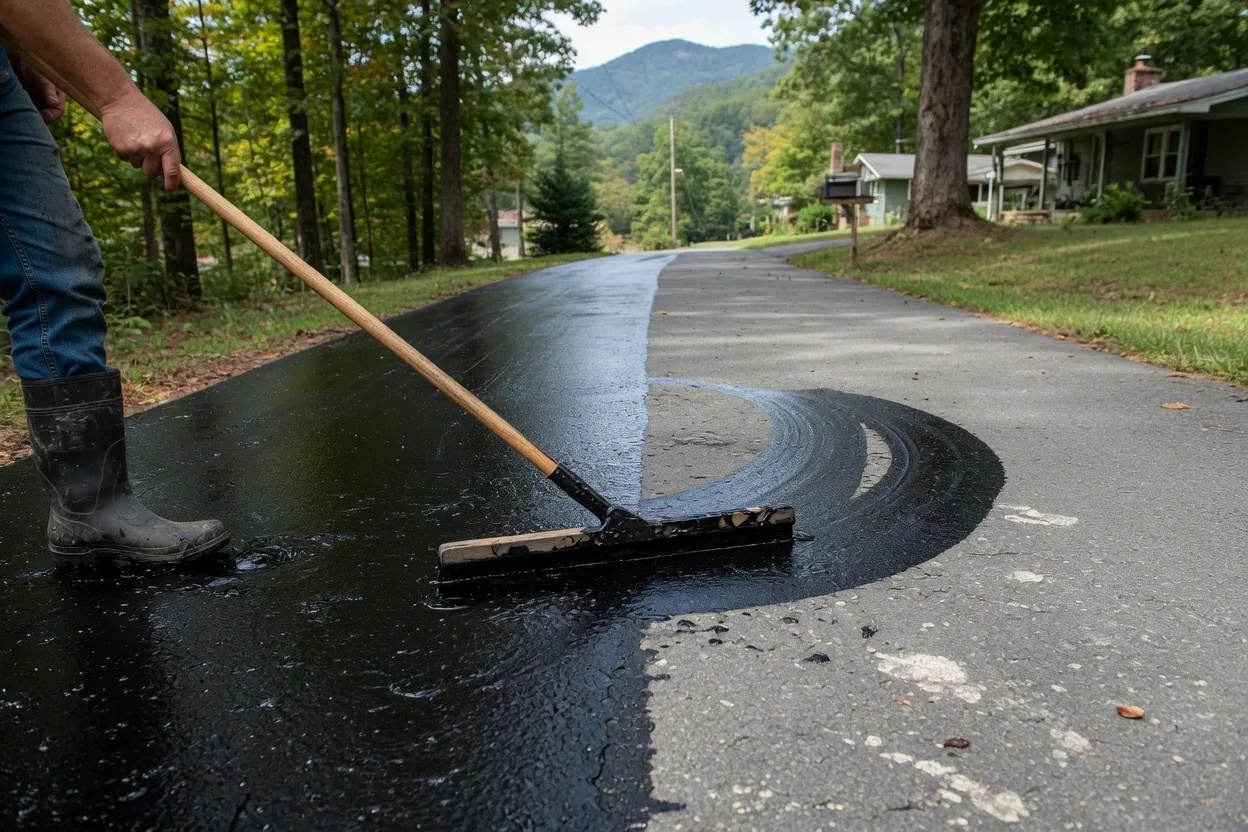
That's where the scope splits. On Leicester's mix of short residential drives and longer rural approaches, we see four typical tiers of work, and the range below reflects what each one realistically costs in Buncombe County. The full picture is in our Buncombe County cost breakdown.
| Scope | What it includes | Typical range |
|---|---|---|
| Crack fill and sealcoat only | Clean cracks, hot-pour fill, surface seal | $0.20–$0.45/sq ft |
| Spot repair plus overlay | Remove failed sections, patch base, 1.5 in overlay | $1.90–$2.75/sq ft |
| Full driveway overlay | Tack coat, 1.5–2 in compacted overlay, edge restoration | $2.40–$3.50/sq ft |
| Overlay with drainage work | Overlay plus regrade, ditch, culvert, or swale correction | $3.20–$4.50/sq ft |
A 900-square-foot Leicester driveway getting a straightforward overlay typically lands in the $2,200–$3,200 range; a 2,400-square-foot rural approach with a drainage correction can run $8,000–$11,000. Anything quoted below $1.75/sq ft for a full overlay is worth a second look at what's being left out.
What a correct scope looks like on paper
A written scope for a Leicester driveway should name the square footage, the overlay thickness in inches, the base prep (milling depth or patching method), and how the contractor will handle the crown and edges so water exits the surface. It should say where the driveway drains to and whether the existing ditch, culvert, or road shoulder is being touched. If the driveway meets a state-maintained road, work near the connection may require a driveway permit through NCDOT Connect, and a contractor who doesn't mention that when it applies to your address is either unfamiliar with the area or planning to skip a step.
Asphalt work itself doesn't require a general contractor license in North Carolina at residential scale, but if the job includes grading, retaining, or anything that reads as structural, check the contractor against the North Carolina Licensing Board for General Contractors. When you're comparing bids, our Leicester paving contractor guide walks through the questions that separate a real scope from a verbal one.
Weather, freeze-thaw, and the Leicester paving calendar
Western North Carolina's freeze-thaw cycle is shorter than the mountains' but real enough to matter. Asphalt placed late in the fall when ground temperatures are already dropping cures poorly and starts its first winter softer than it should. Most paving crews in Buncombe County aim for spring through early fall, with late-spring and early-fall windows producing the best compaction. If a contractor offers a January overlay on a shaded Leicester driveway, ask how they plan to handle compaction temperatures, because the answer is usually "we don't."
The storm record here is part of the story too. 19 federally declared events have touched this county across 1973-2026, and most of them were water events — floods, heavy rain, tropical remnants. A driveway that sheds properly survives them with a reseal; one that ponds gets torn up. That's why every scope on this page starts with water, not with a mix design.
How the work actually gets sequenced
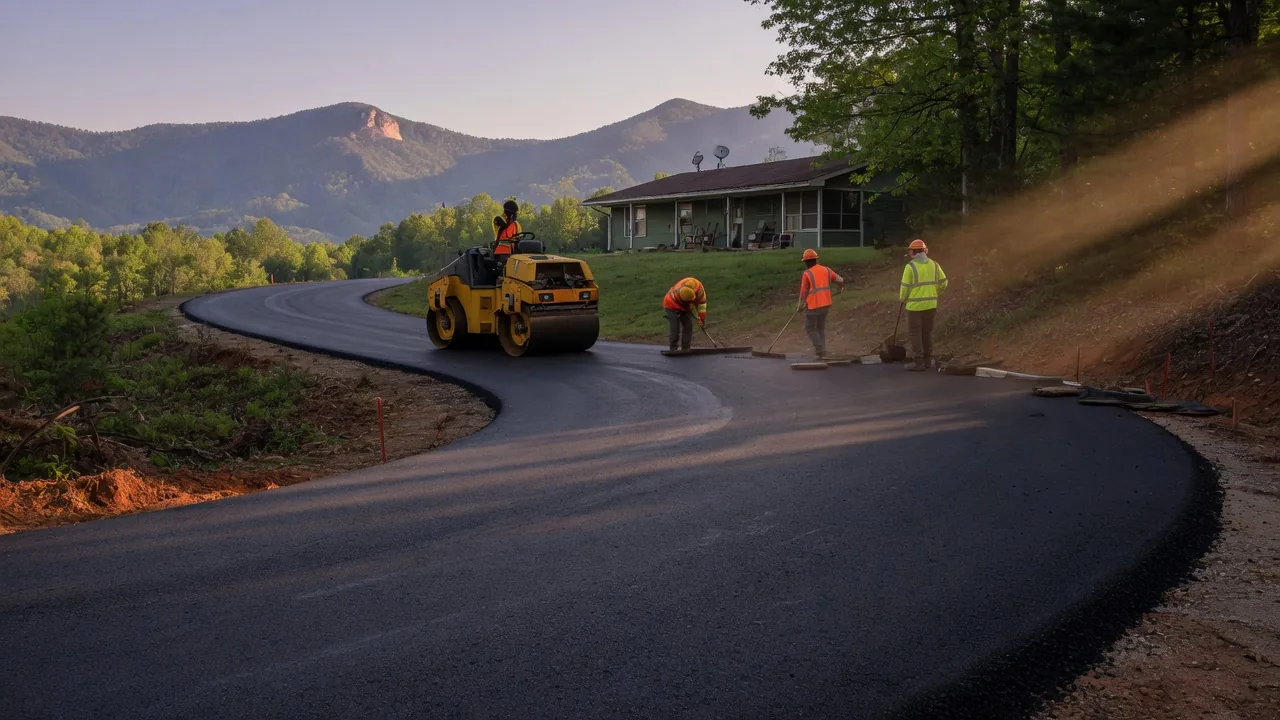
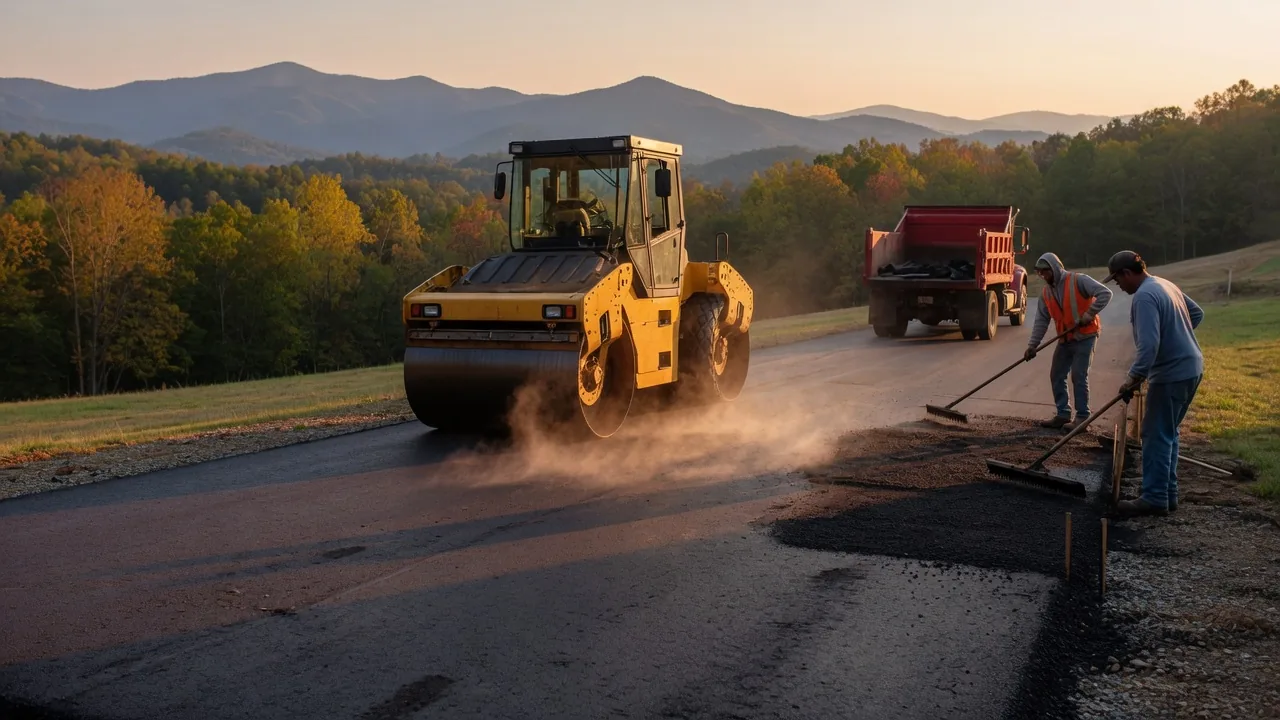
A proper Leicester resurfacing job moves in a fixed order. Clean the surface, strip vegetation and soil off the edges, evaluate the base by probing soft spots, patch or mill the failures, re-establish the crown so water sheds to the intended exit, prime the edges with tack, lay the overlay at the specified compacted thickness, roll it while it's still hot, and finish the shoulder so the new asphalt is supported rather than cantilevered. Skipping any one of those steps is cheaper to sell and more expensive to own.
Expect the crew to ask about drainage first and thickness second. If they ask about thickness first, they're quoting a product, not a driveway. The asphalt resurfacing service overview covers what each phase should look like, and it's worth five minutes before any contractor walks the lot with you.