Read the cracks before you buy paint
In Buncombe County the giveaway is not the paint, it is what the paint is sitting on. A lot on a south-facing slope with hairline cracks wandering through the stalls usually means the subgrade is moving, not that the asphalt is old. A lot tucked in a cove off the French Broad floodplain tells a different story: soft spots that pump water when a truck rolls over them, edges crumbling where the pavement meets the grass. Those two lots need two different answers, and neither one is "stripe it and move on."
Striping is the cheapest line item on any parking lot budget and the easiest one to waste. If a crack is under an inch and not spreading, a crack fill plus fresh layout buys you years. If you are looking at alligator cracking — the web pattern that means the base has failed — no amount of tape and paint will hide it, and the stall lines will start wandering within a season. The repair-or-replace decision comes first; the stripes come last. Start by walking the lot after a hard rain, not after a lawn-mowing.
What the pavement is telling you, stall by stall
Four things decide whether you patch, overlay, tear out, or just stripe:
- Hairline cracks under ¼ inch, isolated. Crack fill and stripe. Routine.
- Alligator cracking over a defined area. The base under that spot is gone. A patch is a bandage; a full-depth repair or mill-and-overlay is the real fix.
- Potholes and raveling edges. Water is getting under the pavement at the edge. Fix the drainage and the edge, or the potholes come back every spring.
- Soft spots that deflect under a loaded truck. The subgrade is saturated. This is the one that turns a $900 striping job into a repave, and the one a lot of striping crews will happily paint right over.
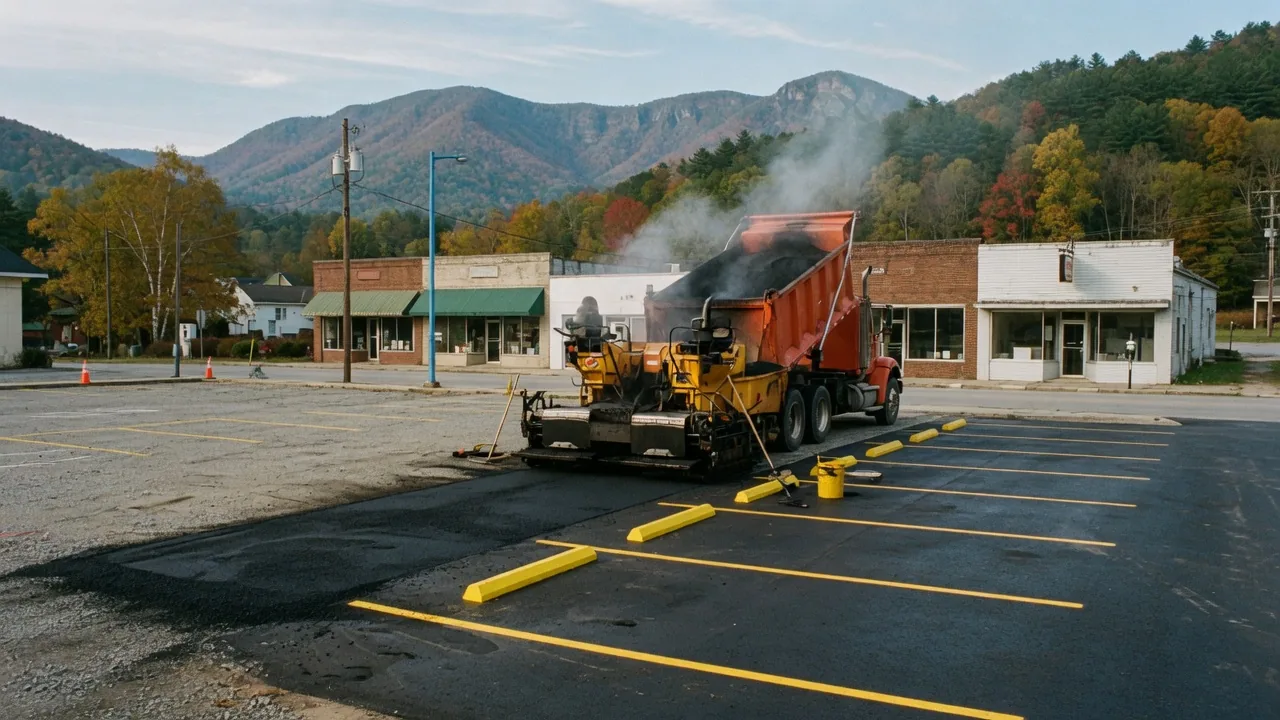
This is why the parking lot paving conversation and the striping conversation are really one conversation. If you are going to repave, do not stripe first — you will pay twice. If you are going to sealcoat, the sealcoat goes down after crack fill and before the layout, and the sealcoating work and the striping need to be sequenced by the same crew or coordinated tightly between two.
What striping and sealcoating actually cost here
Line striping is priced by the linear foot of stripe, with a minimum for small lots and upcharges for ADA-compliant stalls, hatched no-park zones, directional arrows, and stencils ("STOP", "NO PARKING", reserved-space lettering). Sealcoating is priced by the square foot and depends on how much crack fill and prep the lot needs. Regional bands look like this:
| Scope | Typical price range | What moves the number |
|---|---|---|
| Restripe existing layout (same stalls) | $0.10–$0.20 / linear ft | Lot size, number of stalls, single vs. double lines |
| Full restripe with ADA stalls, arrows, stencils | $0.20–$0.35 / linear ft | ADA count, stencil quantity, hatching |
| New layout on fresh asphalt | $700–$2,500 typical lot | Engineering/layout plan, stall count, access drives |
| Crack fill only | $0.50–$2.00 / linear ft of crack | Linear footage, crack width, routing required |
| Sealcoat (with crack fill and prep) | $0.15–$0.30 / sq ft | Sq footage, prep, number of coats, cure time |
| Full-depth patch or mill-and-overlay | Quoted per lot after inspection | Failed area, base condition, drainage corrections |
A small lot in West Asheville might come in under $600 for a straightforward restripe; a larger commercial lot out toward the airport with a full ADA package and stencils can run several thousand. The parking lot paving cost page has the fuller breakout of what drives the pavement work that striping sits on top of.
The climate variable nobody prices in
Western North Carolina gets freeze-thaw cycles that punish pavement in a way flatland lots never see. Water gets into a crack, freezes, expands, and widens the crack a little more each winter. A lot that looked fine in October can have a whole new crack map by March. The region's federal disaster record is not decoration — 19 declared events across 1973-2026 — and saturated-soil seasons are when marginal lots give up the ghost. The National Weather Service freeze warnings are the practical cue: stripe in late spring or early fall when the pavement is dry and air temps will stay above the manufacturer's minimum through cure, not on a warm afternoon in February that freezes that night.
Two more local realities. First, mountain lots are rarely flat — drainage falls toward a catch basin or a curb, and striping layout has to respect the grade so water does not pond in a stall. Second, if the lot ties into a public street or you are changing access, the driveway permit runs through NCDOT, and that is a separate conversation from striping. Get the permit settled before anyone paints a stop bar.
Getting a bid that will not surprise you later
Ask for a written scope that names the linear footage of stripe, the number and location of ADA stalls, whether the layout matches an existing plan or needs to be re-engineered, and whether crack fill and sealcoat are included or quoted separately. Ask what paint they use and what the dry time is. Ask whether they will re-stripe over the old lines or grind them out — an honest crew will tell you when faded ghost lines will show through.
On the contracting side, paving and striping work above the state's threshold falls under the North Carolina Licensing Board for General Contractors, and commercial work should show that license. If a contractor proposes structural changes to a lot that affect stormwater flow, drainage questions land with NC DEQ and the local jurisdiction. The NC Department of Insurance and the Building Code Council publish the state codes that govern how commercial sites are laid out.
The short version: stripe the lot you have, fix the lot you have not yet fixed, and get the sequence right in the bid. A lot restriped over failing asphalt is the most expensive temporary fix on the property.