Two inches or three: what Woodfin grades and truck loads actually call for
Follow Riverside Drive past the older mill lots, then turn up any of the short lanes climbing toward the Beaverdam side, and the same failure shows up on driveway after driveway: a thin mat laid at the edge, rutted where a delivery truck or a loaded pickup parks, and scrubbed bald at the apron where every vehicle turns off a grade. Woodfin is a narrow river-valley town, and its lots are frequently short, steep, and shared between two or three homes. The pavement at the apron takes loads a flat suburban cul-de-sac never sees.
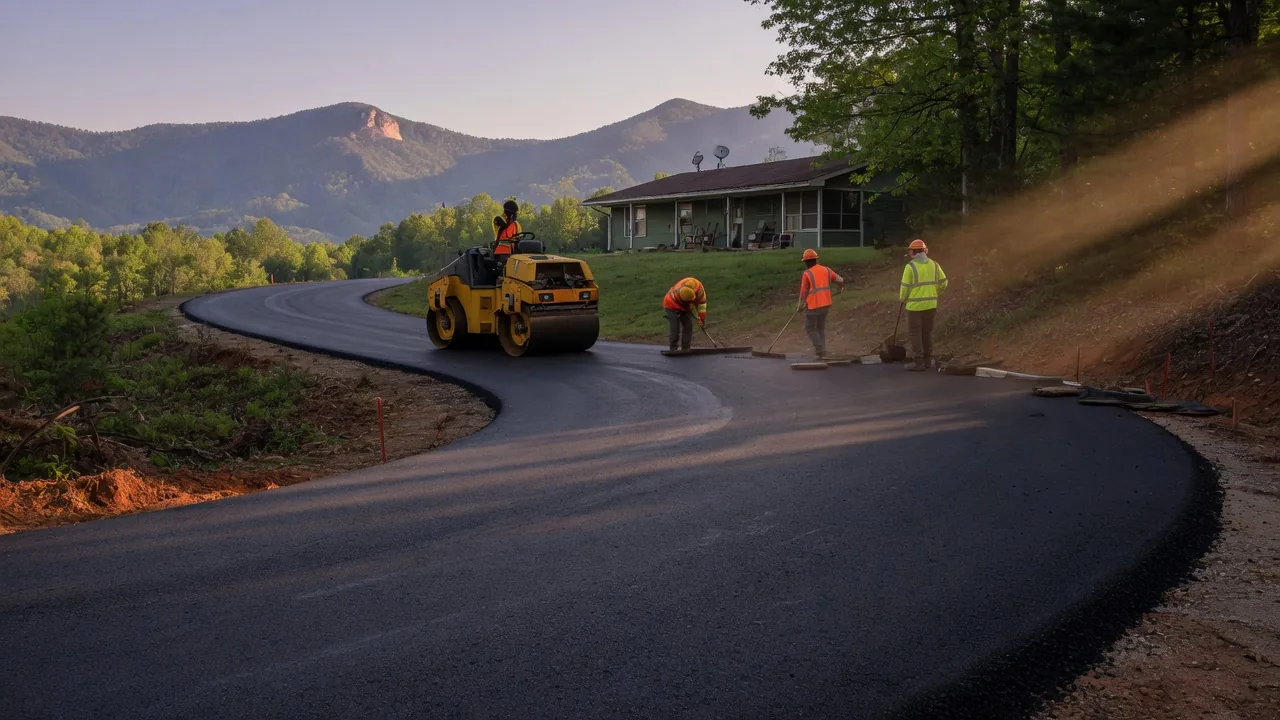
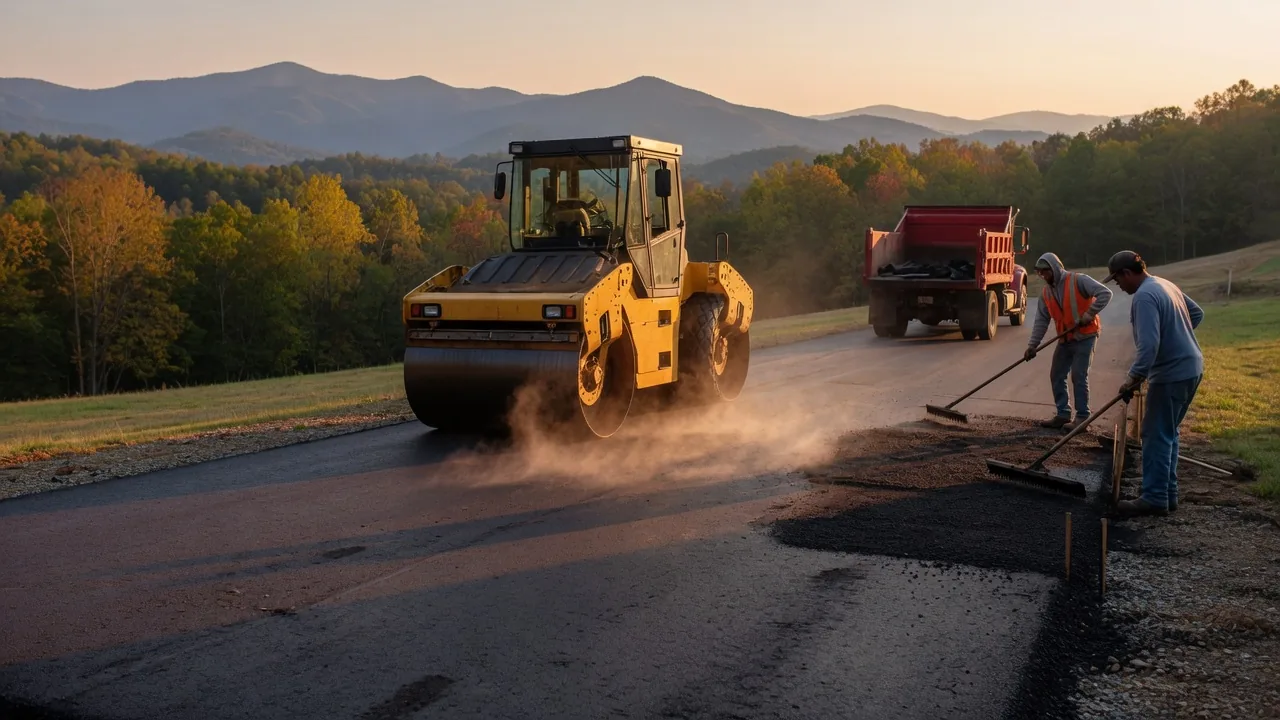
That is why the thickness question comes before the sealcoat question. A single two-inch lift is fine for a passenger car on a gentle slope. It does not hold up where a loaded truck parks, where a turning vehicle scrubs the surface, or where one drive serves three households. Those jobs want three inches compacted in two lifts, with the base graded and rolled before mix goes down. Sealcoating is a maintenance layer, not a structural one. If a drive is already rutting or alligatored from thin asphalt over soft valley ground, sealer will look good for one season and fail with the pavement underneath it.
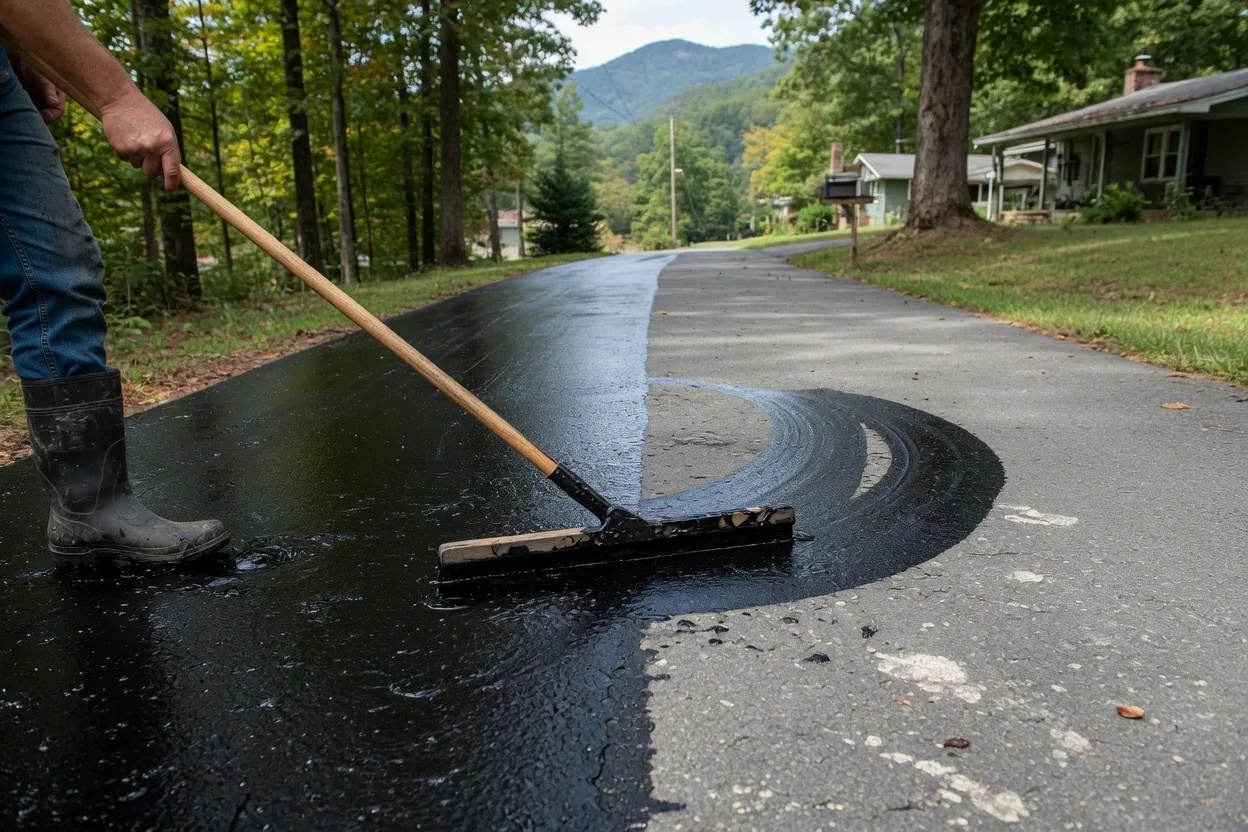
The sequence most homeowners ask about on this site's sealcoating overview is simple: fix base and mat first, then seal what is sound. Anything else is cosmetic.
Why pavement in this valley ages the way it does
Woodfin's climate is a slow stress test. Summer sun bakes the surface and drives off the light oils that keep asphalt flexible. Mountain nights swing hard, and winter brings the freeze-thaw cycle that turns every hairline into an open crack. Add the heavy rain events this county is known for — 19 federal disaster declarations across 1973-2026 — and water finds every low spot, every edge, every failed seam. The National Weather Service outlook for this part of Buncombe County is worth checking before scheduling, because sealing too close to a rain window can wash the finish before it cures.
In practice, pavement here needs sealing on a cycle, not a whim. A new mat in full sun may want its first coat within a year. A shaded drive under hardwoods can stretch longer, but it collects leaf tannin, mildew, and moss that break the surface down from the top. Neither situation is unusual, and both are far cheaper to maintain than to replace.
Grade matters as much as sun. A driveway dropping toward the river sheds water fast but erodes at the shoulder; a driveway cut into a hillside holds water at the garage apron. Both need crack fill and edge attention before any sealer goes down.
What Woodfin sealcoating and paving actually costs
Ranges below reflect typical Buncombe County pricing. Every job differs by square footage, access, and prep, so treat them as bands, not quotes. A finer breakdown lives on the county table at asphalt driveway cost in Buncombe County.
| Scope | Typical range |
|---|---|
| Single-car residential sealcoat | $250–$450 |
| Long or steep residential drive | $450–$900 |
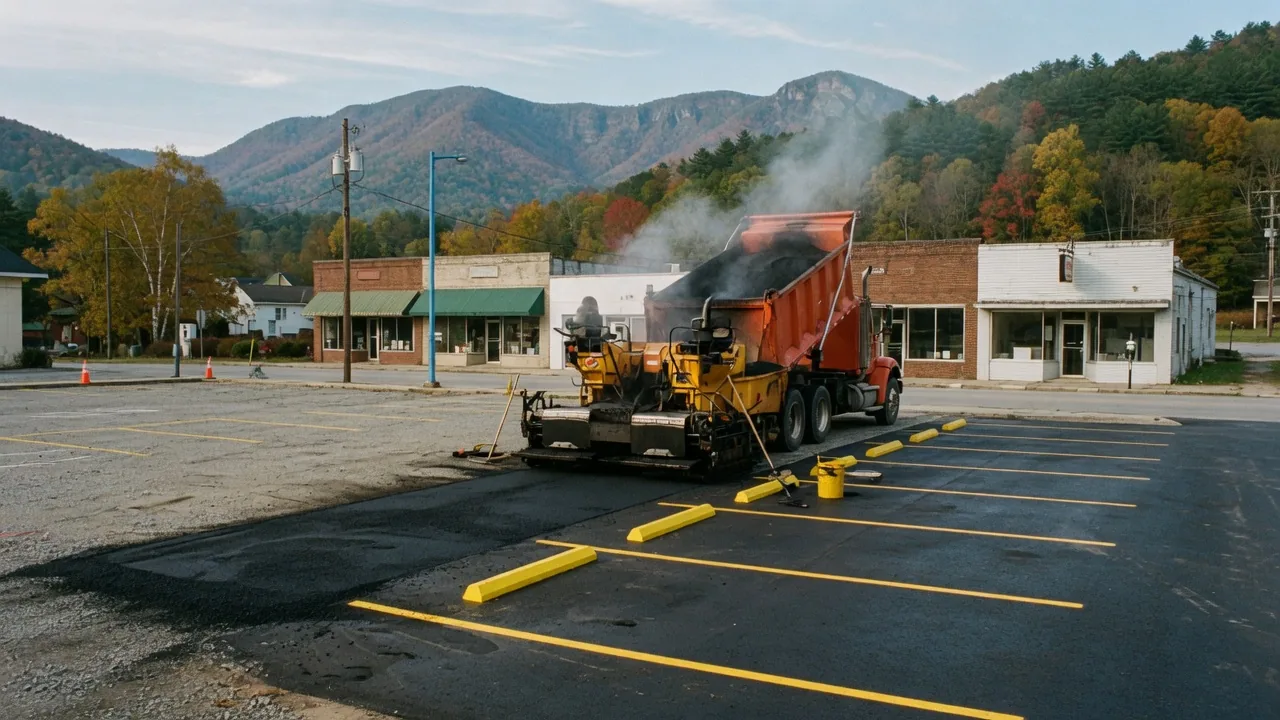
| Commercial lot, per square foot | $0.15–$0.30 |
| Crack fill before sealing | $1–$4 per linear foot |
| Patching (per area, before seal) | $150–$600+ |
| Full driveway replacement, 2 in vs 3 in | priced separately; thicker mat costs more |
A bid far under the low end usually means one thin, diluted coat sprayed over cracks that were never filled. That is a re-do, not a deal.
Prep, cracks and drainage before the squeegee touches pavement
Sealcoat adheres to clean, dry, sound pavement. That means the crew should edge-trim vegetation, blow off grit, and fill cracks with proper hot or cold crack filler before any sealer is applied. On Woodfin's grade lots, water management matters just as much: if the drive slopes toward a garage or pools at the apron, no coat of sealer fixes it. Grading, a stabilized edge, and clean drainage come first.
Ask about the sealer itself. Coal-tar and asphalt-emulsion sealers behave differently in mountain sun, and a reputable contractor will tell you which they use and why. National guidance on pavement maintenance and stormwater-adjacent work is available through the EPA; local stormwater rules apply if runoff leaves your property. Where a job crosses from maintenance into structural paving, North Carolina licensing thresholds and permit rules come into play — see the NC Licensing Board for General Contractors and NCDOT for driveway and street-access permits before anyone cuts into a right-of-way.
One overlooked item on hillside drives: the transition at the street. If the apron has settled or the culvert under it has crushed, resealing is a bandage. Fix the crossing first, then seal.
Picking a crew that knows this town's grades
Ask three questions. First: how many coats, and at what dilution? Two undiluted coats outlast four thin ones. Second: what is the crack and patch plan before sealing, itemized? Third: can they show work on a comparable grade with similar truck traffic? A crew that mostly seals flat apartment lots may not have the squeegee technique for a Woodfin drive that drops toward the river.
Timing matters too. Book after the last spring rain and well before the first hard freeze; curing sealer needs warm, dry days, and November rain on a fresh coat is wasted money.
If you are weighing sealcoating against replacement, or need a full paving job, the town-focused directory at paving contractors in Woodfin NC is the right next click. For maintenance alone, the honest answer is that catch-up crack fill and two good coats beat any bargain spray-down.