Why the paving calendar here is shorter than the invoice suggests
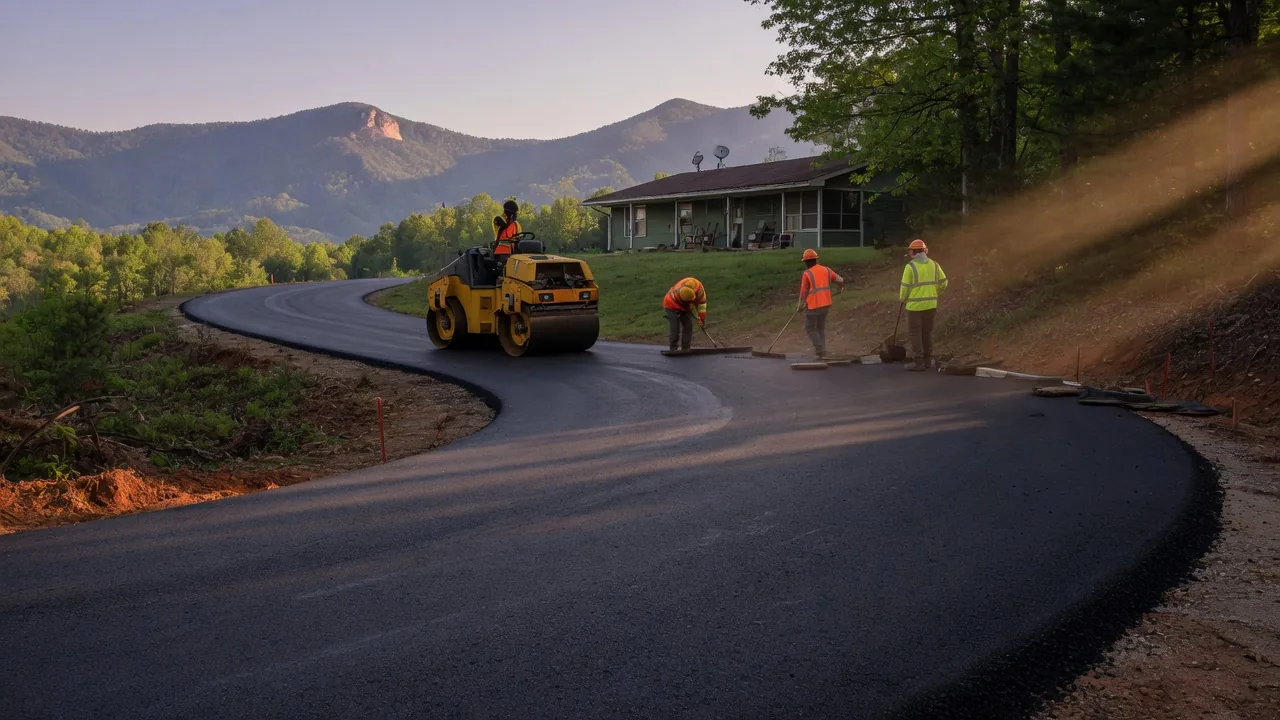
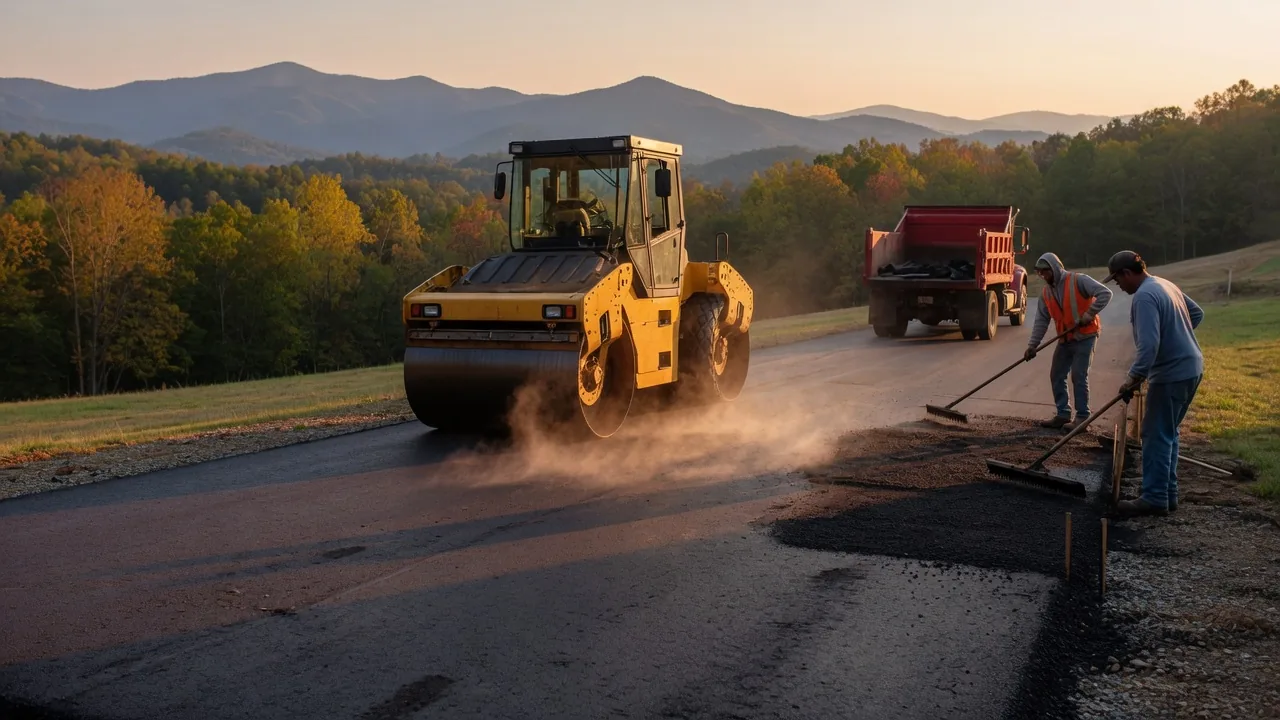
Black Mountain sits at the eastern toe of the Blue Ridge, and that elevation buys the town a paving season that opens later and closes earlier than most of Buncombe County. Hot-mix asphalt needs surface temperatures and air temps warm enough for the roller to actually compact the mat before it stiffens. On the north side of town, where ridges and mature hardwoods throw shade across lots for half the day, a contractor can lose two to three working hours to ground temperature alone. Crews that don't account for that end up with a mat that looks fine in July and ravels by the first hard freeze.
The practical window for full-depth work runs roughly from mid-spring through early fall. Sealcoat and crack fill stretch further, but they still need dry, above-freezing conditions to cure. This is also storm country — 19 federal disaster declarations touch Buncombe County across 1973-2026, and almost all of them are storm or flood events. That history shapes not just when you pave, but how the lot drains.
What that means on the ground: a lot off Montreat Road that backs up against the ridge line may not be ready for a roller until late April, while a sun-exposed lot on the flat side of Cherry Street might be workable in early March. Contractors who schedule strictly by the calendar instead of by the thermometer often end up chasing a mat that never compacted. Ask any crew you interview what ground temperature they want to see before they start rolling — the answer tells you whether they've actually paved in this town.
What a Black Mountain lot price actually covers
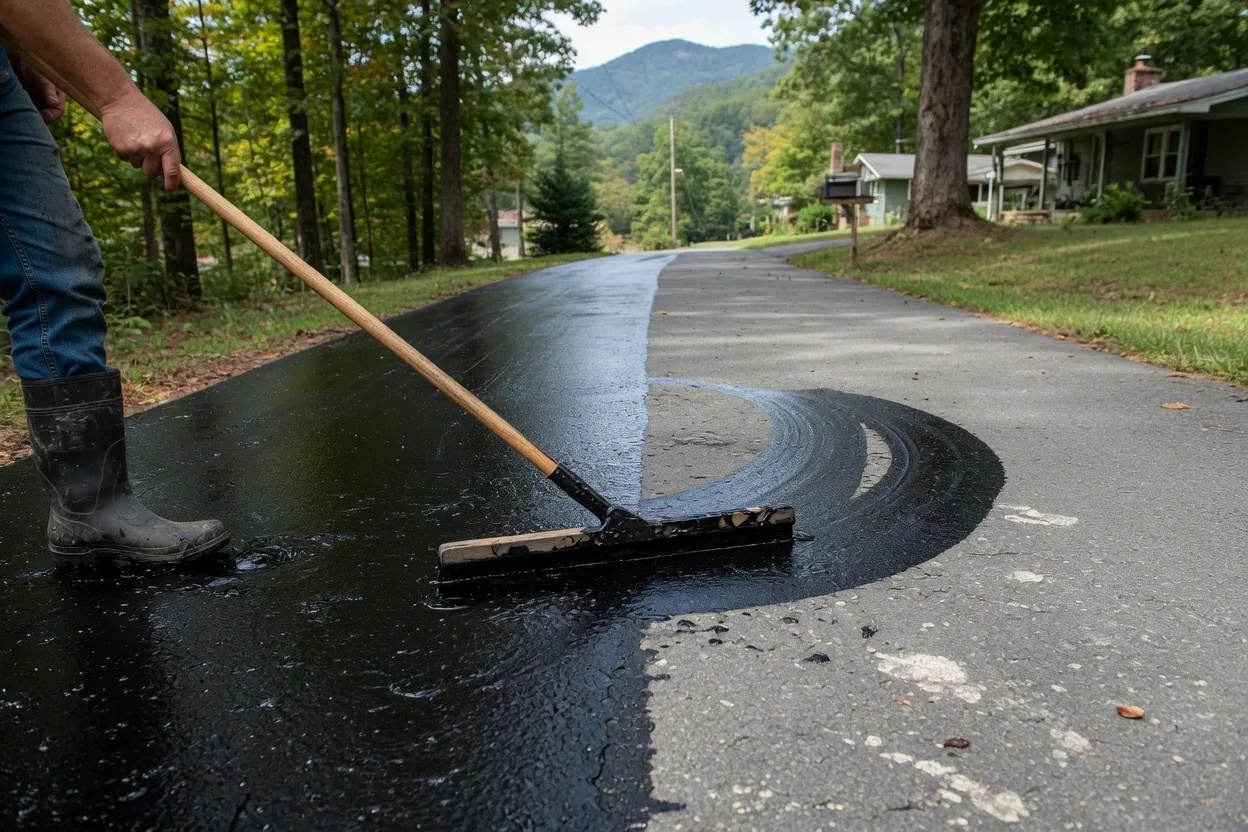
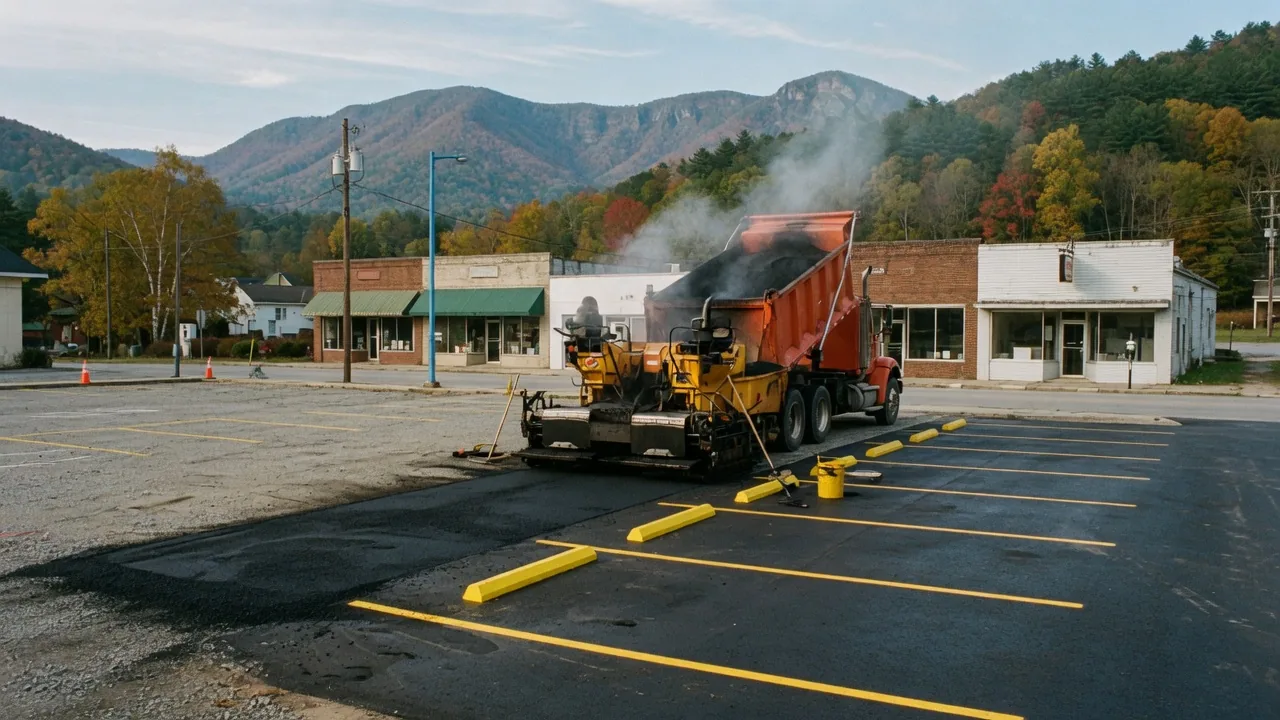
Quotes vary wildly here because the scope does. A straightforward sealcoat over sound asphalt and a full-depth rebuild with new base are both called "parking lot paving," and they are nowhere near the same job. The table below shows honest regional bands for Buncombe County work; your lot's square footage, subbase, and slope decide where you land. See the broader parking lot paving service overview for how each scope is scoped and sequenced.
| Scope | Typical unit range | What drives the price |
|---|---|---|
| Sealcoat (single application) | $0.15–$0.30 / sq ft | Lot size, surface prep, crack count |
| Crack fill & patching | $2–$6 / linear ft (cracks); $3–$8 / sq ft (patches) | Crack width, depth, number of patches |
| Mill & overlay (1.5"–2") | $2.00–$3.50 / sq ft | Existing asphalt condition, edge milling, tie-ins |
| Full-depth asphalt replacement | $4.00–$6.50 / sq ft | Base repair, haul-off, aggregate, drainage corrections |
| Striping & layout | $0.10–$0.40 / sq ft | Stall count, ADA layout, wheel stops |
For a residential-scale comparison, the Buncombe County asphalt cost breakdown shows how driveway pricing overlaps commercial scope on smaller lots.
Two site conditions shift a Black Mountain quote more than most owners expect. First, haul-off: a lot that's tight against a hillside often means spoil has to be trucked further than on a flat commercial pad, and that hauling cost scales with how much failed base has to come out. Second, access: a lot with a single narrow entrance off a grade can force smaller equipment or a longer setup, which shows up as mobilization rather than a higher square-foot rate. Both are legitimate line items, and both should be itemized rather than buried.
Drainage is the first line item, not an add-on
Mountain lots shed water differently. A Black Mountain lot cut into a slope gets runoff from above, not just rain landing on it. If the grading doesn't move that water to a controlled outlet, it will find the seam between asphalt and base, and once it's in there, freeze-thaw cycles open it wider every winter. Any bid that doesn't address uphill inflow, catch basins, or curb transitions is pricing half a job. The NC Department of Environmental Quality regulates stormwater discharge and erosion control on many commercial and multifamily projects, which is why site drainage plans are often reviewed before paving starts.
Before any of that, if your lot connects to a state-maintained road, the entrance apron and any driveway widening may need a permit through NCDOT. That's paperwork a commercial paving contractor normally handles, but it belongs in the schedule conversation. The U.S. Environmental Protection Agency also sets the broader stormwater framework that state and local rules build on, and larger lots with significant impervious cover often trigger a review that a small lot wouldn't.
In practice, this scope shows up in the bid as a separate line for catch basins, trench drains, or a regraded swale, and it's the line owners most often try to delete. Deleting it is the single most reliable way to guarantee a repeat crack-fill call in two winters. If the low bid has no drainage line at all, ask where the water is supposed to go.
Picking a crew that reads the ground, not just the square footage
Any contractor can quote a per-square-foot number. The ones worth hiring will walk the lot, probe the base, note where the shade sits in the afternoon, and ask how the lot drains in a heavy rain. They'll also know when a job crosses the threshold requiring a licensed general contractor — the NC Licensing Board for General Contractors sets that line, and any commercial paving project above it should be handled by a licensed GC or a properly classified subcontractor. Ask for the classification and the license status in writing. If the answer is vague, keep shopping.
When you're comparing bids, the Black Mountain paving contractor guide walks through what a compliant bid includes and what a lowball one leaves out. Pay attention to whether the quote names a specific mix design, a compaction target, and a cure window. A bid that just says "asphalt, installed" is not a bid, it's an estimate waiting to grow.
It also helps to ask how the crew handles the shoulder season. A contractor who has paved in Black Mountain for a few seasons will have a plan for the weeks when a warm afternoon follows a cold morning — paving later in the day, or postponing rather than risking a cold joint. That judgment is worth more than a few cents per square foot, because it's the difference between a lot that survives five winters and one that needs patching after two.