Why thickness and lift count decide the price before anything else
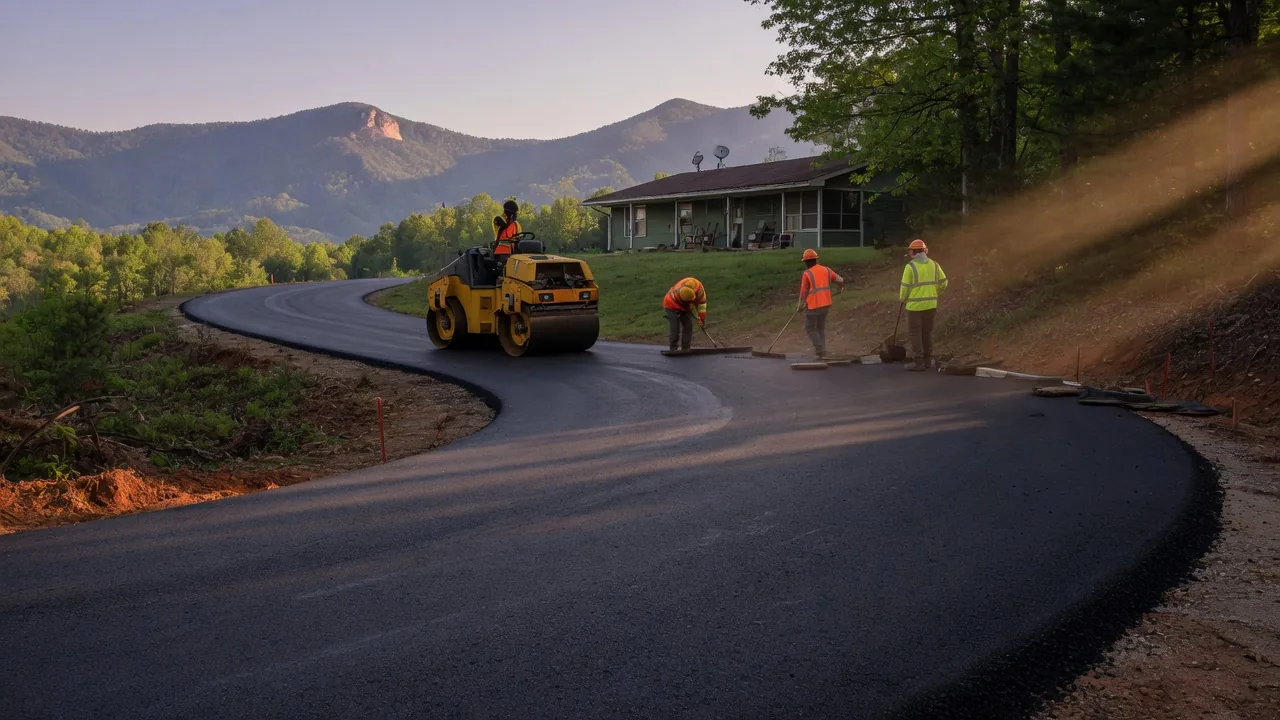
Watch a dump truck ease out of a tight grade off a mountain cove road and you can see what a driveway here is actually up against: point loads from a loaded truck bed concentrated on a turning rear axle, not the polite evenly distributed traffic that flat-lot paving guides assume. That is why the honest answer to resurfacing cost in Buncombe starts with the mat, not the square footage chart.
A one-lift overlay at two inches is the cheapest job that still counts as resurfacing, and it is a reasonable fit for a gentle, well-drained drive with light car traffic. A two-lift build at three inches total costs more per square foot but resists rutting and shoving far better, and it is what most hillside lots with frequent deliveries need. The reason is that the second lift lets the paving crew correct small grade and drainage changes between passes instead of building a smooth-looking ramp that funnels water into the wrong place. If you are weighing whether the existing drive is stable enough to overlay at all, our guide to whether to resurface or replace a driveway walks through the decision before you spend on thickness you may not recover.
| Scope of work | Typical NC range (per sq ft) | What drives it |
|---|---|---|
| Patch and one-lift overlay, 2 inch | $2.25 – $3.50 | patch count, existing drainage, access width |
| Two-lift overlay, 3 inch total | $3.25 – $4.75 | lift count, grade correction between passes |
| Overlay with full base repair | $4.50 – $6.50 | failed subgrade area, excavation depth |
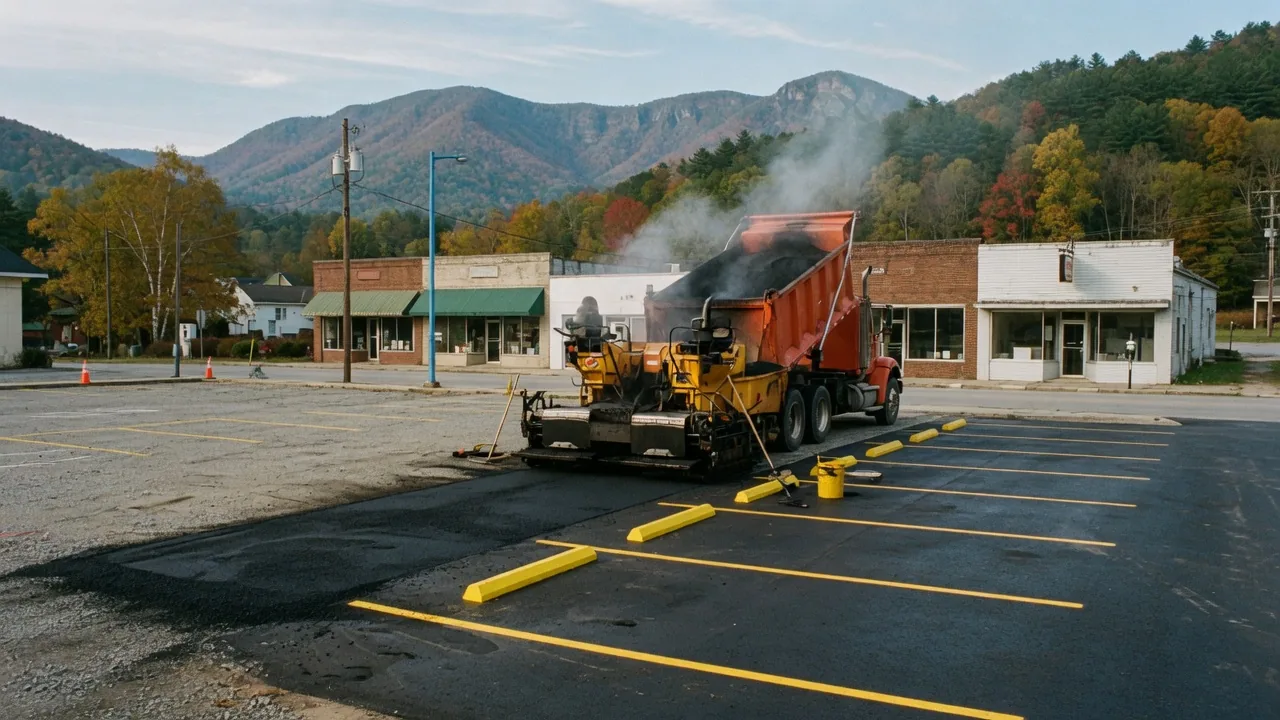
| Commercial lot or steep access | $5.00 – $7.50+ | truck traffic, turning loads, haul distance |
Those are working bands, not quotes. A number given before a contractor sees how the drive sheds water is a guess.
Housing character in the county shapes this too. Buncombe has a mix of older bungalows in West Asheville with narrow apron access, mid-century ranches in Oakley and Haw Creek where the original asphalt is now 40+ years old and probably needs more than a skim coat, and newer ridge lots in Leicester, Fairview, and Weaverville where the drive is steep and the original base may not have been compacted for what it is now carrying. A 900-square-foot car drive in a flat West Asheville yard is a different scope from a 2,400-square-foot switchback up a Fairview ridge lot, even when the price per square foot sounds similar. Ask the bidder which of those two shapes they are pricing before you compare totals.
What the trucks and turning loads are asking of your surface
Driveways in the Asheville area spend a lot of their life at the wrong end of a heavy load. Wood and propane deliveries, septic pump trucks, and multi-axle moving vans are routine on lots where getting to the house means backing up a curve with a drop on one side. A loaded truck pivoting on a driveway edge applies point pressure a passenger car never approaches, and a thin single-lift mat can shear under that load within a season or two.
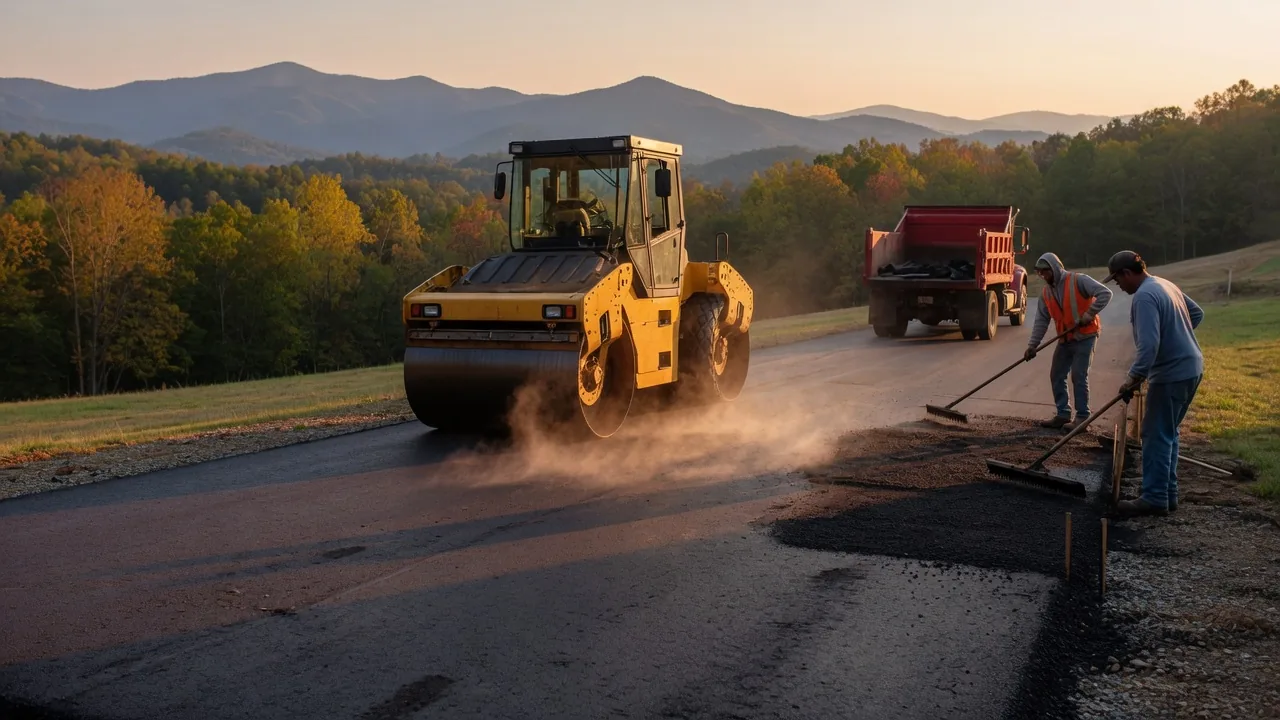
Mix design matters alongside thickness. Hot-mix asphalt placed at the right temperature compacts into an interlocking mat; material that cools too far before rolling goes down porous and ravels fast. On mountain roads, the haul from the plant is longer than it is on Piedmont flatland, and a crew working late on a cool afternoon in October is fighting the clock on every load. Ask about the plant, the mix, and the placement order rather than assuming the cheapest tonnage wins.
Water is the other half of the traffic story. A drive graded to shed stormwater or snowmelt toward the road protects the pavement edge; a drive that pools at the base of a slope will undo a good overlay from below. Most of the county's federal disaster declarations, 19, trace to storm and flood events over 1973-2026, and that history is why drainage gets addressed before mat in a sound scope here.
Freeze-thaw is its own mountain factor. Buncombe sits in a transition zone where a January warm spell can thaw the top inch of ground and a hard freeze the next week can shove it back. Water that gets into a hairline crack, freezes, and widens that crack is how most local driveways fail prematurely, and it is why pothole patching before overlay is not optional here. A crew that skips patching to hit a bid number is handing the freeze-thaw cycle a head start on your new mat. A useful question to ask any bidder is what they do about small, isolated cracks that show up the day before paving. The right answer is crack fill and patch; the wrong answer is pave over it and hope.
Permits, licensing, and the paperwork that protects you
Resurfacing an existing private driveway on your own property usually does not need a permit. Work that touches the street apron, a public right-of-way, or drainage that outfalls to a county road generally requires an NCDOT access permit, and the county can require one for lot-entrance changes as well. Check the NCDOT guidance and the local rules before assuming the contractor is handling it.
For the contractor side, small residential paving jobs fall under the state's general contractor licensing threshold, and the NC Licensing Board for General Contractors is where you verify whether the company is licensed for the dollar size of your job. A paving company that hand-waves this off on a job near the threshold is telling you something. If your project involves curb, drainage structures, or utility work, other trade licensing can come into play; the NC State Board of Examiners of Plumbing, Heating and Fire Sprinkler Contractors maintains that registry. Ask for proof of insurance in writing; a firm whose carrier will not put it in writing is a risk you take alone.
Sediment and runoff rules can also touch a resurfacing scope if the drive drains toward a creek or a storm inlet rather than sheet-flowing across the yard. Since much of the county drains into the French Broad watershed, a scope that changes how water leaves the property is worth a second look against the NC Department of Environmental Quality guidance on erosion and stormwater before the first load of mix shows up. Most residential overlays stay clear of this, but ridge lots and drives that cross a drainageway are where it stops being abstract.
How to compare three bids without getting fooled
Most resurfacing quotes in Buncombe come in as a flat dollar figure and a square footage. That tells you almost nothing about what is being built. Make each bidder answer four things in writing:
- Thickness and lift count. "Two inches, one lift" and "three inches, two lifts" should not show up at the same price for the same driveway.
- Patch scope. Where is the existing pavement failed, and what is the plan for those areas before overlay? Failing to fix a soft spot under a new mat is the most common cause of early failure.
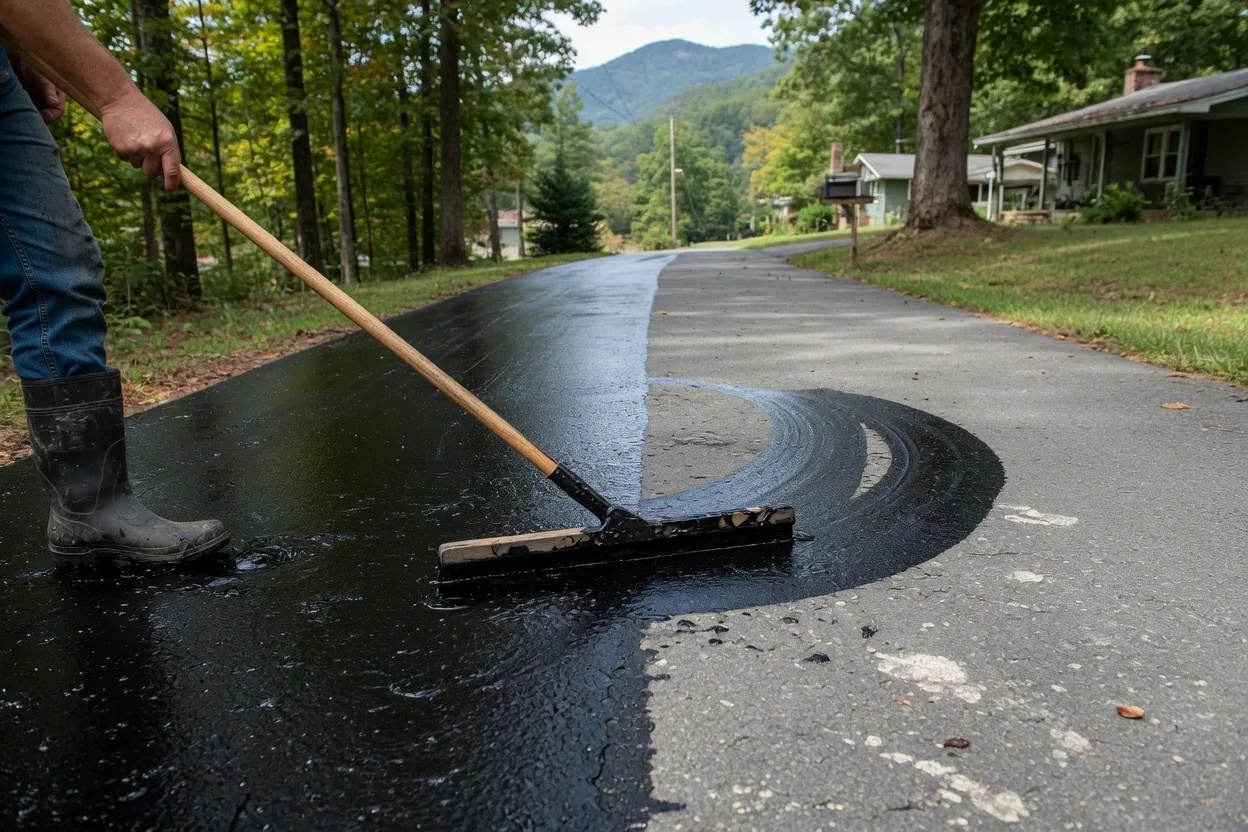
- Edge and drainage treatment. How will the crew handle the edge of the mat and the water that arrives at the top of the drive?
- Haul and plant. Which mix plant, and how long is the drive? Long hauls and cold-day placing both degrade the finished surface.
Wondering how the resurfacing line item compares to a full rebuild? Our asphalt driveway cost guide breaks out the larger job, and the asphalt resurfacing overview covers surface preparation and timelines in more detail.
One more local habit worth knowing: ask what time of day the crew plans to place the mat. A mix that left the plant in Marshall or Asheville at 7 a.m. and sits on a Fairview ridge in August is losing workability to heat just as surely as a late-October load loses it to cold. A crew that can tell you the plant, the arrival window, and the rolling sequence without reaching for the phone is a crew that has done this drive before, or one that at least knows what the drive will throw at them. That is the kind of detail a Buncombe homeowner can actually use to separate three bids that otherwise look identical on paper.