Thickness is the number nobody puts on the bid
Drive through any Black Mountain neighborhood and you can read the bids from the curb. One driveway is a thin black skin that already shows the gravel silhouette underneath after a single winter; the next holds a clean edge and still drains. The difference is almost never the contractor's skill. It is how many tons of mix went down and whether it went down in one pass or two. Two inches compacted is a resurfacing number for a driveway that already has a sound base. Three inches compacted in two lifts is a structural number, and on ground that climbs toward the ridge, that is the one that survives freeze-and-thaw cycles. Ask every bidder for thickness after compaction, in inches, and for the mix designation. A number that arrives without units is not a specification.
Mix designation matters almost as much as thickness, and it is the part homeowners rarely hear explained. Binder course mix is coarser and carries the load; surface course mix is finer and takes the weather. On flat ground, a single surface lift sometimes does the job. On a grade that drops off the road at ten percent or steeper, a crew that skips the binder and lays only surface mix is asking the asphalt to do two jobs with one material, and rutting in August heat is the predictable result. Ask which mix goes in which lift, and whether the bid calls for a tack coat between them. A tack coat is cheap; its absence is what lets a surface layer slide off its base.
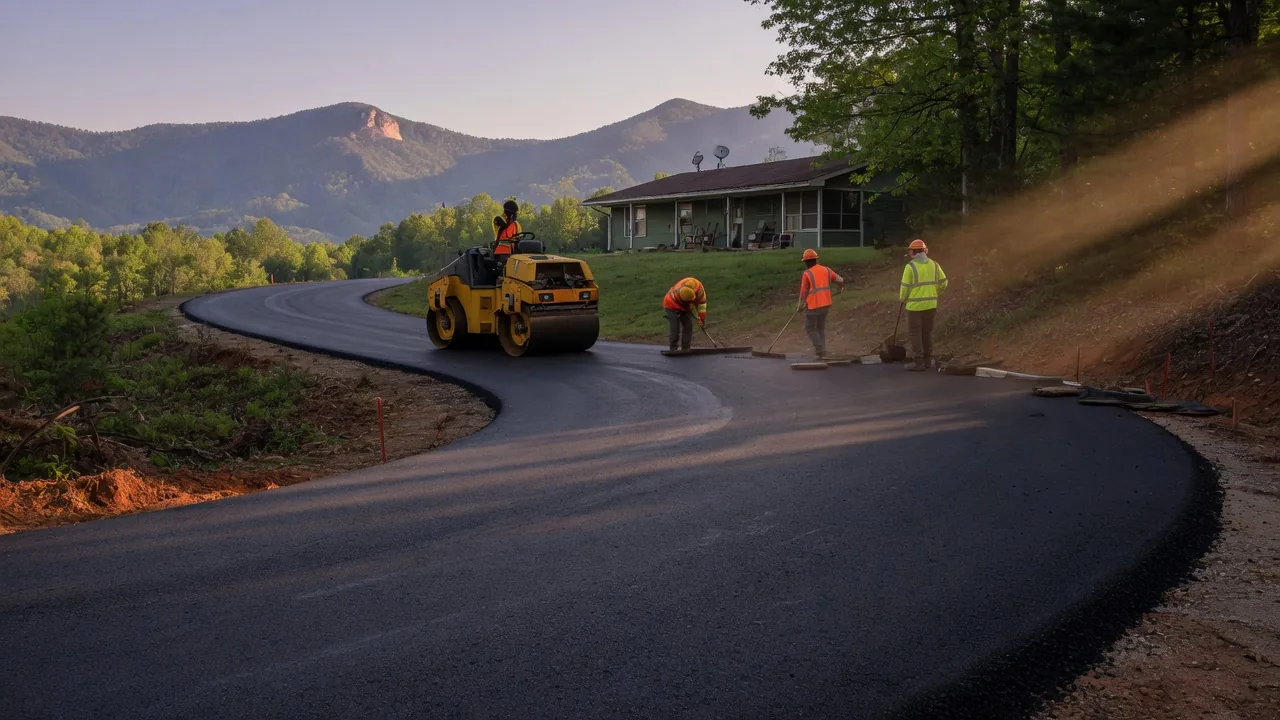
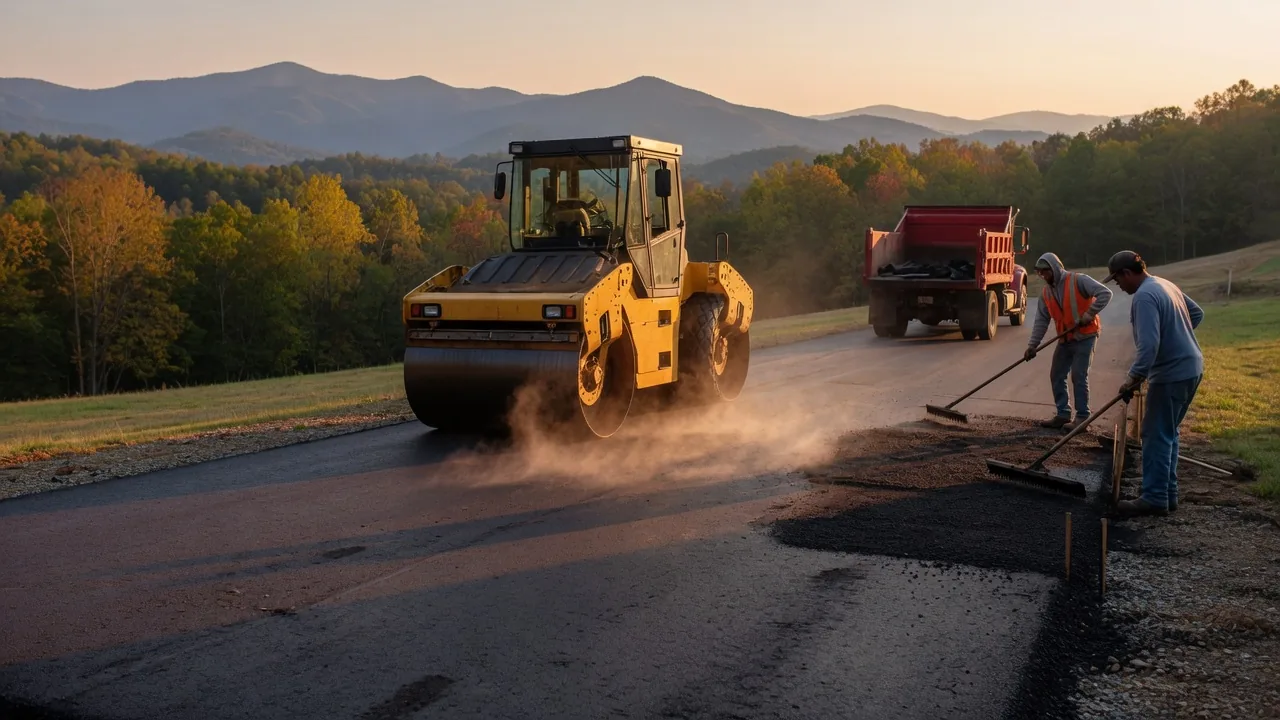
Residential streets here were not all built to the same standard. Older lanes off the main corridors often have narrow aprons, tight culvert headwalls, and no shoulder. That geometry decides what equipment can reach the job. A full-size paver and tandem roller need room to turn and pack; some hillside driveways can only take a smaller machine in stages. When a bidder walks the lot, watch whether they measure the slope and check the existing base or just pace off square footage. The second is a square-foot price looking for a driveway, not a build.
What Black Mountain's loads actually ask for
This town is not flat, and its pavement is not asked to be. Lots off the upper streets carry grade steep enough that a loaded pickup leaves marks; driveways serving short-term rentals and multi-car households see far more turning traffic than a typical residential slab. Then there is the commercial side: supply trucks, delivery vans, and the general traffic that funnels through a town sitting on a US highway corridor between Asheville and the eastern slope. All of that matters because asphalt strength is a layered decision. A residential driveway with occasional passenger cars generally performs on a lighter section. Anything with recurring truck weight, an RV pad, a business lot, a steep pull-through, needs a heavier base, a coarser binder course, and a mix that resists rutting in summer heat. The right thickness is a function of what rolls over it and how steeply, not of how wide it is.
Turning loads are the quiet killer on mountain lots. A vehicle that turns while stationary, backing a trailer, three-pointing a driveway, scrubs the surface and works the edge. Where driveways are short and steep, that scrubbing happens in the same few square feet every time. A heavier compacted section and a properly built edge hold up; a thin skin at the edge unravels. This is also why driveway width is not the cost driver people assume. Widening a flat driveway by two feet adds mix. Widening a steep one can require cutting the bank, adding fill, and rethinking where water sheds, all of which moves the number before a single ton of asphalt shows up. Buncombe County's slope and drainage character runs across the whole region, but Black Mountain lots tend to concentrate it: the town sits in a valley that rises quickly on nearly every side, so the switch from flat-lot pricing to hillside pricing happens fast.
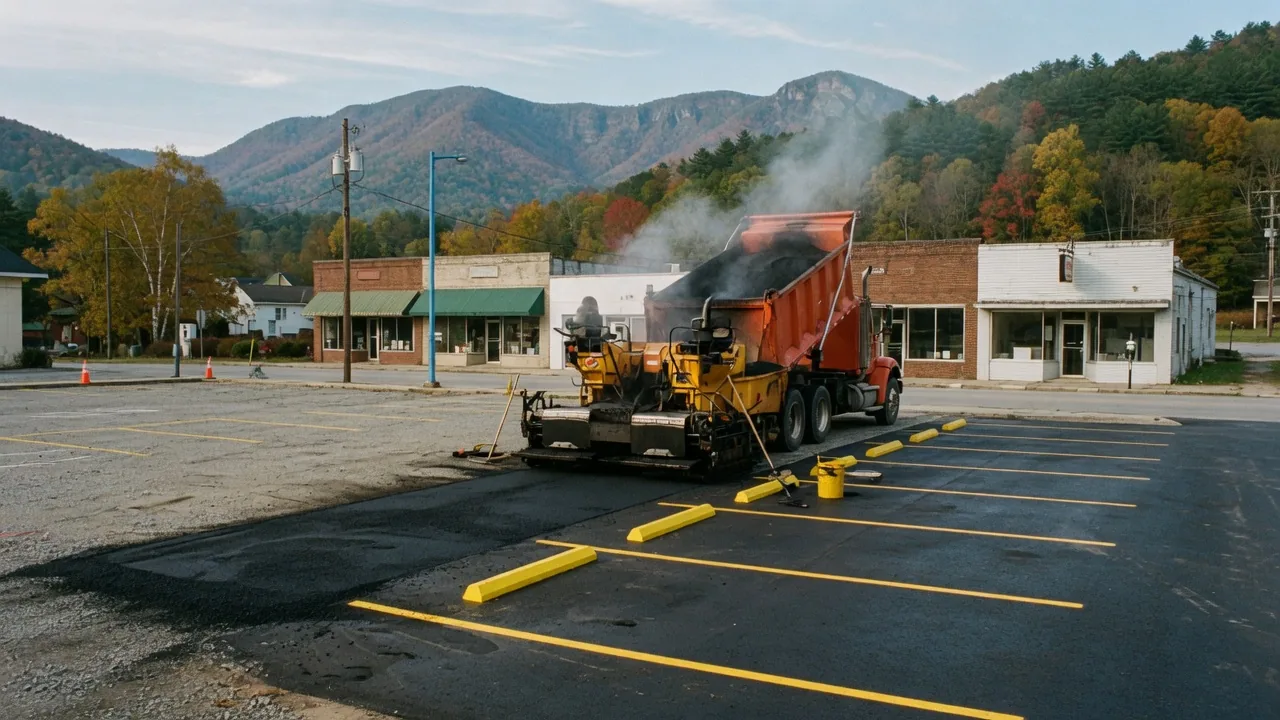
Commercial and multi-family work around town raises the stakes further. A lot serving a small retail building or a cluster of rentals may see dozens of vehicle movements a day, plus periodic deliveries and the occasional heavy truck. That traffic profile calls for a deeper stone base, drainage that can handle a hard rain off a large impervious area, and a surface mix engineered for it. Whether the job touches a state-maintained road or a private access easement also changes the scope: work at the connection point often runs through the NCDOT driveway permit process, and a contractor who has done it before will know before quoting whether your job needs one.
Where the money goes, line by line
Regional bands for Black Mountain and Buncombe County run wider than most homeowners expect, because grading on a mountain lot can cost more than the asphalt itself. The table below reflects honest scopes, not teaser pricing. For a fuller breakdown by scope, see the Buncombe County asphalt cost table, and for the material itself, what the paving scope covers.
| Scope | Typical range | What drives it |
|---|---|---|
| Overlay / resurface, sound base | $2.50-$4.50 per sq ft | Existing base condition, edge milling, crack prep |
| New driveway, 2 in compacted | $3.50-$6 per sq ft | Grading, stone base depth, access for equipment |
| New driveway, 3 in in two lifts | $5-$8 per sq ft | Base build-up, binder plus surface course, grade |
| Grading and stone base only | $2-$5 per sq ft | Cut and fill volume, drainage, slope |
| Small commercial lot or turnaround | $8,000-$40,000+ | Truck loading, drainage structures, striping |
Two practical notes. First, permits can enter a bid: work that touches a driveway apron or a state-maintained road often runs through the NCDOT driveway permit process, and any contractor worth hiring knows whether your job needs one before quoting it. Second, drainage is not optional here. Saturated subgrade under fresh asphalt fails from below, and storm-fed mountain runoff is exactly what does the saturating — county disaster history includes 19 federally declared events spanning 1973-2026, overwhelmingly storm and flood related. Fix where water goes before you pay for a surface that water will otherwise pull apart.
It is worth separating the three ways a bid gets cheaper, because only one of them is a real saving. A lower price can come from less thickness, from less base preparation, or from skipping drainage work. Less thickness and less base cost you every year the driveway exists. Skipping drainage can cost you the whole slab after one heavy storm season. When you line two bids up, compare them line by line: thickness after compaction, stone depth, drainage scope, and prep work. A bid that is vague on all four is not actually cheaper. It is just unspecified, and the difference gets paid later in repairs or in a full replacement two winters sooner than expected.
The questions that separate the real bids
Three checks sort Black Mountain paving bids quickly. Ask for the thickness after compaction and the mix type, in writing. Ask whether the bid includes full-depth repair of soft spots or just paves over them, the second is cheaper and fails sooner. Ask who is responsible for water: grading, culverts, driveway cross-drain, and where the uphill neighbor's runoff crosses your lot. A crew that answers those three without hedging is usually a crew that has paved on this terrain before. Verify any contractor crossing into work that requires state licensing through the NC Licensing Board for General Contractors, and confirm they carry liability coverage before anyone fires up a paver. If you are comparing a new build against fixing an existing surface, the local driveway paving guide walks through when overlay is the smarter money.
Two more checks are worth the phone call. First, ask for the location of a driveway they paved three or more winters ago and go look at it in person. Freeze-thaw cycles expose weak work quickly: cracking at the edges, rutting in the wheel paths, and settlement over the base all show up within two seasons if the build was thin. Second, ask who handles the subgrade before the stone goes down. Stripping topsoil, proof-rolling, and correcting soft spots are the unglamorous steps that most cheap bids quietly leave out. Ask how they will confirm the subgrade is firm, and listen for a description of the actual work, not a promise that it will be fine. If a bidder cannot describe what they do before the asphalt truck arrives, the price being quoted is for the part you can see, not the part that holds it up. Asphalt is a wearing surface layered on a structure, and the structure is where the honest builders spend their margin. Anyone selling only the black part is selling half a driveway.
When to schedule work on this terrain
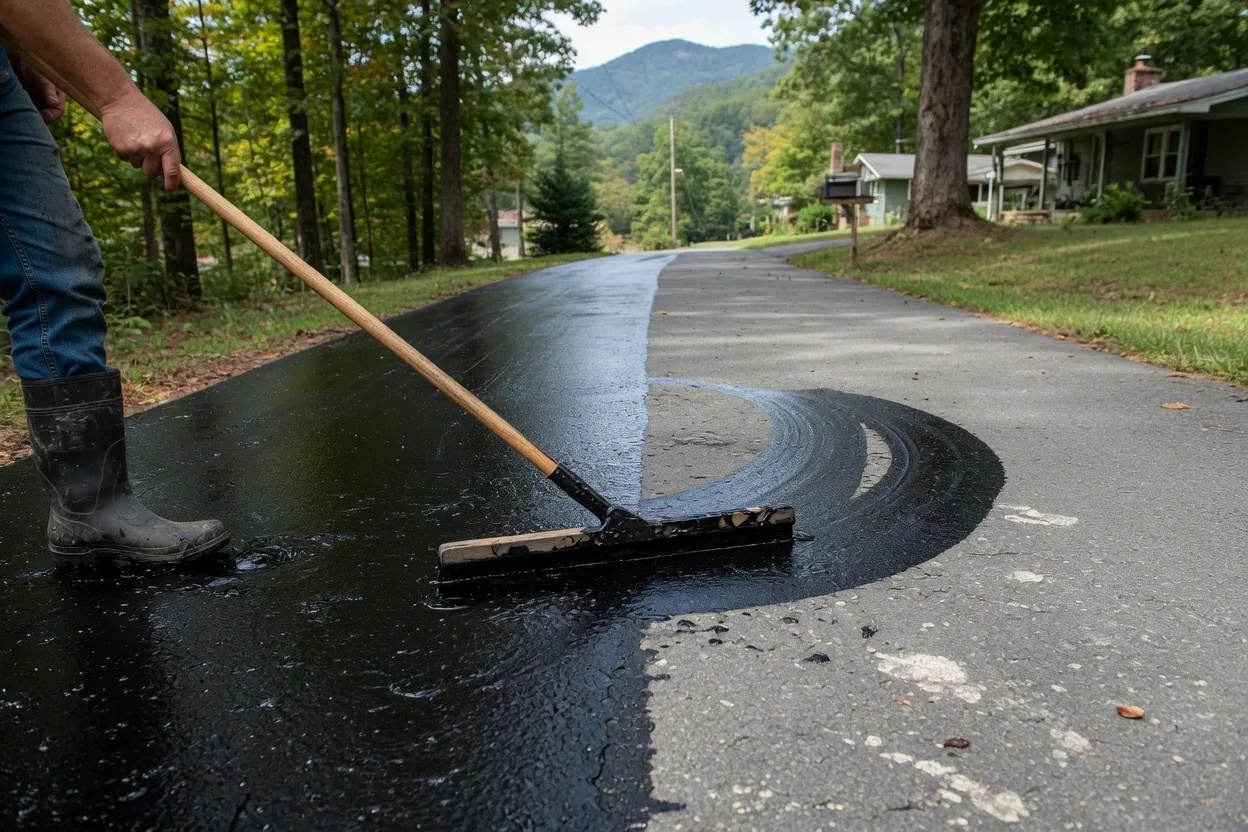
Asphalt needs warm, dry conditions to compact and cure, and in the Black Mountains that window is narrower than the calendar suggests. Late spring through early fall is the reliable stretch; late-season work still happens but leaves less margin if weather turns. A freshly paved driveway also needs time before heavy loads, no delivery trucks or moving vans for the first weeks. Plan around that rather than discovering it. And if your current surface is cracking in a pattern rather than a line, that is a base conversation, not a sealcoat conversation. Sealcoating a broken surface is money spent delaying a real repair.
The window matters more here than on the flats because nighttime temperatures drop earlier in the season and stay lower through spring. Asphalt placed too cool does not compact properly, and a poorly compacted mat is porous from day one, which means it takes on water through the surface as well as the base. Scheduling also interacts with mountain rainfall patterns: the same spring and summer storms that drive regional flood history can shut a job down mid-pour. A contractor who has worked around here will build weather margin into the schedule rather than promising an exact day weeks out. When a paving crew tells you they will call the evening before with a go-or-no-go, that is not flakiness. That is how this trade works on this terrain, and it is a sign the crew is protecting the quality of the finished surface rather than the date on the calendar.