Where Fairview rain actually goes on a gravel drive
A Fairview lot seldom sits flat. Most driveways around here climb off the road, drop into a cut, or run along the shoulder of a slope the way the land was already draining before anyone poured gravel on it. That means the existing gravel drive has probably been shedding water onto the same line for years, sometimes onto the road, sometimes into the yard, sometimes right back at the house. Asphalt does not fix a wrong direction. It locks it in.
Before a conversion is worth quoting, someone has to walk the drive and answer a simple set of questions. Which way does it fall from top to bottom, and does that match the way water wants to go? Where is the crown, and is it high enough to push runoff toward the edges instead of letting it stand in the middle? Are the shoulders high or washed out, and does a ditch exist on the uphill side or the downhill side? On most Fairview conversions the real work is moving dirt and re-laying base so the drive can crown properly and send water to a defined outfall. Asphalt is the last step, not the first.
Why local terrain changes the scope
Buncombe County's west side sits on ground that folds, and Fairview is textbook: wooded slopes above the road, creeks and branches cutting across lower parcels, and a lot of driveways that hold grade long enough to develop ruts when the base was never deep enough to begin with. A flat-lot paving estimate from somewhere else rarely matches what a Fairview conversion needs.
The federal disaster record backs this up. 19 declared events touch this county across 1973-2026, overwhelmingly storm, flood, and slope-movement family. Every one of them pushed water at driveways that were already borderline on drainage. The National Weather Service tracks this pattern across the Southern Appalachians, and anyone who has lived here knows what a stalled summer storm does to a gravel drive with a weak crown.
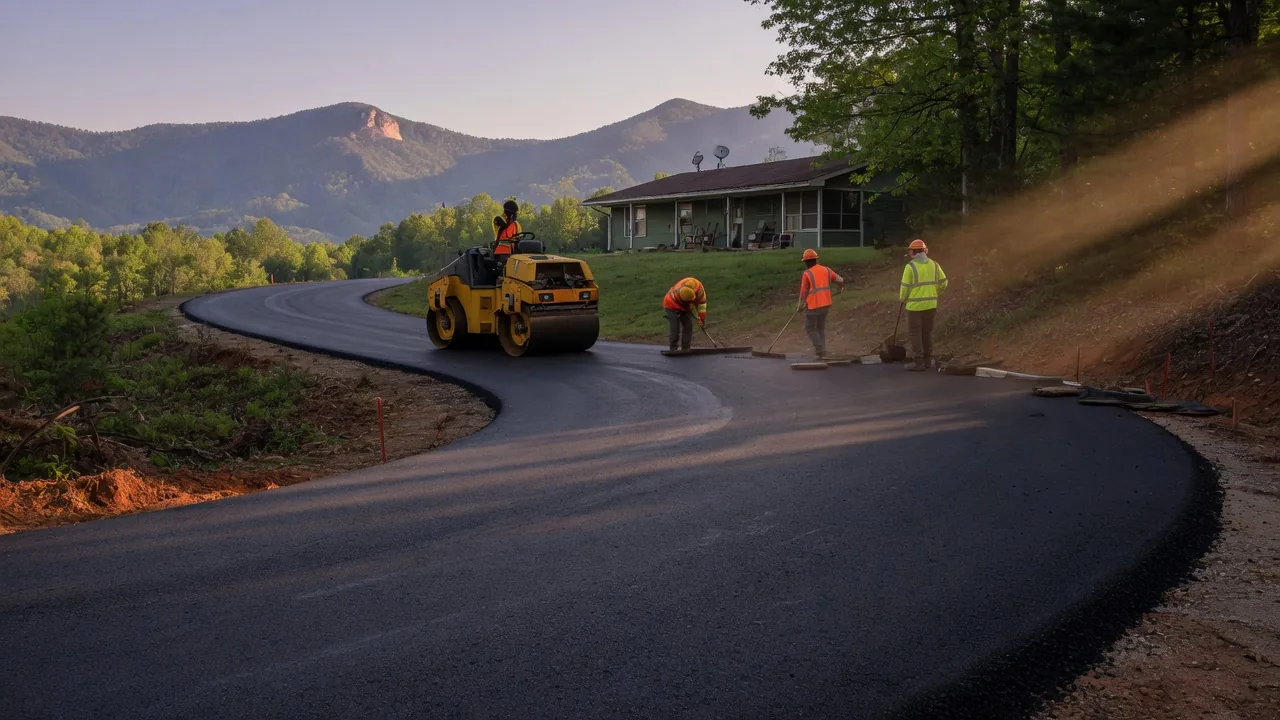
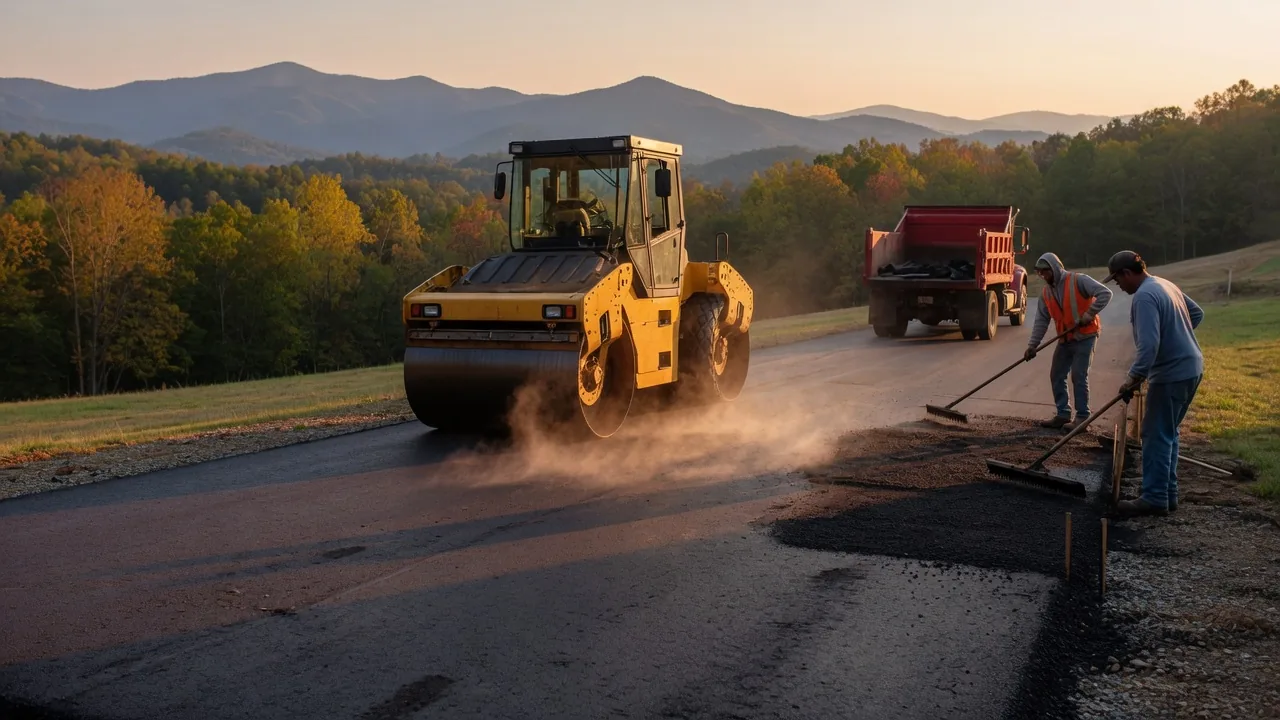
In practical terms, the conversion scope for a Fairview lot usually includes re-grading to re-establish fall, adding or deepening a roadside ditch on the uphill side, armoring that ditch with stone where velocity picks up, and building up base course where the existing gravel has been pounded into the subgrade. Skipping those steps gets you a black driveway with the same water problem it had in gravel.
What the conversion costs, line by line
These are honest regional ranges, not a quote. Every drive is different, and the numbers below move with slope, length, and how much base has to be replaced rather than just topped off. For a fuller working table by scope level, see the Buncombe County asphalt driveway cost breakdown.
| Scope | Typical range | What drives the number |
|---|---|---|
| Gravel refresh and light grading only | $900-$2,500 | Length of drive, how much new stone is added, ditch touch-ups |
| Regrade, reshape crown, and full base rebuild | $2,800-$6,500 | Subgrade repair, depth of new base course, ditch work |
| Standard conversion, prepped base to 2-inch asphalt | $6,500-$12,000 | Square footage, slope, access for equipment |
| Steep or long drive with drainage upgrades | $12,000-$18,000+ | Culvert or catch basin, engineered base, haul distance |
| Apron and road-approach transition | $1,200-$3,500 | NCDOT apron requirements, existing shoulder condition |
Any bid that lands well below these numbers is not a bargain — it usually skips base work, which is where the difference shows up in year two. When you are ready to compare crews, the Fairview paving contractor page covers what to verify before signing.
Where the crown, edges, and ditch have to send the water
Asphalt on a Fairview drive has to do three things at once. It has to crown in the middle so sheet flow breaks toward both edges. It has to end the edges at the same grade as the surrounding shoulder so water does not pond along the asphalt. And it has to hand that edge water to a ditch, culvert, or defined outfall that carries it away from the driveway, the foundation, and the road.
If the drive runs uphill from the road, the ditch almost always belongs on the uphill side, and it needs enough slope to move water even in a slow rain. If the drive runs downhill, water has to be caught before it accelerates and starts cutting the asphalt edge. Both cases call for a compacted base that will not pump under load, because soft base moves the asphalt and cracks the crown within a season.
Permitting matters here too. Any new driveway connection to a state-maintained road requires a driveway permit through NCDOT Connect, and the apron and sight-distance rules come from NCDOT. On private roads, the rules move to the property owner and any HOA, but the drainage logic stays the same.
Doing the work properly and lawfully
Asphalt paving itself does not require a state license in North Carolina, but site work that crosses into grading, drainage structures, or structural changes can pull the job under the North Carolina Licensing Board for General Contractors threshold, and the rules are worth knowing before you hire. Local code on stormwater and driveway drainage is enforced through the NC Office of State Fire Marshal code officials network, and if your drive sits near a creek or wetland, the EPA has guidance on runoff that is worth a look.
Ask any crew to walk you through the sequence: strip and inspect subgrade, correct the grade and crown, add and compact base, cut the edges, then pave. If the conversation starts with the asphalt mix and never reaches drainage, the scope is incomplete. The gravel to asphalt conversion guide covers the full sequence step by step.