Where the money actually goes on a Fletcher lot
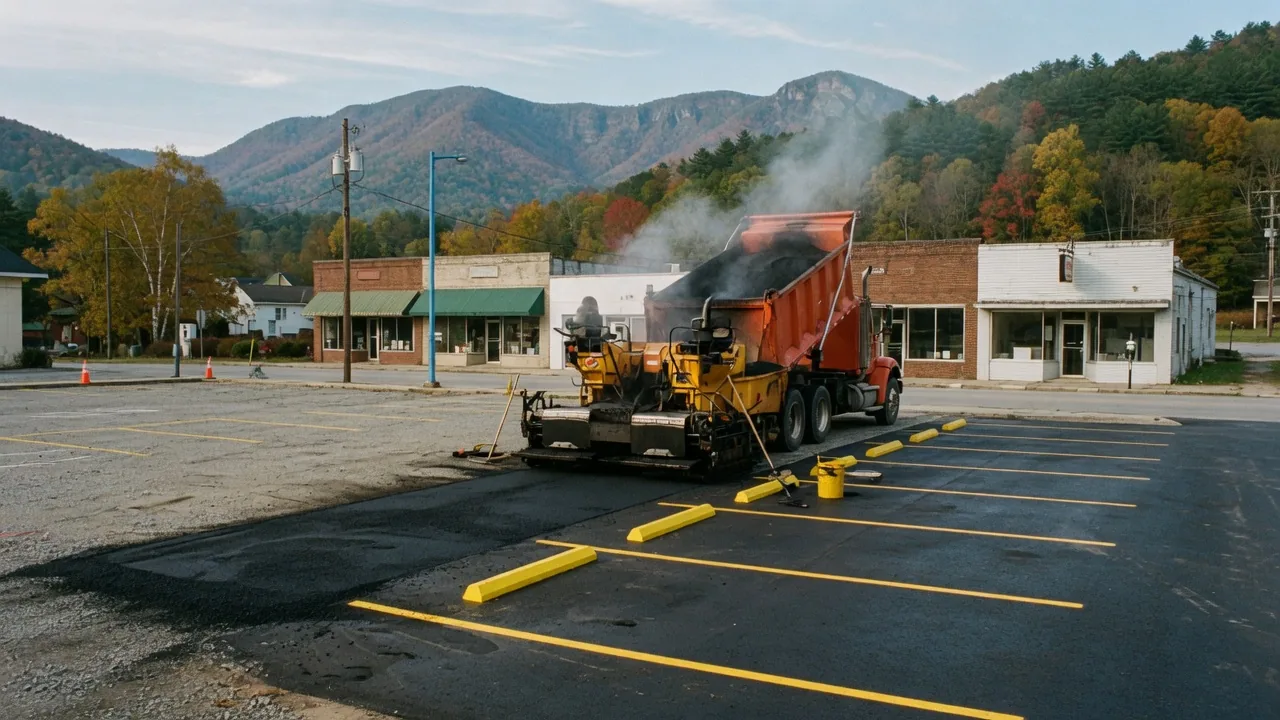
Drive the commercial strip along Asheville Highway past the airport industrial park and the parking lots tell the truth about asphalt pricing: the surface you see is rarely the expense. On a typical 20,000 sq ft lot here, roughly 45–60% of the invoice sits in excavation, hauling, stone base, and compaction — work that is invisible once the mat cools. The asphalt itself (binder and surface course) is the smaller share. That ratio explains a fact many Fletcher owners find confusing: two bids for the "same" lot can differ by $20,000 and both be honest, depending on how deep the subgrade got cut and how much unsuitable red clay left the site. When you compare proposals, compare tonnage, base depth, and mobilization as separate line items, not a single lump number. Our parking lot paving overview walks through how a full scope gets assembled before the first load of stone shows up.
The Henderson County terrain matters here in ways flatland bids miss. Fletcher sits in a valley between the French Broad River bottoms and the rising ground toward Asheville, so lots that drain fine in July can pond against a building pad after a February thaw. That is why the excavation line on a local bid often includes more than stripping topsoil: it includes re-grading to a positive slope away from structures and doorways, which is cheap to do during construction and expensive to fix after the fact. A bid that leaves grade correction out is not a lower bid; it is a bid that silently pushed that cost onto a future change order.
Fletcher pricing table: scope versus realistic range
Use these as regional working bands for Henderson County commercial and multifamily lots, not quotes. Every lot has its own subgrade story, and the ranges below assume normal access and no overnight phasing.
| Line item | What drives it | Typical range |
|---|---|---|
| Full-depth new asphalt (2" binder + 1.5" surface over 6" stone) | Square footage, truck traffic, base depth | $6.50–$8.00 / sq ft |
| Mill-and-overlay (1.5–2" surface only) | Existing pavement condition, drainage profile | $2.75–$4.50 / sq ft |
| Base repair (remove & replace failed sections) | How much subgrade is unsuitable | $4.00–$9.00 / sq ft of repair area |
| Sealcoat + restripe (maintenance cycle) | Age since last seal, crack density | $0.30–$0.65 / sq ft combined |
| Striping only (standard stalls, ADA layout) | Stall count, ADA compliance scope | $0.35–$0.80 / sq ft |
| Curb, gutter, and storm drainage tie-ins | Linear feet, town or NCDOT connection points | Bid-specific, often 10–20% of total |
| Traffic control and mobilization | Lot size, phasing, business-hours constraints | $2,500–$9,000 |
The band that surprises owners most is base repair. A lot that looks like a simple overlay from the cab of a pickup can double in price once a test pit shows 14 inches of soft clay under the failed section. That is not a contractor upcharge; it is what the ground demanded. It is also why a good bid will name a unit price for unsuitable-material removal rather than a vague allowance, so both sides know what happens when the excavator finds the soft pocket nobody could see from the surface.
Why this county's ground shapes the bid
Henderson County sits in the same Blue Ridge storm pattern as the rest of Western North Carolina: 16 federally declared events touch this county across a 1978-2026 record, and the overwhelming majority are flood and storm family. That history lives in the pavement. Fletcher lots near Cane Creek and the French Broad floodplain carry drainage design that flatland bids miss, and post-storm freeze-thaw cycles accelerate the alligator cracking you see on aging lots along the corridor. The National Weather Service freeze and flood outlook for the mountains is a fair proxy for how many thaw cycles a mat will see in a season, and that count is what ages asphalt here faster than sun alone would.
Before you price asphalt, price water. The NC Department of Environmental Quality maintains stormwater guidance that applies to any lot adding or reworking impervious surface, and it is worth knowing which rules your project touches before a contractor tells you. Separately, any driveway apron or lot connection that meets a state-maintained road crosses an NCDOT driveway permit threshold — real lead time, real inspection, and a line item that should appear on the bid. The NCDOT Connect permit portal is where those applications actually move, and knowing the turnaround keeps a paving schedule honest.
Who is allowed to take the job, and who is not
North Carolina draws a line by dollar value. Commercial paving projects above the statutory threshold require a licensed general contractor, and the NC Licensing Board for General Contractors publishes both the threshold and the license lookup. For a Fletcher commercial lot, verify licensure before you sign anything, and ask the paving crew how they sequence base compaction testing — a mat laid over uncompacted stone fails the same way regardless of the asphalt quality on top.
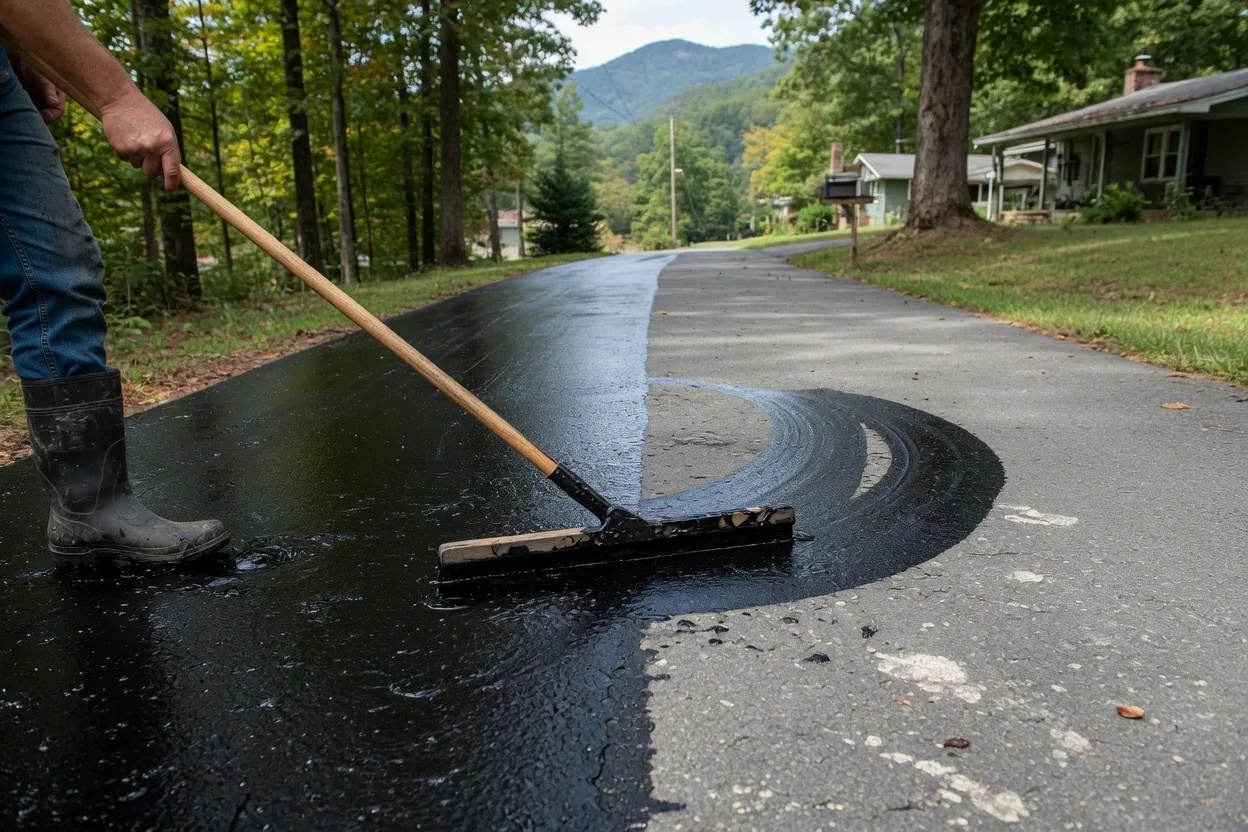
For residential driveways, the bar is lower but the discipline is the same. Because much of Fletcher's housing stock sits on sloped lots cut into the hillside, driveway work often involves retaining or re-grading the edge as much as laying asphalt, and that is the kind of scope where a cheap bid quietly shaves depth. Our Henderson County driveway cost breakdown shows how those smaller jobs get priced by line item, which is a useful sanity check when a commercial bid arrives looking suspiciously round.
Comparing bids without getting played
Three questions separate real bidders from optimistic ones. First: "Show me compaction density targets and how you will test them." Second: "What is the disposal cost for the material you remove, and is it in this number?" Third: "If we find unsuitable subgrade during excavation, how is the change order priced?" A paved lot is a 15-to-25-year asset when the base is right and a three-year headache when it is not.
If you want to compare the full menu of paving options before committing, the Fletcher paving contractors page covers how to audit the crews bidding your job. The honest answer to all three questions above is worth more than the lowest number on the page. On a lot this close to the airport industrial park, where loaded trucks and delivery traffic beat up the entrance apron hardest, the base depth and compaction question is not academic — the entrance is almost always the first section to fail, so ask specifically how the bid handles the apron and turning radius where heavy vehicles pivot.