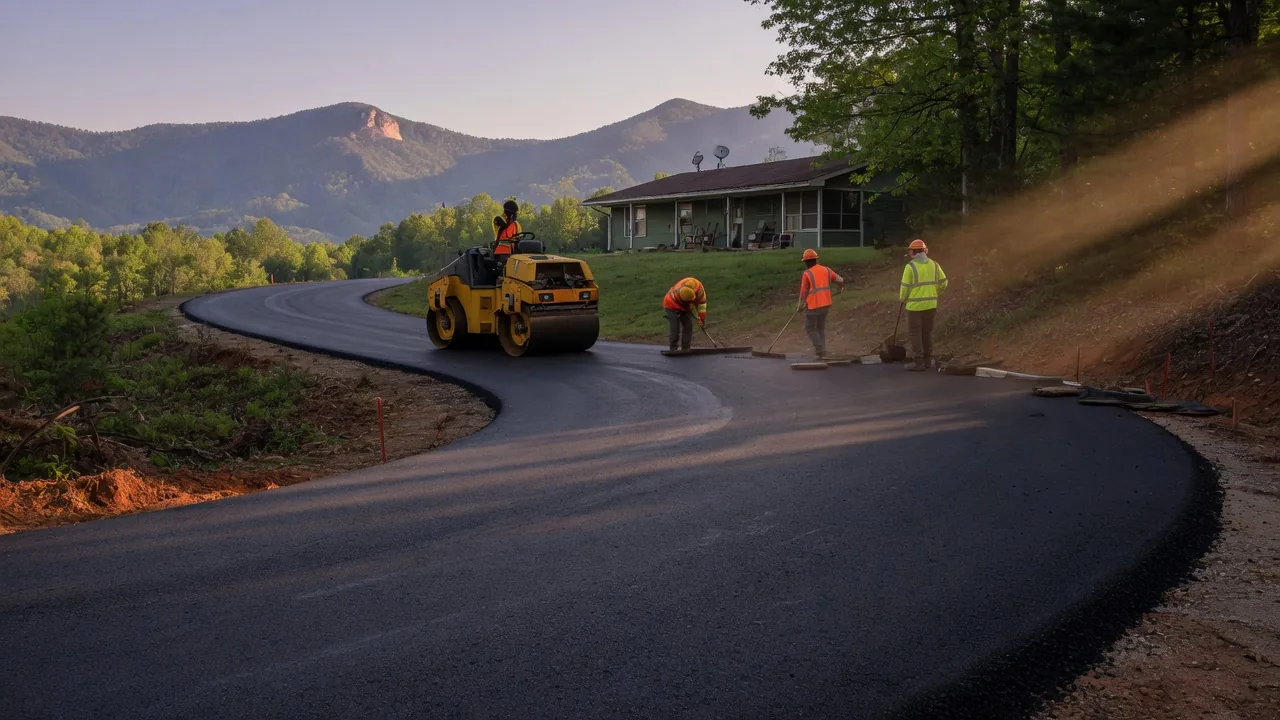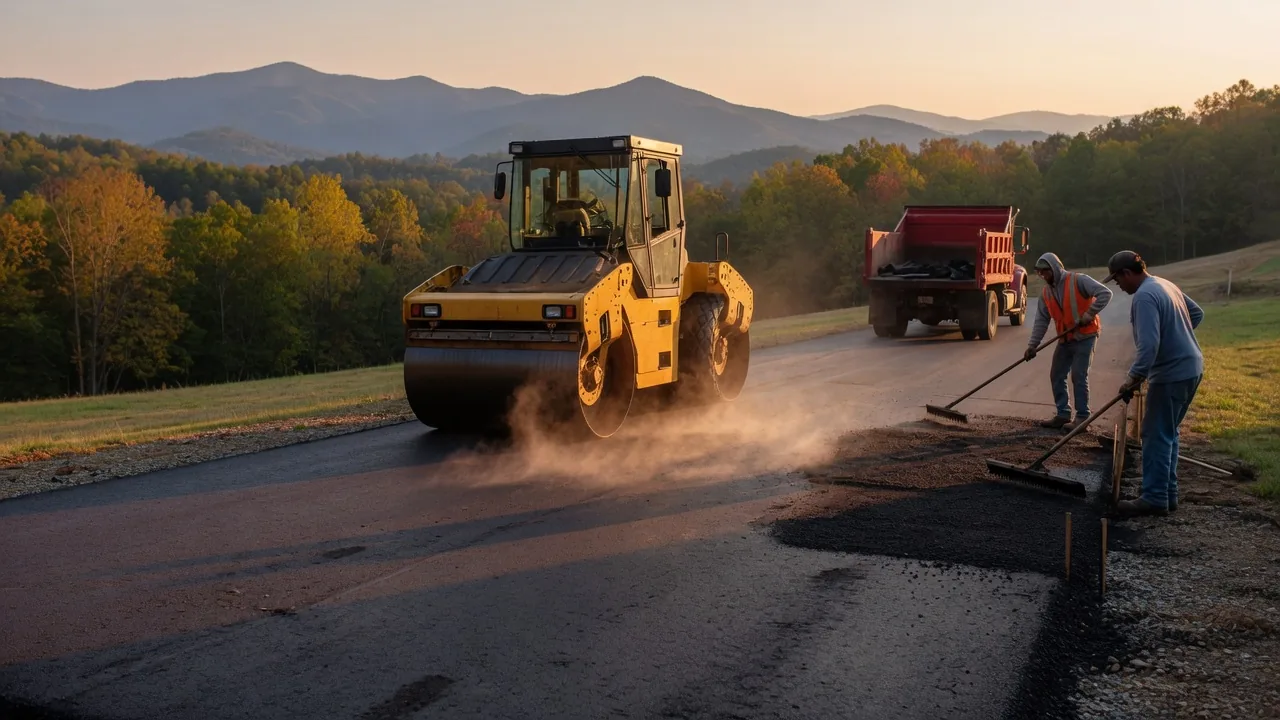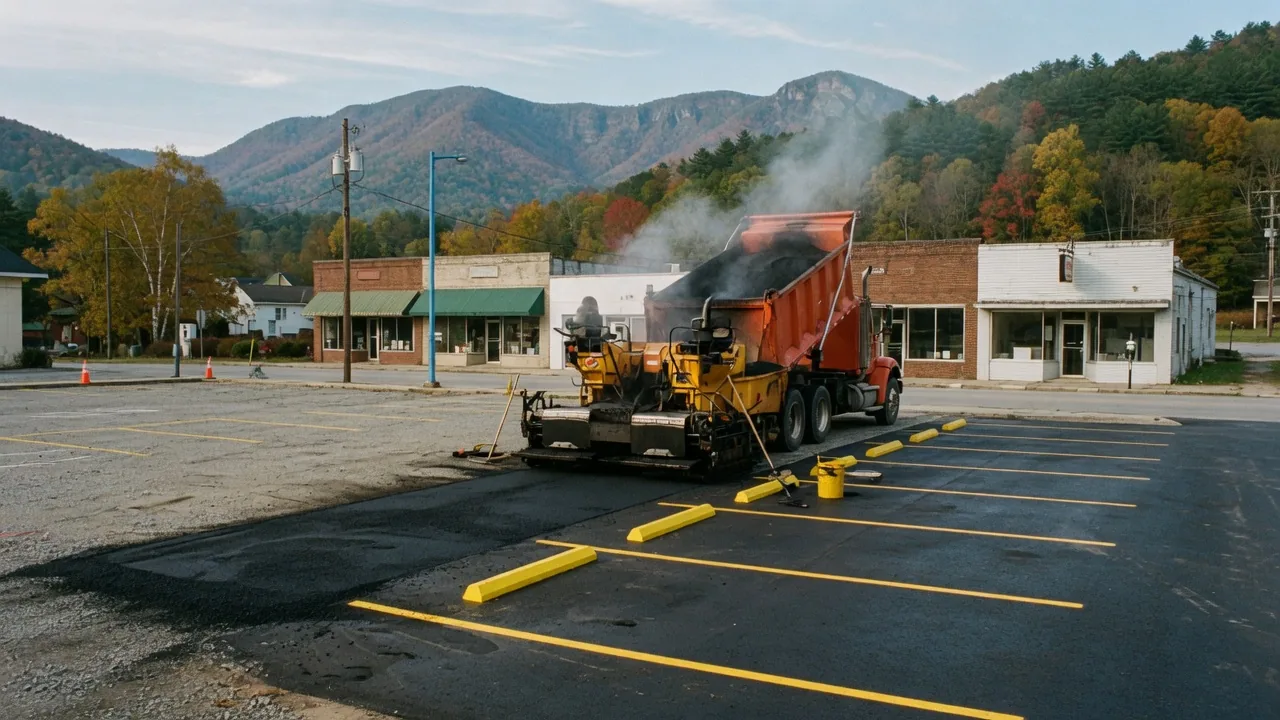
The paving window in Etowah is shorter than the calendar suggests
Etowah sits in the French Broad valley south of Hendersonville, where the ground climbs fast toward the DuPont and Pisgah ridges. That geography does two things to driveway work. First, it puts a lot of driveways on grades, which means water moves fast and asphalt carries load unevenly. Second, it puts a lot of driveways in shade — mature hardwoods on the south side of a lot can hold surface temperatures 10 to 15 degrees below a sunny reading on the same afternoon.
Asphalt needs warm, dry, stable conditions to compact and cure. In Henderson County that window generally opens in late spring and closes before the first hard freeze, with a shoulder season in between where morning frost sits in the bottom of a driveway at 7 a.m. and the surface is 60 degrees by 2 p.m. Reputable crews watch surface temperature, not the air temperature on the truck thermometer. Cool asphalt rolled too early never reaches compaction, and that shows up as a soft, raveling strip within a season or two.
Fall is also when Etowah's storm pattern gets active. Federal records show 16 declared events touching this county across 1978-2026, weighted heavily toward storm and flood. Driveways on sloped lots here are often the first thing to wash, and a repair scheduled after a big rain is a different scope than one scheduled before it.
What actually fails on Etowah driveways
The failure modes here are fairly consistent, and they follow the water. Alligator cracking in the wheel paths usually means the base under that strip has lost support — often from a spring or a gutter that dumps onto the pavement edge. Edge cracking along the downhill side is a grading problem as much as an asphalt problem. Longitudinal cracks up the middle of a steep drive are often the seam between two original pours moving at different rates.
Then there is winter. Henderson County gets freeze-thaw cycles where water enters a crack during the day and expands at night. A hairline crack in November can be a finger-width crack in March. Sealing early is cheap; sealing after three winters of that cycle is a milling job. For the broader picture of what falls under repair versus replacement, the asphalt driveway repair overview walks through the categories.
Scope and price ranges for this county
Numbers below are realistic regional bands for Henderson County, not quotes. Grade, access, and how much base repair is uncovered are the movers — a steep drive with limited truck access prices differently than a flat one with a wide apron. The full line-item breakdown lives on the Henderson County cost page.
| Scope | Typical range | Notes |
|---|---|---|
| Crack filling (linear) | $1–$4 per linear ft | Clean, dry cracks; best done in warm months |
| Patching (small areas) | $350–$900 | Squared-off, compacted, edges sealed |
| Patching (large / base repair) | $1,200–$3,500 | Includes stone base rebuild under the patch |
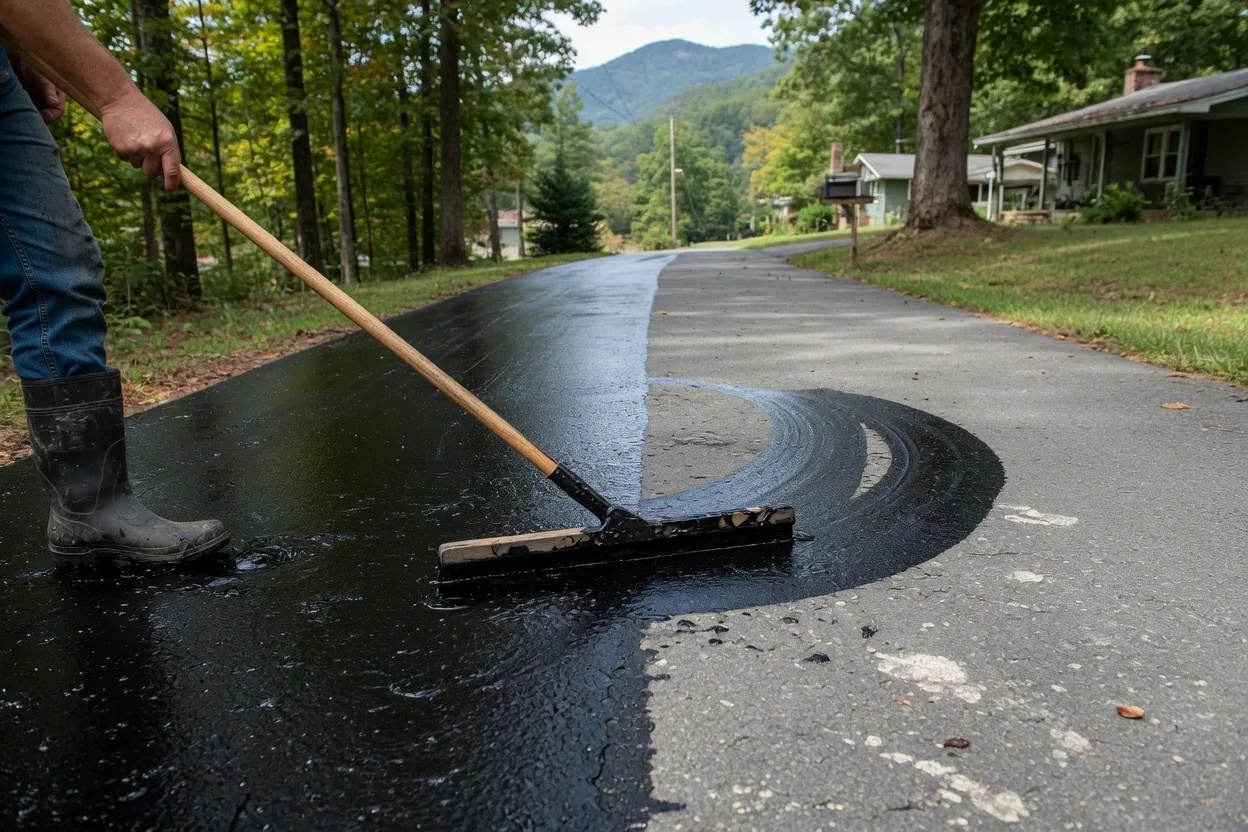
| Sealcoat | $0.20–$0.45 per sq ft | Cure time matters; new asphalt should not be sealed immediately |
| Overlay (partial or full) | $2.50–$5.50 per sq ft | Grade and drainage corrections often needed |
Two of those rows deserve a warning. Sealcoating freshly laid asphalt too soon traps solvents and causes soft spots — ask the crew how long they want the surface to cure before sealing. And on sloped Etowah drives, any overlay that raises the pavement surface changes where water goes. If the bid does not address drainage, it is incomplete rather than inexpensive.
Permits, licensing, and who is actually on the job
Routine repair inside an existing driveway footprint generally does not require permits. Any work that touches the roadway, the apron where the driveway meets a state-maintained road, or drainage discharging toward a right-of-way may require authorization from the North Carolina Department of Transportation. Applications for driveway access are handled through NCDOT Connect. If your driveway enters a state road — common on the older rural stretches around Etowah — ask the contractor who is pulling that authorization and when.
For the contract itself, the NC Licensing Board for General Contractors sets the threshold at which a project requires a licensed general contractor, and paving work is not automatically exempt. Stormwater and sediment leaving a work site fall under state and federal rules administered in part by the EPA. A crew that understands those boundaries is a crew that has done this before.
Scheduling around mountain weather
The practical advice for Etowah homeowners: book repairs in the shoulder months with a crew that will walk away if the forecast turns. Rain on an open patch ruins adhesion, and a cold snap right after an overlay can leave the mat too stiff to compact. Ask what happens if the day is rained out and who eats the cost of a remobilization.
Also ask when the plant runs. Asphalt is mixed hot and has to be placed within a limited time. Crews working this side of the county coordinate around plant schedules and haul distance up the grades. If a quote seems unusually low, it is worth asking whether the mix is coming from far enough away that it arrives cool, or whether the job is being done in a temperature window the crew would not normally accept.
For a shortlist of local companies who work these grades regularly, the Etowah paving contractors page is a reasonable starting point.