The haul is the hidden line item in a Waynesville chip-seal quote
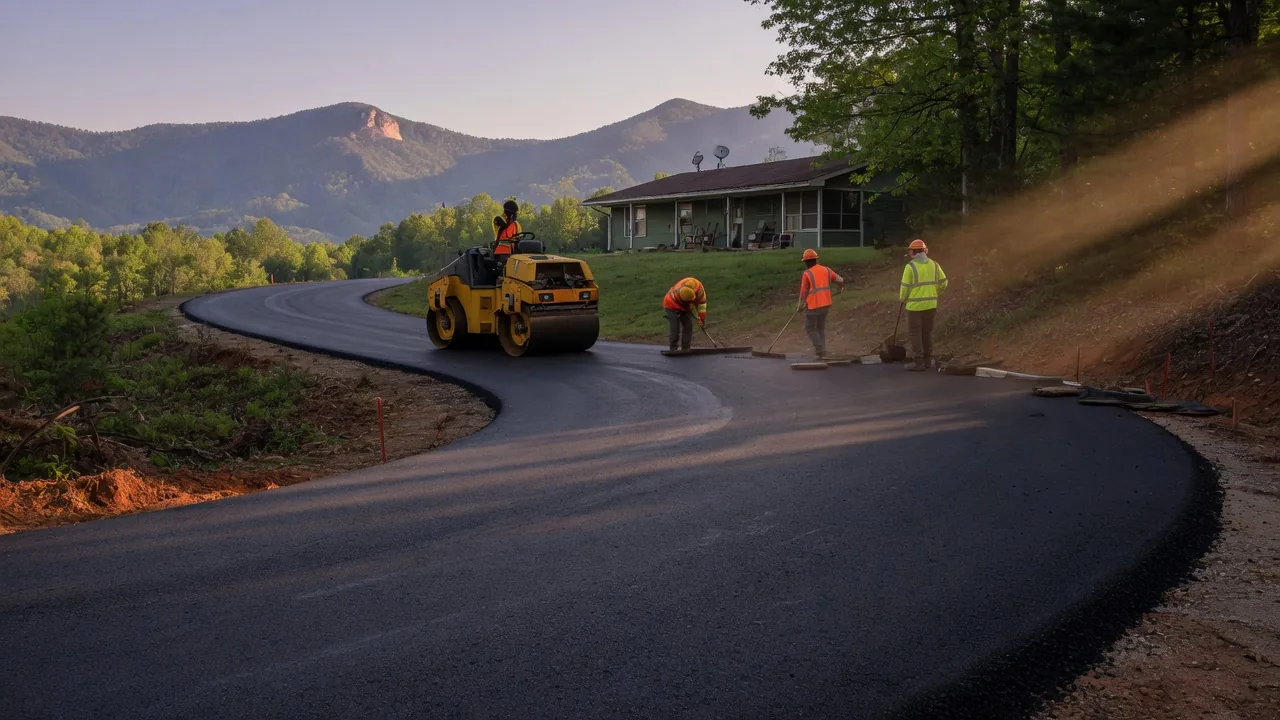
Haywood County's chip-seal supply doesn't sit on every ridge, so the first real question on a Waynesville job is how far the binder and the aggregate have to travel to your gate. A chip-seal spreader truck holds heat for a limited window, and a driveway that takes thirty tight minutes to reach off a switchback road costs the crew that window twice — once going up loaded, once coming back for the next pass. Two-lane roads like the climb off Highway 276 or the narrow lanes threading back toward the county seat reward a contractor who budgets for grade, turn radius, and turnarounds before quoting.
That's why two driveways of identical square footage in Waynesville can price four hundred dollars apart. The material is the same stone; the day is not. A drive off Russ Avenue where the truck can nose in and out cleanly prices differently than a gravel lane climbing past Lake Junaluska toward a ridge lot with no turnaround. The crew either loses time backing down or brings a smaller spreader and makes more passes — both hits land in the number.
Waynesville sits in a bowl ringed by ridges, and that geology controls the schedule. Binder cools as it climbs, and on a cool morning the last fifty feet of a long drive may not take stone the way the first fifty did. Contractors who work these ridges plan the pour so the top of the drive gets the freshest load, not the leftover. It sounds like a small thing until you see a drive where the top third shells out in two winters.
Aggregate haul is its own line. Quarries serving Haywood County are scattered, and the stone common to chip seal here is a hard, angular crushed rock that locks together under a roller. If your contractor is pulling from a pit an hour out, that shows up the same way the binder haul does — as a truck hour you're paying for.
What tar and chip actually does well on this ground
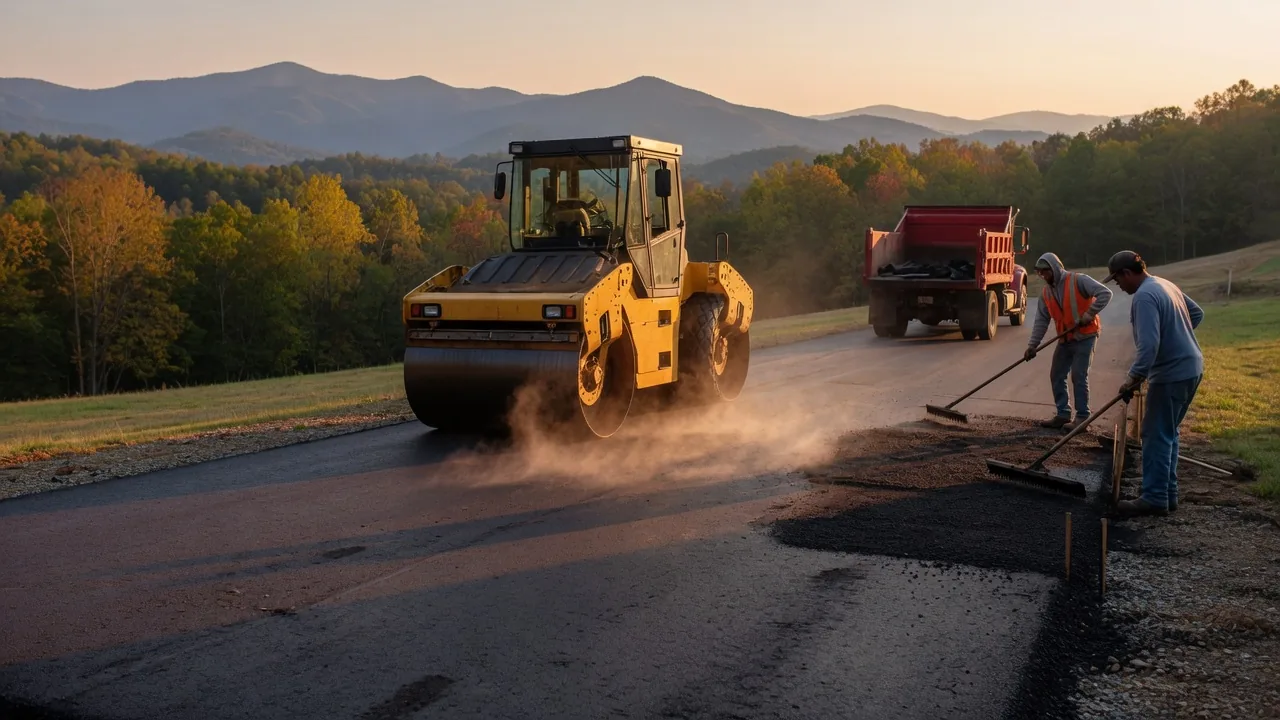
Tar and chip (also called chip seal or macadam) sprays hot asphalt binder, broadcasts crushed stone, then rolls it in. On Haywood County's clay-heavy subsoils and long steep grades, it outlasts plain gravel by locking the surface stone in place, and it drains faster than a thin asphalt overlay because the finish stays porous at the edges. For tar and chip driveway work, that matters on any slope where a straight asphalt mat would rut from summer heat.
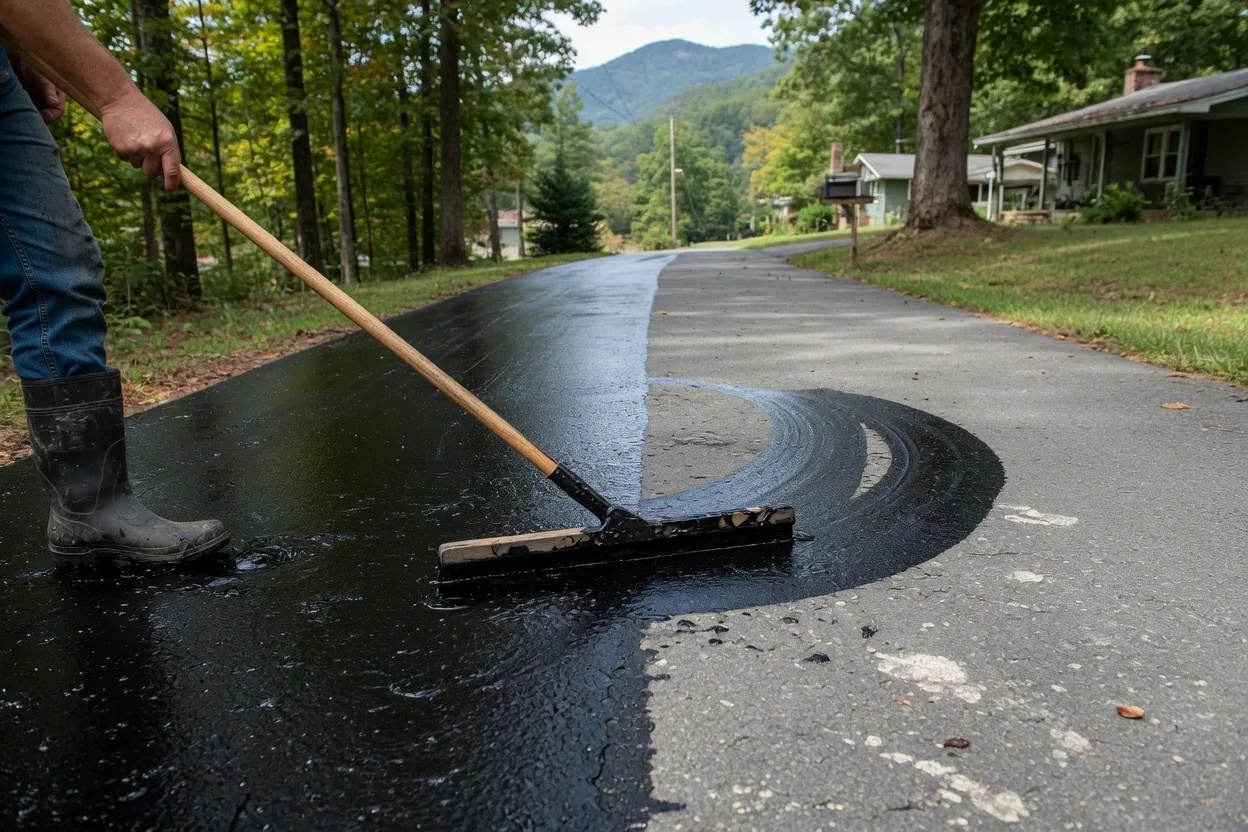
The trade-off is texture. You get a rough, grippy surface, not a glossy blacktop. If you want the smooth look, that's a different scope and a different price — see the Haywood County asphalt driveway cost page for that comparison.
On this ground the case for chip seal is usually drainage and grip. Waynesville sits in a basin where afternoon thunderstorms dump water fast, and a crowned chip drive sheds that water off the shoulders instead of ponding in the middle. A worn asphalt drive with hairline cracks does the opposite — water gets in, freezes, and the crack widens every thaw. That cycle is the single biggest killer of driveways in the county, and it's why a porous surface holds up here.
Gravel is the other comparison people ask about. A gravel drive on a clay base works fine until the first heavy runoff, when the fines wash out and you're left with loose stone sitting on slick clay. Chip seal binds that surface stone into the binder, so the same slope that rutted your gravel holds together under a chip mat. The cost difference between the two is real, but so is the maintenance gap.
The honest limit is this: chip seal is a wearing surface, not a structural fix. If the base is failing, no topcoat saves it. Base correction comes first, and that's true on every driveway in the county, from flat valley lots to the steepest ridge cuts.
Waynesville price picture
Ranges below are honest brackets for residential work in this county. They assume a typical 12-foot-wide drive; narrower or wider scales the square footage, not the rate.
| Scope | Typical range |
|---|---|
| New tar and chip over prepared gravel base | $3.50-$6.50 per sq ft |
| Chip-seal refresh over existing sound chip drive | $1.75-$3.25 per sq ft |
| Steep-grade job (over ~15% slope) with added binder | add 10-25% |
| Base regrade, culvert, or drainage correction | $1,800-$6,500 |
| Long haul (>15 min from plant) | add $250-$900 per day |
Treat any bid without haul, grade, and drainage lines as a bid that hasn't seen the driveway yet.
Refresh work is where most Waynesville homeowners start, because the first chip layer is the expensive one and the refresh keeps a sound drive going for another cycle. A refresh over a drive that's still tight and draining is one of the better values in mountain paving. A refresh over a drive that's already rutted or ponding just buries the problem for a season.
Base correction is the line item that surprises people. On a ridge lot off a switchback, a proper fix might mean cutting a crown back in, adding a culvert where runoff crosses the drive, and armoring the shoulder where water leaves. That's dirt work, not paving, and it's priced per job, not per square foot. Skipping it to save money now usually costs more later.
Permits, code, and the steep-lane fine print
If your driveway ties into a state-maintained road, the NCDOT driveway permit applies — the application path runs through NCDOT Connect, and the access rules are at ncdot.gov. On steep mountain lanes, the code side that trips people up is drainage: the NC residential code, administered through the NC Department of Insurance / Office of State Fire Marshal, expects surface water to be controlled rather than dumped onto the road or the neighbor's property. Get that wrong and the good driveway you just paid for becomes the cause of someone else's washout within two seasons.
Contractor licensing thresholds also matter if a job crosses into structural work or crosses the dollar limits — the NC Licensing Board for General Contractors is the authority. A driveway paving crew is not automatically the same thing as a licensed general contractor, and you should know which one you're hiring.
On a steep lane, the practical rule is that water has to leave the drive somewhere it can't do damage. That usually means a cross-drain or a culvert sized for the runoff the drive actually sees, plus a stone-lined outlet where the water lands. On a ridge road, the outlet often points at a wooded slope or a natural swale rather than a neighbor's gravel. That detail is worth raising before work starts, because retrofitting drainage under a fresh chip mat is messier than putting it in first.
Homeowner association rules are also worth checking on drives serving shared mountain communities. Some of these lanes are private and maintained by an association, and the association may have its own spec for surface type and edge treatment. Paving a private shared lane without checking that spec can create a fight that has nothing to do with the work itself.
Weather and mountain water
Haywood County's federal disaster record — 19 declared events spanning 1973-2026 — is dominated by storm and flooding family events, and that matters to chip seal more than people expect. Binder needs dry, warm conditions to cure, and a drive that drains poorly will fail at the edges first every time. The National Weather Service forecast is not decoration on a mountain job; it's a scheduling constraint. Ask your crew how they handle a rain event mid-job. The answer tells you if they've worked these ridges before.
Chip seal cures hot. Once the binder is sprayed and the stone is broadcast, the mat sets as it cools, and rain during that window can wash stone off the surface before it locks in. Crews working the county watch the radar the way a farmer watches the sky, and a good crew will push a job an hour or move it a day rather than roll the dice. A crew that shrugs at a 40% chance of afternoon storms is telling you something.
Freeze-thaw is the other mountain factor. Waynesville sits at elevation where winter swings between freeze and thaw repeatedly, and every cycle works on any weak point in the mat. Edges, culvert crossings, and anywhere water sits are the first places a chip drive shows wear. A drive installed with those transitions detailed from the start generally gets a longer first cycle out of it.
Getting a real quote in Waynesville
Ask three questions before any number goes on paper: how far is the plant, what grade are we paving, and where does the water go when it leaves the drive. The Waynesville paving contractors page walks through what a proper first visit includes and how to compare bids line by line. If a quote can't answer the haul question, it's a guess, not a price.
A good first visit on a Haywood County driveway involves walking the drive, noting the grade, checking where water currently exits, and asking how the base was built. That last question matters most on older drives. A gravel base laid decades ago may be sound, or it may have clay pumped up into it over years of traffic. The paving crew can usually tell by probing and by how the drive drains after a rain.
Compare bids on scope, not just the bottom line. One bid might include a fresh crown and shoulder work, another might lay chip over whatever's there. Both can be legitimate quotes for different scopes, and the cheaper one can still be the wrong choice if the base needs attention. Ask each contractor what they included for drainage and prep, and read the two answers side by side.