Where the money actually goes on a Black Mountain driveway
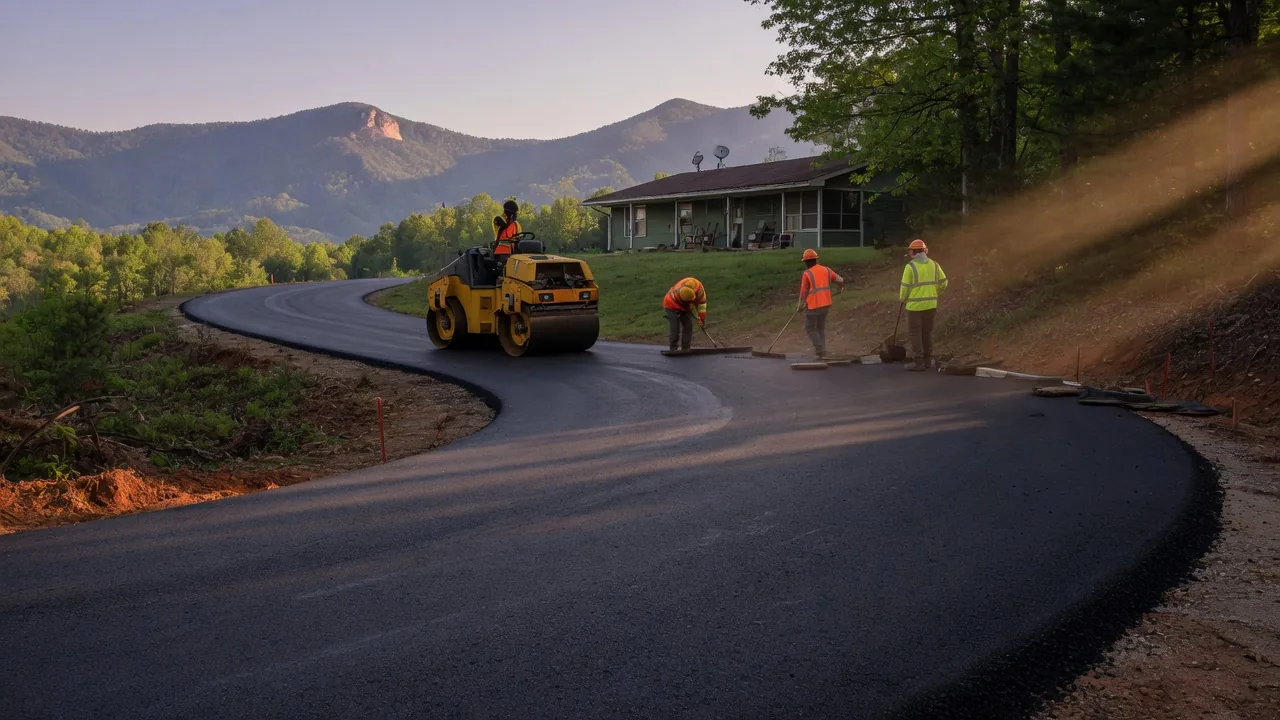
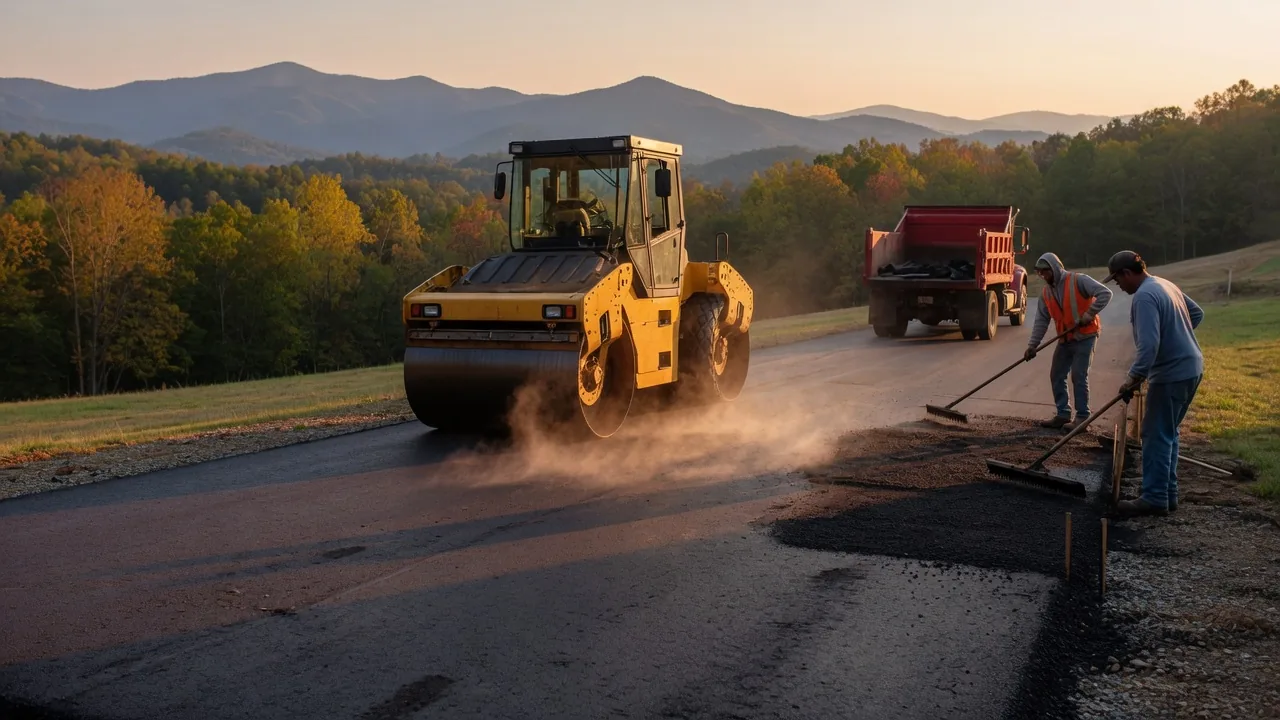
A paving quote that arrives as one number is hiding the four things that decide it. First, tonnage: overlay thickness times area, and the mix delivered to a town where half the driveways climb. Second, repair area: the soft spots, alligator cracks, and settled edges that have to come out before any new asphalt goes down, because resurfacing over failing base buys you one winter. Third, access: a steep, narrow, or switchback drive off a road like Montreat Road or North Fork slows the dump trucks and the roller, and slow equipment is billable. Fourth, the tie-in at the street: apron, culvert, and whether the driveway meets a private lane or a road the state maintains.
You can see that arithmetic laid out for the whole county in the Buncombe County driveway cost breakdown. For a typical single-family drive here, resurfacing usually lands between $2,200 and $7,500, but the spread inside that band is almost entirely those four variables, not the contractor's mood.
What each scope line costs, and when it's worth it
Below is the honest shape of resurfacing pricing in and around Black Mountain. Numbers are regional ranges, not quotes — your driveway decides.
| Scope line | Typical range | When it applies |
|---|---|---|
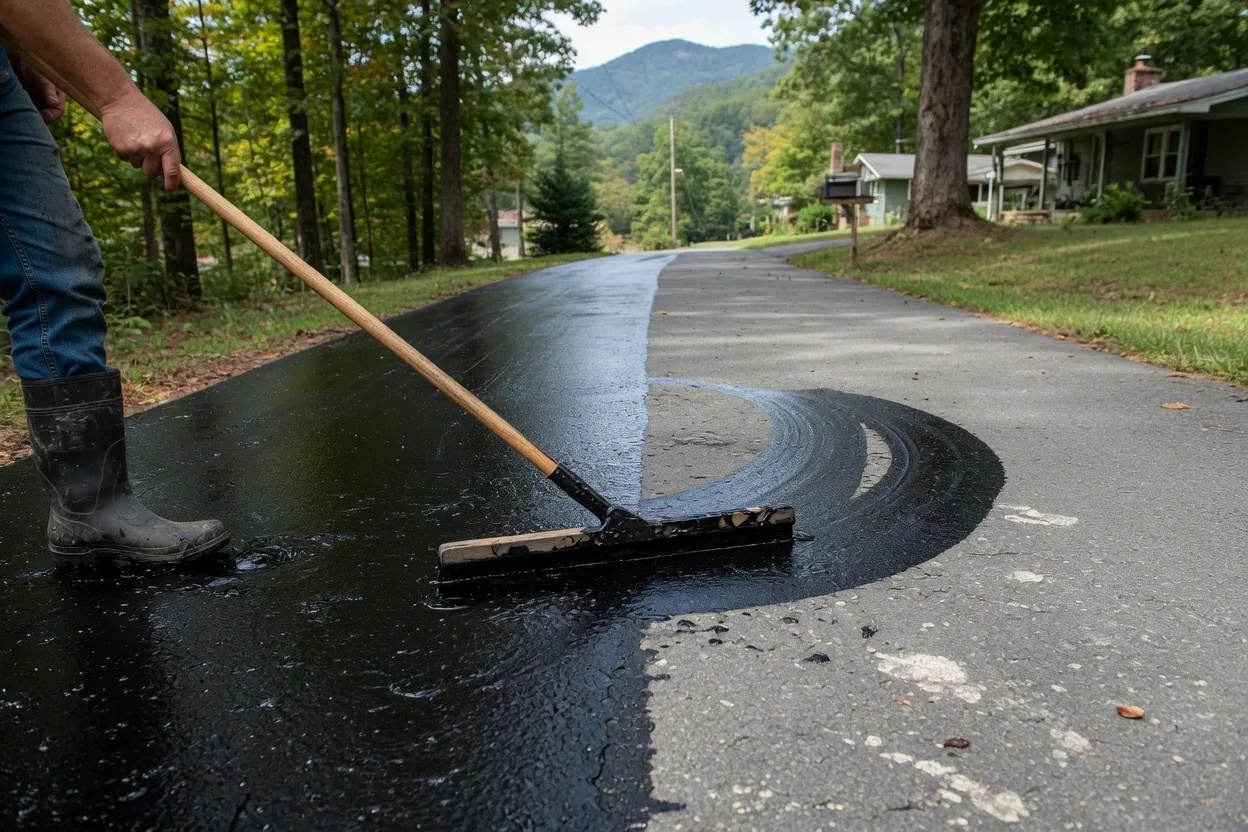
| Seal coat only (no new asphalt) | $0.15–$0.30 / sq ft | Sound pavement, cosmetic refresh; this is maintenance, not resurfacing |
| 1.5-inch asphalt overlay, standard drive | $2.50–$4.50 / sq ft | The baseline resurfacing scope on a good base with minor prep |
| Overlay with full-depth base repair | $4.00–$7.00 / sq ft | Isolated soft spots, alligator cracking, settled apron |
| Remove-and-replace (mill or tear out first) | $6.00–$10.00 / sq ft | Structural failure, drainage problems, multiple failed layers |
| Grading and drainage correction | $1,500–$5,500 per job | Water sheeting toward the house or pooling at the garage |
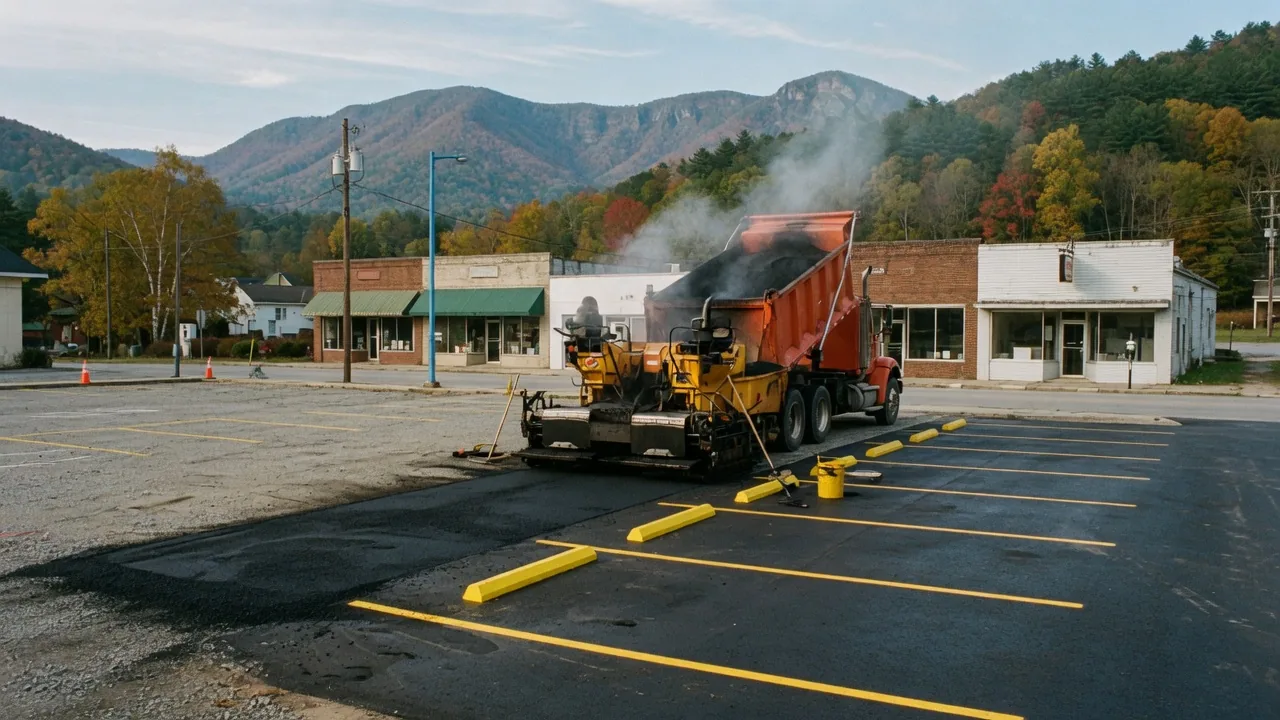
| Apron / street tie-in rebuild | $900–$3,000 per job | Broken apron, culvert issues, or a state-maintained road edge |
Two of those rows are where Black Mountain jobs go sideways financially. Base repair gets underestimated when a driveway looks fine in summer and pumps in March. And drainage correction is a pavers-versus-water question: if the grade pushes runoff at the foundation, resurfacing alone just seals the water in. See the resurfacing service overview for how those two scopes get sequenced.
Why this town's grades and weather shorten pavement life
Black Mountain sits at the foot of the escarpment, and the ground here reflects it: driveways that climb from the street, lots cut into slopes, and neighborhoods where a driveway is really a short private road. Water moves downhill fast on those grades, and asphalt on a slope sheds its surface load into the edges first, which is why edge cracking and shoulder breakdown show up earlier here than on flat lots in the county.
The freeze-thaw record matters too. Federal disaster data for Buncombe County lists 19 declared events across 1973-2026, and while those run the storm and flood family, the mechanism that ages pavement is the same one: water gets into the asphalt, freezes, expands, and pries the mat apart from underneath. The National Weather Service freeze and heavy-rain patterns for the mountains are the honest planning input for when a resurfacing should be scheduled, and late-season work that gets paved too cold is a common reason a two-year-old overlay already looks old.
Permits, right-of-way, and who you're allowed to hire
Most residential driveway resurfacing inside your own property line does not need a permit. The exceptions matter. If work touches a state-maintained road — the apron, the culvert, or anything in the right-of-way — you need a driveway permit through NCDOT, and applications go through NCDOT Connect. Get that wrong and you can be ordered to tear out finished pavement at the street.
On the contractor side, North Carolina draws a line by project value: above the threshold, the job falls under the state's general contractor licensing rules, administered by the NC Licensing Board for General Contractors. Ask whether the resurfacing scope crosses that line and who is licensed for it. Stormwater and runoff also fall under state environmental rules through the NC Department of Environmental Quality when a job changes drainage in a way that affects a stream or a shared system — relevant here, where so many lots drain toward mountain creeks.
Comparing quotes without getting played
The fastest way to compare two paving bids is to make them itemize. Ask for square footage, overlay thickness in inches, tons of mix, repair area in square feet, and whether the apron is included. A bid that can't state thickness is not a bid, it's a guess.
Then ask three questions. When will the work be done relative to the season, and what temperature is the mix placed at? What happens if you uncover base failure under what looked like a sound surface — is that change-order pricing stated up front? And who handles the street tie-in if a permit is needed? Crews that pave in and around Black Mountain regularly should answer all three without hedging. If you're still shortlisting, the local paving contractors page covers what to verify before anyone shows up with a roller.