On a Buncombe County lot, the rain decides the price
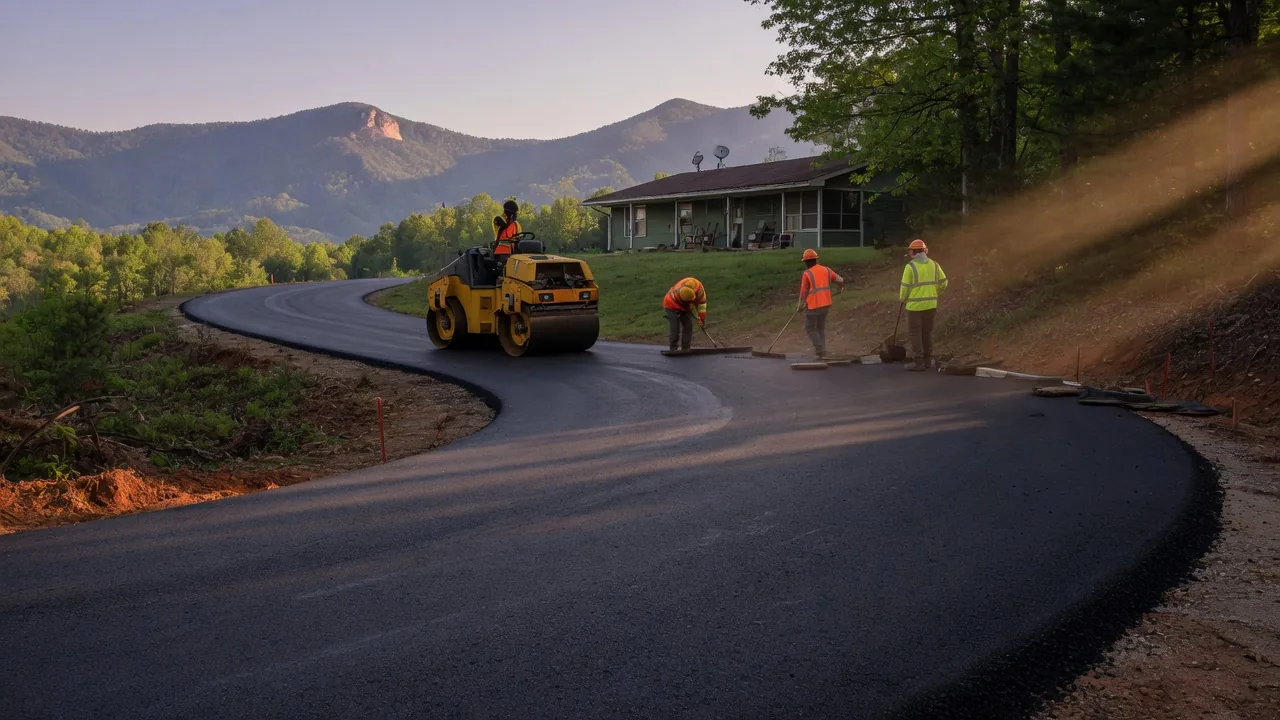
Driveways in this county are drainage projects that happen to be paved. A house pad cut into a hillside above Haw Creek or off a switchback in Leicester sends stormwater down the drive faster than a flat Piedmont lot ever will, and asphalt does not forgive standing water. Where the driveway crown sits, how the edges are built up, and whether the ditch on the uphill side actually carries flow to a culvert and not into the base course — those three details set the real number long before anyone talks about tonnage.
Consider what that looks like on the ground. In the Beaverdam valley west of Asheville, a drive might run 200 feet at a steady 12 percent grade through oak and poplar, and the rain that hits the upper half of that pavement is moving at walking speed by the time it reaches the road apron. If the crown is flat or the shoulder has slumped, that water spreads across the full width of the drive instead of sheeting to one side, and the first freeze-thaw cycle of January opens it up. On a south-facing slope in Fairview, the same rain arrives with less warning because the ground stays warmer and softer longer into winter, and a drive that drains poorly in December becomes a rutted mess by March. The terrain dictates the drainage detail, and the drainage detail dictates the price.
So the honest way to read any quote is by grade and drainage first. A short, gentle run down to a Weaverville road prices like a normal paving job. A steep drive with a blind outside edge and no defined ditch prices like earthwork, and buyers who compare it to a flat-lot bid get a shock. For the broader regional picture, our asphalt driveway cost guide breaks down what each line item means.
What Buncombe homeowners actually pay
Ranges below assume a typical single-family driveway with reasonable access for a dump truck and roller. Tight mountain turnarounds, long runs over 300 feet, and jobs needing a new culvert run higher.
| Scope of work | Typical Buncombe range | What drives it |
|---|---|---|
| Asphalt overlay on sound existing drive | $2,100 – $5,400 | square footage, edge condition, crack prep |
| Full install, new base, moderate grade | $4,800 – $9,800 | depth of stone, compaction, drainage crown |
| Steep or long drive with culvert and ditch work | $9,500 – $18,000+ | cut and fill, pipe size, ditch length, retaining |
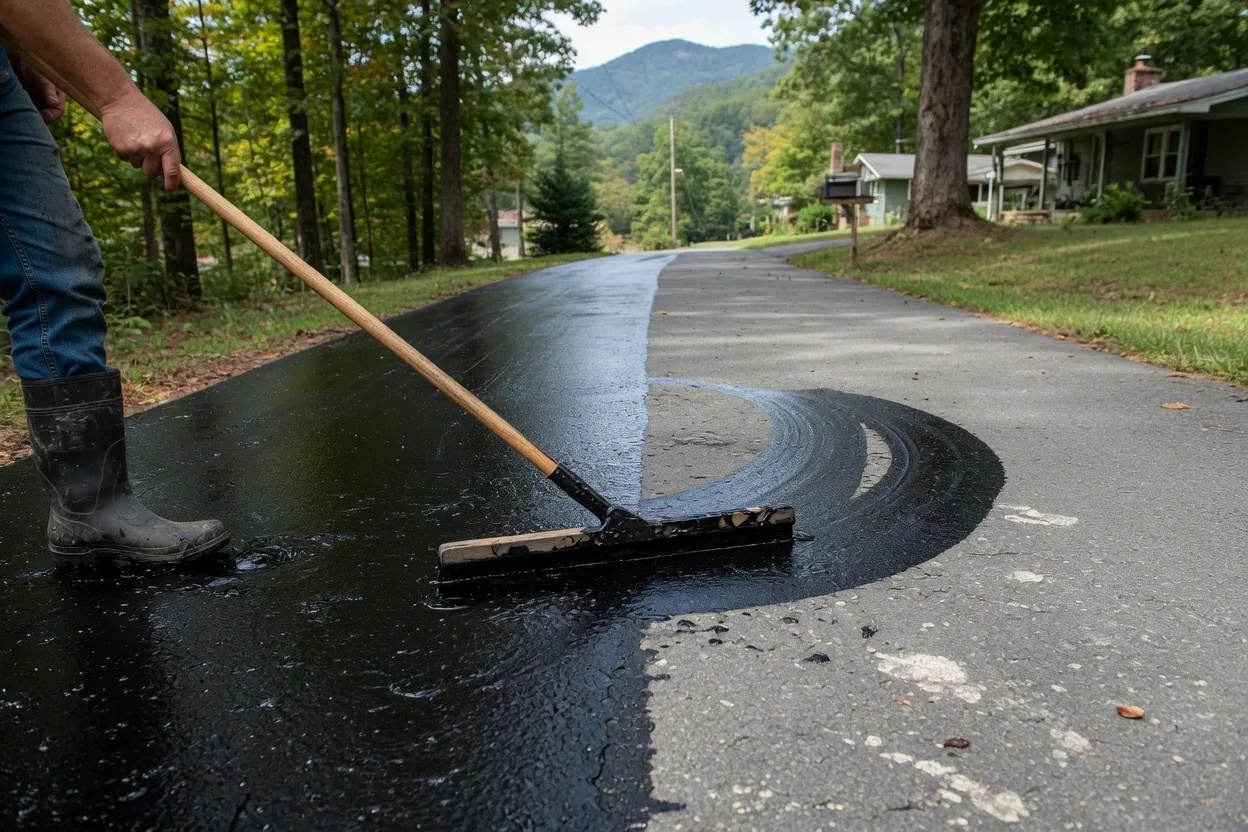
| Sealcoat (per application) | $300 – $1,100 | area, cleaning, crack fill included |
| Patching and pothole repair | $450 – $2,200 | failed area, base repair underneath, access |
Those are working bands, not quotes. A contractor who gives a firm price before walking the drive and watching where water pools is guessing with your money.
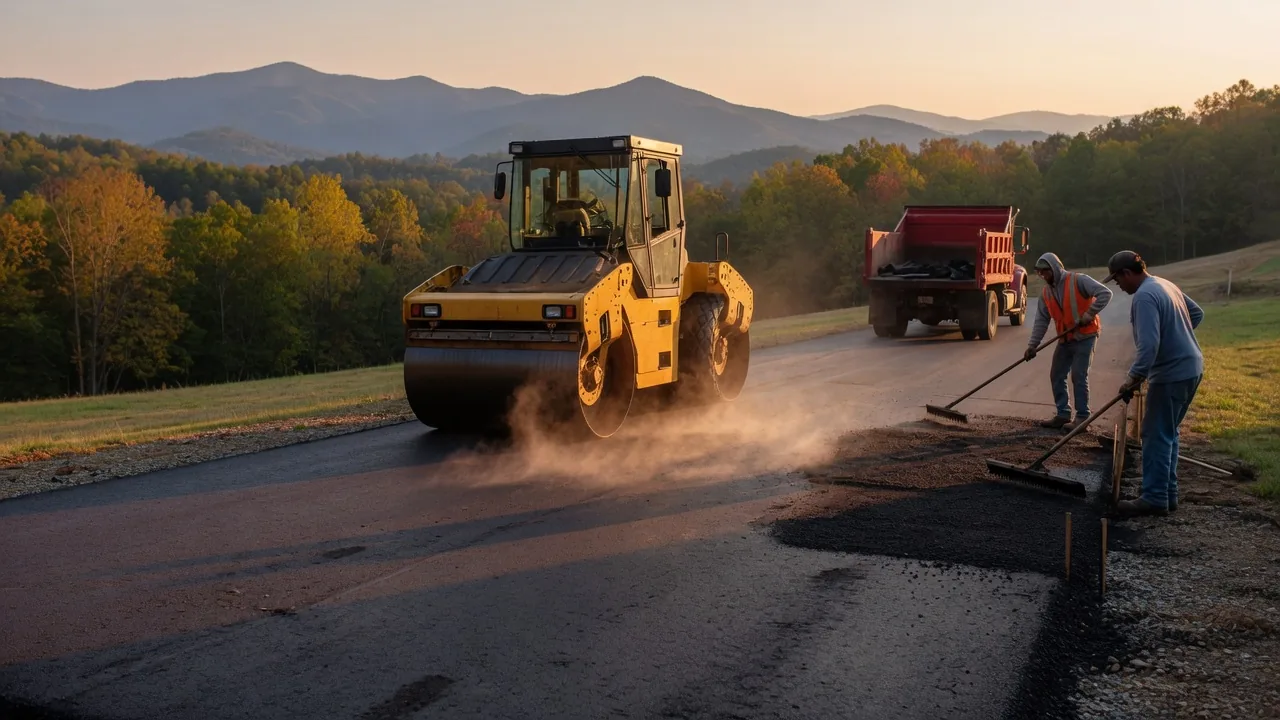
Access matters as much as acreage here. A driveway off a narrow county road in Barnardsville or a switchback in Black Mountain may not let a fully loaded tandem dump truck turn around, and that adds labor for shuttling stone in smaller loads or using a track machine where a wheeled roller would normally go. A drive that can take a full-size roller and a paver in one pass prices differently from one where the crew hand-tamps the edges and finishes with a plate compactor because there is nowhere to turn. Neither approach is wrong — one simply costs more, and the bid should say which one you are getting.
The stone base is where cheap quotes hide
Asphalt is a wearing surface. It carries no load by itself. On the clay and weathered rock subgrades common across Buncombe County, a driveway that skips base depth looks fine for a season and then cracks along the wheel paths. The compaction and stone depth are the parts of a bid you cannot see once the job is done, which is exactly why low bids tend to cut there.
Ask every bidder for the base thickness and the compaction method in writing. Whether it's 4 inches or 8 inches of crushed stone matters more to the twelve-year cost than the asphalt thickness on top. A driveway that gets 4 inches of compacted stone over soft clay in Arden may hold for a few years on a gentle grade, but the same 4 inches on a Leicester hillside will pump and fail within two winters. The stone is not the expensive line, but it is the one that determines whether the asphalt you paid for lasts a decade or two.
Pair the paving with a drainage plan that moves water off the drive and away from the house — our asphalt driveways overview covers how crown, shoulder and ditch work together on sloped lots. If a bidder cannot explain where the water goes after the drive is paved, that is the answer to a question you did not ask.
Permits, stormwater and why the county cares
Most residential driveway paving on your own property does not require a building permit in North Carolina, but any work that changes how water leaves the property or ties into a public road can. Driveways connecting to a state-maintained road need a driveway permit from NCDOT, and Buncombe County reviews stormwater and grading on projects that alter runoff. If your drive crosses a creek or sends concentrated flow toward a neighbor, expect questions from the county and, in some cases, from NC Department of Environmental Quality under state stormwater rules.
Asphalt paving contractors doing larger site work fall under the state's general contractor licensing threshold rules (NC Licensing Board for General Contractors). If a bidder waves off the driveway permit as optional on a road tie-in, that tells you how they handle the rest of the paperwork too.
The County's review is not just about your property. In a watershed county, stormwater from a steep drive can reach a creek or the French Broad River quickly, and state rules reflect that. A project that concentrates flow into a road ditch or a neighboring lot can trigger a complaint and a correction order. Getting the drainage right on the front end is cheaper than fighting a notice later.
How to keep a mountain driveway quote honest
Rain on a graded lot is relentless. Buncombe County sits in a documented storm and flood history — 19 federally declared events touch the county across 1973-2026 — and every one of those storms found the driveways that were built without a drainage plan. Three moves protect you:
- Get the water story first. Before you discuss asphalt, ask each bidder where runoff goes now and where it will go after. A quote with no drainage line item on a sloped lot is not a complete quote.
- Price base and asphalt separately. When you can see the stone number and the asphalt number on their own lines, you can compare bids honestly instead of comparing a number to a number.
- Check against the county range. If a bid lands far outside the table above, make them walk you through it. Sometimes there's a real reason — a long run, a culvert that needs replacing, ledge rock — and how they explain it tells you everything.
A few more questions worth asking: Does the bid specify the asphalt mix and thickness, or just say "asphalt"? Will they compact the stone in lifts, or dump it all and roll the top? Is the ditch on the uphill side included, or is that a separate line? Does the price include cleanup and hauling away spoils? The answers separate a complete bid from a low number that grows.
Wondering how your town compares or what a fresh sealcoat buys you? See our asphalt paving service page for the regional picture and what ongoing maintenance actually costs.