Where the rain goes decides what you pay
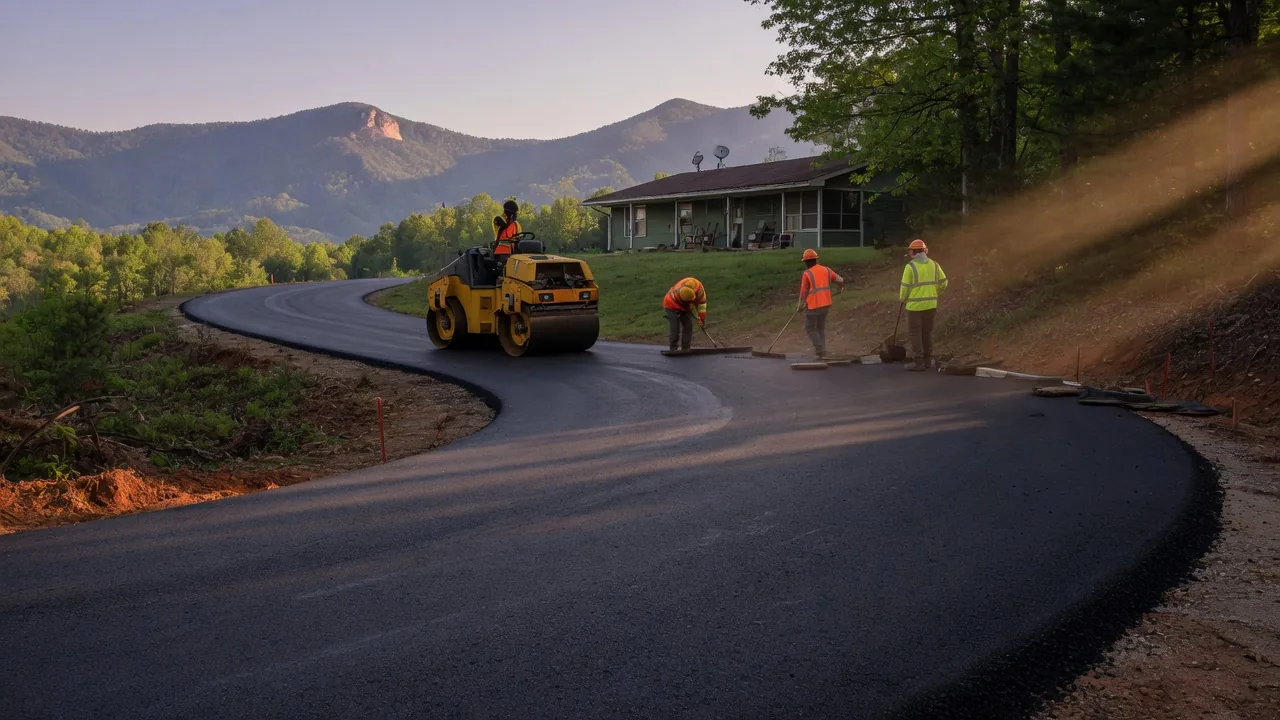
Stand at the bottom of a Waynesville driveway after a summer storm and you can read its future in the water lines. On a lot that climbs off a valley road toward a ridge, pavement is a chute. On a bench cut into a hillside, it is a shallow bowl. Each shape fails in its own way, and each shape demands different work before the first ton of asphalt shows up.
The crown is the first decision. A proper crown sheds water to both edges, but on a single-slope driveway the crown becomes a fall to one side, and that side needs somewhere to send the runoff. In Haywood County that somewhere is usually a vegetated swale or a stone-lined ditch, sometimes an underdrain tied to a daylight pipe. If the edge just spills onto grass, the grass saturates, the shoulder softens, and the pavement edge — the thinnest, most fragile part of the mat — breaks off in chunks by the second or third winter.
That is why the first honest question a paver asks you is not about asphalt at all. It's which way the water runs during a hard rain, and where it currently ends up. If your driveway floods a garage door, carves a gully in the yard, or sheets across the road, the fix starts with grade, not mix design.
How these hills shape the paving scope
Waynesville's terrain — steep grades off the ridgelines, older in-town streets where driveways meet a curb, newer lots cut into fill along the valley corridors — produces scopes that flatland quotes miss. A few honest tendencies:
Steep drives need a textured or heavier surface course for traction, plus serious water controls at the top. Short in-town drives often need hand work at the apron where the driveway meets the street, which is also where access and drainage rules apply. Long rural drives above the valley floor burn more truck time and more tack coat per job, and if the grade exceeds what a loaded truck can safely climb when hot, the crew works in shorter pulls. None of that shows in a price-per-square-foot figure, and all of it shows in the final bill.
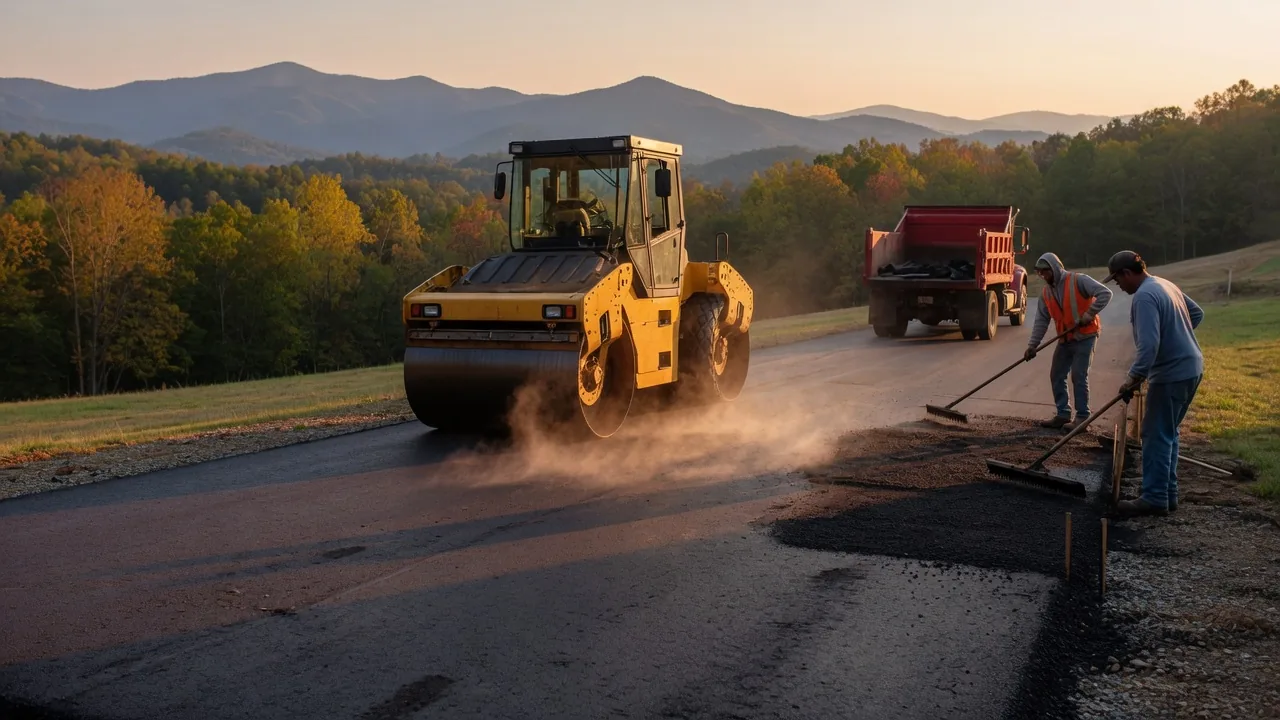
Under it all is base. Mountain subsoil moves with freeze-thaw and moisture, so crushed stone base, proper compaction in lifts, and a binder course matter more here than on flat Piedmont ground. The asphalt driveway guide walks through the layers, but the short version: on a Haywood County slope, the stone under the asphalt is doing most of the work.
The Waynesville price picture
Haywood County pricing tracks the work, not the zip code. See the full Haywood County cost breakdown for the working table; the short version sits below. Treat any bid far under these ranges as a scope problem rather than a bargain.
| Scope | Typical range |
|---|---|
| Reseal / crack fill, standard in-town drive | $350–$1,200 |
| Overlay (new surface course over sound asphalt) | $2,200–$5,500 |
| Full removal and replacement, moderate grade, 400–800 sq ft | $4,500–$9,800 |
| New driveway, steep grade, includes grading, base, drainage | $8,500–$18,000+ |
| Drainage add-ons (swale, underdrain, ditch, culvert) | $600–$4,000 |
Two line items move these numbers fastest: how much base the grade requires, and how far the runoff has to travel before it's off your property. A driveway that needs an engineered drainage solution is a different project from one that doesn't, and the honest quote says so.
Water, frost, and what the rules require
Haywood County's storm record explains a lot of driveway calls: 19 federal disaster declarations touch this county across 1973-2026, and the family is dominated by flooding and severe storms. Every one of those events put water on pavement that was graded for drier assumptions. If a driveway keeps washing out in the same spot, the answer lives in the drainage plan, not in a thicker layer of asphalt.
Two rulebooks genuinely matter here. If your driveway connects to a state-maintained road, the connection point is subject to NCDOT driveway and access permitting — start at the NCDOT site and the NCDOT Connect permit portal. And once a paving job crosses the threshold in the state's contractor licensing rules, the crew doing the structural work needs to be properly licensed — verify through the NC Licensing Board for General Contractors. Neither check is a formality when the failure mode is a driveway that dumps water onto a road or a neighbor.
Choosing a crew on a slope lot
Three checks that separate paving crews who understand these grades from crews who mostly work flat ground. First, ask how they plan to handle water at the top and the edges of your driveway before they talk about asphalt thickness. Second, ask how they compact base on a grade and what equipment they bring when the slope is steep — the answer should be specific. Third, ask for references on driveways with your approximate slope, not just your approximate size.
Then sequence the work correctly. Drainage before asphalt, base before surface, and a cure window that respects the weather. The Waynesville paving contractors page covers how to compare bids line by line, including the line items cheap quotes quietly leave out. A bid that shows grading, stone, compaction, drainage, and asphalt separately is easier to trust than one that shows a square-foot rate and nothing else.