The line items that actually move a Black Mountain tar and chip number
A tar and chip driveway Black Mountain NC quote is really three numbers stacked together, and only one of them is about the chip stone. The first is preparation: how much of the existing surface has to be graded, cut, or hauled away before anything goes down. The second is the binder and aggregate spread — the part people picture when they hear 'tar and chip.' The third is everything at the edges: culverts, water bars, retaining at cut banks, and haul distance.
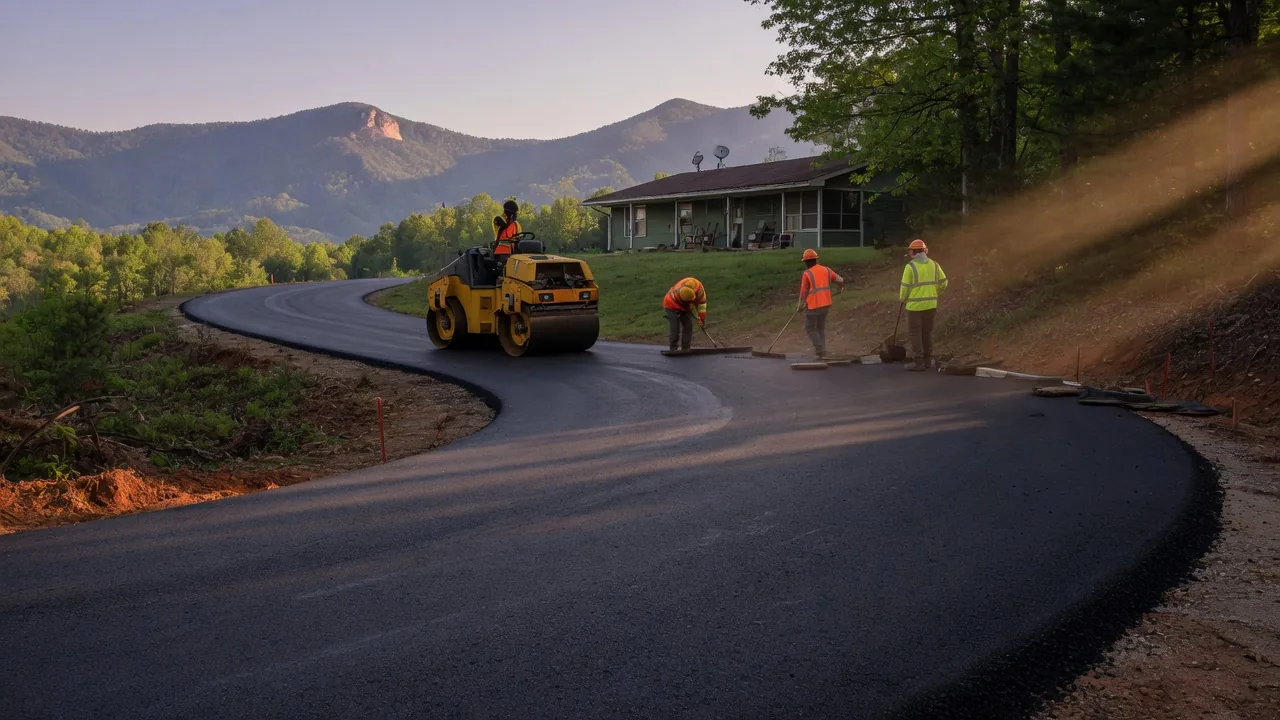
Black Mountain driveways sit on some of the steepest residential ground in Buncombe County. A relatively flat lot off Vance Avenue prices one way; a switchback gravel drive climbing toward the Ridgecrest side prices another, because every square foot carries more prep and more edge work. That is why two quotes for the 'same' driveway size can differ by thousands and both be honest.
The town itself sits in a bowl between the Black Mountains and the Swannanoa River valley, and the terrain changes block by block. A drive off Cherry Street backing into a hillside has different water behavior than a flat gravel pad near the golf course. That distinction is not marketing — it is the main reason two neighbors with identical square footage can pay different amounts, and why the first thing a good estimator does is walk the grade, not measure the area.
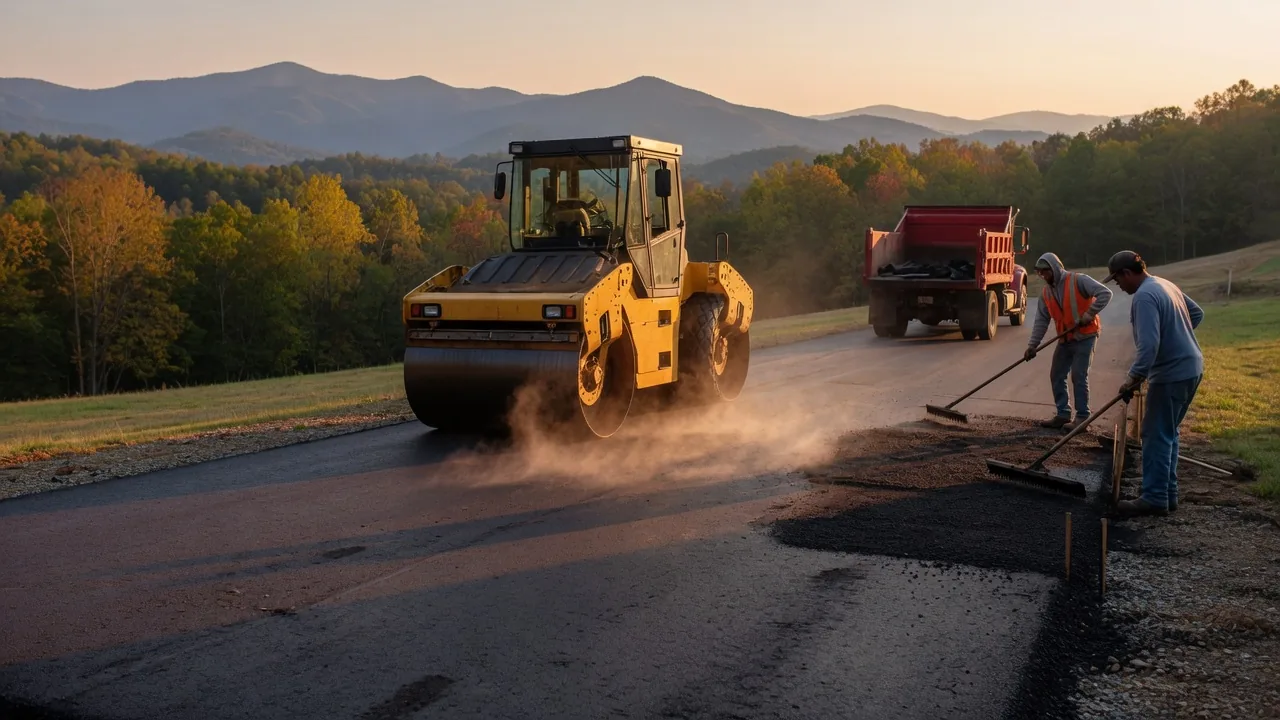
Haul distance is its own line item. Much of Black Mountain is far enough from the quarries serving the Asheville basin that every load of chip stone costs more in truck time than it would on a jobsite in Arden or Fletcher. On a large drive, that freight adds up. It rarely shows as its own line on a bid, but it is baked into the per-square-foot rate, and it is one reason rates here can run above what a flatland market quotes.
What Black Mountain tar and chip pricing looks like line by line
The table below is a typical residential breakdown. Ranges reflect real mountain-lot variability, not fixed rates. For how this service compares against alternatives, see the tar and chip overview.
| Line item | Typical range | What drives it |
|---|---|---|
| Grading and sub-base prep | $1.00–$2.25 / sq ft | Slope, existing material, how much has to be removed |
| Binder and stone (tar and chip) | $1.25–$2.50 / sq ft | Stone size and spread rate, number of passes |
| Culverts and drainage | $600–$2,800 per driveway | Uphill runoff, road-side ditch, crossing size |
| Edge and shoulder work | $300–$1,500 | Cut banks, retaining, hauling of spoil |
| NCDOT right-of-way apron | varies | Whether the drive meets a state-maintained road — permit through NCDOT Connect |
Add the line items for any single drive and you land where the market is: roughly $2.50 to $5.50 per square foot. A 1,200 sq ft drive is a smaller job with the same mobilization; a 3,000 sq ft lane up a grade is where the ranges push to the top. If you want to compare against a different surface before deciding, the Buncombe County asphalt cost breakdown runs the same exercise for hot-mix.
Spread rate is the line item homeowners most often overlook, and it is where two bids can quietly diverge. Chip stone applied thin covers the binder but does not embed evenly, and the surface starts shedding stone within a season or two. A crew that has worked mountain grades knows to set a heavier spread rate on the steeper pitches and a lighter one on the flatter apron, because the binder needs enough aggregate to lock before traffic touches it. That judgment shows up in the price, and it is worth asking about directly.
Number of passes matters too. Some drives get one binder pass and one chip pass; steeper or more trafficked drives can take a second binder and chip cycle, which adds cost but also adds years. Understanding how many passes your bid includes is a fair question, and a straight answer tells you a lot about how the crew thinks about longevity.
Where the money hides on a steep lot
Two Black Mountain realities show up on every driveway estimate. First: water. A driveway cut into a slope collects runoff from everything above it, and tar and chip will wash out if water is not routed around or under the surface. Drainage line items are not upselling — they are what keeps the job from failing after the first hard rain. The National Weather Service's mountain forecasts for this part of Buncombe County reliably include heavy convective storms, and a driveway that was fine in August can be a gully by October.
Storm history is not hypothetical here. Buncombe County has recorded 19 federal disaster declarations across a 1973-2026 record span, and a meaningful share of those involve flooding or severe water damage. Roughly translated: water management on a mountain driveway is a design requirement in this county, not an optional upgrade any honest estimator should treat as an upsell.
Second: access. If a concrete or dump truck cannot comfortably reach the work area, everything comes in smaller loads, and labor hours go up. That is a structural cost difference on mountain roads, not a negotiation trick. Ask any contractor how they plan to deliver materials before you compare bids.
There is a third factor that quietly drives price: how much spoil leaves the site. Cutting a driveway into a hillside generates dirt and rock that has to go somewhere. On flatter ground it can often be spread nearby; on a tight mountain lot with neighbors close, it gets loaded and hauled, sometimes miles away. Hauling spoil is one of the least glamorous line items on a bid and one of the most honest indicators of whether the estimator actually walked your lot or just plugged your square footage into a rate.
What the state expects of a driveway contractor here
North Carolina draws a line at what a general contractor can take on, and driveway work near a state-maintained road involves a state permit. If a contractor's scope crosses the threshold set by the NC Licensing Board for General Contractors, verification is public record and worth a two-minute check. Any work that touches the NCDOT right-of-way — widening an apron, adding a culvert under a state road — is a permitting question for the state, not the town.
That matters more than usual in Black Mountain, where roads like Montreat Road, Flat Creek Road, and NC 9 serve a mix of through traffic and driveway access. A culvert that is undersized for the uphill drainage above your drive can flood the state road itself, and that becomes a state problem, not just yours.
For the surface itself, tar and chip is not a load-rated structural pavement, so it does not carry the same code triggers as a building foundation. But if the driveway is serving a structure that requires site drainage, the drainage side of the work falls under the residential code overseen by the NC Office of State Fire Marshal code officials. That is a plain-language reason to insist on a real drainage plan, not just a fresh chip surface.
Contractor licensing, in turn, is governed by the state board, and the dollar threshold at which a project must be run by a licensed general contractor is published in their rules. If a local bid sits near that line and the contractor hand-waves questions about licensure, that hand-waving is the answer. A legitimate outfit will point you to the public record without hesitation.
Getting a usable Black Mountain quote
A bid that only states a price per square foot is not finished. Ask for the prep scope in writing (what is cut, what is hauled, what stays), the stone size and spread rate, the drainage plan, and how the drive ties into the road. The Black Mountain paving contractors page covers what a qualified local crew looks like and what to expect from a first site visit.
One honest note about tar and chip: it is not a forever surface. Under mountain sun, snow-plow traffic, and freeze-thaw cycles, it wants a fresh chip seal every few years. That maintenance cost is real and belongs in your five-year thinking. A crew that tells you that up front is a crew worth talking to.
It also pays to think about timing. Cooler shoulder seasons can work well for tar and chip because the binder sets quickly and the surface is less likely to pick up on tires, while mid-summer heat can soften a fresh surface during its first curing days. Freeze-thaw between November and March is the enemy of any chip surface here, so a fall install wants enough warm weather ahead of it to cure before the first hard freeze. Ask your contractor how they plan around that window.
Finally, treat the quote as a snapshot of a real relationship. A driveway here is re-surfaced every few years regardless of who installs it, so the question is not only 'what will this cost today' but 'who do I call in three winters when the edges need work.' The crews that do well in Black Mountain are the ones you see on neighbors' drives, season after season, answering the phone.