What makes Laurel Park driveways their own kind of job
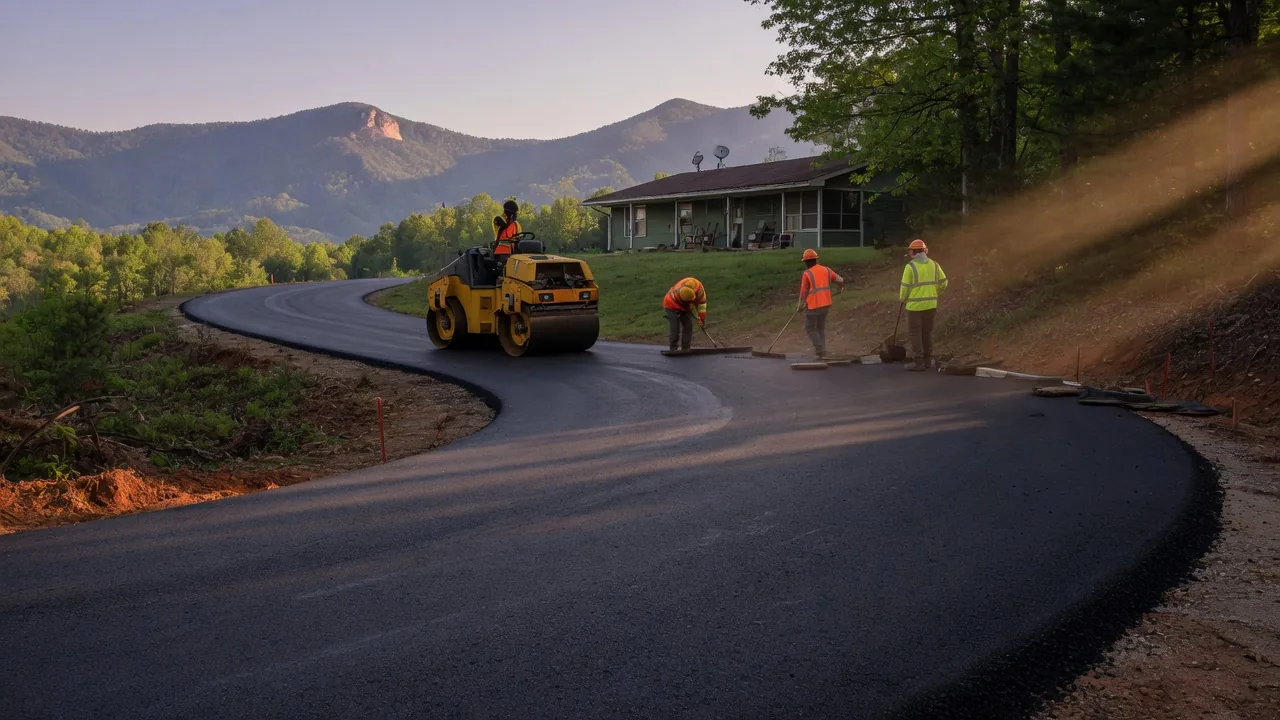
Laurel Park is a small Henderson County town folded into the southern edge of Asheville's mountain frame, and its housing stock shows it. Most of the town climbs — lots off Laurel Park Highway, Fleetwood Plaza, and the roads threading toward Jump Off Rock sit on grades that would be unbuildable in flat country. Driveways here are short and steep, often rainbowed or switchbacked to make the climb, and many were poured or paved decades ago when the houses were built and have been patched ever since.
The result is that a Laurel Park driveway isn't priced like an Asheville driveway of the same square footage. A 300-foot run on a 15% grade carries more subgrade correction, more edge support, and far more drainage work than the same length on level ground in West Asheville. Add the tree canopy — oak, pine, and poplar shading most of these lots — and you get the two failure modes we see most: shaded asphalt that never fully cures season to season, and roots quietly lifting and cracking the surface from below.
Reading the pavement before anyone quotes a number
Not every cracking driveway needs a full tear-out, and not every quote should assume one. The tells worth walking with a contractor:
Alligator cracking (the interconnected web pattern) usually means the base has failed, not the asphalt — overlay it and the cracks telegraph through in a season or two. Longitudinal cracks along the wheel paths are often a paving-joint or compaction issue. Edge crumbling on these narrow mountain drives is almost always a missing or failed shoulder, which lets the whole mat migrate downhill over time. Puddling at the low side of a slope is a grading problem that no amount of new asphalt fixes on its own.
Any honest scope in Laurel Park starts with what's underneath. The asphalt is the visible part; the base, drainage, and slope containment are what actually hold a driveway on a mountain lot together.
The Laurel Park price picture
Use the table below as a working frame, not a bid. The Henderson County cost breakdown covers the line-item logic in fuller detail, and the general driveways guide explains how scope tiers differ across the region.
| Scope | Typical range | What drives the number |
|---|---|---|
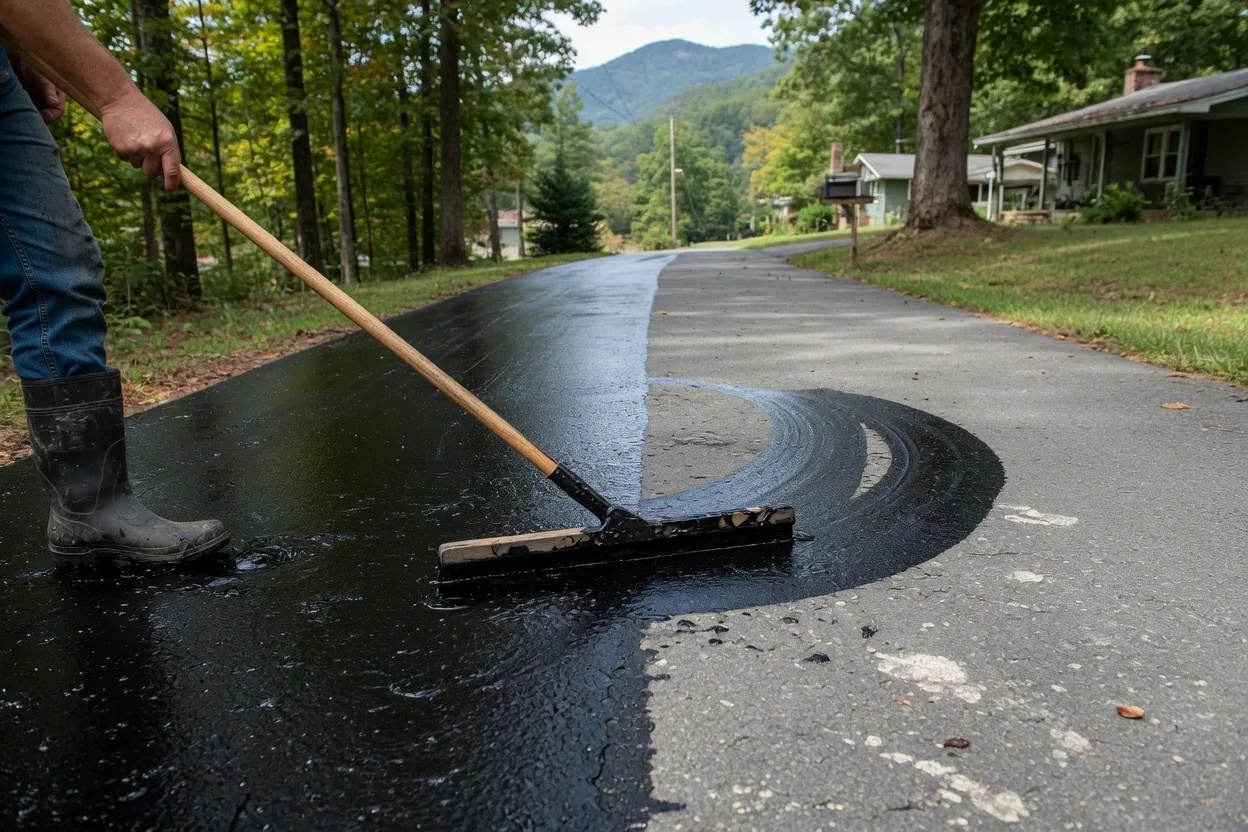
| Crack fill and sealcoat (maintenance) | $400–$1,200 | Linear feet and number of cracks; whether prep includes cleaning and routing |
| Overlay over sound asphalt (1.5"–2") | $2,200–$5,500 | Square footage, existing surface condition, edge milling |
| Full replacement, standard slope | $3,800–$8,500 | Tear-out and haul-off, base depth, drainage allowance |
| Full replacement, steep or switchback lot | $6,500–$12,000+ | Grading, retaining or edge support, erosion control, equipment access |
| Drainage correction as a standalone line | $1,200–$4,500 | Catch basins, French drains, culvert sizing, discharge point |
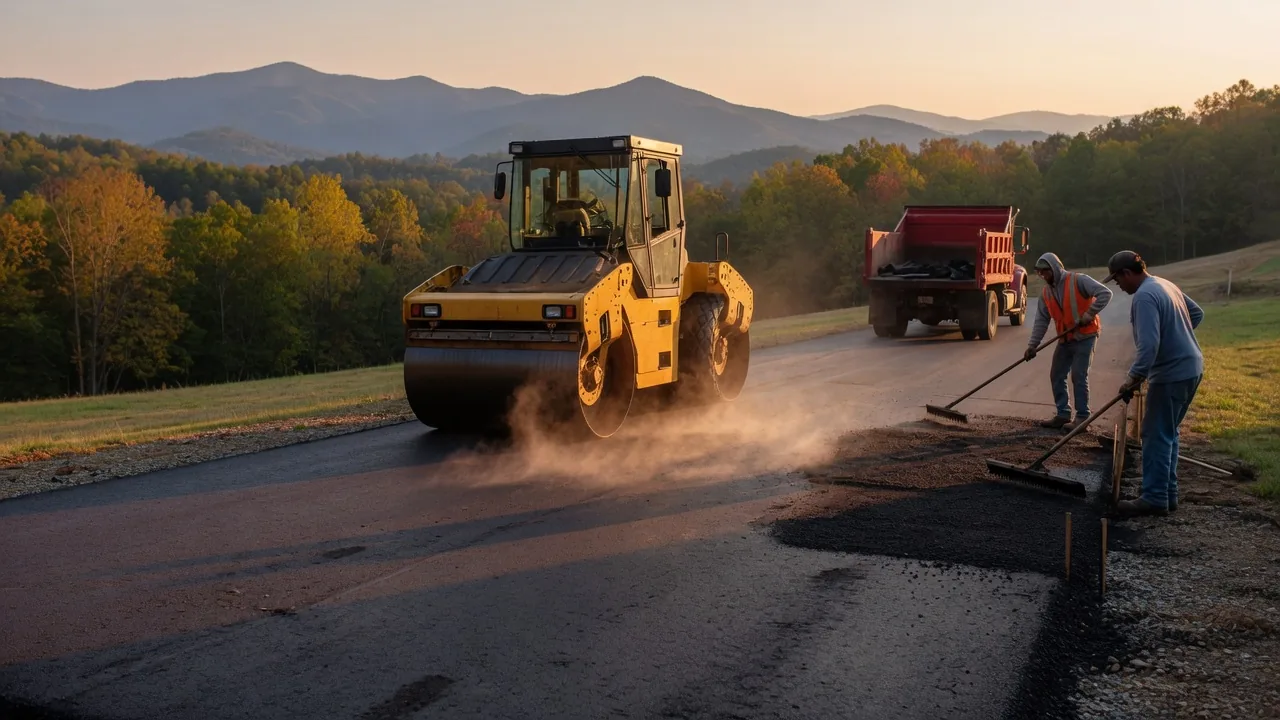
Mobile home and equipment access is a real cost line on these lots. If a dump truck or paving train can't physically reach the work area, the quote has to account for smaller equipment and longer cycle times — and a bid that ignores that reality is a bid that will change once the crew shows up.
Water, grade, and the rules that follow them
Henderson County's storm record matters here more than most homeowners realize: 16 federal disaster declarations touch this county across 1978-2026, and the pattern is storm-driven. On a steep Laurel Park lot, that translates directly into driveway design — where runoff goes, how fast it goes, and what stops it from taking the base with it. Before anyone sells you a new mat of asphalt, the drainage question needs an answer.
Two regulatory touchpoints are worth knowing before work starts. Any contractor on a job of meaningful size in North Carolina should be operating under the state's general contractor licensing framework — the NC Licensing Board for General Contractors publishes the current thresholds at nclbgc.org. And if the work touches the public right-of-way — a new driveway connection, a widened apron, anything that changes how your drive meets the street — the state DOT's driveway and street access permit process at ncdot.gov applies, with applications handled through NCDOT Connect. Getting that piece sorted early avoids a stalled job mid-pour. If you want to see how the local contractor market looks in this town specifically, the Laurel Park paving contractors page walks through what to look for.
Sequencing work on a mountain lot
On steep Laurel Park driveways, the order of operations matters as much as the materials. Base repair and drainage correction happen first — always. Then edge support or retaining, if the grade calls for it. Only then does asphalt go down, and it needs to go down in weather that lets it cure: cool mountain mornings in shoulder seasons can extend cure time and shift scheduling in ways flatland crews don't always anticipate.
That sequencing is also the best screening question for a contractor. Ask how they plan to handle water before, during, and after the pour. The crews that answer that in specifics are the ones who fix driveways; the ones who talk only about thickness and mix design are selling a surface. Our asphalt driveways guide covers the full scope tiers, and the Henderson County cost breakdown puts the ranges above into line-item context.