How the river bend shapes local driveways
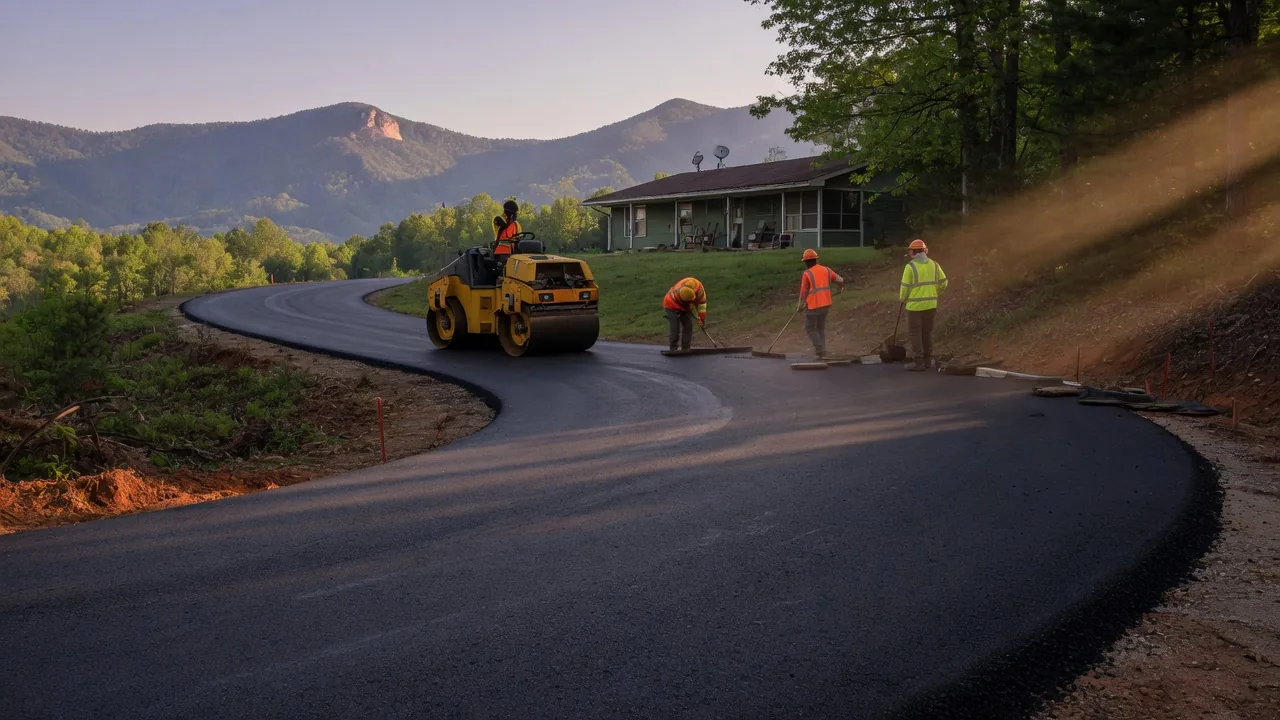
Hot Springs sits wedged into a bend of the French Broad where the valley floor is barely wide enough for the depot, a few blocks of downtown, and the road that follows the water. Every driveway in town is a response to that squeeze. Behind the storefronts on Bridge Street you find short, flat pads poured tight against the hillside. Go up River Road or over toward the Spring Creek and Laurel Valley sides and the driveways stretch into long, pitched runs that climb switchbacks through oak and poplar. Those two kinds of driveway are not the same job, and a quote that treats them as one is a quote you should question.
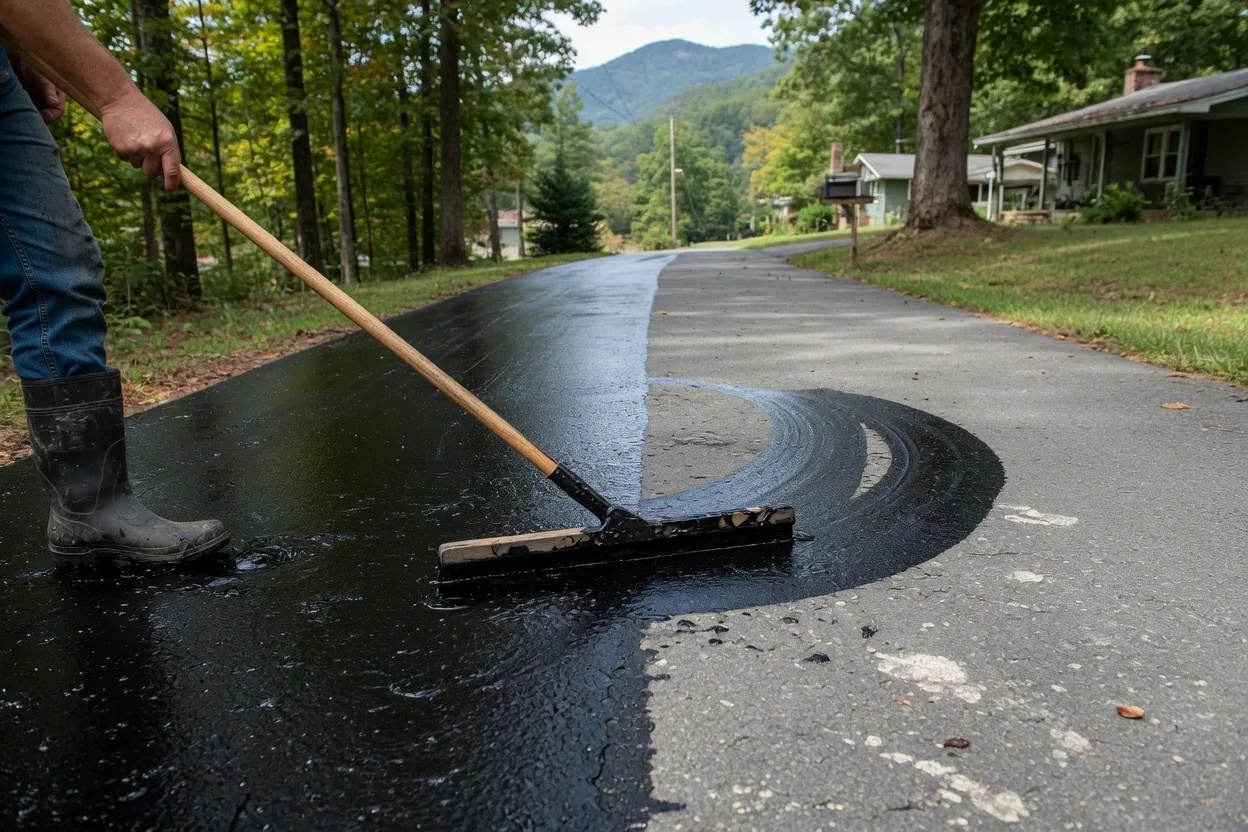
The older pavement near the depot has been baking in the sun for decades, and it takes sealer unevenly, with lighter patches where the binder has oxidized hardest. That is normal for aged asphalt and not evidence of a bad application. Newer builds up on the ridges tend to be longer, cleaner, and more exposed to afternoon sun and runoff, which changes both how much material a drive drinks and how carefully the crew has to work the squeegee on a grade.
What drives the price on a Madison County slope
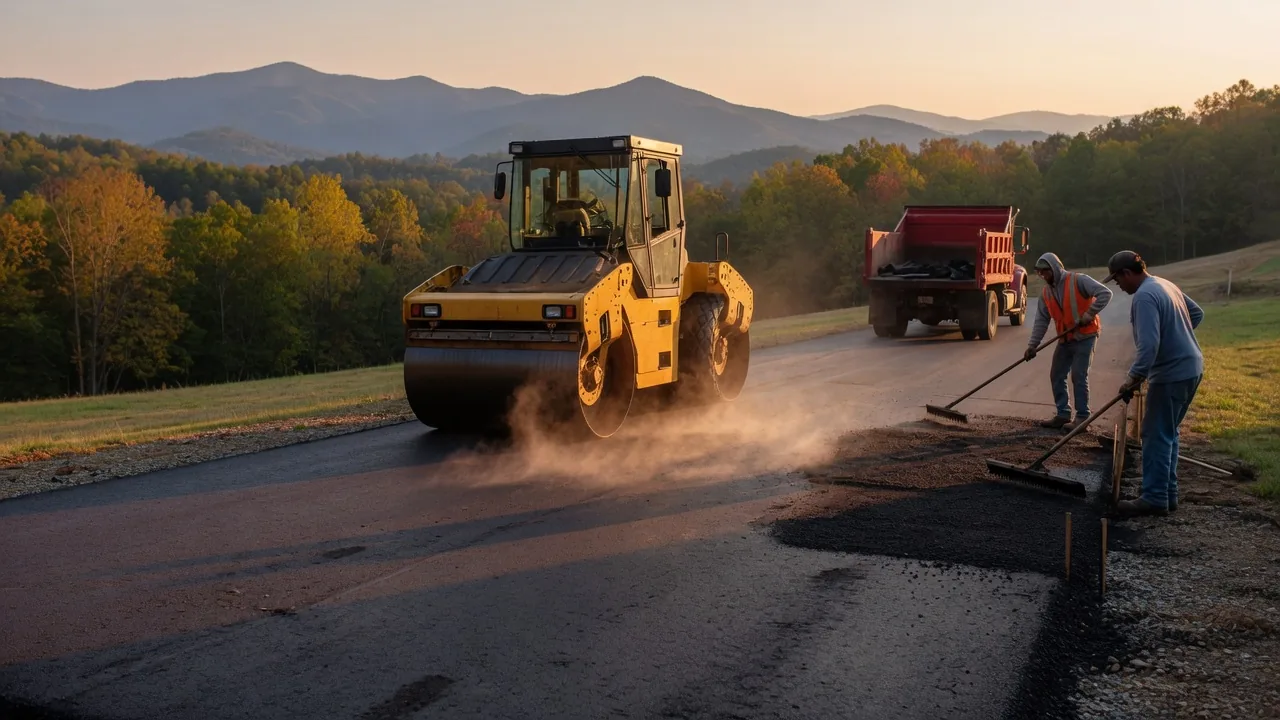
Madison County work prices differently than flat-terrain jobs in Buncombe. Slope forces slower application and tighter squeegee control. Length multiplies material by the linear foot. And the fall leaf load here is genuinely heavy, which means oxidized, raveled edges that need crack filling before any sealer goes down. Sealing over open cracks is a cosmetic patch that fails by the first hard freeze, and this valley gets plenty of those. The Madison County cost breakdown has the working line items; the table below is the short version.
| Scope | Typical price range |
|---|---|
| Crack fill and spot prime only | $200-$550 |
| Short residential driveway, standard prep | $500-$1,100 |
| Long or split-level mountain drive | $1,200-$2,800 |
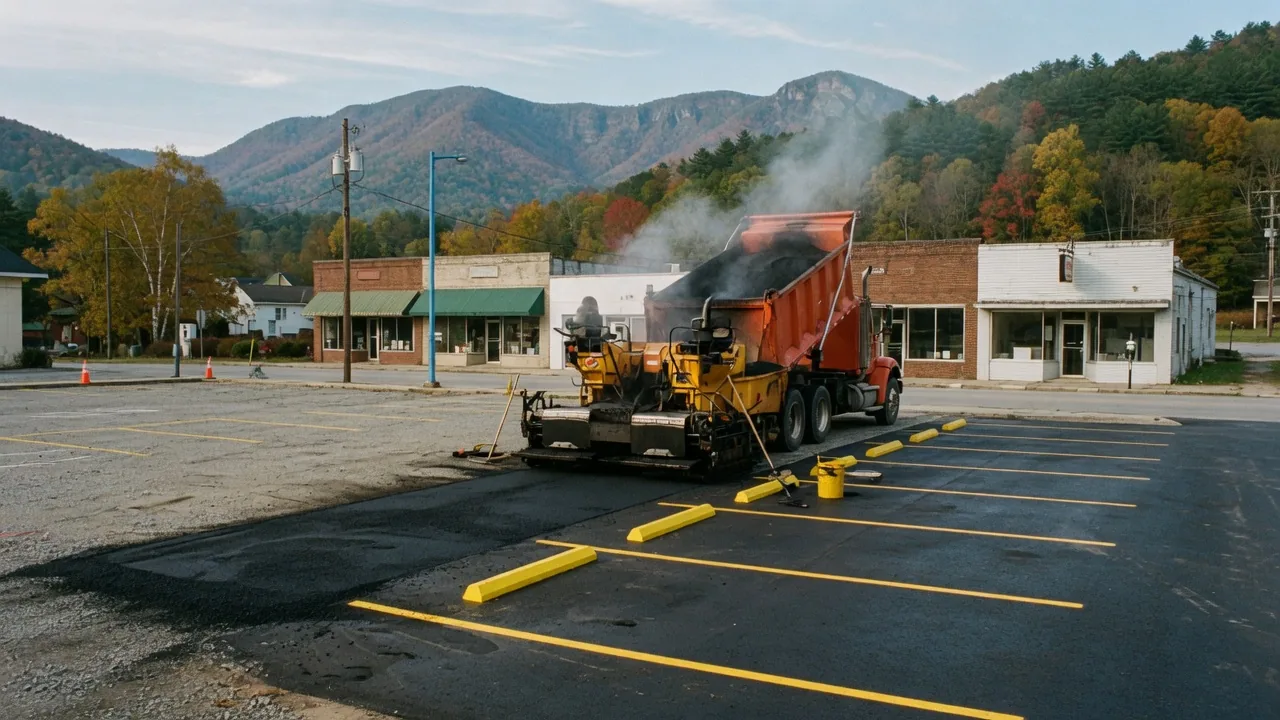
| Commercial lot or shared private drive | $2,500-$6,500+ |
Those are local bands, not Asheville numbers. Hot Springs is small enough that many crews travel in from Marshall, Weaverville, or further out, and a fuel-and-travel charge can legitimately show up on a quote for a job that would be routine a few miles down the road. A shared private drive off River Road that serves several households is a different animal again, and worth pricing as one contract rather than four.
Water, not traffic, is the real wear
Federal disaster history explains why sealcoating matters more in this valley than the modest traffic would suggest: 21 declared events touch Madison County across a record spanning 1978-2026, and they lean heavily toward flood and storm damage. A sealcoat is not flood control, but it does slow surface water from migrating into the asphalt mat and softening the base, which is the failure mode that turns a driveway into a re-grading project. The National Weather Service keeps the regional rainfall record that makes clear why prep and drainage grading are not optional line items in this county.
If the driveway already ponds after a storm, sealing it first is backwards. Fixing grade or cutting a drainage swale belongs at the front of the scope, and a bid that skips it is quoting a different problem than the one you actually have. On the steepest hillside drives, a simple water bar or turn-out at the top can do more than any sealer ever will.
The prep that separates two years from ten
The minimum credible scope: scrape and blow the surface clean, kill vegetation in the cracks, fill cracks wider than about a quarter inch, spot prime oil-stained areas so sealer actually bonds, then apply sealer in the manufacturer's stated number of coats at the stated dilution. Skipping the prime on a stained drive is a shortcut you will see within one winter as peeling patches. The sealcoating service overview walks through what proper prep includes, and it's worth reading before a crew arrives so you know what you should be watching for.
On a steep grade, one heavy coat is worse than two thin ones. Thin coats cure evenly; thick coats can skin over on top while staying soft underneath, which is how sealer peels off in sheets on a hot July afternoon. If a bidder can't tell you the coat count, they probably don't have one to give. Environmental rules around sealer products and runoff are worth a glance too, since the EPA tracks the coal-tar and asphalt-emulsion standards that affect what can be applied near a waterway like the French Broad.
Vetting a crew in a town this size
North Carolina draws a licensing line above certain job values, so the NC Licensing Board for General Contractors is the first check for any project crossing that threshold. Below it, reputation and local references carry the weight, and in a town this small that's easy to verify because neighbors watch each other's work. Three questions worth asking: how many coats, what's the sealer cut, and what does their prep include on a sloped drive.
If the work touches a state-maintained road, expect a separate approval from the North Carolina Department of Transportation before any apron work begins, and plan the schedule around that. When you need names, the Hot Springs paving contractor list covers who is working this side of the county. For any structural work beyond a sealcoat, it's also worth checking the North Carolina Department of Insurance, Office of State Fire Marshal for code references, since driveway and access standards can matter for fire apparatus turning radius on a long private drive.