Canton lots were built for narrower trucks and softer ground
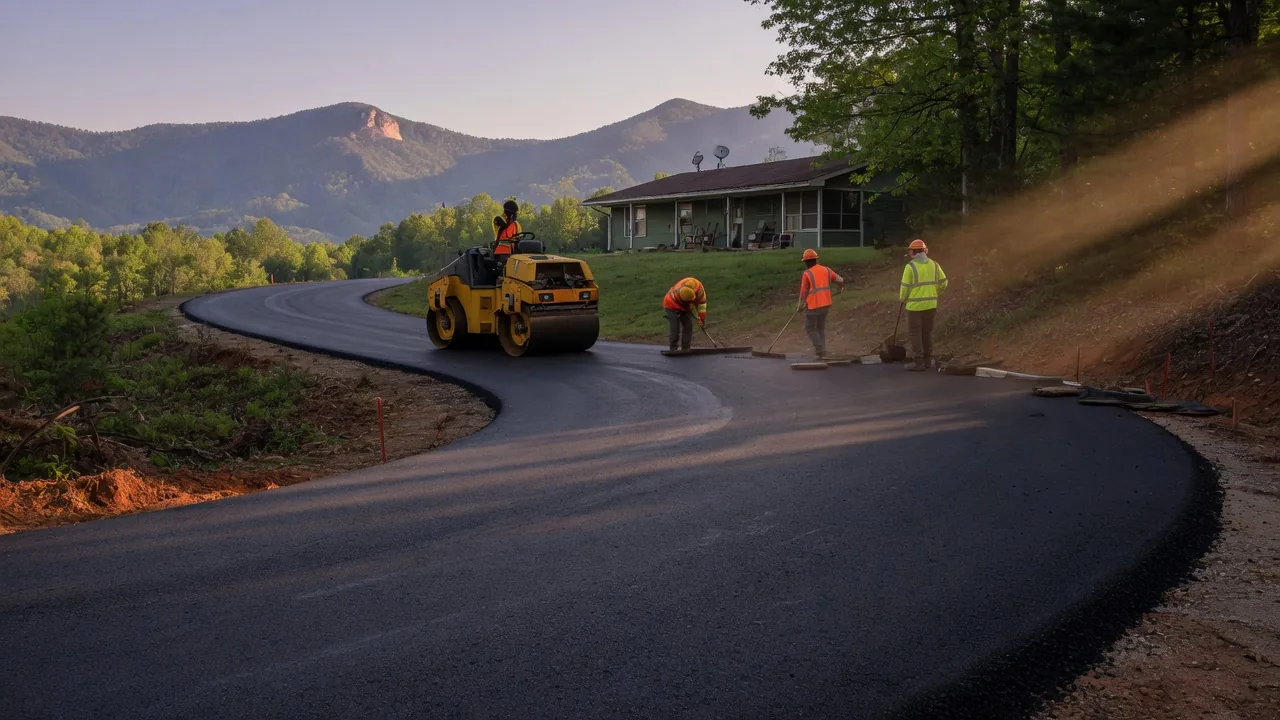
Downtown Canton grew up around the mill, and the pavement around it reflects that: tight lots behind older commercial buildings, side-street parking that was widened a bay at a time, and long single driveways climbing away from the Pigeon River bottomland. Much of this ground is river-adjacent or reclaimed fill, and it drains and settles differently than solid upland. A paving contractor pricing Canton has to ask two questions a flatland contractor never asks: how steep is the fall to the street, and how deep is the stone under the asphalt before we touch anything.
Compare that to a Waynesville lot on a graded bench, and the estimate looks different for reasons that have nothing to do with the contractor's truck. Long mountain driveways, hillside gravel pads that get used as parking, and small commercial lots behind older storefronts are the bread and butter of paving work here — each one a different repair conversation.
The neighborhood pattern matters as much as the geology. Canton's older residential blocks sit close to the river and to the rail line, so a lot that looks simple from the street may have a narrow throat, an alley-width entrance, or a shared drive that two property owners use and only one maintains. Contractors working these blocks figure in tighter turnarounds, smaller equipment, and hand work where a full-size paver can't fit. Hillside lots above the valley floor present the opposite problem: enough grade that the mix has to be placed carefully so it doesn't creep, and enough drop that a load of stone base has to be hauled in and tailgated rather than dumped and spread.
Another Canton signature is the mix of pavement ages on a single property. It's common to find a front apron poured decades ago, a mid-lot addition from a later era, and a gravel back pad added last. Each section has aged on its own schedule, so the honest scope is rarely one uniform overlay. A good walk-through separates the pavement that still has structure from the pavement that's just holding on, and prices the work in zones instead of quoting one blanket number that hides the weak spots.
What actually drives the price in Haywood County
Three cost movers dominate: the size of the lot in square yards, how much of the existing surface can be salvaged (mill and overlay versus full removal), and drainage. A lot that ponds after rain needs the grading corrected before asphalt goes down, or the new surface fails under the same water that ruined the old one. Where the base is failing — rutting, alligator cracking, soft spots that sink when a loaded truck rolls over — the fix is repair of the stone, not more asphalt on top. See the Haywood County asphalt cost breakdown for the driveway-scale version of the same math.
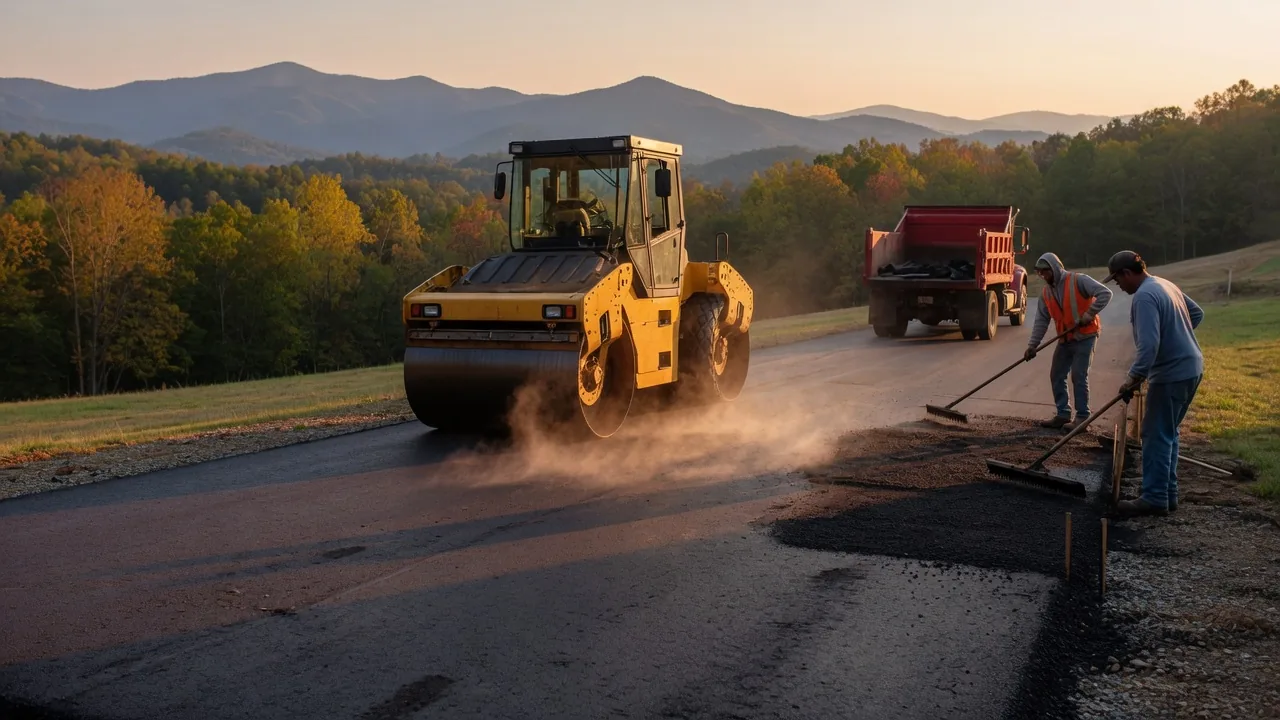
Access is the fourth mover that catches people off guard in Canton. If the only way into the lot is a narrow side street or a shared alley, the crew loses production time and sometimes needs smaller equipment, and that labor works its way into the bid. A lot that a tri-axle can back straight into costs less per square yard than one where stone and asphalt have to be shuttled in small loads. Slope adds cost too: a steep lot needs more careful grade work, sometimes a transition apron at the street to keep the bumper from dragging, and edge treatment where the pavement meets the hill.
Timing is the last honest variable. Asphalt plants serve the whole region, and a small Canton job has to fit between larger pours on the plant schedule. That doesn't always raise the price, but it does affect scheduling, and a bid that pretends otherwise is guessing. Most reliable contractors would rather tell you the work will land in a two-week window than promise an exact morning.
Scope-to-price table
| Scope | Typical range | What it includes |
|---|---|---|
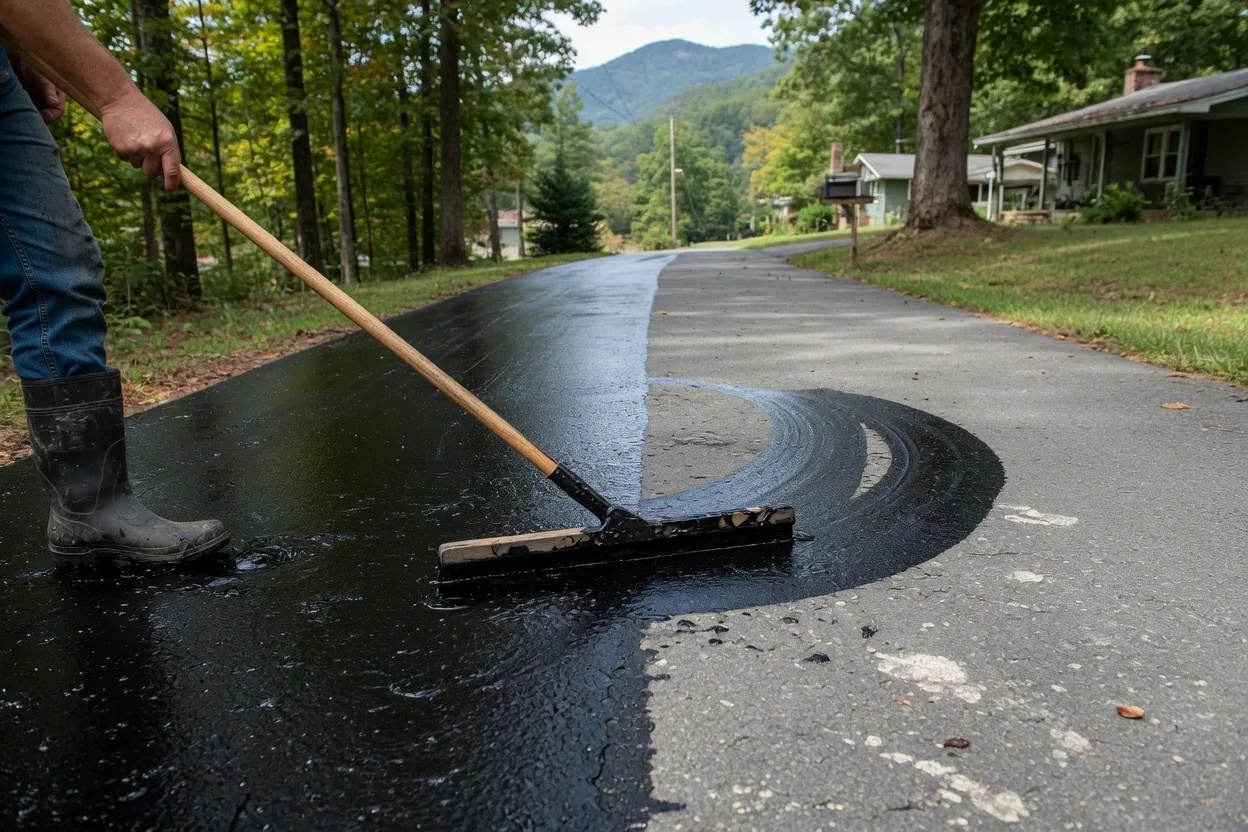
| Sealcoat refresh (small lot) | $650–$2,200 | Cleaning, crack fill, one or two coats |
| Crack fill & patching only | $450–$1,800 | Hot-pour crack seal, localized patching |
| Mill & overlay, small lot | $2,400–$7,500 | 1.5–2 in. mill, new surface course |
| Mill & overlay, mid-size lot | $9,000–$24,000 | Greater area, tack coat, full re-surface |
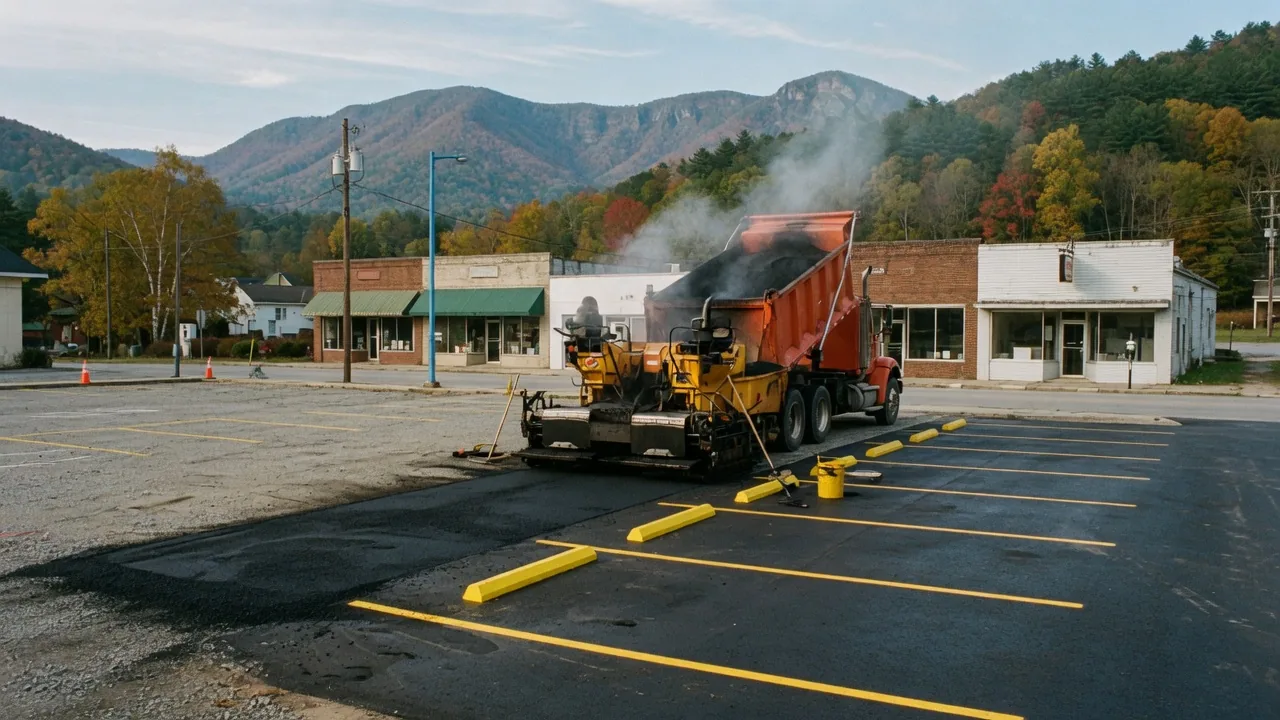
| Full-build commercial lot | $28,000 and up | Grading, new stone base, asphalt, striping |
| Drainage correction | quoted separately | Grading, inlets, culvert, catch basins |
Treat any bid as incomplete if it doesn't say what happens to the base and where water goes. The NC Office of State Fire Marshal code side matters for commercial lots — a repaved lot must still meet the code access and turning requirements it was designed to, and that's a design question, not just a paving one. Striping is part of that: stalls, aisles, and fire-lane markings are governed by code and by how the building is used, and the layout shouldn't drift just because the surface is new.
Read the table as a starting point, not a quote. Two Canton lots the same size can land in different bands because one drains and one sits in a bowl, or because one has an intact base and the other is stone over soft fill. The bands are honest ranges for the region; the walk-through is what narrows them.
Stormwater is the deciding factor in Canton
The federal disaster record explains why local paving bids keep coming back to drainage: 19 declared events touch this county (1973-2026), and the recurring pattern is rain — flash flooding off the ridgelines and backwater in the valley. Every one of those events pushed water at pavement that was laid without any thought for it. Before anyone sells you a new surface, the questions are where the uphill runoff enters the lot, whether the slope carries it to a legal discharge point, and how quickly the lot sheds a hard summer storm. The National Weather Service records for the region give a fair picture of what a real rain event looks like here, and any drainage plan worth paying for should account for it.
In practice, that means most Canton drainage fixes start uphill of the asphalt. A swale cut along the high edge, a shallow ditch that carries sheet flow around the lot instead of across it, or a small culvert under the entrance apron often does more than any surface repair. Where the lot sits low and the street is the only outlet, an inlet and a short run of pipe to daylight may be the only honest option, and that work is quoted separately because it involves excavation, not paving.
Water also explains the failure patterns residents see. New cracks that run along the same line every year, a soft spot at the bottom of a slope, or a corner of the lot that stays wet long after a storm all point to drainage rather than a bad batch of asphalt. The EPA stormwater resources are a useful plain-language reference for how runoff is supposed to be managed, and any contractor who shrugs off the water question is telling you something about how the job will age.
Permits, licensing, and who to let bid
Paving a parking lot is mostly not a permitting event — but the moment you change the entrance, add a curb cut, or push water toward a public street, you're in NCDOT driveway permit territory, and that requires a plan. See NCDOT's permit portal for what a driveway or access change actually requires. On the contractor side, North Carolina's general contractor licensing rules apply once a job crosses the threshold for a building or sitework project — ask any paving contractor who bids a large job for their license status and their references on lots your size.
For a straight re-surface inside the property line, most Canton jobs don't need a permit, and that's worth saying plainly. What they do need is a clear scope: what's being milled, how deep the base is being rebuilt, where the water goes, and what happens to the stripes. A short written scope protects both sides, and it's the document you compare bids against rather than a single bottom-line number.
Ask also about insurance and about who does the work. Subcontracted striping is normal; subcontracted grading on a steep lot is worth knowing about in advance, because the grade is what the asphalt sits on. And for commercial properties, keeping the accessible parking and fire-lane layout to code is a building-safety issue, not a cosmetic one — the International Code Council publishes the model codes that most North Carolina jurisdictions build from, and the lot has to keep meeting them after the repave.
For crews working in the Canton area, see the Canton paving contractor directory and the parking lot paving overview for what a proper scope includes from the first walk-through to the final stripe.