The shapes of driveways you actually see around here
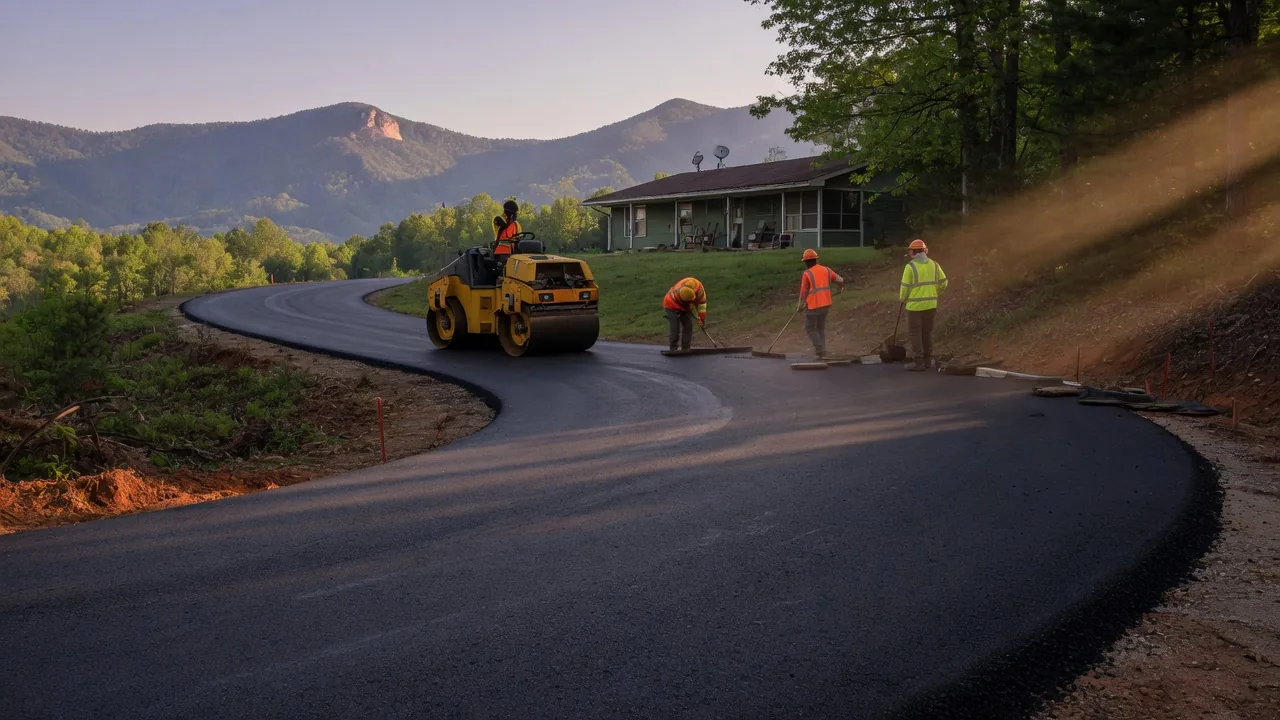
Stand anywhere along Soco Road on a summer morning and you can count the driveway types in a single glance. There is the short flat gravel apron that meets the highway almost level, the long wooded pull that climbs a ridge in one steady pitch, and the switchback that folds twice before it reaches a house. Some lots off the older lanes near town have driveways barely longer than a parking pad, while ridge properties above Jonathan Creek may run several hundred feet with significant elevation gain. That variety is the entire pricing story in this valley.
The subdivision pattern matters too. Older platted parcels closer to the valley floor often have gravel drives that were graded decades ago and have quietly settled. Newer ridge development tends to arrive with longer runs and sharper grades that were never designed with asphalt in mind. A driveway here is closer to a small road project than a parking pad, and every slope foot changes what the asphalt has to sit on.
Gravel that has looked solid for years can be deceiving. Probe it and you often find stone has migrated downhill, thinning the top of the drive and leaving soft ruts at the bottom. Asphalt laid over that without correction will crack within a season. The conversion is really two jobs: build a base engineered for the grade, then cap it.
What the gravel-to-asphalt conversion actually involves
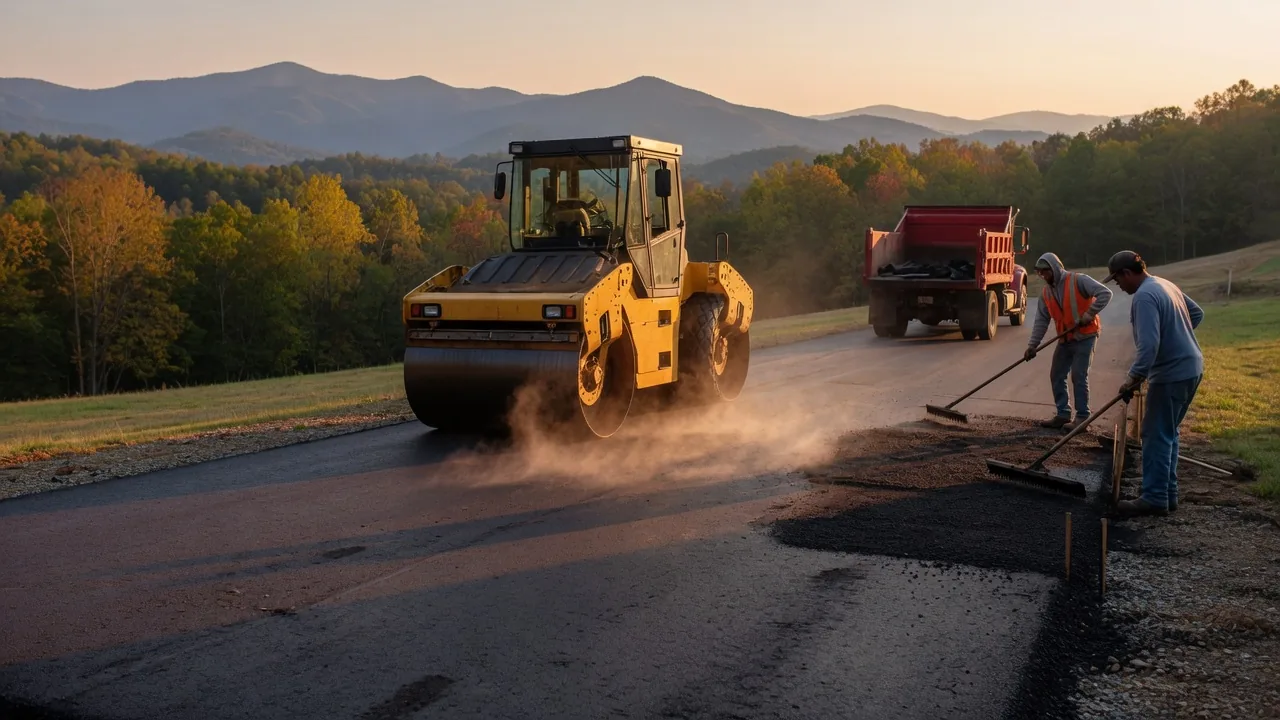
This is not an overlay. The existing gravel becomes the subgrade, then a compacted aggregate base is added, shaped to drain, and rolled. Asphalt binder and surface courses go on top. On flatter valley-floor lots, that sequence is fairly direct. On ridge lots, it usually means cutting a crown for water, adding a turnout or two, and often a culvert where uphill runoff crosses the drive.
Driveways that tie into a state-maintained road trigger access requirements. The NCDOT Connect portal handles driveway permit applications, and the NCDOT driveway manual spells out sight distance, culvert sizing, and apron standards. Skipping that step is the most common reason a conversion stalls mid-project, especially on properties with limited sight lines on curving mountain roads.
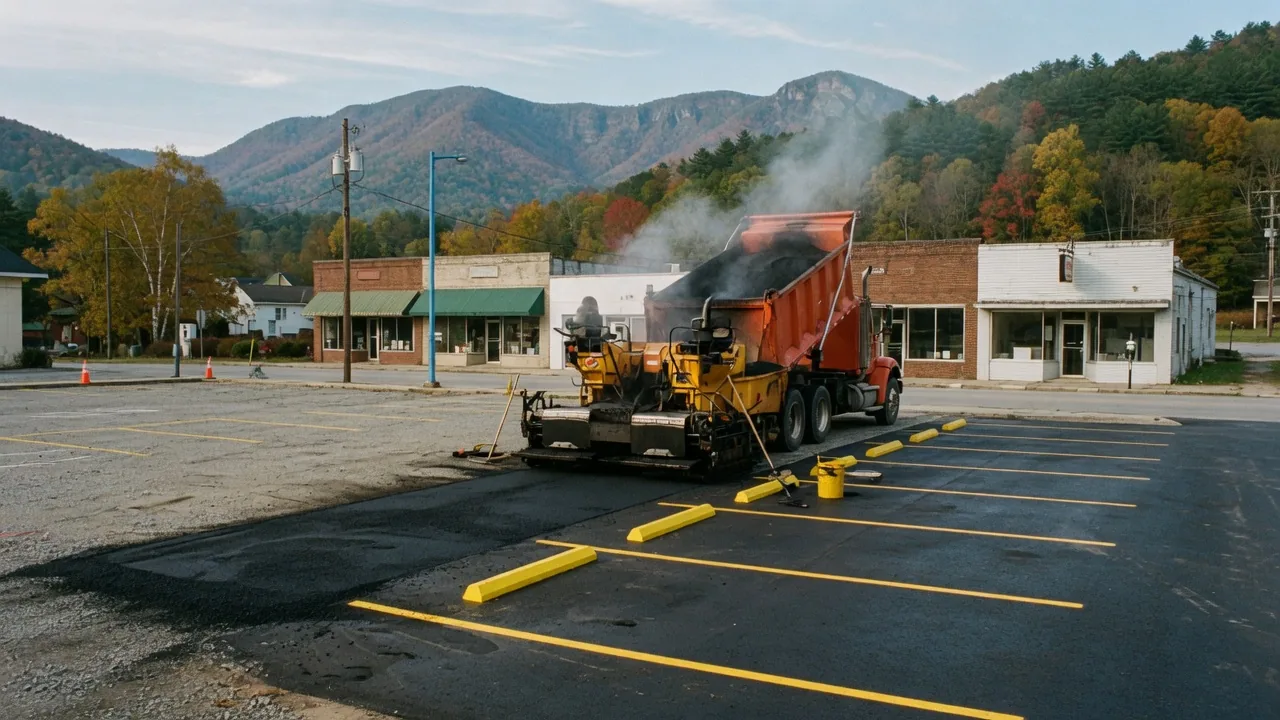
Widening, turnarounds, and parking pads are separate line items because they add tonnage. A turnaround at the top of a steep drive is often essential, since backing down a wet grade in winter is its own hazard. Make those decisions before the quote, not during the pour.
Drainage design also connects to broader stormwater practice. The EPA maintains resources on stormwater and runoff that are relevant when a driveway sheds water onto neighboring parcels or a shared easement.
Typical scope and price ranges in Haywood County
Numbers below are regional working ranges, not quotes. Actual pricing depends on length, slope, and how much base repair your existing gravel needs.
| Scope | Typical Range | Notes |
|---|---|---|
| Short flat conversion (under 60 ft) | $6,500 - $9,500 | Minimal grading, standard 2-inch base and 2-inch surface |
| Mid-length with moderate grade | $9,500 - $13,500 | Crown work and drainage correction typically included |
| Long or steep mountain run | $13,500 - $18,000+ | Added base tonnage, possibly retaining or turnout work |
| Base rebuild only (asphalt added later) | $3,000 - $6,000 | Useful when budgeting across two seasons |
| Widening or parking pad addition | $2,000 - $5,500 | Priced by square foot and tonnage |
The full Haywood County cost breakdown walks through line items. For the general method behind these numbers, see the gravel to asphalt conversion guide.
Keep in mind that haul distances within the county affect delivered stone cost. A load that travels from a quarry on the eastern side of Haywood County to a ridge lot above Maggie Valley adds time and fuel, and crews who quote the same per-ton price for every parcel are usually underestimating the trip.
Timing the work around mountain weather
Maggie Valley sits high enough that winter arrives earlier and lingers later than the Asheville side of the county. Asphalt needs warm, dry conditions to compact and cure properly, which compresses the workable season into roughly late spring through early fall. A base installed in October may sit as gravel through the winter and receive its surface in spring. That split schedule is normal here, and any bid that ignores it is a bid that will get deferred.
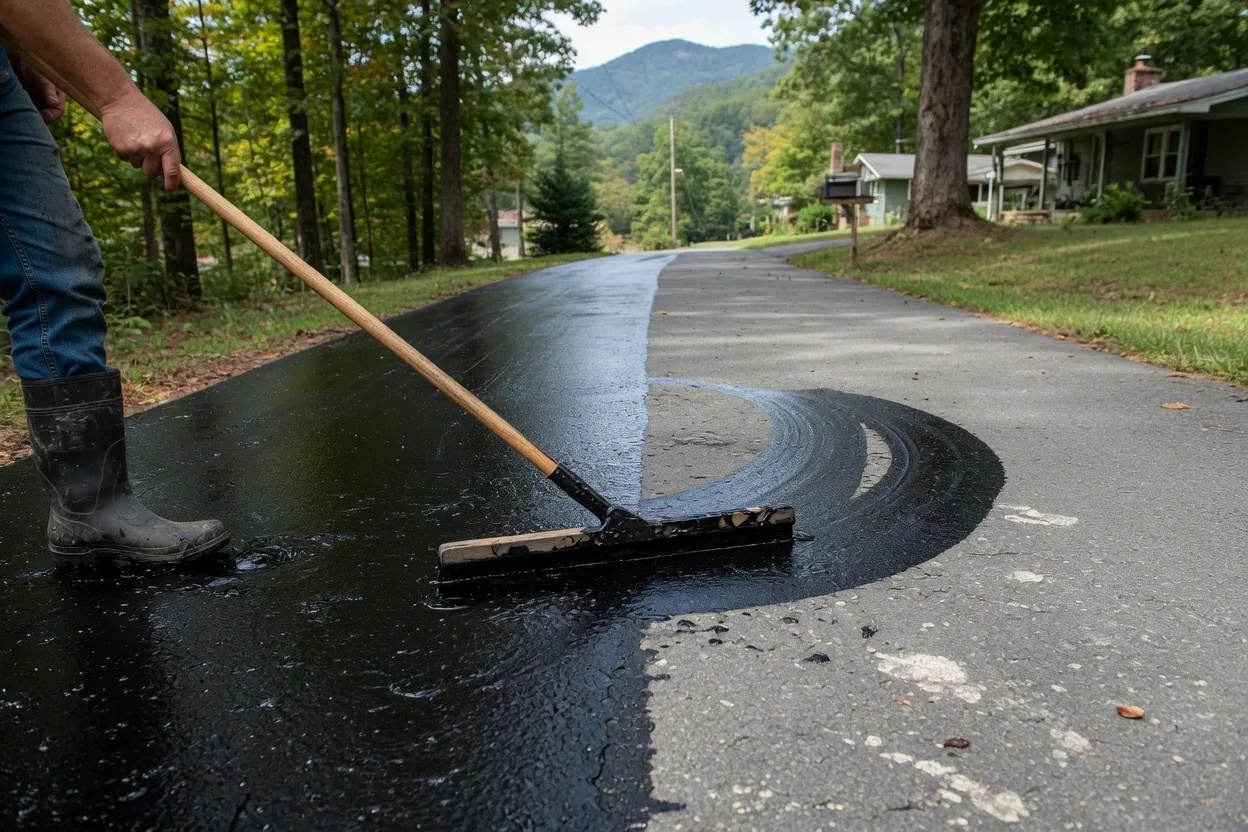
Freeze-thaw cycling is the other factor. Water that gets under an asphalt edge and refreezes will lift and crack it, so edge treatment, shoulder grading, and positive drainage matter more here than at lower elevations. The National Weather Service local climate data is a fair reference for planning the window, and the NC Office of State Fire Marshal code resources govern how the work must meet local inspection where permits apply.
Storm and flood history in the county is real; Haywood County has recorded 19 federal disaster declarations spanning 1973-2026. That record is worth a thought when you plan where uphill water will go after your drive is paved. A conversion that ignores runoff paths can turn a graded driveway into a channel that sends water toward a neighbor's foundation.
Choosing a paving crew up here
Ask three questions before signing. First, has the crew built driveways on grades like yours, not just paved them. Second, how do they handle drainage at the top of the drive where uphill water arrives. Third, what is their plan for compacted base thickness, and will they show you the stone spec. A crew that answers all three in specifics is one that has done this work in Haywood County before.
Larger projects may fall under general contractor licensing rules administered by the NC Licensing Board for General Contractors. For anything beyond a straightforward residential driveway, that licensing threshold matters. Our Maggie Valley paving contractors page covers what to look for in a local crew.
Ask also about scheduling and how they handle weather delays. A crew that works the same stretch of Soco Road or Jonathan Creek repeatedly will know which slopes drain well and which hold water after a storm, and that familiarity saves money in the long run.