Read the driveway before you buy asphalt
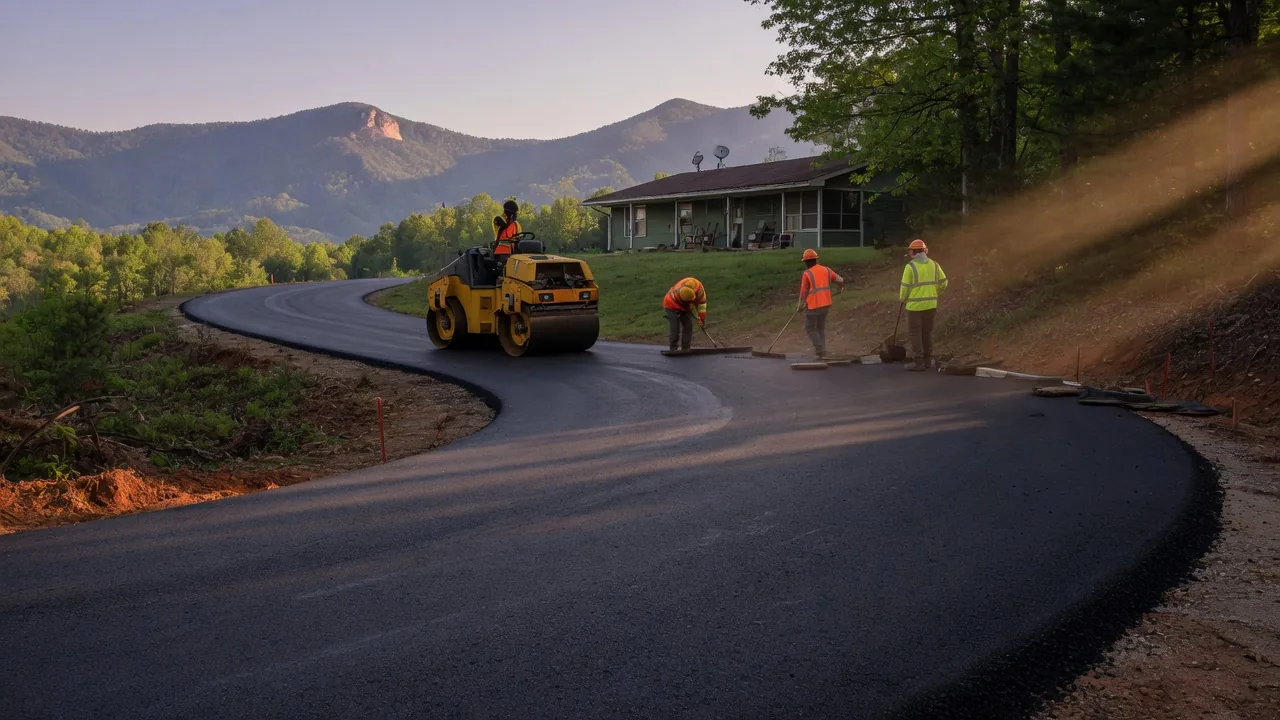
Drive out Haywood County roads toward the county seat and you can spot the conversions that failed: a black ribbon laid straight on old gravel, one winter behind it, edges already curling and a pothole forming at the culvert. Waynesville sits in a bowl of ridges, and most driveways here climb or cut through them. That terrain decides whether your gravel is a candidate for paving or a base that has to be rebuilt first.
The read is simple if you know what you are looking at. Cracks that run with the driveway length usually mean the base is moving under the whole slab. Potholes that regrow in the same spot mean water is still getting under from a low side or a bad culvert — patching that without fixing the water is money burned twice. Edges that crumble and soften after rain point to thin stone and no shoulder support. If your gravel has held grade through a couple of wet springs without rutting, you likely have a base worth paving. If it has not, the conversion starts below the surface.
In Waynesville specifically, the older gravel drives tend to fall into two camps. There are the ones off the flat bottomland near Richland Creek and the Pigeon River bottoms, where the stone has stayed put for decades and the main issue is a culvert that has silted in. And there are the hillside drives off Plott Creek, Ratcliffe Cove, and the climb up toward Junaluska, where the gravel is thin and the grade sheds water fast — sometimes too fast, scouring a channel down one wheel track every time it rains hard. Those two drives need completely different scopes, and a contractor who quotes both the same way has not walked either one.
Your own walk is worth doing before anyone shows up. Wait for a soaking rain, then walk the drive in boots. Where does the water run? Where does it stand? Where does the stone squish underfoot? Mark those spots with a can of spray paint. When a contractor sees you have already done that, the conversation changes — you are talking about a specific repair, not buying a generic service.
Repair, overlay, or full tear-out
Most gravel driveways do not need a tear-out. They need a defined call on scope: re-grade and compact the existing stone, address drainage, then pave. That is the middle path, and it is where most Waynesville conversions land. A full tear-out makes sense when the base has gone to mud, when the grade is wrong enough that water pools on the surface, or when the driveway is short enough that hauling new base is cheaper than fixing old.
The honest middle of the mountain decision tree goes like this. A pothole in one spot on otherwise solid gravel is a patch job — clean it, dress it with the right stone, compact it, and watch it through a season before you commit to paving. A spider of longitudinal cracks across the whole drive is a base decision, not a patching decision. An edge that turns to mush every spring is a shoulder and drainage decision. And a drive that has been re-graveled three times in ten years is telling you the subgrade is wrong — no amount of new stone fixes a grade that sends water the wrong way.
This is also a permitted activity in many cases depending on where your driveway meets a state-maintained road. Driveway connections on NCDOT right-of-way require a permit before you cut, fill, or change the entrance — see the NCDOT Connect driveway permit applications for the process. Skipping that step is the kind of thing that surfaces at resale.
One more local wrinkle: many Waynesville-area drives serve more than one household, especially the older gravel roads that split to two or three houses. If your conversion touches a shared entrance, the scope conversation has to include the neighbors, because widening a shared apron or changing its slope affects everyone who uses it.
What the conversion actually costs in Haywood County
Numbers below are working regional bands, not quotes. Length, slope, and how much base correction the driveway needs are the real drivers — a 60-foot flat run off a county road and a 200-foot climbing driveway are different jobs with different equipment needs.
| Scope | Typical range | What drives it |
|---|---|---|
| Re-grade existing gravel + compact, no new stone | $1,200–$2,800 | Length, equipment access, how much stone is already there |
| Add base stone, correct grade, then pave | $4,500–$9,500 | Stone depth required, slope, drainage |
| Full rebuild: strip, new base, new drainage, pave | $8,500–$14,000+ | Soft subgrade, culvert work, haul distance |
| Asphalt surface only (base already proven) | $3.50–$6.00 per sq ft | Thickness, aggregate mix, compaction passes |
| Edge repair / shoulder reinforcement after paving | $300–$1,200 | Run length, whether shoulders need stone |
Haywood County pricing sits close to the regional average for mountain counties because haul distances are short and local aggregate is available. See the full Haywood County asphalt driveway cost breakdown for line-item context before you compare bids.
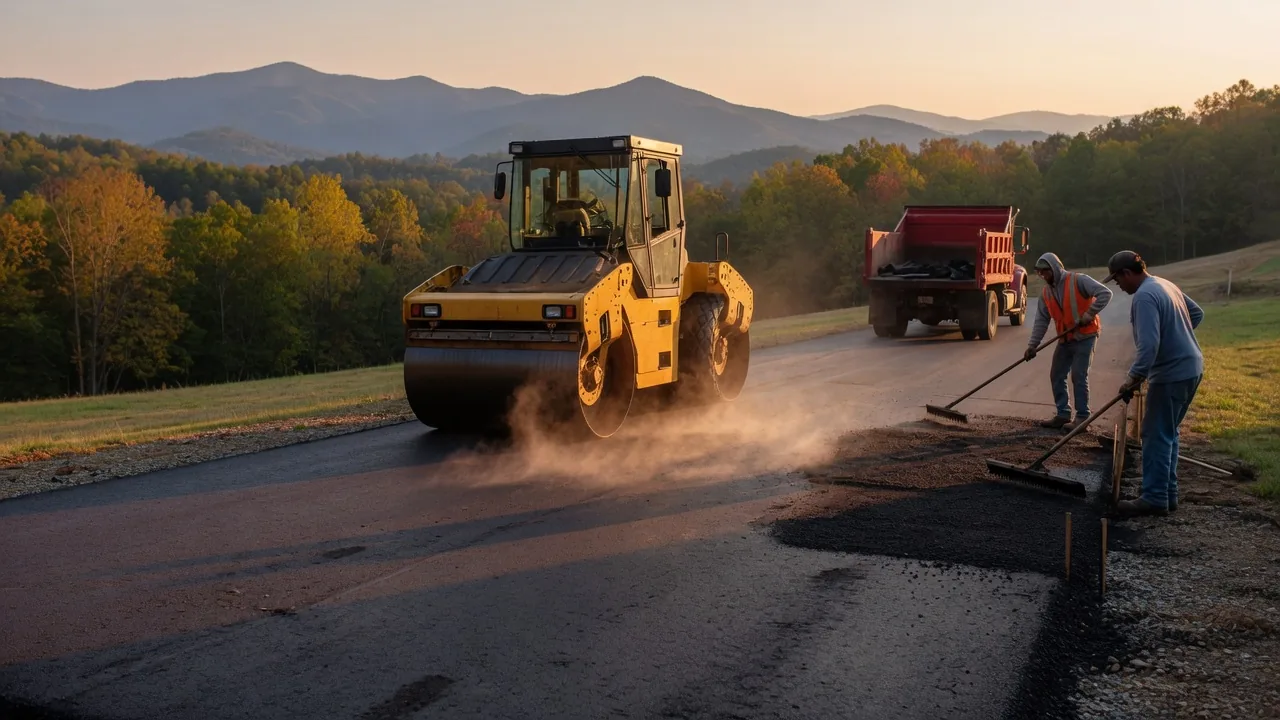
Two things move the number here more than people expect. The first is access: a drive that a dump truck and roller can reach in one straight shot is cheap. A steep, curving drive where the paver has to be fed by hand, or where the truck cannot get within a hundred feet of the top, adds labor hours that show up in every line of the bid. The second is the apron at the road. A well-built apron flares to meet the road surface so the transition does not break up — and a bad apron is the first thing that fails on a mountain drive, because that is where plow trucks and delivered loads hit hardest.
Expect bid spread of 25 to 40 percent on the same driveway. That spread is almost always scope, not price gouging. A low bid that does not include drainage correction is not the same job as a high bid that does. Ask each contractor to write down what they are and are not including — stone depth, compaction, drainage, and whether the apron is in or out.
Water and weather are the real cost drivers here
Waynesville gets mountain rain — fast, concentrated, and often after long dry stretches that have opened up the subgrade. The federal disaster record for this county shows 19 declared events spanning 1973-2026, and the pattern is consistent: water arrives faster than the ground can absorb it. Every driveway conversion in this terrain is a drainage project wearing an asphalt hat.
Before asphalt goes down, the uphill side of the driveway needs a plan. That can mean a shallow swale, a cross-drain before the steepest pitch, or a culvert upgrade at the road entrance. The National Weather Service's local forecast and hydrology resources are useful for understanding typical rainfall intensity here, and the NC Office of State Fire Marshal code officials portal is the reference point when code officials have questions about access width and slope on a permitted entrance. None of that is optional scope — it is the part of the job that determines whether the asphalt is still tight in five years.
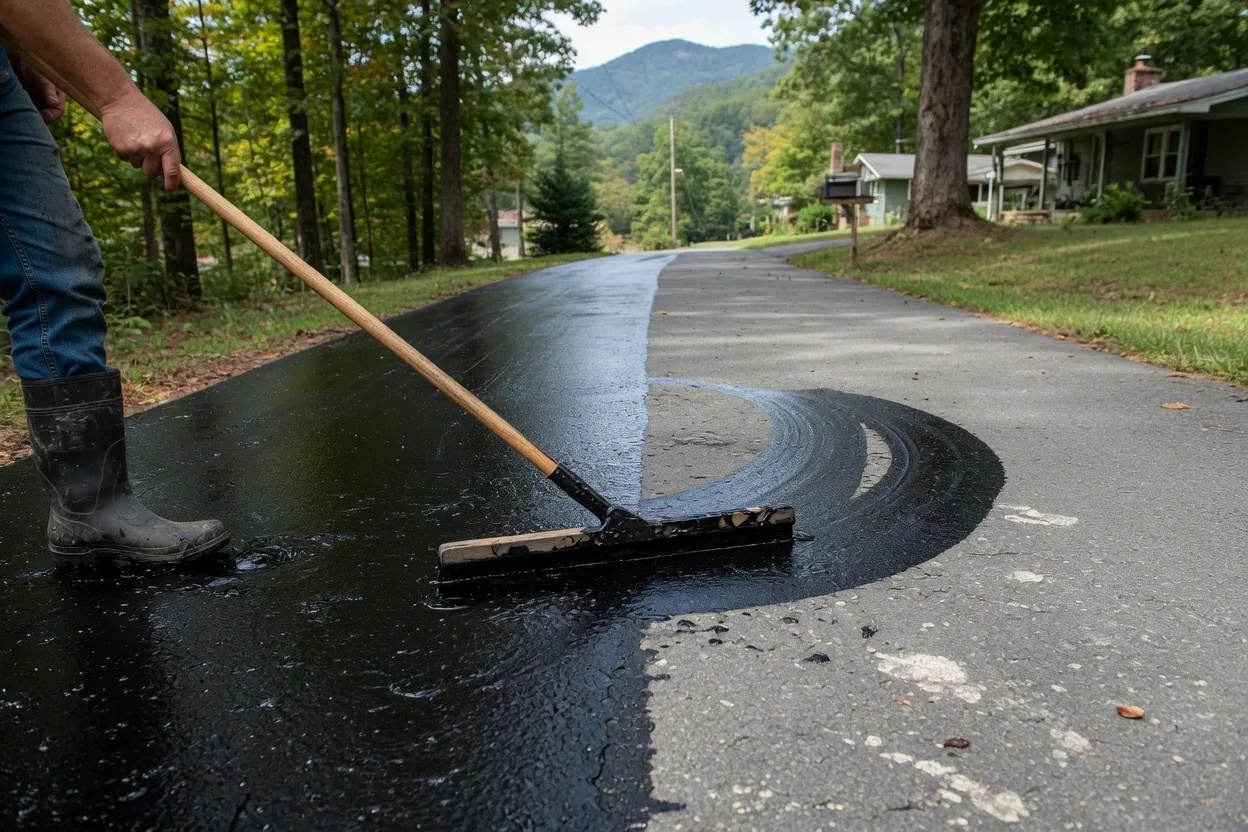
Haywood County also has a freeze-thaw cycle that flatland paving advice ignores. Water gets into the base, freezes overnight, expands, and pushes the asphalt up. Daytime sun thaws it, the surface settles, and a crack is born. On a mountain drive, the fix is not thicker asphalt — it is keeping water out of the base in the first place, with positive drainage off the uphill side and a crowned surface that sheds rather than pools. That is why a cheap overlay on a wet base fails within a couple of winters, and why a properly drained conversion on the same drive can last a generation.
Shade matters too. The north side of a ridge here stays damp and icy longer, and a drive under heavy hardwood canopy never fully dries after a rain. If your drive runs through that kind of cover, the drainage plan needs to be more aggressive, not less — more cross-drain, more shoulder, and a real conversation about whether the tree canopy should be thinned over the pavement.
If you are hiring, match the crew to the terrain
Not every paving contractor works mountain driveways well. The tells: do they ask about drainage above the driveway, not just the surface? Do they walk the base and probe soft spots, or quote from the truck? Do they know where the driveway meets NCDOT right-of-way and whether a permit is required? North Carolina's Licensing Board for General Contractors sets the threshold where a paving job crosses into licensed-general-contractor territory, and a crew that cannot tell you where that line is for your job is one to pass on.
Ask for a reference on a similar driveway — not a flat commercial lot, but a gravel conversion on a grade. Ask what failed on that job and how they fixed it. A good mountain paving crew will tell you plainly which drives they would not pave over, and why. That honesty is worth more than a low bid, because the failure mode of a bad conversion here is expensive: water under the asphalt, alligator cracking within two seasons, and a full tear-out that costs more than doing it right the first time.
Also confirm what happens after the pavement goes down. Good crews come back once to check the surface and the edges after the first winter, because that is when any base problem reveals itself. If a contractor disappears after the invoice is paid, you have no leverage when the first soft spot shows up in March.
For a shortlist of local crews that have worked this terrain, see the Waynesville paving contractors page. If you are still comparing repair versus replacement on an existing asphalt driveway, the gravel to asphalt conversion guide walks through the base-prep sequence in more detail.