What's under the asphalt in Woodfin decides everything
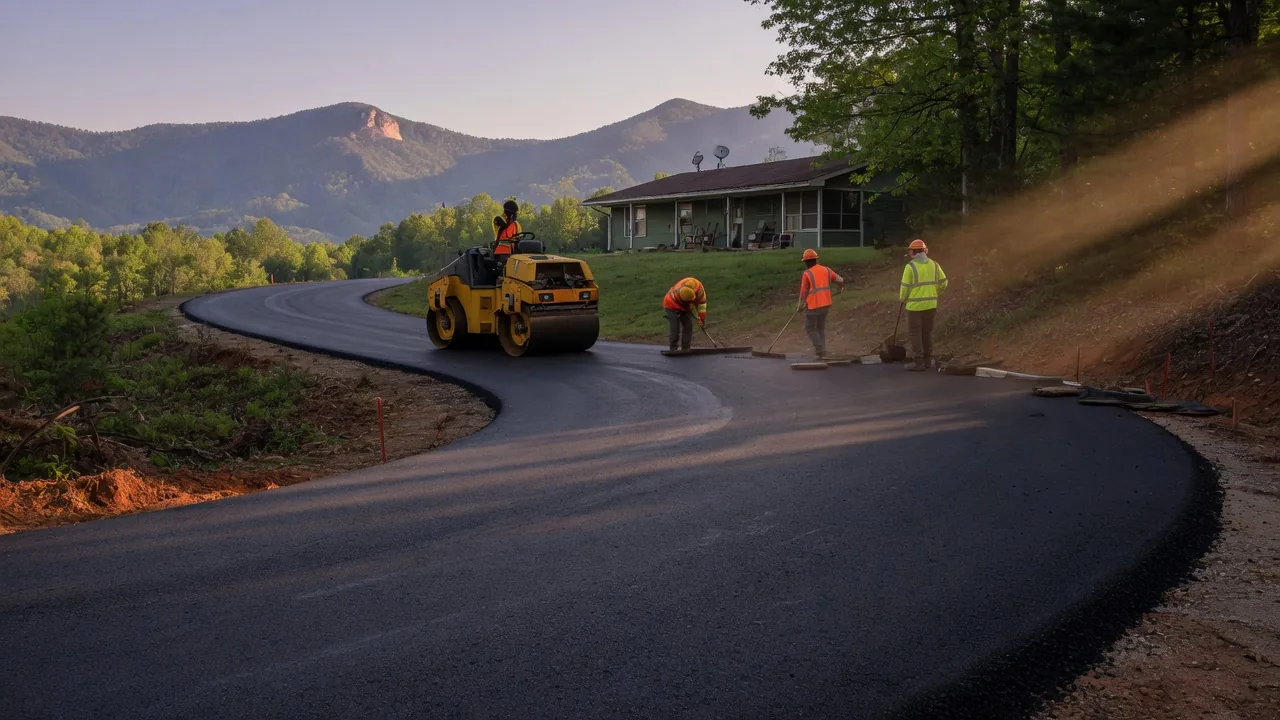
Woodfin sits in a narrow valley where the French Broad River bends north out of Asheville, and the ground under most driveways here tells one of three stories. On the hillside streets climbing toward Elk Mountain, you're usually on red clay that holds water and pumps when it freezes. In the river-bottom neighborhoods off Old Weaverville Road, you're on decades of fill and gravel that never fully consolidated. And on the older lots near the Woodfin town limits, there's often an original gravel drive buried under one or two thin asphalt overlays that someone kept adding instead of fixing what was underneath.
That buried history is why a resurfacing bid here can swing by thousands. A driveway with 6 inches of sound crushed stone and good drainage might take a 1.5-inch overlay and last. The same square footage over wet clay with 2 inches of stone needs base correction first, or the new asphalt will crack along the same lines within two winters. The asphalt resurfacing guide walks through how to tell the difference before you sign anything.
What most homeowners here don't realize is how much the original builder's grading decision still haunts the driveway. On the Elk Mountain side, developers often cut a bench into the slope and called it a driveway pad, backfilling the downhill edge with whatever was handy. Ten or twenty years later, that fill edge settles, the asphalt cracks along the fill line, and every overlay just traces the same crack. On the flat river-bottom lots, the opposite problem: the soil never drains because there's nowhere for water to go, so the base stays saturated and the asphalt acts like a lid. Both situations need a stone-depth assessment, not a sales pitch.
The Woodfin price picture
Buncombe County resurfacing prices track the base condition more than the neighborhood. The full Buncombe County asphalt cost breakdown has the working numbers, but the short version helps set expectations: a straight overlay over sound base runs $2.50-$4.00 per square foot, base repair and re-grade pushes into the $4.00-$5.50 range, and full removal with new stone and asphalt can exceed $6.00. Steep driveways off the mountain-side streets often need a tack coat and fabric detail at the transition, and tight access for the paver and roller adds labor hours that flat-lot quotes never show.
| Scope | Typical price range | What it covers |
|---|---|---|
| Thin overlay, sound base | $2.50-$4.00/sq ft | 1.5 in. hot mix over cleaned, primed asphalt; minor crack fill |
| Overlay with base repair | $4.00-$5.50/sq ft | Spot stone replacement, re-grade, fabric at transitions, then overlay |
| Full mill and replace | $6.00-$8.50/sq ft | Remove existing, new crushed stone base, binder and surface course |
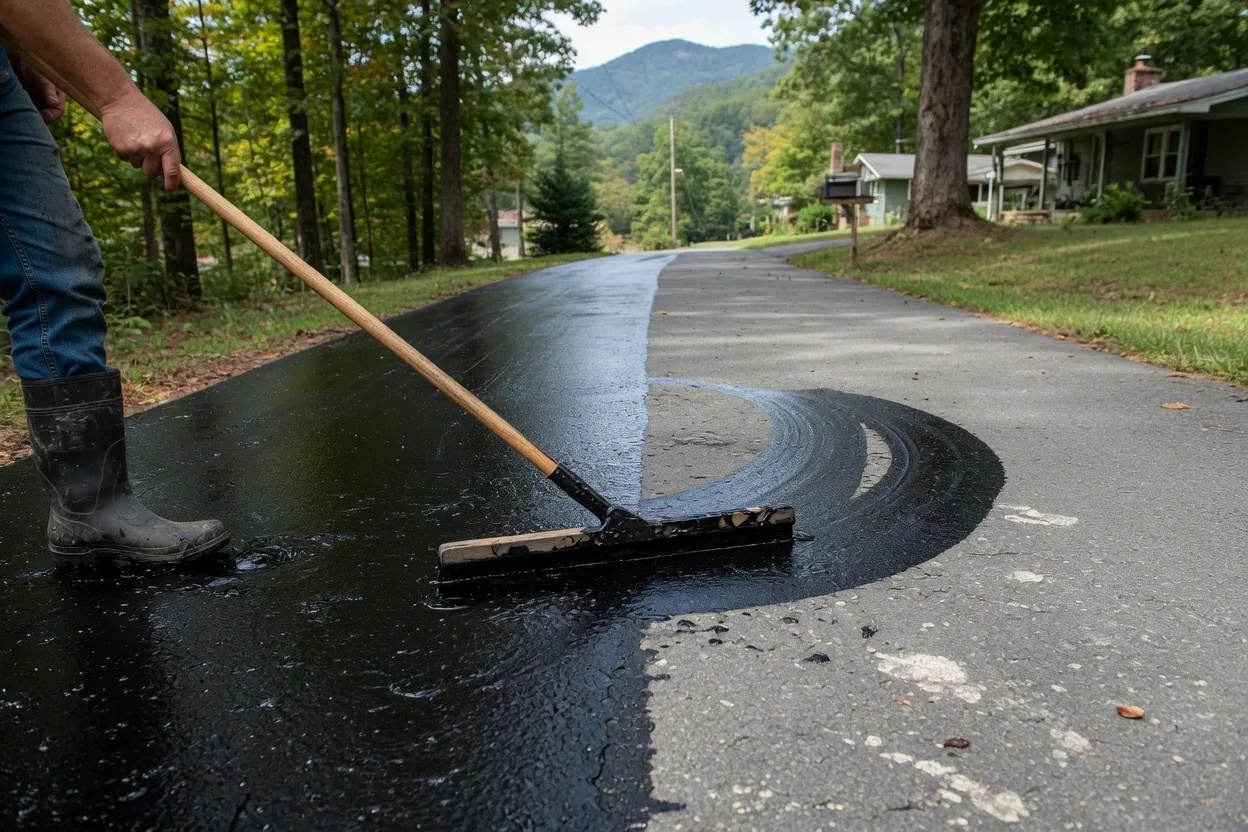
| Sealcoat only (not resurfacing) | $0.25-$0.50/sq ft | Maintenance coat; will not fix structural cracking or settlement |
Any bid that doesn't include a stone-depth assessment in writing is guessing. Treat it that way.
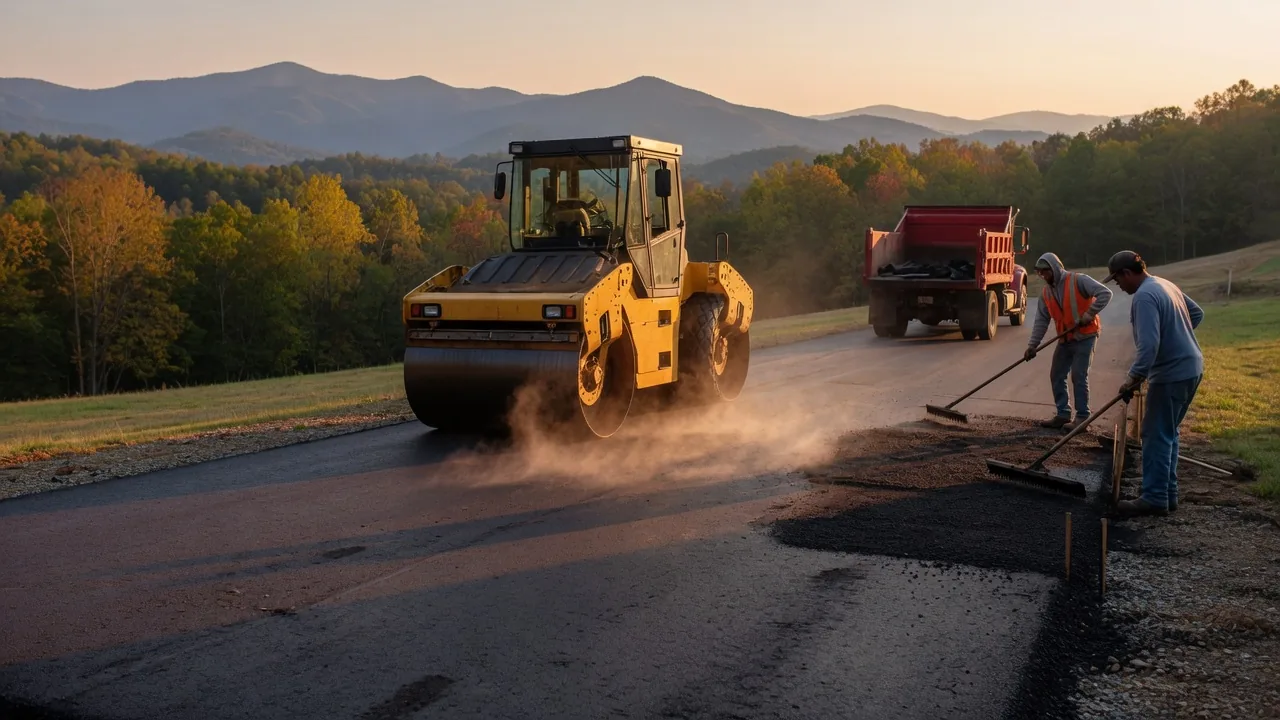
One more local cost reality: hauling. Woodfin is close enough to the Asheville-area asphalt plants that haul time is usually reasonable, but narrow mountain roads off Elk Mountain or steep switchbacks in the Reynolds area can mean the paver and especially the roller can't reach every corner. Crews sometimes have to hand-tamp edges or use a smaller vibratory roller, which adds hours. That's not a gimmick, it's physics. If a bid for a steep, tight driveway comes in suspiciously low, ask what equipment they plan to use on the slope and how they'll handle compaction at the edges. The answer tells you almost everything.
Water, slope, and the river bottom
Woodfin's storm history is not abstract. 19 federally declared events touch this county across 1973-2026, and the French Broad corridor has taken the worst of them. Every one of those events pushed water at driveways that were graded for a drier assumption. If your driveway holds puddles after a normal rain, or the asphalt at the bottom of the slope stays wet for days, resurfacing without fixing the drainage is paying twice for the same failure.
The fix is usually grading and a proper crown, sometimes a French drain or a swale at the uphill edge. The NC Office of State Fire Marshal code officials enforce site drainage requirements that apply to residential paving work, and the NCDOT controls any work at the driveway apron where it meets a state-maintained road, including the permit for that connection. Confirm who pulls what before the crew shows up.
River-bottom lots deserve a closer look. The French Broad has changed course and deposited sediment across this valley for centuries, and lots that sit on what looks like flat, buildable ground may actually be sitting on sandy, poorly graded fill placed during earlier development. That material moves under load when it's wet. A driveway there might need deeper stone, geotextile fabric between the subgrade and the stone, or in some cases a re-grade that lifts the whole pad above the seasonal water table. None of that is visible from the surface, which is exactly why a probe rod and a conversation about what the crew found is worth more than a glossy brochure. If your neighbor's driveway has settled and cracked in the same pattern yours is starting to show, that's a strong clue about what's underneath both properties.
Hiring a crew that respects the base
Three questions that separate the Woodfin crews worth hiring from the ones selling hot mix by the ton: ask how they measure stone depth (a probe rod, not a guess), ask what they do when they find soft spots after milling (a real answer, not "we'll handle it"), and ask for the name of the asphalt plant they'll pull from, which tells you the mix temperature and haul time. Cold mix patched in from a bag is a temporary repair, not resurfacing.
On larger jobs, North Carolina general contractor licensing thresholds apply, and the NC Licensing Board for General Contractors is where you verify status. When you're comparing bids, the Woodfin paving contractor guide covers the scope items a complete proposal should include, and it's worth reading before the first estimate lands.
Another sign of a crew that knows this valley: they ask about your gutters and downspouts. Water pouring off a roof edge onto the driveway edge is one of the most common causes of edge cracking and settlement in Woodfin, and it costs almost nothing to fix before the overlay goes down. A paver who mentions it is thinking past the pour date. A paver who doesn't may still do fine work, but you'll want to manage that drainage yourself. And if the bid includes terms like "millings" or "recycled base," ask where the millings came from and how they'll be compacted. Reclaimed asphalt can make a decent base layer when it's graded and compacted correctly, but it's not a substitute for crushed stone over soft clay, and it's not always cheaper once you account for proper compaction and thickness.
Timing the work around mountain weather
Hot mix asphalt needs air temperatures above roughly 50°F and a dry surface to compact properly. In Woodfin that window runs from roughly late March through November, with the shoulder months risky for morning work. The National Weather Service forecast for the Asheville area is the honest arbiter: a crew willing to push a pour ahead of a rain event is a crew that will hand you a driveway that fails early. Spring in this valley brings pop-up storms, and a paver that gets rained on before it sets is a redo, not a discount. Schedule with a weather buffer, not against it.
Summer afternoon thunderstorms are the other scheduling trap here. A clear morning in July can turn into a downpour by 3 p.m., and a crew that started late on a big driveway can end up racing the radar. The better crews start early, sometimes before the asphalt plant is fully warmed up, so the pour and compaction are finished before the afternoon buildup. If your contractor won't commit to a morning start in summer, ask why. And in fall, watch the overnight lows, not just the daytime highs. Asphalt placed on a day that hits 60°F but drops to 38°F overnight can cool too fast to compact properly, especially on shaded driveways under the tree canopy that covers a lot of Woodfin's hillside lots. The NWS forecast is the tool, and a crew that checks it the morning of the pour is showing you their standards.