Which way the rain leaves your lot decides the driveway
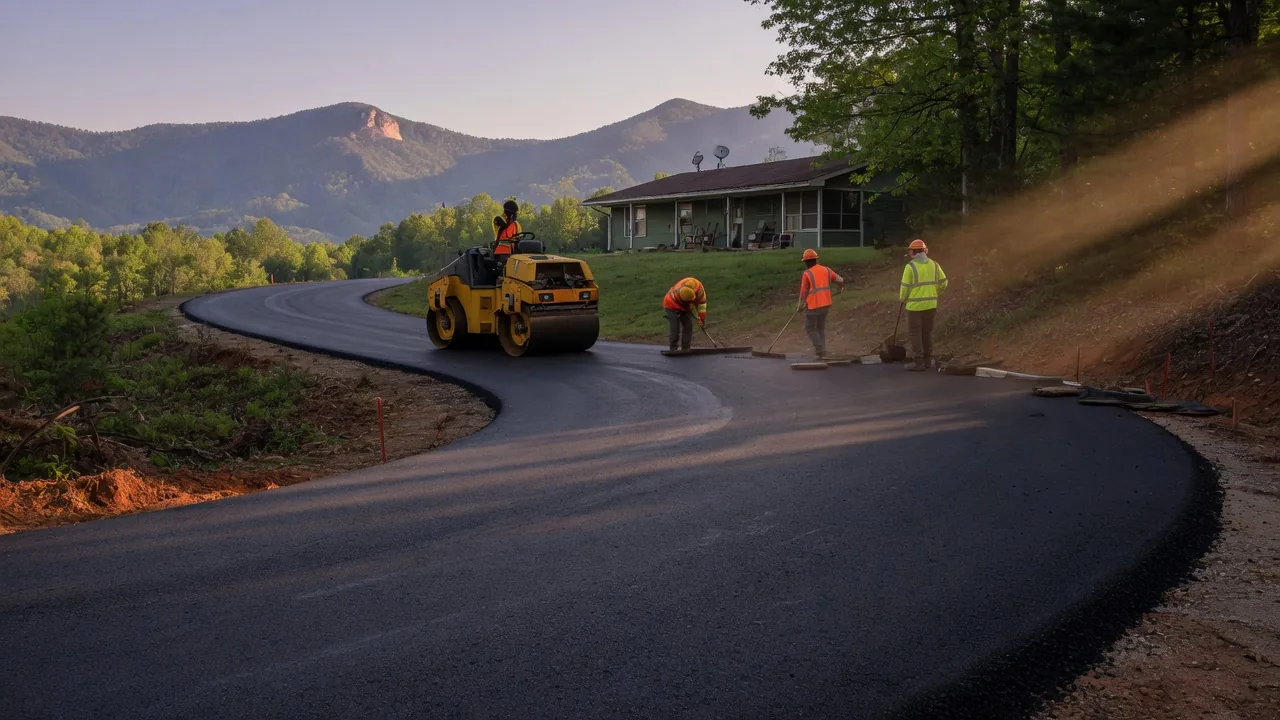
Driveways around Canton almost never sit flat. Whether you're on a bench above the Pigeon River bottoms, on a cut-in shoulder off a road heading toward the Plott Balsams, or on a graded pad in one of the newer subdivisions between town and Clyde, your driveway is a drainage structure first and a surface second. Rain lands on it, and every drop has to go somewhere you chose before it goes somewhere you didn't. Tar and chip fails fast when the answer is "down the middle": sheet flow eats the edges, the crown flattens, and the first hard freeze pops the mat. The lots that hold up are the ones where the crown sheds to a shaped shoulder, the shoulder hands off to a lined ditch or a culvert under the drive, and the pipe outlet is armored so it doesn't dig a canyon at the low side. On a long uphill run, that also means cross-drainage or a rolling grade dip where water crosses instead of running the whole length like a chute.
None of this is exotic, and none of it is optional on this terrain. It is the difference between a driveway that gets a fresh chip seal in seven or eight years and one that needs patching every spring.
What tar and chip actually is, and where it fits here
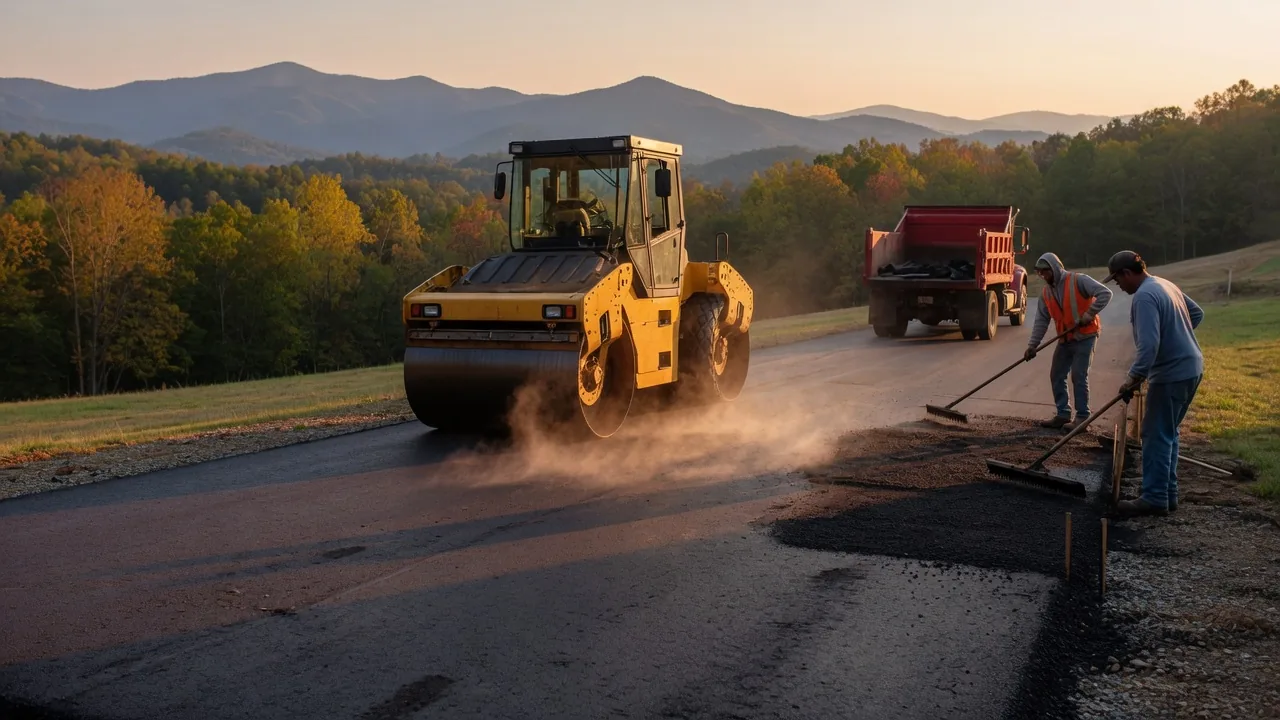
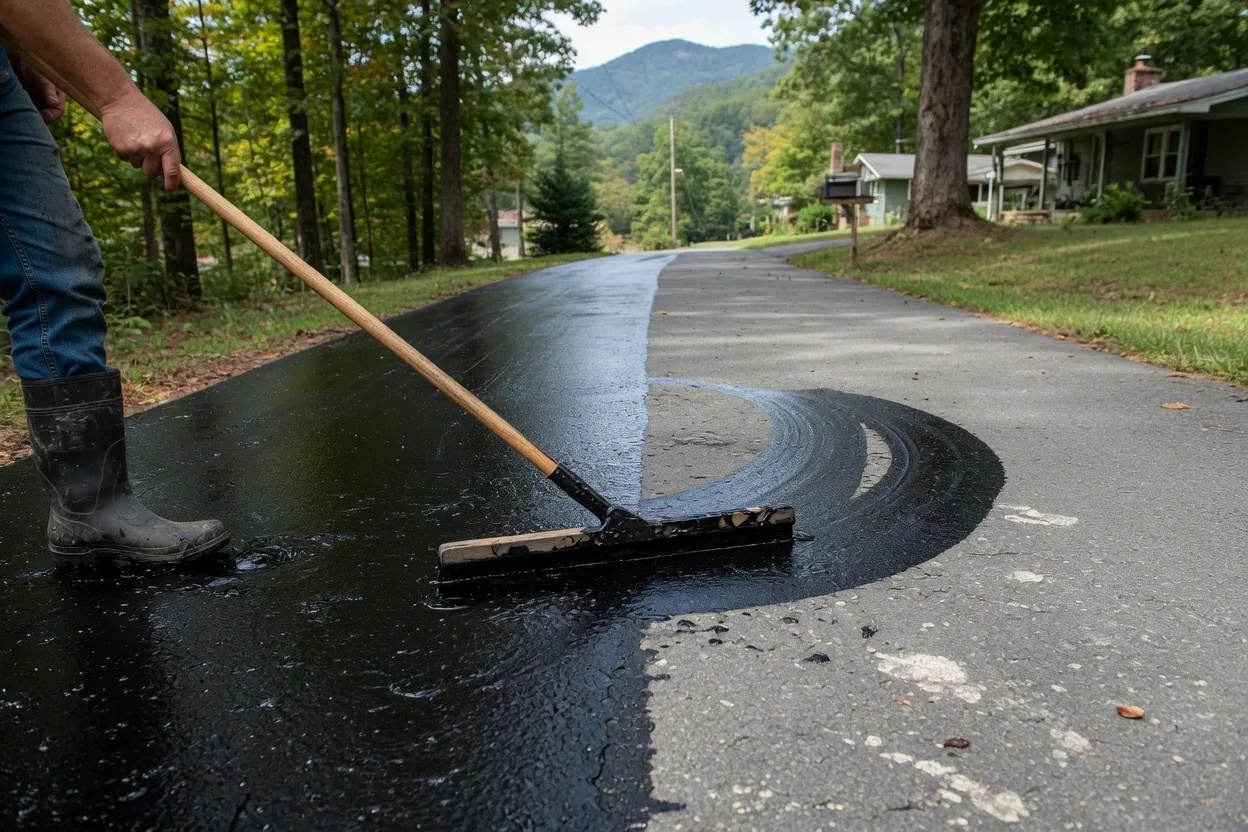
Tar and chip (chip seal) is a sprayed asphalt binder covered immediately with washed stone, then rolled. It costs meaningfully less than hot-mix asphalt, handles freeze-thaw cycles well because the surface stays flexible and slightly textured, and it grips on grades where smooth blacktop gets slick in winter. The trade-offs are honest ones: it's louder under tires, the loose chip phase lasts a few weeks, and it wants a genuinely sound base underneath. If your existing drive has soft spots, ruts, or a base that never drained, a chip seal on top is a cosmetic fix that will telegraph every failure underneath within two winters. That's why grading and base correction come first, and why the tar and chip service page starts with the subgrade question rather than the binder.
The Canton price picture
Mountain driveways price by the yard in more ways than one. Length and width set the square footage, but slope, tree canopy, and how much of the existing surface can be reused set the prep hours, and prep is where the money goes. The table below reflects what regional crews typically quote for Haywood County work. For a fuller line-item view including hot-mix comparisons, see the Haywood County asphalt cost breakdown.
| Scope | Typical range | What drives it |
|---|---|---|
| New tar and chip over sound existing gravel base | $2,900-$4,400 | Square footage, one or two chip lifts, edge prep |
| Full build: grading, base stone, culvert, then chip seal | $5,500-$7,800+ | Cut/fill volume, culvert size, ditch lining, slope |
| Resurface over failing asphalt (patch, level, chip) | $3,600-$6,200 | How much old surface is removed vs. overlaid |
| Drainage correction alone (crown, shoulder, ditch, outlet) | $900-$2,800 | Run length, cross-drain count, riprap at outlet |
| Culvert replacement under driveway | $1,400-$4,000 | Pipe diameter, depth of cover, inlet/outlet work |
Steep-lot jobs carry engineering and drainage line items that flat quotes never show. Treat a bid without them as incomplete rather than cheap.
Permits, weight limits, and the county road edge
Any time you change how your driveway meets a public road, you're touching somebody else's asset. In North Carolina that generally means a driveway permit through NCDOT when the connection point is a state-maintained road, and the application path runs through NCDOT Connect. The state's overview of access and encroachment rules lives at ncdot.gov. On the private side, larger projects cross the threshold where the state's general contractor licensing rules apply; the NC Licensing Board for General Contractors is the place to confirm whether your project triggers it. Locally, the practical question that comes up most is weight: chip seal over a properly built base handles a loaded pickup and a delivery truck fine, but it is not a concrete apron, and heavy equipment turning on it in the first month can scar the surface. That's a sequencing conversation, not a product flaw.
Storm history is the reason drainage gets priced in
Haywood County's federal disaster record is dominated by storm and flood events: 19 declared events touch this county across 1973-2026. That pattern matters at the driveway scale because the failures homeowners call about are almost always water events, not wear events. A culvert undersized for a fifty-year rain, an outlet that discharges straight onto a neighbor's slope, a ditch that was never lined and now runs mud across the drive every spring melt. The National Weather Service's local outlook and warning products at weather.gov are worth watching before you schedule work in a wet stretch, because fresh chip seal wants dry cure time and disturbed slopes want cover before the next system. Building the drainage so it survives the next big rain is the whole point; the surface is just the part you see.
What a straight scope looks like before you sign
A good Canton driveway bid is a drainage document with a paving line at the bottom. It should state the crown height and which way the surface sheds, where the ditch or swale runs and how it's lined, the culvert diameter and material, what happens to the outlet, how much base is being added versus reclaimed, the chip size and binder application, and how long before you drive on it and how long before the loose chip settles. If a quote is one number and a start date, it's a guess. When you're comparing crews, the Canton paving contractors page covers how to read those scopes side by side, and the questions worth asking before anyone mobilizes equipment.