The line items that actually build a Marshall driveway number
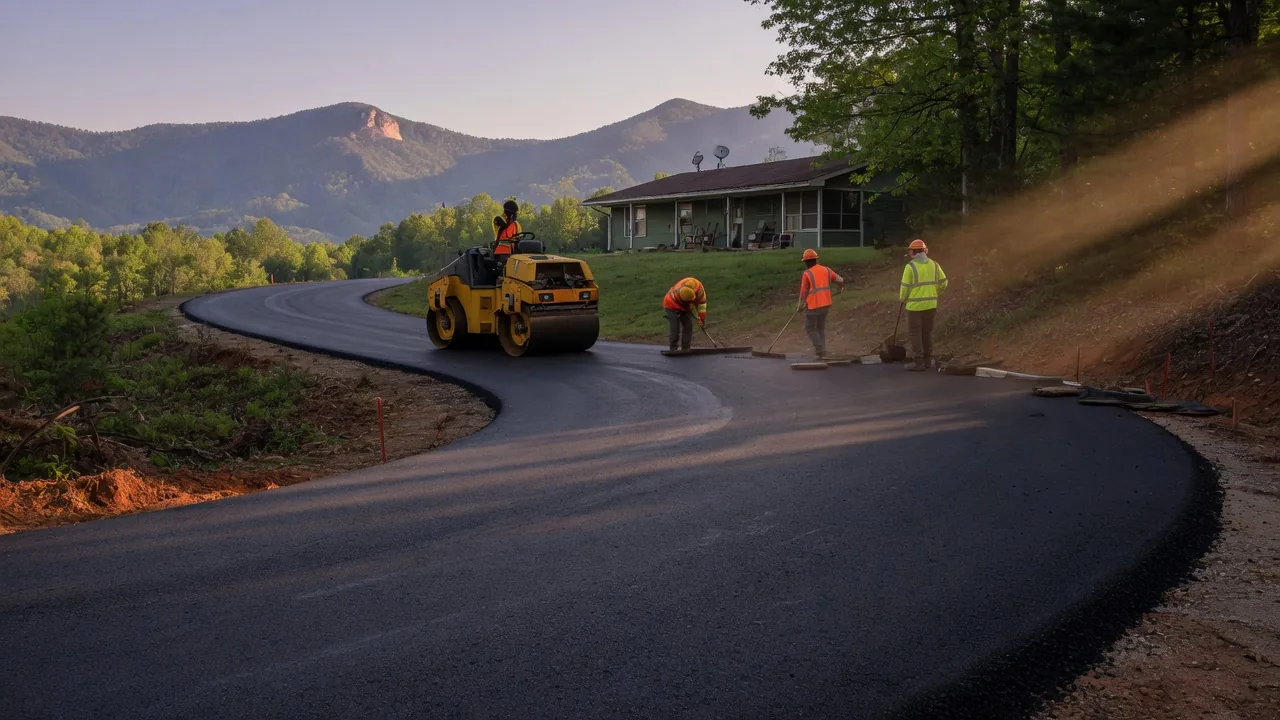
Driveways in Marshall do not look like driveways in the flat counties east of here. The town sits in the French Broad valley where the river bends, and most of the paving around it climbs: switchback gravel lanes off Route 25/70, short community spurs up to houses on the hillside, and small commercial lots near the river bottom that are nearly level until they are not. That terrain shows up in a sealcoating bid as labor, not material.
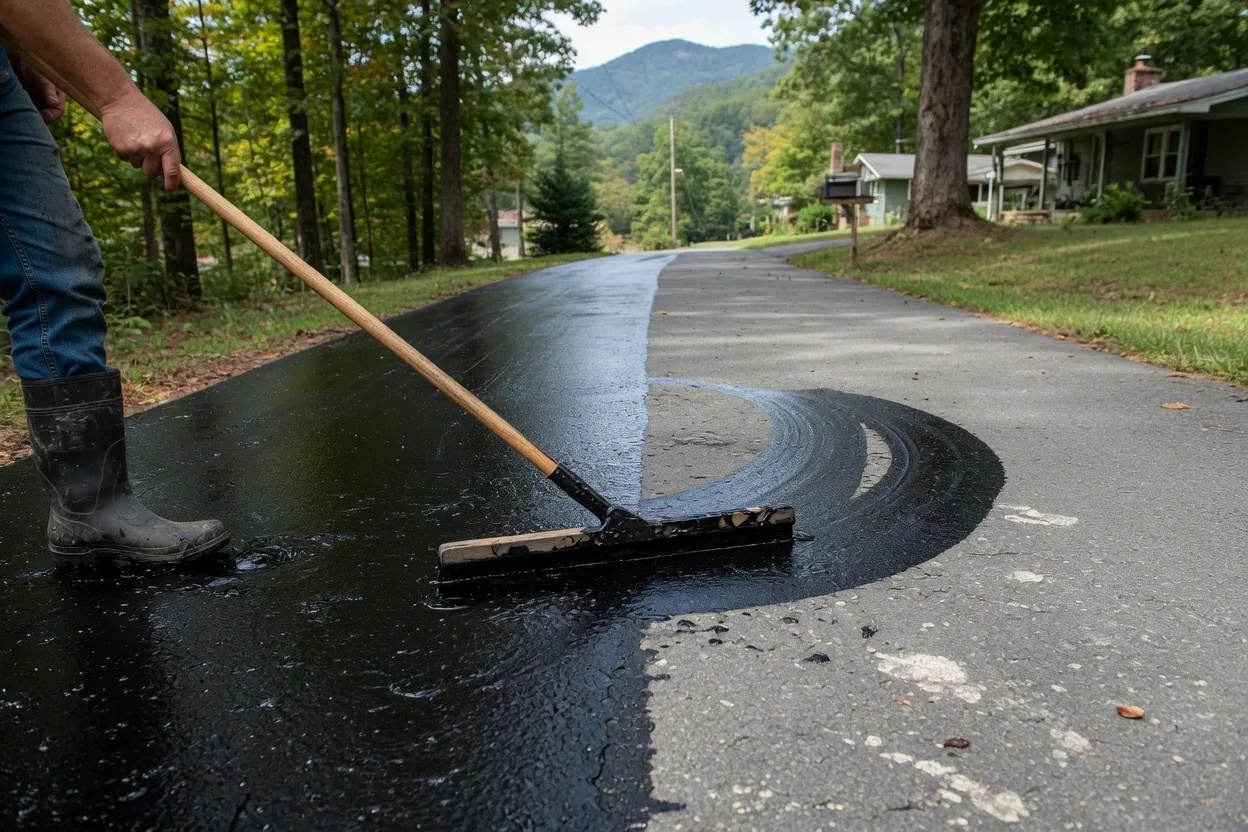
A straightforward quote breaks into five movable pieces: cleaning and vegetation removal, crack filling, edging and surface prep, sealer application, and cure scheduling. On a flat lot, cleaning is a leaf blower and ten minutes. On a hillside drive in Madison County, cleaning is weed-eating the center seam, backpack-blowing the slough, and hand-scraping where the pavement meets a ditch that carried last month's rain. That difference is the whole estimate. Sealer cost per square foot is roughly fixed; prep labor is where a $900 job and a $2,400 job separate.
Scope versus price range for a Marshall driveway
Ranges below are honest regional bands, not quotes. Every one assumes sound asphalt — sealcoating protects pavement, it does not rebuild it. A driveway with alligator cracking or a soft base needs repair priced first, and that work belongs with the Madison County asphalt cost breakdown rather than here.
| Scope | Typical range | What drives it |
|---|---|---|
| Single-coat seal, short flat drive (under 1,000 sq ft) | $250-$550 | Access, cure weather, one-day turnaround |
| Single-coat seal, hillside drive 1,000-2,500 sq ft | $500-$1,200 | Slope, edge weeds, drainage swales |
| Two-coat seal with crack fill, 2,500-5,000 sq ft | $1,200-$2,600 | Crack linear feet, hand-edging, traffic windows |
| Long private lane or shared access road (5,000+ sq ft) | $2,600-$6,000+ | Length, culverts, gates, scheduling around multiple owners |
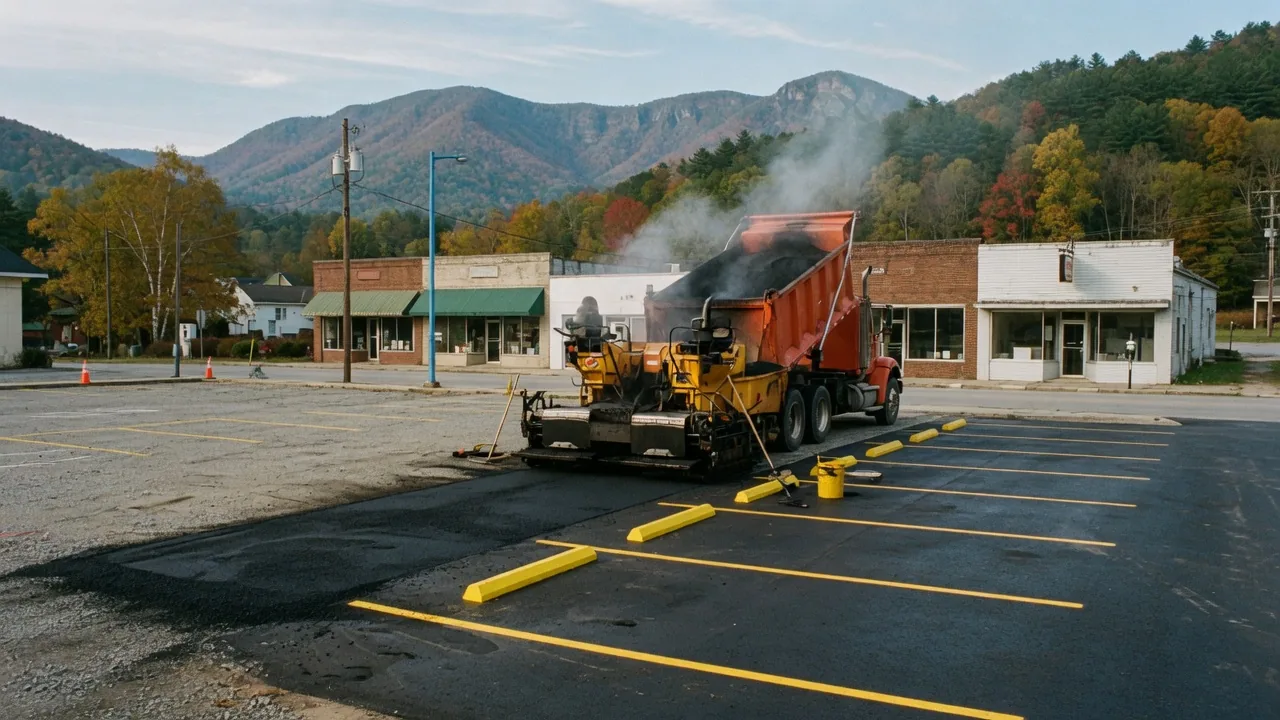
| Commercial lot or church parking area | Quoted per sq ft | Striping, ADA stall layout, phasing to keep lot open |
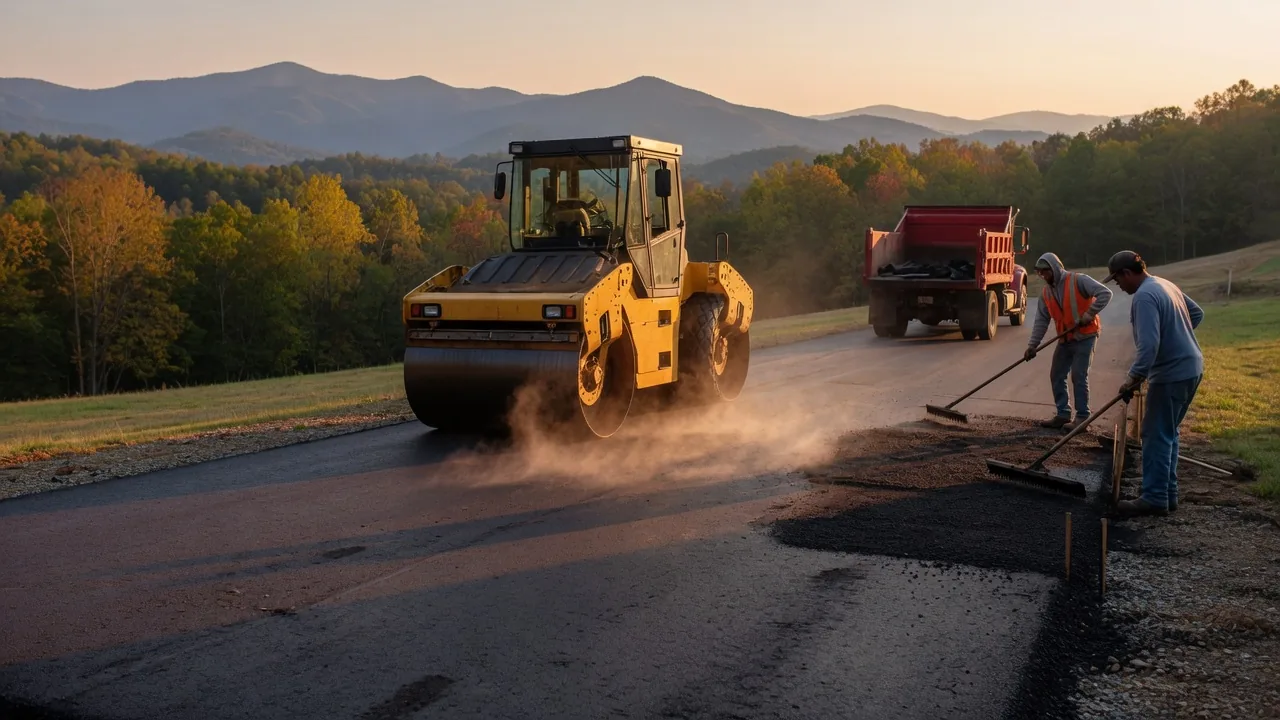
Two-coat work is the norm on mountain drives for a reason: UV and freeze-thaw chew a thin coat off a slope faster than off a parking lot. On a steep grade, a single coat can look worn within a season.
Weather windows are tighter here than the calendar suggests
Sealer needs a dry surface, mild air temperature, and enough hours to cure before dew or rain returns. Marshall sits in a river valley that fogs early and cools fast, which shortens fall windows considerably compared to the piedmont. The National Weather Service forecast at weather.gov is the tool crews actually watch, because a two-day rain event after application does not just wash off the money, it can leave a streaked surface that must be re-done.
Residential work clusters in late spring and early fall for that reason. Summer afternoons on fresh asphalt can be too hot for a clean cure, and winter is a hard stop once overnight lows sit near freezing. If a crew offers a deep discount in late November, ask what the cure forecast looks like before you accept.
Storm and flood history shapes what gets sealed and when
Madison County's federal disaster record is a real factor in driveway maintenance: 21 declared events touch this county across 1978-2026, and they are overwhelmingly flood and storm related. The French Broad and its tributaries have reworked low ground more than once in living memory, and driveways near the river bottom often take on silt and standing water that a slope drive never sees.
That changes the advice. A river-bottom lot should prioritize drainage before sealer, because sealcoating over pavement that stays wet underneath fails early. A ridge drive should prioritize crack filling, because freeze-thaw opens seams that water then widens. Both are sealcoating jobs, but the prep scope is not the same, and the honest answer sometimes is that grading or a culvert comes first. On any project that crosses into paving new surface or replacing base, the NC Licensing Board for General Contractors sets the threshold where a licensed general contractor must be involved.
How to read a bid without getting burned
The most useful thing a Marshall homeowner can do is ask what is in the price and what is not. A good bid names the square footage it measured, the number of coats, the linear feet of crack fill included, and whether vegetation removal and edging are in or extra. A vague bid usually means extras appear later.
Three more checks worth making. First, ask whether the crew does work inside the town limits and how it handles tight access on narrow valley roads, since staging and traffic control affect cost. Second, ask for proof of insurance before work starts. Third, if the job touches a state-maintained road, shoulder, or drainage ditch, the driveway connection may need a permit through NCDOT Connect before anyone disturbs it. That is true anywhere in the county, and it is the kind of detail that separates organized crews from ones that leave you holding a notice. When you are comparing companies, the Marshall paving contractor guide covers what to look for, and the main sealcoating service page explains what the work actually involves from prep to final cure.